The soldiers got them in. Then the city shut the doors.
Illustration generated by AI for The Day Vault.
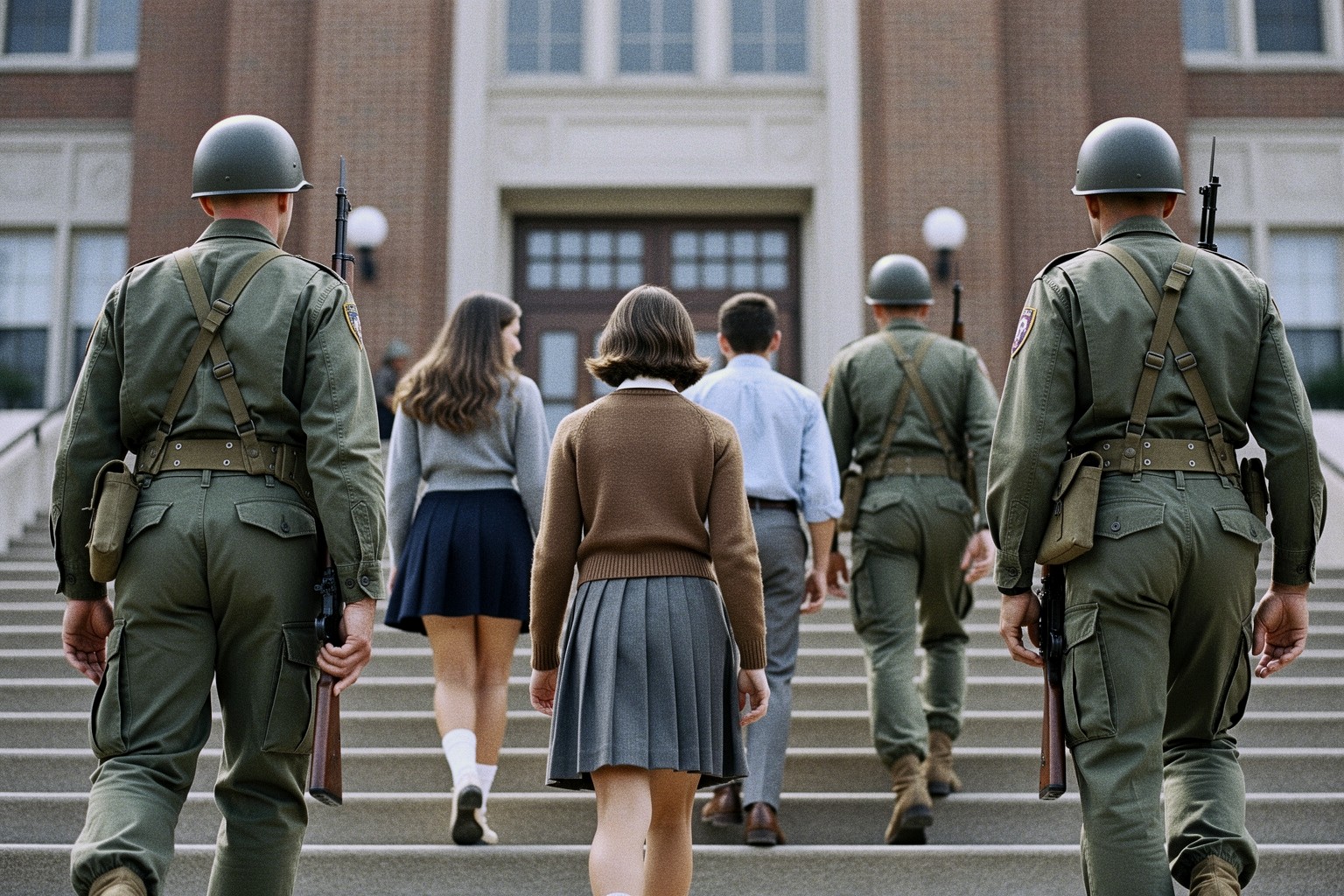
On September 25, 1957, nine Black teenagers walked into Little Rock Central High School surrounded by paratroopers of the 101st Airborne Division. It was the first day they were allowed to stay.
Three years earlier, the Supreme Court had ruled school segregation unconstitutional. Arkansas governor Orval Faubus answered by sending the state's National Guard to keep the nine out. When they finally slipped inside on September 23, the crowd outside turned so violent that police took them out through a side entrance before noon.
President Eisenhower ordered the 101st into the city and put the Arkansas Guard under federal command. Soldiers with fixed bayonets walked the students between classes. The harassment inside never stopped, but the nine came back day after day. In May 1958, Ernest Green became the school's first Black graduate.
The next September, Faubus closed all four of Little Rock's public high schools rather than let integration continue.
For the whole 1958–59 school year, no teenager in the city, Black or white, attended a public high school there. The doors reopened only after a federal court struck the closures down.
Checked against: Presidential executive orders and papers, U.S. Army records of the 101st Airborne deployment, federal court rulings on the Little Rock school closures, contemporary newspaper and wire coverage, National Park Service historic site histories
He won the battle in the north. Then the wind changed in the south.
Illustration generated by AI for The Day Vault.
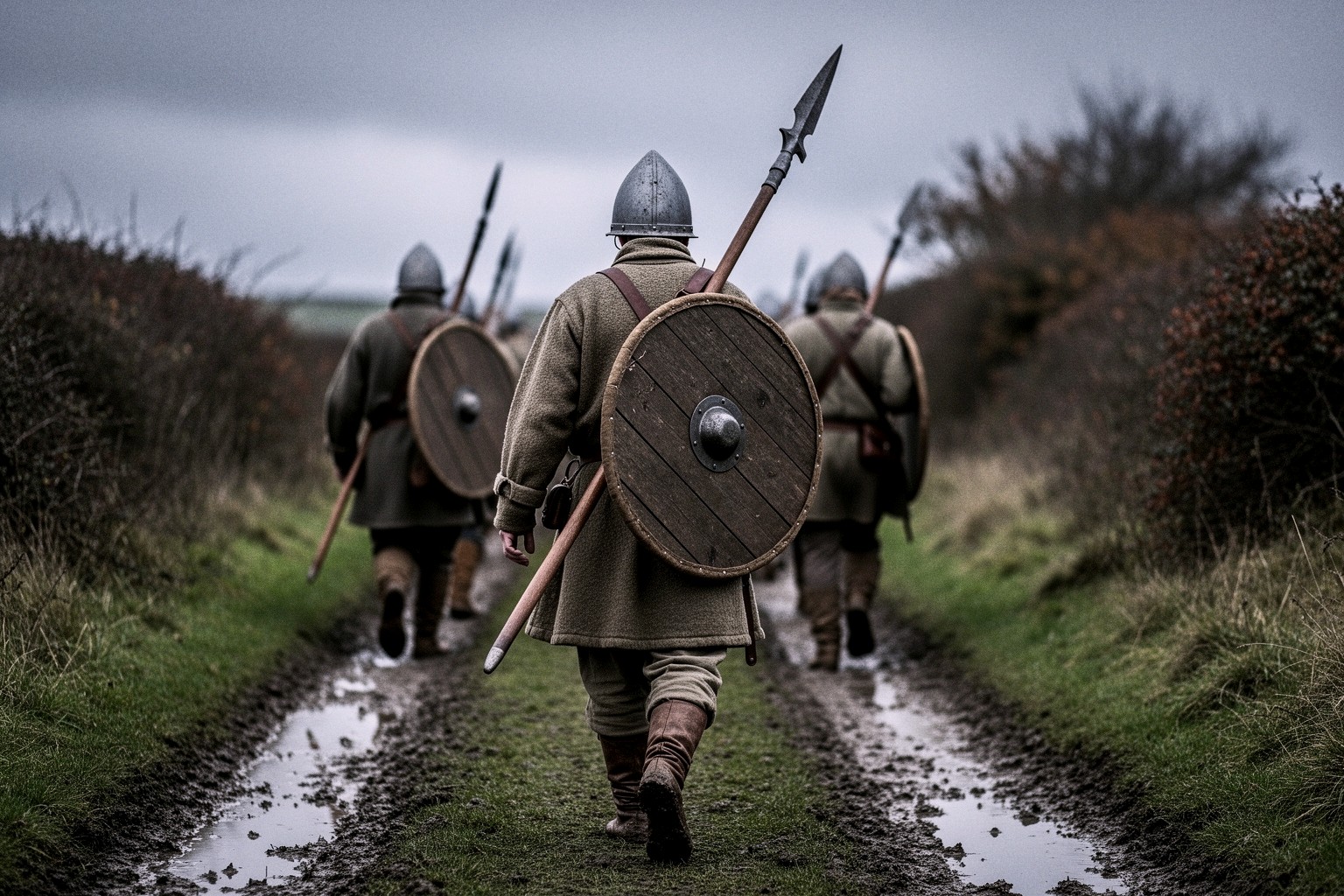
On September 25, 1066, King Harold II of England destroyed a Norwegian invasion army at Stamford Bridge, east of York. It was led by Harald Hardrada, the most feared soldier-king in northern Europe. Beside him marched Harold's own exiled brother, Tostig.
Harold had driven his army from London to Yorkshire in about four days. The Norwegians were not expecting him. According to the later Norse sagas, many of them had left their mail armour with the ships, miles downriver, on a warm day that was supposed to be about collecting hostages.
By evening Hardrada and Tostig were both dead. The Anglo-Saxon Chronicle records that the invaders had come with around 300 ships. The survivors needed only 24 to sail home. It was one of the most complete victories an English king ever won.
Three days later, the wind in the Channel turned, and William of Normandy landed his army at Pevensey, on the south coast Harold had just left unguarded.
Harold marched his worn, bloodied army back the length of England. On October 14, at Hastings, he lost the battle and his life.
Checked against: The Anglo-Saxon Chronicle; Snorri Sturluson's Heimskringla; standard academic histories of the Norman Conquest
They sent out twelve. One came back 203 years late.
Illustration generated by AI for The Day Vault.
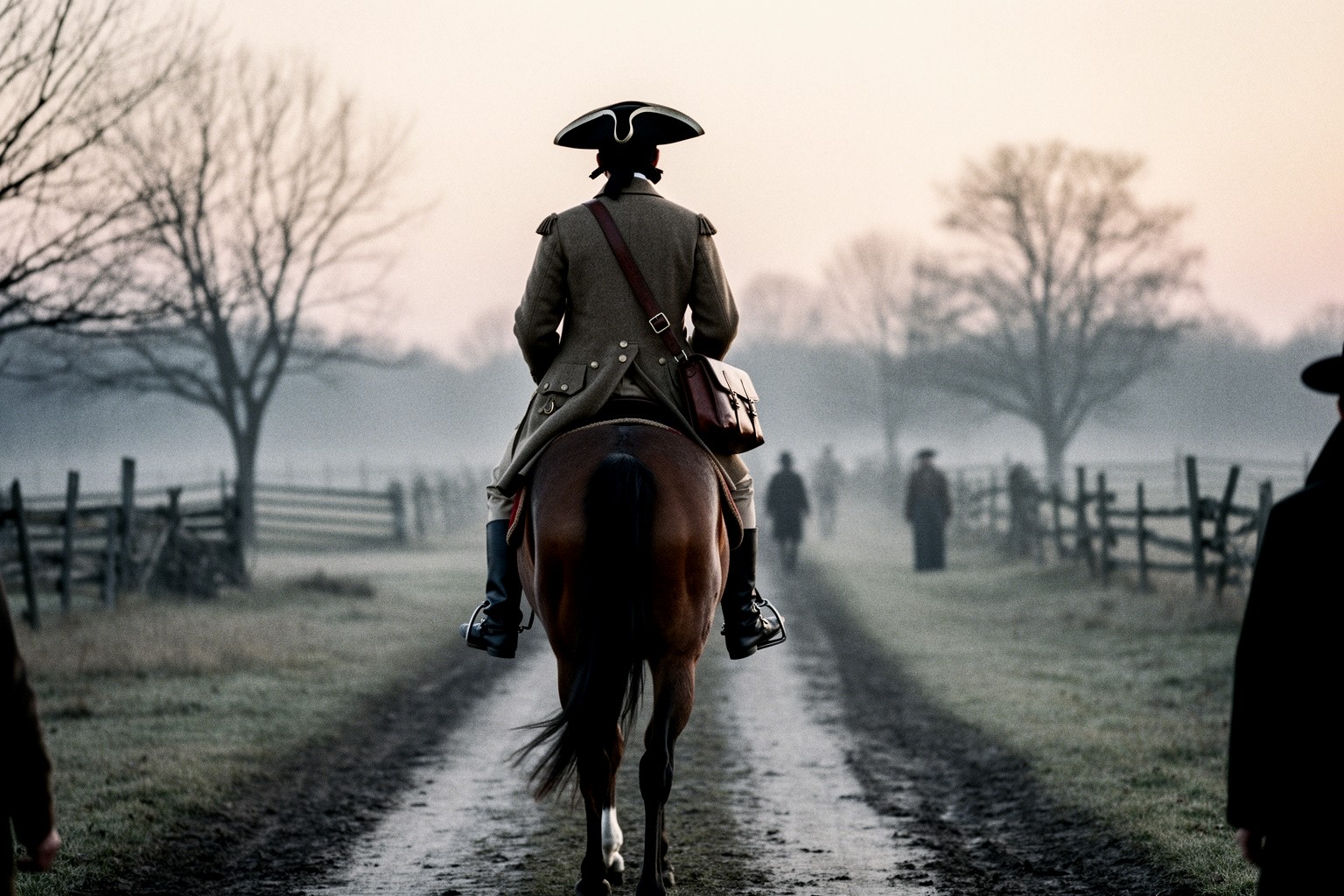
On September 25, 1789, Congress approved a list of amendments to the new Constitution and sent them to the states for ratification. There were twelve, not ten.
Most answered what critics had demanded during the ratification fight: protections for speech, religion, juries and the press, and limits on searches. Federalists had promised these changes to win over wary states, and James Madison had pushed the list through the House over a summer of argument.
By December 1791, enough states had approved articles three through twelve. Those ten became the Bill of Rights. The first two fell short. One dealt with the size of House districts. The other said any pay raise Congress voted itself could not take effect until after the next election.
Nobody had attached a deadline, so the pay amendment never actually died.
In 1982 a University of Texas undergraduate wrote a paper arguing it was still pending, received a C, and began writing to state legislators. Ratifications trickled in through the decade. In May 1992 Michigan brought the total to three-quarters of the states, and the article Congress drafted in 1789 became the Twenty-seventh Amendment, two centuries after the rest of its list.
Checked against: National Archives records of the 1789 joint resolution, Journal of the House of Representatives, Congressional Research Service reports on the Twenty-seventh Amendment, 1992 newspaper coverage of its ratification
They called it the accessory. Then they let it go.
Illustration generated by AI for The Day Vault.
On 25 September 1915, at the opening of the Battle of Loos, the British Army used poison gas for the first time. Before dawn, specialist companies of Royal Engineers opened chlorine cylinders dug into the front line and released the gas toward the German trenches.
The army was nervous about the word itself. In orders and on the telephone the gas went by a codename, "the accessory," so that nobody listening would learn what was coming. Months of secret work had gone into getting the heavy cylinders forward by hand, through communication trenches, at night.
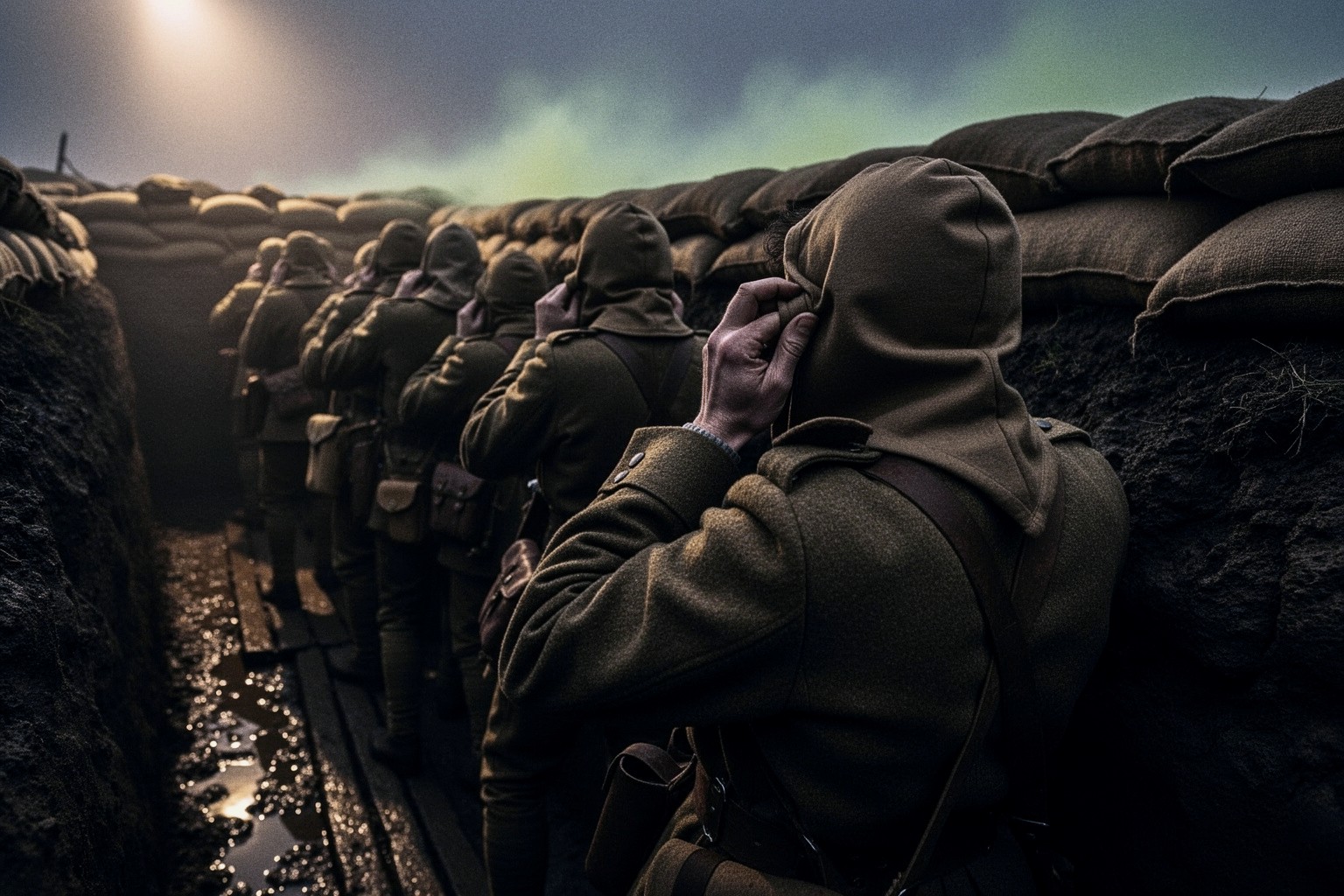
The plan rested on the cloud moving in one direction. Behind it, the infantry waited in flannel hoods soaked in chemicals, with small windows to see through, ready to follow the gas across no man's land once it had done its work.
The breeze that morning was weak and shifting, and in several sectors the chlorine hung in no man's land or drifted back over the British trenches.
Men who had been told the gas would clear the way went over the top through their own cloud, half-blind inside their hoods, toward German machine guns that were still firing.
Checked against: British official history of the First World War; battalion and brigade war diaries; Royal Engineers Special Brigade records; academic histories of chemical warfare in the Great War
On September 25, 1983, thirty-eight IRA prisoners broke out of HM Prison Maze, near Lisburn in Northern Ireland. It remains the largest prison escape in British history.
The men were held in H-Block 7. That Sunday afternoon, using handguns smuggled into the block, they overpowered the officers on duty, took their keys and uniforms, and seized the wing without raising the alarm.
Then they waited for the meals lorry. It arrived on schedule. The prisoners commandeered it, hid inside, and had it driven toward the main gate. There, officers tried to stop them and the plan began to fray. Prison officer James Ferris was stabbed and died. Escapers ran on foot, some through the gate, some over the fence.
The Maze had been built as one of the most secure prisons in Europe, with walls, wire, watchtowers and soldiers on the perimeter. None of it was designed for a breakout that used the prison's own routine as cover.
Some escapers were caught within hours in nearby fields. Others crossed the border and stayed free for years. The official Hennessy Report blamed failures of security and procedure, and the hunt for the rest became extradition fights in courts as far away as the Netherlands and the United States.
Checked against: The Hennessy Report (1984) into the escape; UK parliamentary debates (Hansard); contemporary Irish and British newspaper coverage; court records from later extradition cases; histories of the Northern Ireland Troubles
The princes got to choose. Everyone else got to leave.
Illustration generated by AI for The Day Vault.
On 25 September 1555, the Imperial Diet at Augsburg agreed a peace between the Catholic and Lutheran states of the Holy Roman Empire. After decades of quarrelling and open war, the settlement was blunt: each ruling prince would decide which of the two churches his territory followed.
Later lawyers boiled it down to a Latin phrase, cuius regio, eius religio: whose realm, his religion. Subjects who disagreed with their prince got one concession in return. They could sell their property and move to a territory whose ruler shared their faith.
Emperor Charles V wanted no part of it. He left the bargaining to his brother Ferdinand, who signed. Within a month Charles began giving away his crowns.
The peace recognised exactly two faiths, and the fastest-growing Protestant movement of the age, Calvinism, was not one of them.
Calvinist princes ruled anyway, outside the settlement, and the arrangement lasted only until 1618, when a revolt in Bohemia began the Thirty Years' War. Calvinists won legal recognition in 1648, once the fighting was over.
Checked against: Text of the Augsburg Recess of 1555; standard histories of the Reformation and the Holy Roman Empire; scholarly biographies of Charles V and Ferdinand I
The tour was booked for October. The band ended in December.
Illustration generated by AI for The Day Vault.
On September 25, 1980, John Bonham, the drummer of Led Zeppelin, was found dead at Jimmy Page's house in Windsor. He was 32.
The band had gathered there to rehearse. They were preparing for their first North American tour since 1977, when a run of American dates was cut short after the death of Robert Plant's young son. A short European tour that summer had been the warm-up. America was meant to be the return. The day before, Bonham had been drinking heavily, starting at lunch and carrying on through rehearsal and into the night. He was put to bed. The inquest found accidental death: he had choked on his own vomit.
Bands lose members all the time and carry on. Drummers are replaced more often than anyone. A stadium act with a tour already in the works had every commercial reason to audition someone, rehearse for a month and fly out.
Led Zeppelin did not audition anyone.
In December the three surviving members issued a brief statement saying they could not continue as they had been. The American tour never happened. One of the biggest bands in the world ended with a press release, not a farewell show.
Checked against: Coroner's inquest reporting in British newspapers, 1980; contemporary music press coverage; published band biographies; the band's December 1980 statement as reported at the time
The family on TV was real enough. The band was someone else.
Illustration generated by AI for The Day Vault.
On September 25, 1970, ABC aired the first episode of The Partridge Family, a sitcom about a widowed mother and her five children who form a pop group and tour the country in a painted school bus.
The idea came from the Cowsills, a real family band from Rhode Island with hits in the late 1960s. Shirley Jones played the mother. Her real-life stepson, David Cassidy, played the eldest son, Keith.
Nearly every episode ended with the family on stage. Viewers watched the kids strum guitars, hit drums and pound a keyboard, and record buyers took the act at face value.
Only two of the cast were on the records: Cassidy sang lead, Jones sang backing, and the rest came from session singers and Los Angeles studio musicians while the younger actors mimed to tape.
The charts did not care. By late November, "I Think I Love You" was the No. 1 single in America, and Cassidy was a teen idol fronting a band that did not exist.
Checked against: Billboard Hot 100 chart archives; network broadcast schedules from 1970; memoirs by David Cassidy and Shirley Jones; published histories of American television and of Los Angeles session musicians
They gave him a rocking chair. He gave them three innings.
Illustration generated by AI for The Day Vault.
On September 25, 1965, Satchel Paige walked to the mound for the Kansas City Athletics against the Boston Red Sox. He was 59 years old.
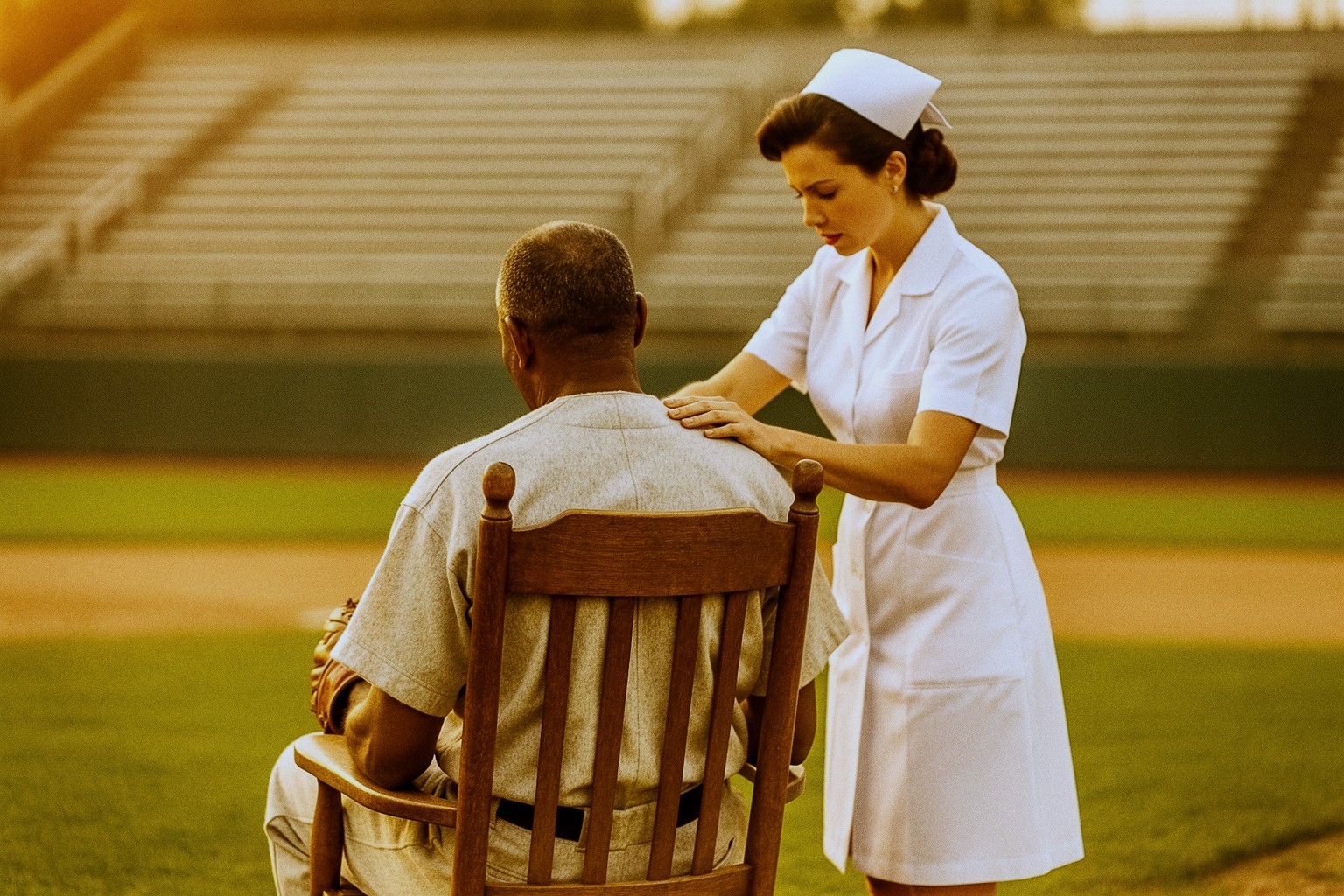
The club's owner, Charlie Finley, had signed him as a draw, and the Athletics leaned into the joke. Paige waited in the bullpen in a rocking chair. A nurse stood by to rub liniment into his pitching arm. Fans in Kansas City came to see a novelty.
Then he pitched. Three innings against a major league lineup, no runs. The only hit he allowed was a double by Carl Yastrzemski, a future Hall of Famer who was then in his twenties. Paige left the field to applause, and the crowd sang to him in the dark when the stadium lights went down.
The stunt only worked because the major leagues had kept him out for most of his career. Barred by segregation, Paige spent his prime in the Negro leagues and on barnstorming tours, and did not throw a big league pitch until 1948, when he was 42.
The rocking chair made him the oldest man ever to pitch in a major league game. No one has broken that record since.
Checked against: Major League Baseball box scores and official records; contemporary newspaper game reports; Baseball Hall of Fame archives; published biographies of Satchel Paige
On September 25, 1992, a Titan III rocket lifted off from Cape Canaveral carrying Mars Observer, the first American spacecraft sent to Mars since the Viking missions of the 1970s.
It was built to study the planet from orbit: its rocks and minerals, its gravity, its magnetic field, its thin and dusty weather. To save money, engineers based it on a satellite design meant for Earth orbit. Then it spent eleven months crossing the gap.
On August 21, 1993, three days before it was due to fire its engine and slip into orbit around Mars, controllers began pressurising its fuel tanks. As planned, they had switched off the spacecraft's transmitter to protect it during the procedure.
It was supposed to switch back on. Nobody ever heard from it again.
An investigation concluded that a propellant line had most likely ruptured, sending the craft into a spin. Copies of its instruments went to Mars on later missions, starting with Mars Global Surveyor, which reached orbit in 1997.
Checked against: NASA mission records and press kits; the Mars Observer Mission Failure Investigation Board report; contemporary newspaper coverage; histories of the US Mars exploration programme
They left the last page blank. The council blanked the rest.
Illustration generated by AI for The Day Vault.
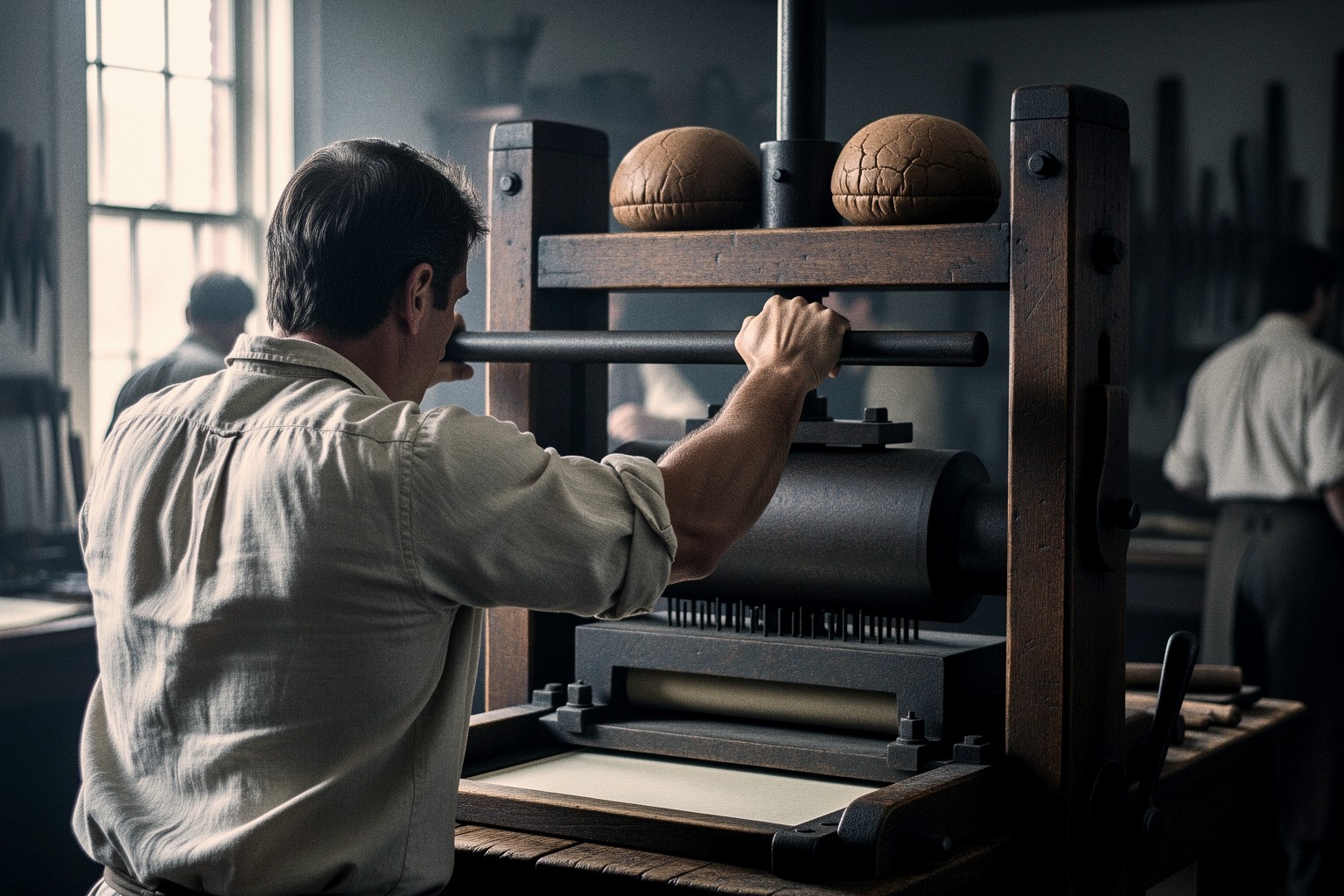
On September 25, 1690, Benjamin Harris printed the first multi-page newspaper in the American colonies. Publick Occurrences Both Forreign and Domestick came off a Boston press as three printed pages and one empty one.
The empty page was deliberate. Harris expected readers to write their own news on it and pass the sheet along. He promised a new issue every month, or sooner if news piled up. The first issue carried local items, including smallpox in town and a fire, alongside reports from the war with France.
Two of those reports caused trouble. One accused England's Mohawk allies of brutality toward prisoners. Another passed on a rumour about the King of France and his son's wife. Harris had printed all of it without a licence from the colony's authorities.
Four days later, the governor and council ordered the paper suppressed and its copies seized.
There was no second issue. Boston waited fourteen years for its next newspaper, and the only known surviving copy of the first one ended up in a government archive in London.
Checked against: Massachusetts colonial council records; standard histories of American journalism; the surviving copy held in the UK National Archives