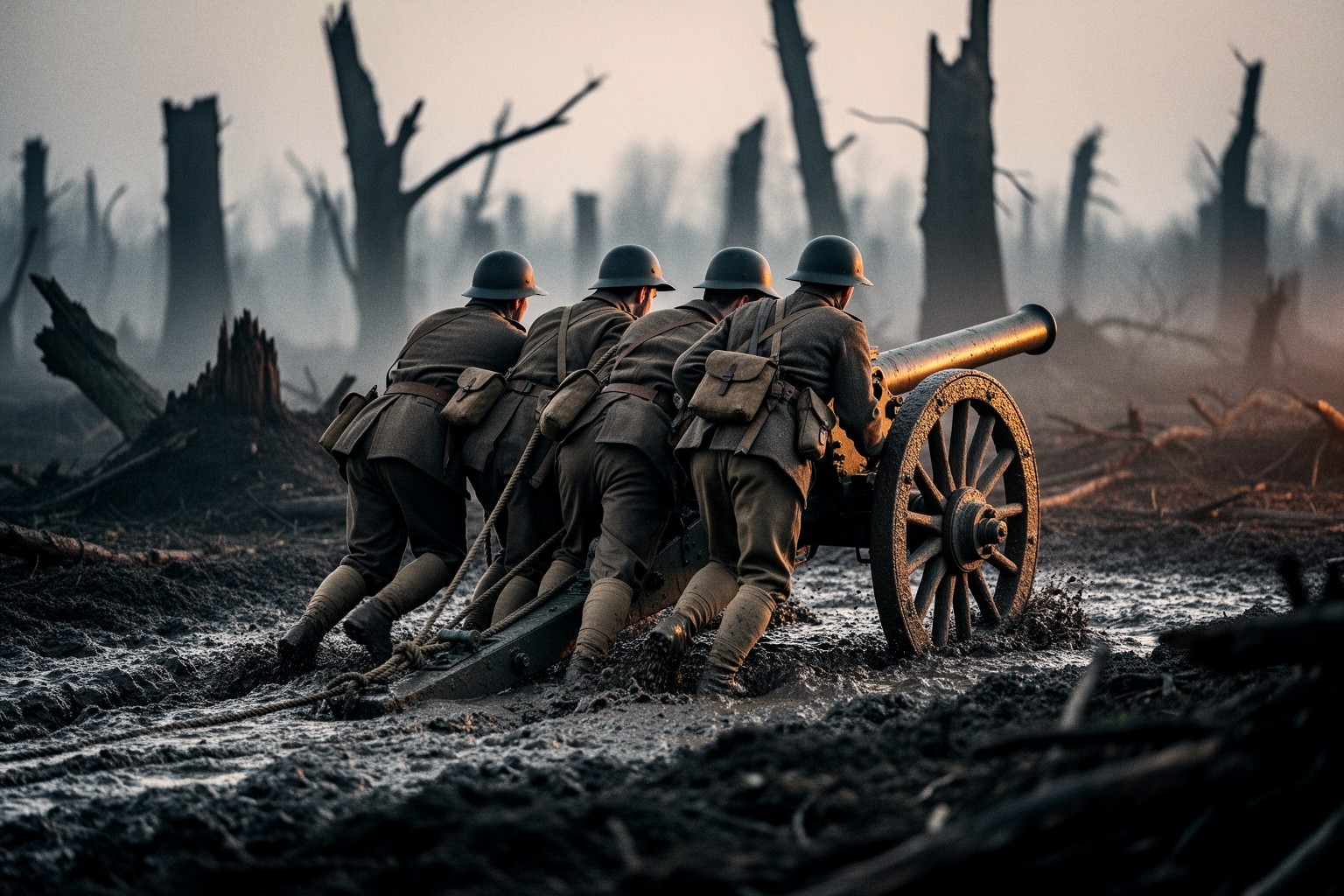
At 5:30 on the morning of September 26, 1918, American infantry climbed out of their trenches in northeastern France and walked into the Meuse-Argonne Offensive. Hours of artillery fire had gone ahead of them. The plan was to break the German line between the Meuse River and the Argonne Forest and cut the railways feeding the Western Front.
The ground favoured the defenders. Ravines, wire, concrete machine-gun posts and dense woods slowed every advance to a crawl. Roads jammed with trucks, horses and men. Rain turned the whole sector to mud. Inside the forest, a battalion of New York soldiers was cut off for days and became known as the Lost Battalion.
The army kept feeding men in. More than a million Americans eventually served in the offensive, and more than 26,000 were killed. It remains the deadliest battle in United States history.
It never reached a clean finish. The armistice was signed on November 11 while the offensive was still grinding forward, and the agreed ceasefire hour was 11 a.m., not the moment of signing.
So the guns kept firing through that final morning, and soldiers on the Meuse front were killed in the last hours of a war that had already ended on paper.
Checked against: US Army Center of Military History campaign histories; American Battle Monuments Commission records; divisional unit histories; standard academic histories of the American Expeditionary Forces
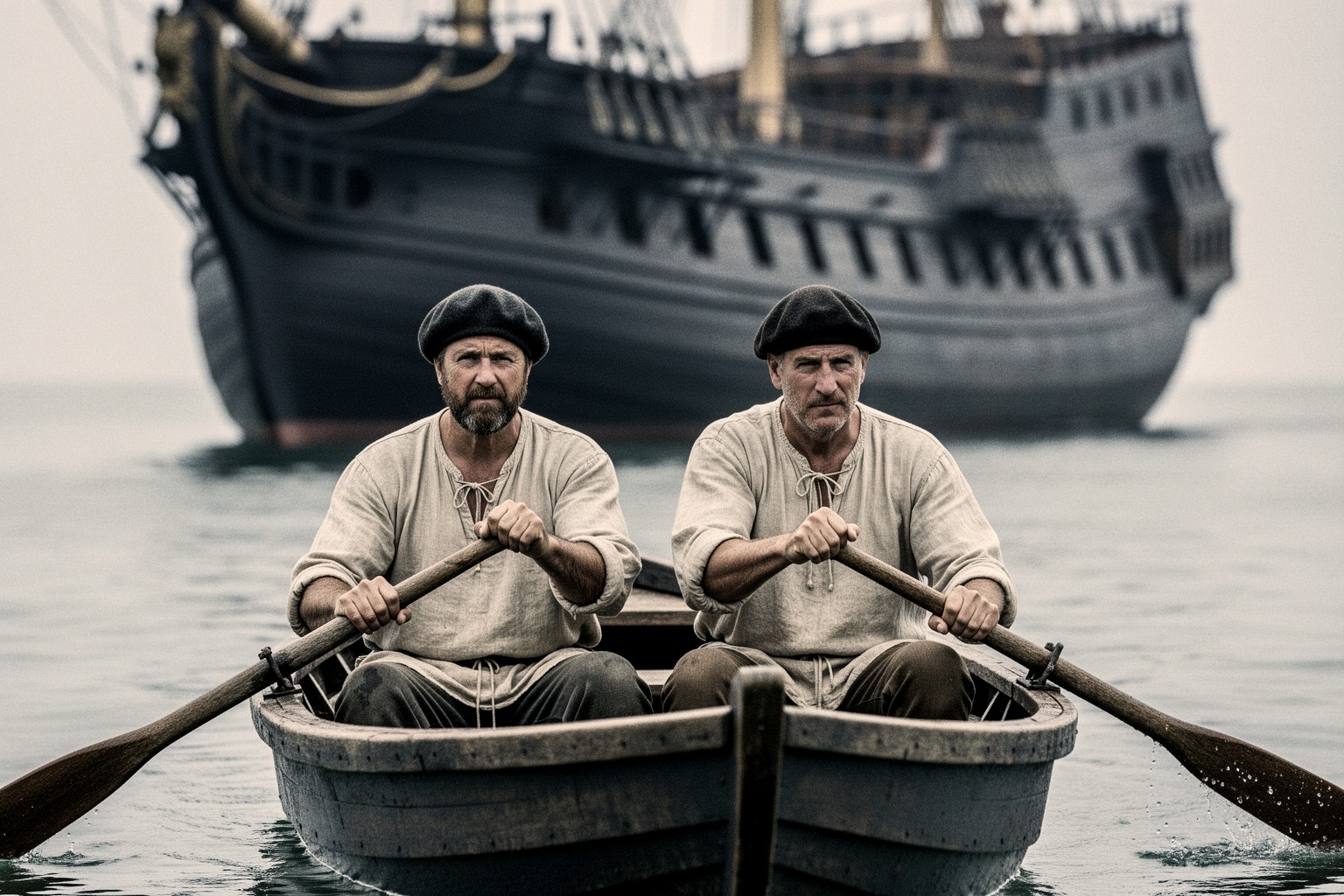
On 26 September 1580, a battered ship called the Golden Hind sailed into Plymouth harbour. It had left the same port nearly three years earlier as one of five vessels. It came back alone, and it came back having gone all the way round the world, the first English ship to do it.
Its hold was heavy with Spanish silver and gold. Off the coast of Peru in 1579, Francis Drake's crew had run down a Spanish treasure ship and stripped it. Then they crossed the Pacific, rounded the Cape of Good Hope and turned north for home.
Nobody aboard had reliable news from England in years. Spain, meanwhile, had heard plenty. Its ambassador in London wanted the treasure returned and the captain punished. Whether Drake was a hero or a thief depended entirely on who now sat on the English throne.
So Drake's first words to the fishermen who rowed out to meet him were not about the voyage, the Pacific or the gold. He asked whether Queen Elizabeth was still alive.
She was. Under a new monarch, the plunder could have been called piracy and the captain hanged for it. Instead, seven months later, Elizabeth came aboard the ship at Deptford and had him knighted on its deck.
Checked against: Contemporary voyage narratives (The World Encompassed, compiled from the chaplain's notes; Hakluyt's Principal Navigations), Spanish diplomatic correspondence, modern maritime histories and biographies
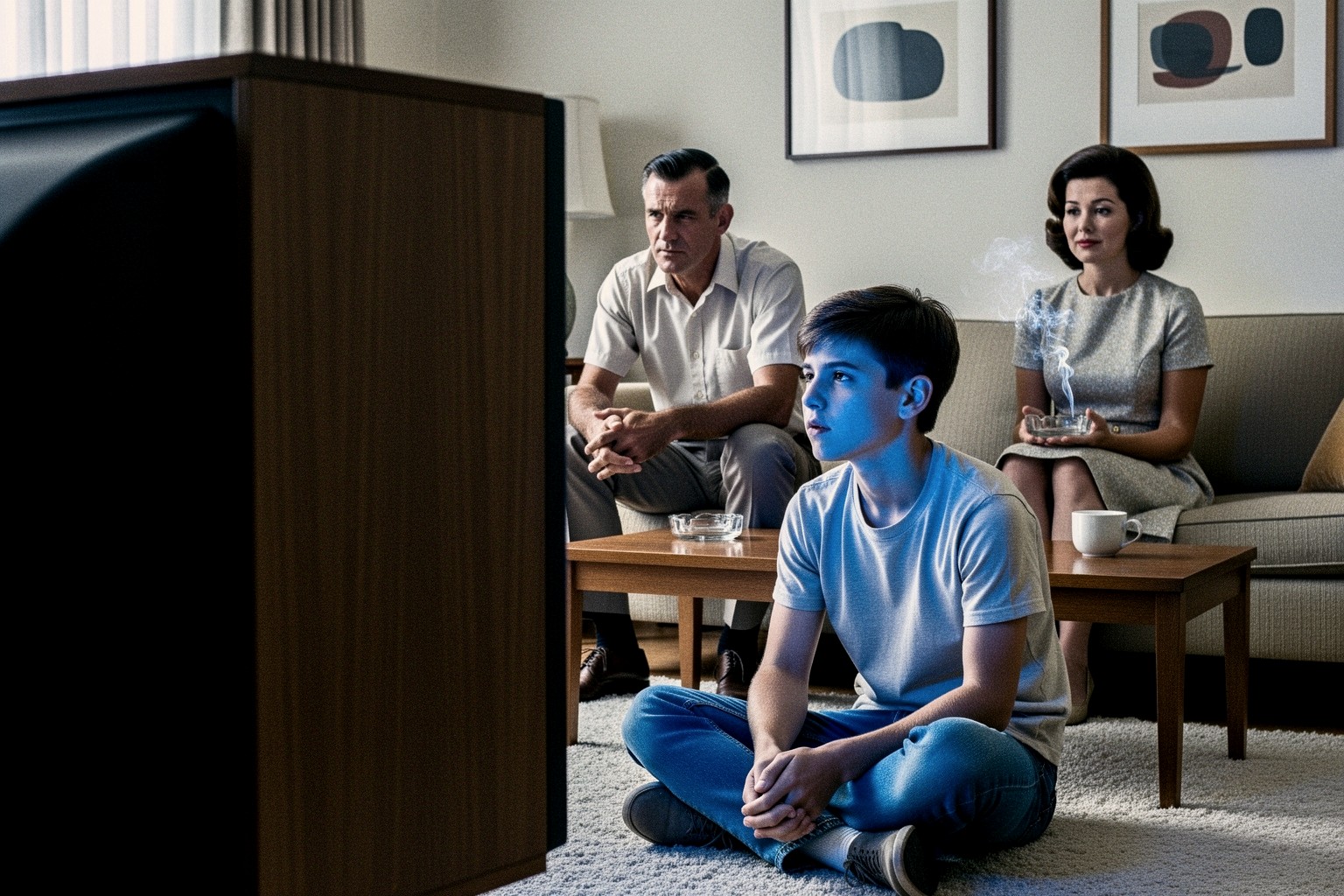
On September 26, 1960, John F. Kennedy and Richard Nixon met in a CBS studio in Chicago for the first televised general-election presidential debate in American history. Roughly 70 million people tuned in.
Nixon arrived in poor shape. He had banged his knee on a car door in August, the wound became infected, and he spent nearly two weeks in Walter Reed hospital. He came out underweight, pale and behind on campaigning. He refused professional makeup, accepted only a thin powder over his stubble, and perspired under the studio lights.
Kennedy had spent the campaign outdoors. He was tanned, rested, and spoke past his opponent to the camera. The two men agreed on more than either campaign liked to admit, and the moderator kept the hour to domestic policy: farms, schools, labour, spending.
Hardly anyone remembers a word of it. What lasted was the sweat, the grey suit fading into the grey set, the five o'clock shadow.
Candidates drew the obvious conclusion about cameras. No presidential nominees debated on television again until 1976.
Checked against: Network broadcast archives; presidential library collections; contemporary newspaper coverage; standard histories of the 1960 election
Five missiles on the board, and one man who didn't believe it
Illustration generated by AI for The Day Vault.
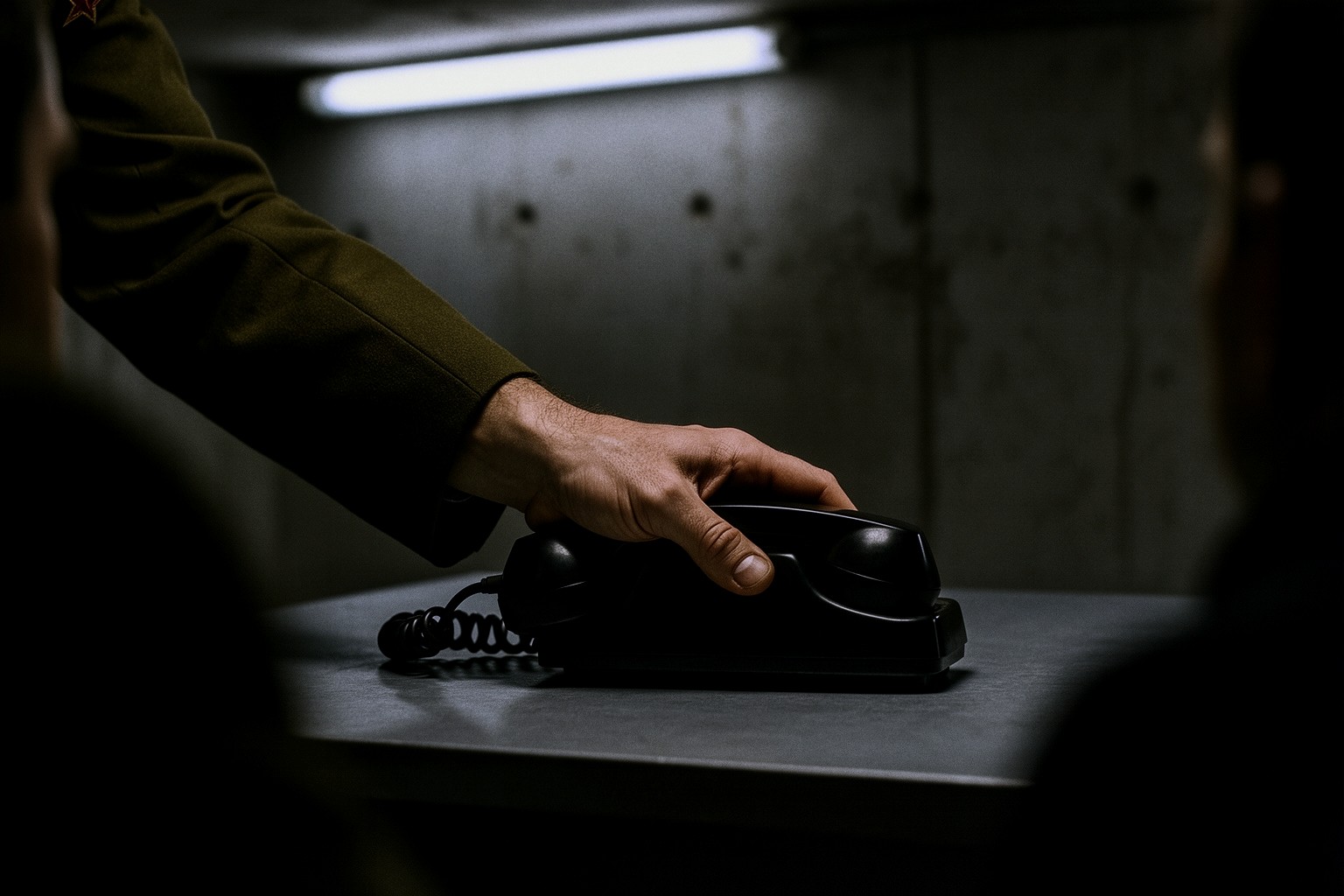
Shortly after midnight on September 26, 1983, a Soviet early-warning satellite reported that the United States had launched a nuclear missile. Then another. Then three more.
The officer on duty at the Serpukhov-15 command bunker outside Moscow was Lieutenant Colonel Stanislav Petrov, a 44-year-old engineer who knew the system from the inside. His job was to pass alerts up the chain. Three weeks earlier, Soviet fighters had shot down a Korean airliner, and relations with Washington were as cold as they had been in decades.
Petrov reported a malfunction instead. A real American first strike, he reasoned, would come with hundreds of missiles, not five. Ground radar showed nothing. He waited, and nothing arrived. The satellites had mistaken sunlight glinting off high clouds for rocket exhaust.
He was not decorated. Investigators questioned him for days, and his superiors faulted him for an incomplete logbook.
The incident stayed classified for fifteen years. Petrov left the army the following year for a civilian job, and the world learned his name only in 1998, from a retired general's memoir.
Checked against: Declassified Soviet military accounts, the 1998 memoir of air defence commander Yury Votintsev, interviews with Petrov in major newspapers, Cold War histories of nuclear early-warning systems
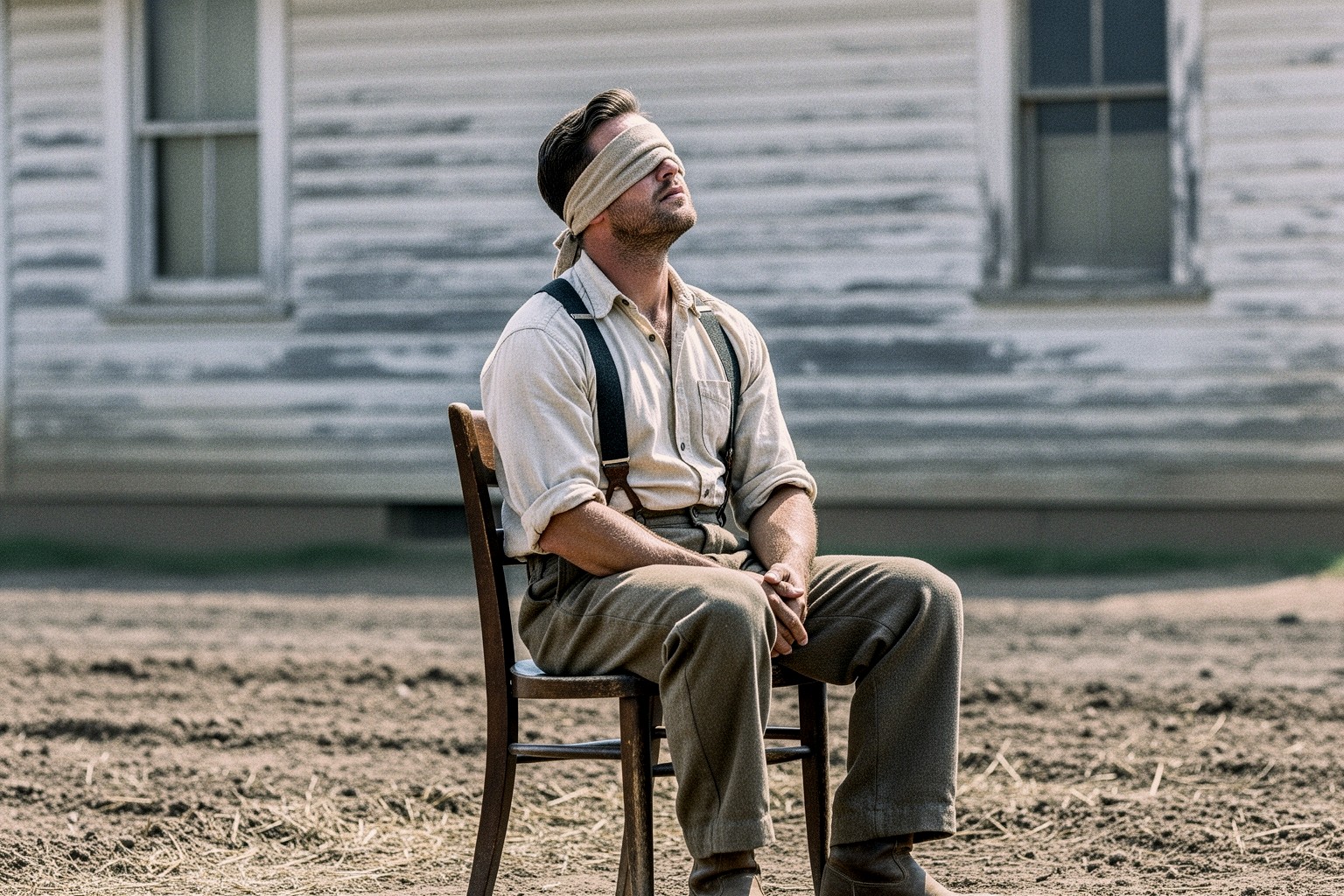
He couldn't see the farm. He could hear the plane.
Illustration generated by AI for The Day Vault.
Before dawn on September 26, 1933, federal agents and Memphis police entered a house in Memphis and arrested George "Machine Gun" Kelly, one of the most wanted men in America. He surrendered without firing a shot.
Two months earlier, Kelly and his wife Kathryn had kidnapped Charles Urschel, a wealthy Oklahoma City oilman, and collected $200,000 in ransom. They kept him blindfolded on a remote farm and released him alive, confident he had seen nothing useful.
Urschel had been paying attention. Blindfolded, he listened for an aeroplane that passed overhead at the same times each day, and remembered the one day it failed to come, when a storm rolled in. Investigators matched his account against flight schedules and weather records and found the farm in Paradise, Texas. The trail ran from there to Memphis.
The arrest is best remembered for Kelly supposedly crying "Don't shoot, G-men!" as agents burst in, but historians have found no reliable contemporary record that he ever said it.
It made no difference. Within weeks both Kellys were sentenced to life, and the Bureau kept telling the story until the nickname belonged to its agents, long after Kelly died in Leavenworth in 1954.
Checked against: FBI historical case files; federal trial records from 1933; contemporary newspaper coverage; published histories of the early FBI
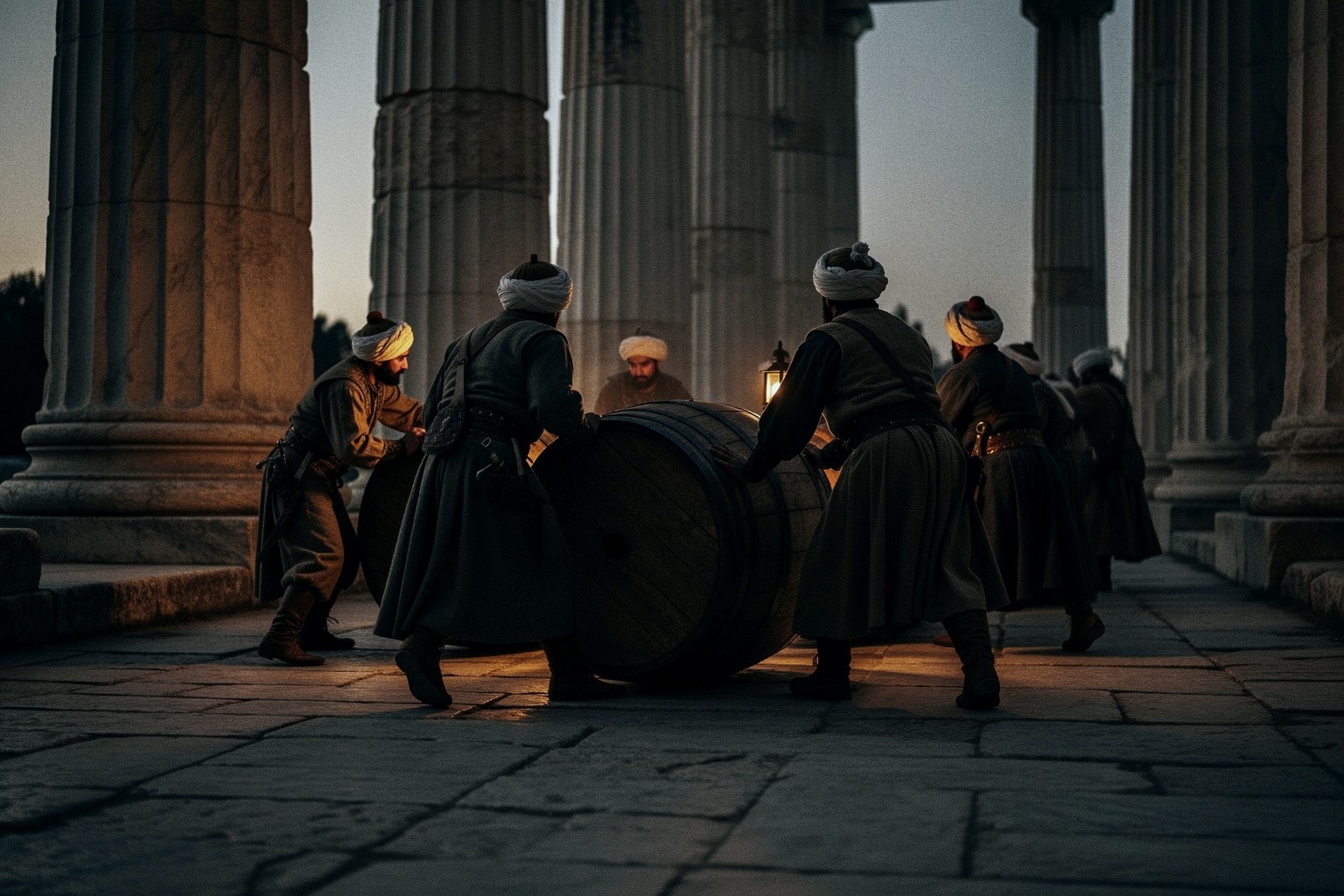
Two thousand years of worship, one night of gunpowder
Illustration generated by AI for The Day Vault.
On the evening of 26 September 1687, a Venetian mortar shell dropped through the roof of the Parthenon in Athens and landed among the Ottoman garrison's gunpowder. The blast tore out the middle of the building, bringing down walls and columns that had stood for more than two thousand years.
It was built in the fifth century BC as a temple to Athena. Christians later made it a church of the Virgin Mary. After the Ottomans took Athens in the fifteenth century, it became a mosque, with a minaret raised inside its walls.
Each faith adapted the building rather than wrecking it. Altars moved, images were plastered over, and the roof stayed on. During the siege, the defenders stored their powder inside and sheltered women and children there, trusting the thick marble to hold.
What two millennia of rival religions had left standing, one shell and the garrison's own powder brought down in a single night.
The Venetian commander, Francesco Morosini, then tried to take sculptures from the west end as trophies. His workmen's lifting tackle failed, and the marble horses fell and shattered on the rock below.
Checked against: Histories of the Venetian-Ottoman war of 1684-1699; archaeological and architectural histories of the Acropolis; contemporary Venetian siege accounts and officers' letters; museum scholarship on the Parthenon sculptures
On September 26, 1957, West Side Story opened at the Winter Garden Theatre in New York. It took Romeo and Juliet and moved it to the Upper West Side, where two street gangs, the Jets and the Sharks, fought over a few blocks of pavement.
The team was formidable. Leonard Bernstein wrote the music. A 27-year-old Stephen Sondheim wrote the lyrics, his first Broadway show. Arthur Laurents wrote the book, and Jerome Robbins directed and choreographed. Robbins made dance carry the plot, so fights, threats and courtship all came out as movement. During rehearsals he kept the two gangs' actors apart so the rivalry would feel real on stage.
The first act ends with two young men dead on the floor. Musicals of the day did not usually do that. Audiences heard a score that leaned on jazz and Latin rhythm, and songs like "Maria" and "Tonight" that would outlive almost everything else on Broadway that decade.
At the 1958 Tony Awards, Best Musical went to The Music Man, a sunny show about a con artist selling band instruments in small-town Iowa.
West Side Story took home awards for choreography and scenic design. Four years later the film version won ten Academy Awards, including Best Picture.
Checked against: Broadway opening-night records and theatre databases, Tony Awards archives, Academy Awards records, biographies of the creative team, contemporary New York newspaper reviews
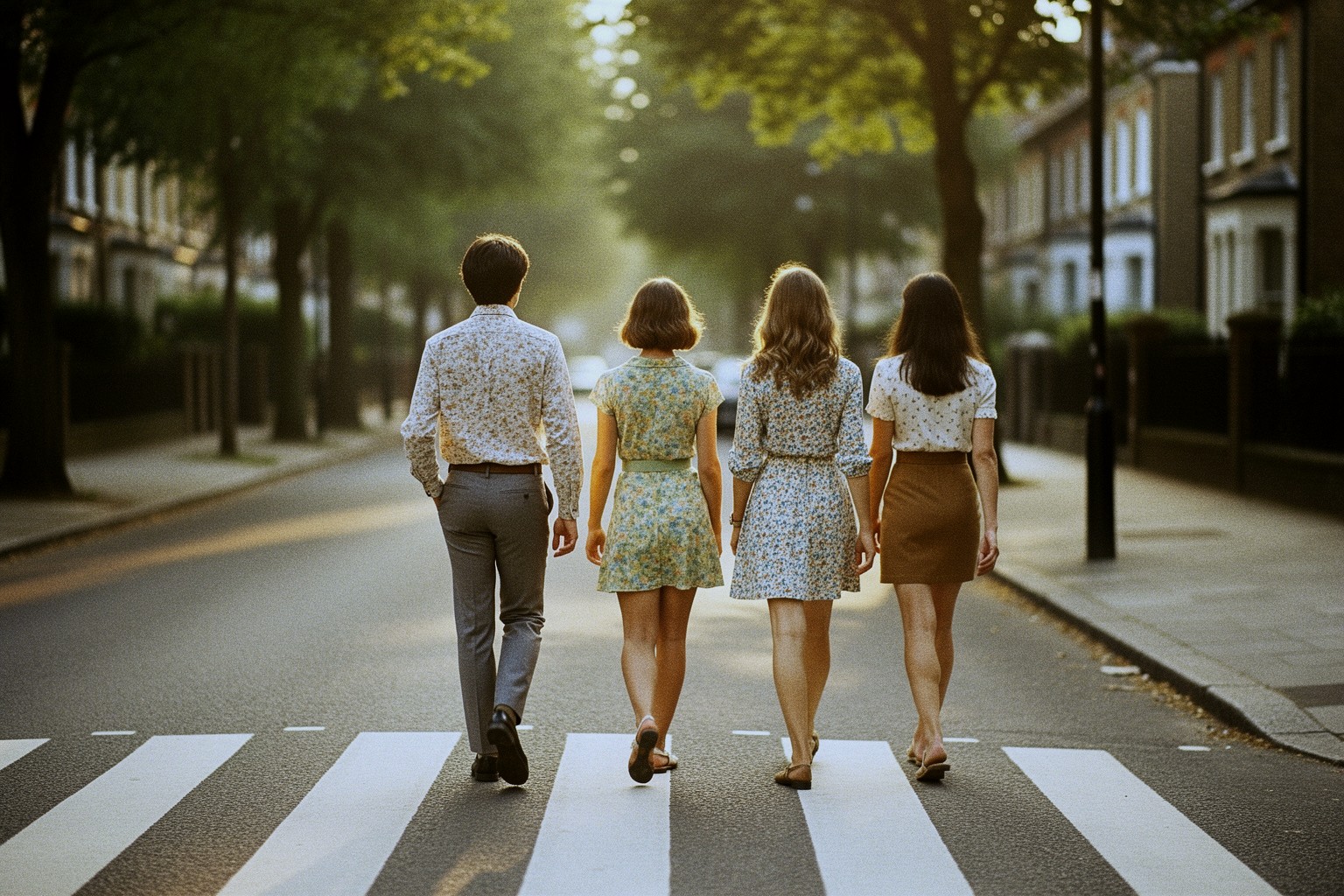
On September 26, 1969, the Beatles released Abbey Road in Britain. It was the last album the four of them recorded together, and its front cover carried neither the band's name nor the record's title.
The photograph had been taken seven weeks earlier, on the morning of August 8, outside EMI's studio in St John's Wood, London. Photographer Iain Macmillan climbed a stepladder in the road while a policeman held back the traffic. The band walked the zebra crossing back and forth. Macmillan took six frames. The whole shoot lasted about ten minutes.
It was the easy option. The working title had been Everest, and there was talk of flying to the Himalayas for the cover. Nobody wanted to go. Naming the album after the street meant they only had to walk out the front door.
The shortcut turned out to be the most permanent thing they ever made.
Fans began copying the walk almost immediately and never stopped. EMI renamed its building Abbey Road Studios. In 2010 the crossing itself was given Grade II listed status, a protection usually reserved for historic buildings. Drivers on that road still brake for strangers in single file, posing mid-stride for a photograph.
Checked against: Contemporary music press coverage and record company release records; published interviews with the photographer and studio staff; biographies of the band; Historic England's listing records.
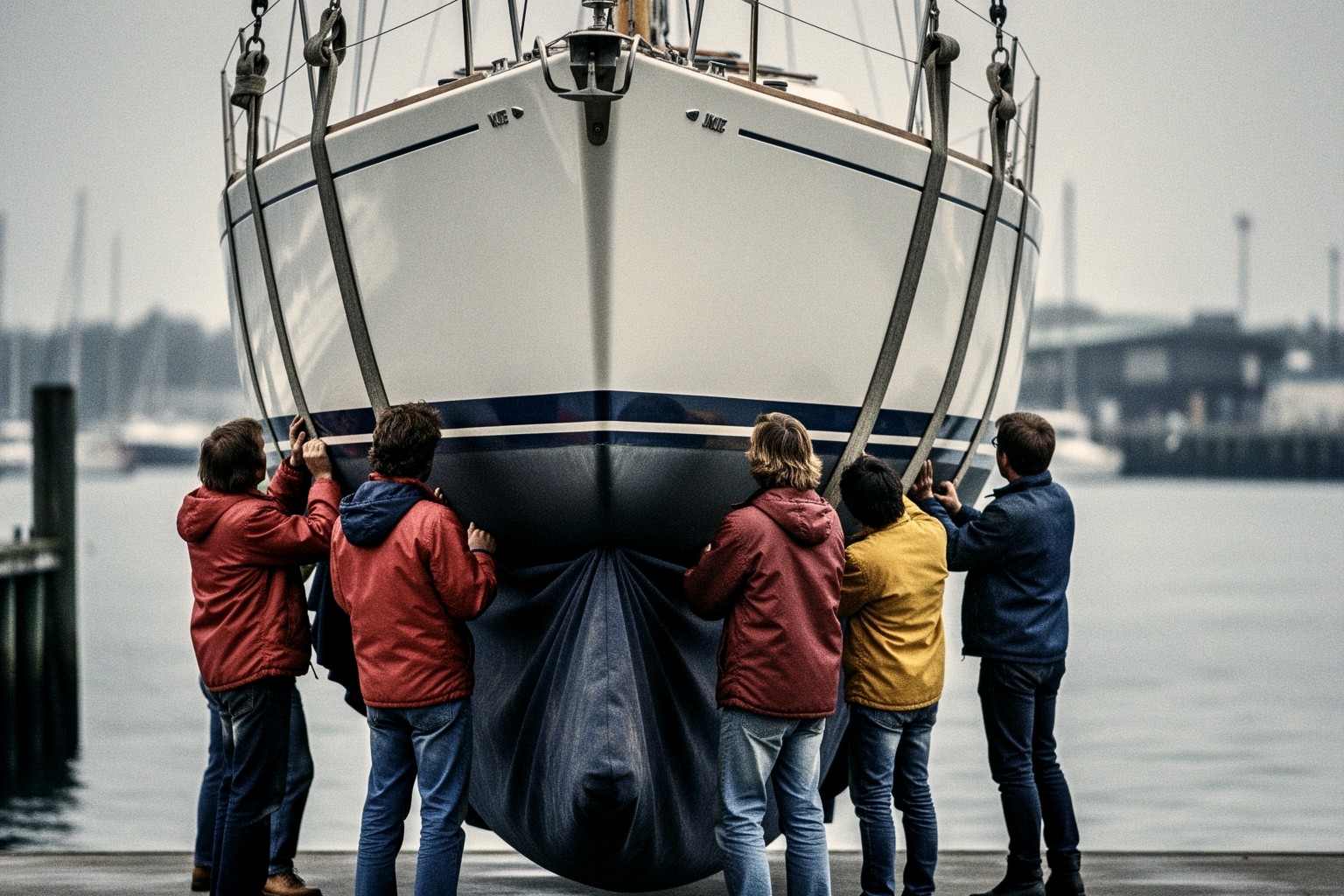
A hundred and thirty-two years, then forty-one seconds
Illustration generated by AI for The Day Vault.
On September 26, 1983, off Newport, Rhode Island, the yacht Australia II crossed the finish line ahead of Liberty and won the America's Cup. It ended the longest winning streak in sport. The New York Yacht Club had held the trophy since 1851.
The series had looked finished. Australia II trailed three races to one, then won two in a row to force a deciding seventh. In that race Liberty led by close to a minute with two legs left. On the downwind run, Australia II sailed past her and held on to the line.
Her edge sat below the waterline. Designer Ben Lexcen had given her a winged keel, and whenever the boat came out of the water her crew wrapped the hull in a fabric skirt. The Americans spent the summer arguing the keel was illegal. The measurers let her race.
Winning the cup meant defending it, and the keel was no longer a secret.
In 1987, off Fremantle, Dennis Conner, the skipper who had lost it in Newport, took the cup back four races to nil.
Checked against: Yachting and sailing histories of the America's Cup, contemporary newspaper race reports from September 1983, and New York Yacht Club and Australian maritime museum archives.
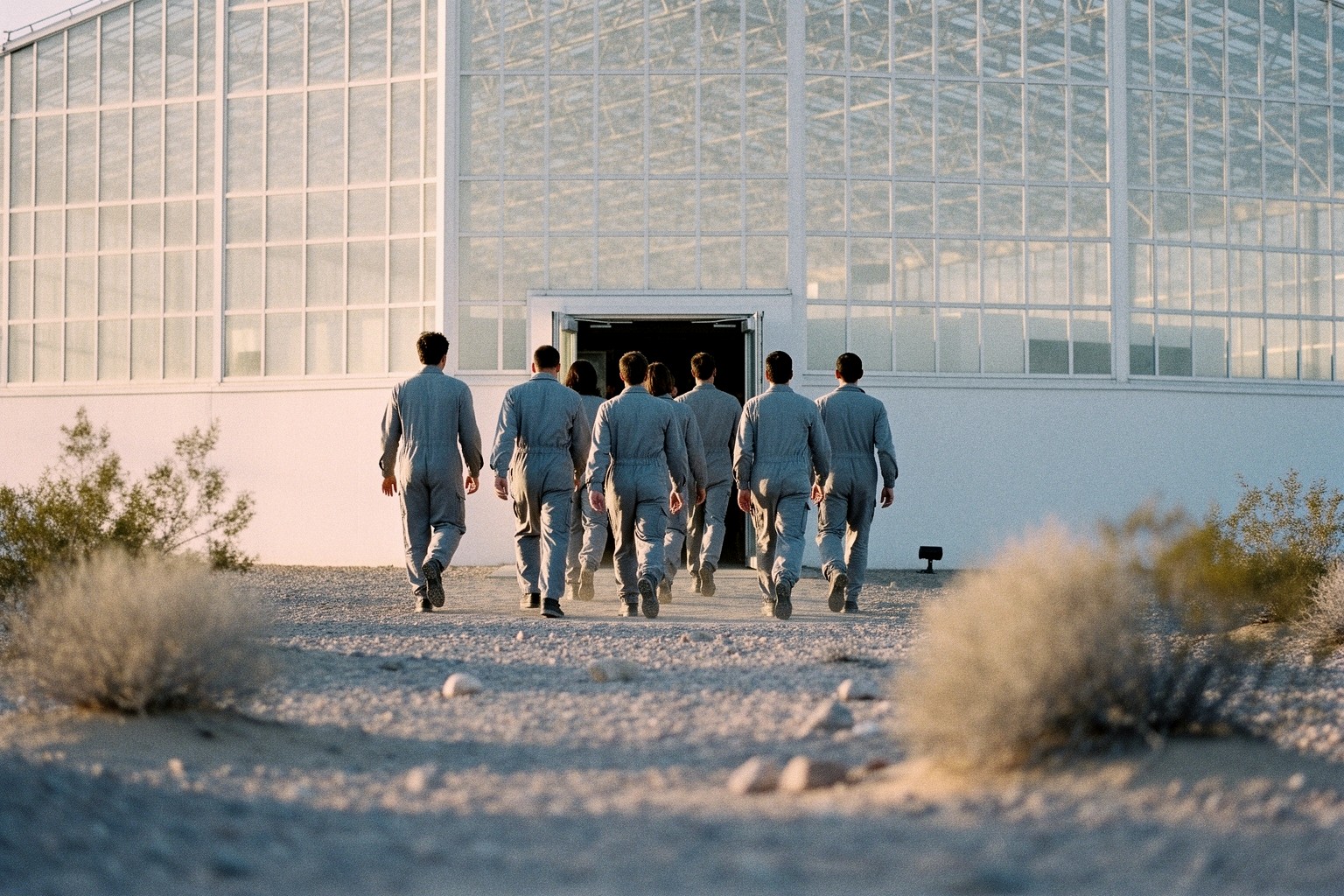
On September 26, 1993, eight people walked out of an airlock in the Arizona desert after two years sealed inside Biosphere 2, a 3.14-acre glass-and-steel enclosure near Oracle. They had gone in on the same date in 1991 to show that humans could live inside a closed, self-supporting world.
Inside were a small rainforest, a coral-reef ocean, a desert, a marsh and a half-acre farm. The crew grew nearly all their own food: bananas, sweet potatoes, beets, peanuts, rice. For much of the first year they were hungry, and they lost a lot of weight.
The air was the bigger problem. Oxygen fell steadily from the normal 20.9 percent toward about 14.5 percent, thin enough to leave the crew tired and short of sleep. Microbes in the rich soil were consuming it, and exposed concrete was soaking up carbon dioxide that should have fed the plants.
In January 1993, managers pumped in oxygen from outside, breaking the very seal the experiment existed to test.
The crew still served out the full two years. Biosphere 2 did not leave proof of a self-sustaining world. It left a detailed record of how a closed one starts to suffocate.
Checked against: Contemporary newspaper and magazine reporting; peer-reviewed papers on Biosphere 2's atmosphere and carbon cycle; histories of the project; University of Arizona institutional records
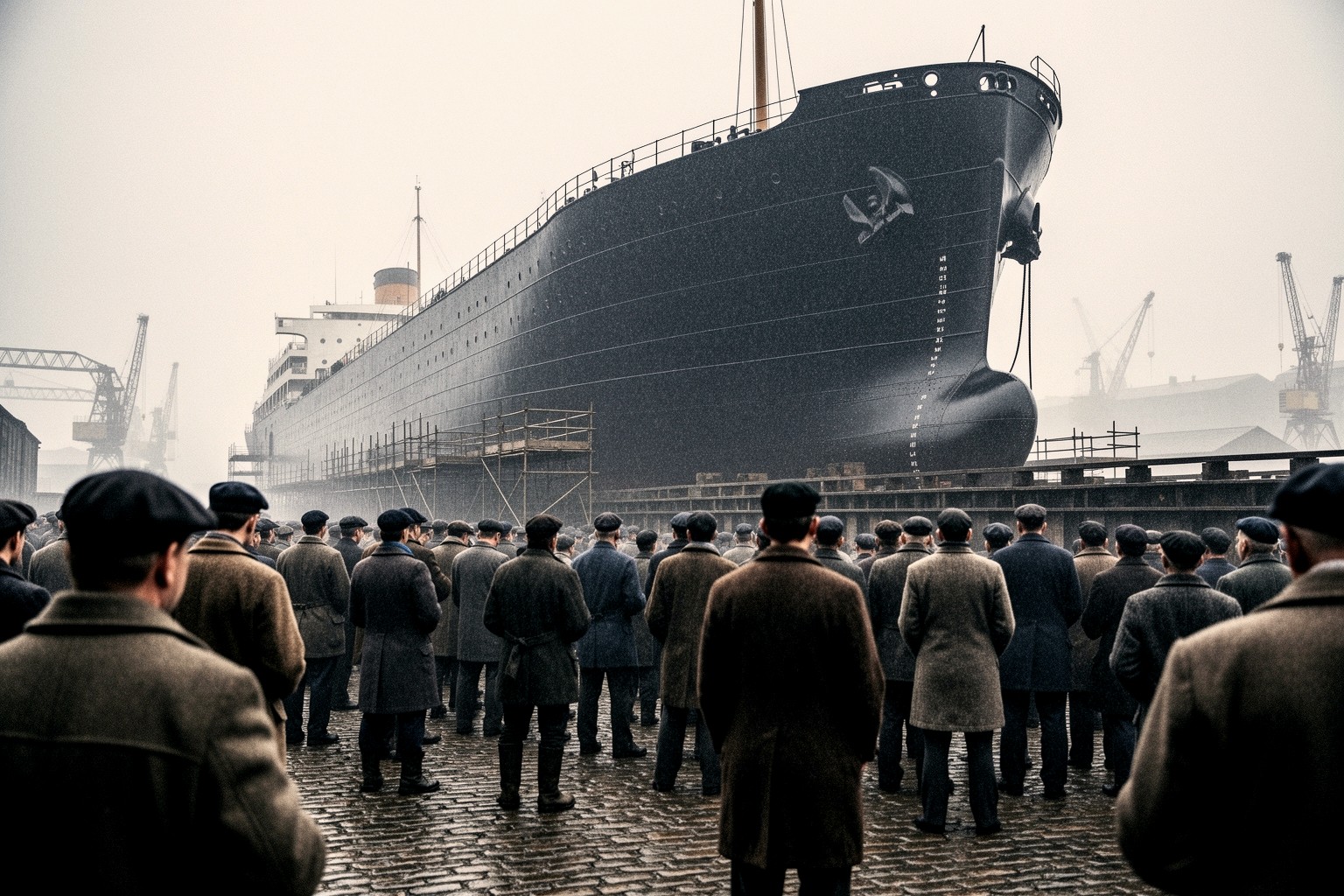
On September 26, 1934, the hull known only as Number 534 slid down a slipway at John Brown's shipyard in Clydebank and into the River Clyde. Queen Mary named the ship after herself. It was the first time a Cunard liner had been launched by a reigning monarch's consort.
Getting there had taken far longer than planned. Work began in December 1930. A year later, with the Depression gutting transatlantic trade, Cunard ran out of money and stopped. Thousands of men walked out of the yard with no work to return to. The half-built hull stood on the slipway for more than two years, rusting, a steel skeleton the whole town could see from its windows.
In 1934 the British government agreed to lend Cunard the money to finish the ship and build a sister. Riveters went back to the yard that April. Men who had been idle since 1931 were hammering again.
The loan came with a condition: Cunard had to merge with its great rival, White Star Line, the company that had built the Titanic.
So the hull that slid into the Clyde that afternoon belonged to a new firm, Cunard-White Star. White Star's own name was soon dropped from the company altogether.
Checked against: Cunard company histories; John Brown & Company shipyard records; contemporary British newspaper reports of the launch; maritime history references on the North Atlantic Shipping Act 1934