She wrote about birds, and the chemical industry answered
Illustration generated by AI for The Day Vault.
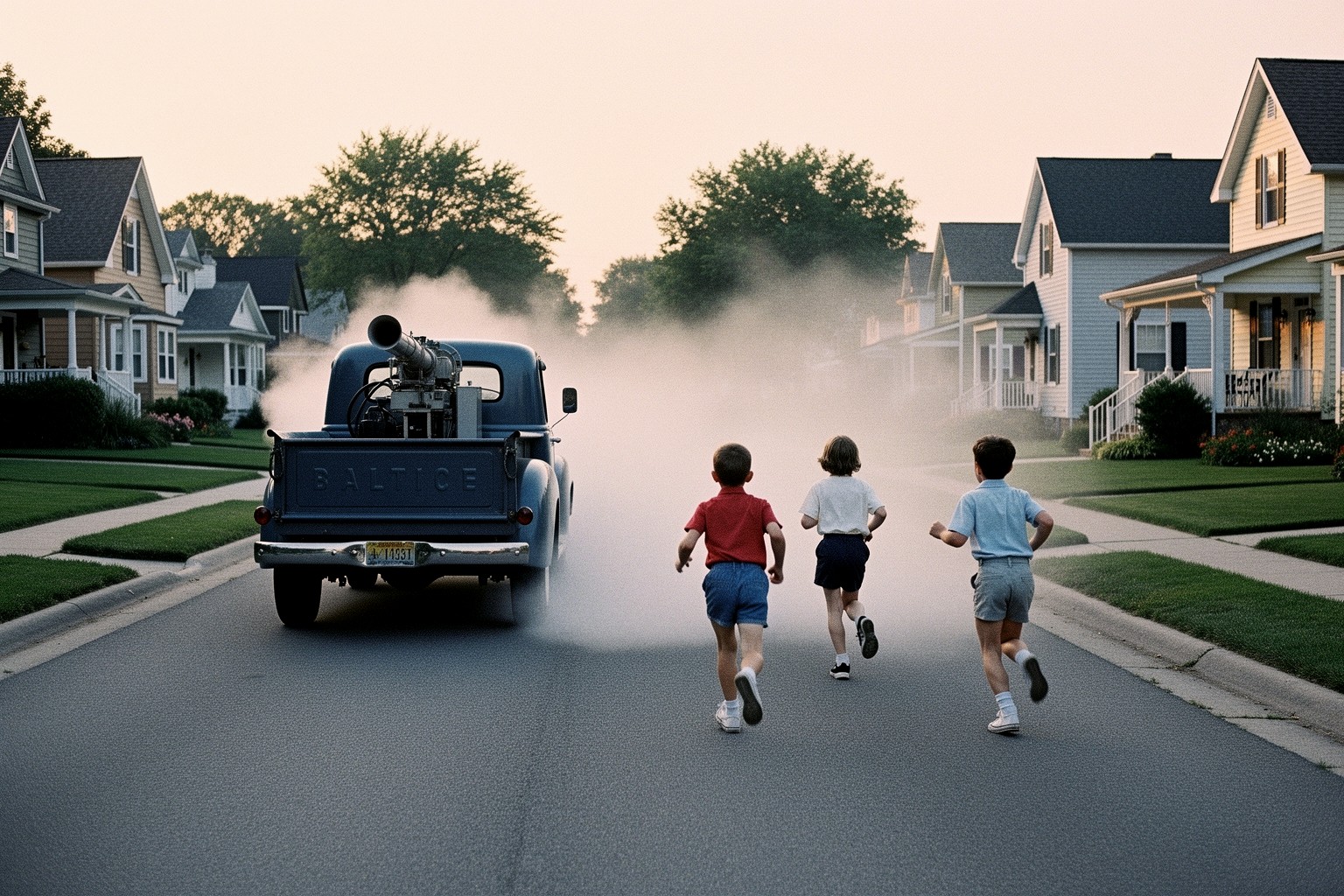
On September 27, 1962, Houghton Mifflin published Rachel Carson's Silent Spring. It argued that synthetic pesticides, DDT above all, were poisoning birds, fish and the food chain that led back to people.
Carson was a marine biologist who had spent years at the U.S. Fish and Wildlife Service. She built her case from published research and long correspondence with scientists. The New Yorker had already run parts of the book that summer, so the argument arrived in bookshops with an audience waiting.
The response was loud. Velsicol, a pesticide maker, threatened legal action against the publisher. Industry spokesmen called her an alarmist. The book sold anyway. In 1963 President Kennedy's Science Advisory Committee issued a report that largely supported her, and she testified before a Senate subcommittee.
She was dying the whole time. Carson had breast cancer while she wrote the book and while she defended it, and she kept the illness private.
She died in April 1964. The new Environmental Protection Agency banned most uses of DDT in the United States in 1972, eight years after her death.
Checked against: Publisher records and contemporary book reviews; biographies of Carson; the 1963 President's Science Advisory Committee report on pesticides; Senate hearing records; EPA historical records on the 1972 DDT decision.
On 27 September 1825, the Stockton and Darlington Railway opened in north-east England. It was the world's first public railway to use steam locomotives, and the opening day was built to prove it.
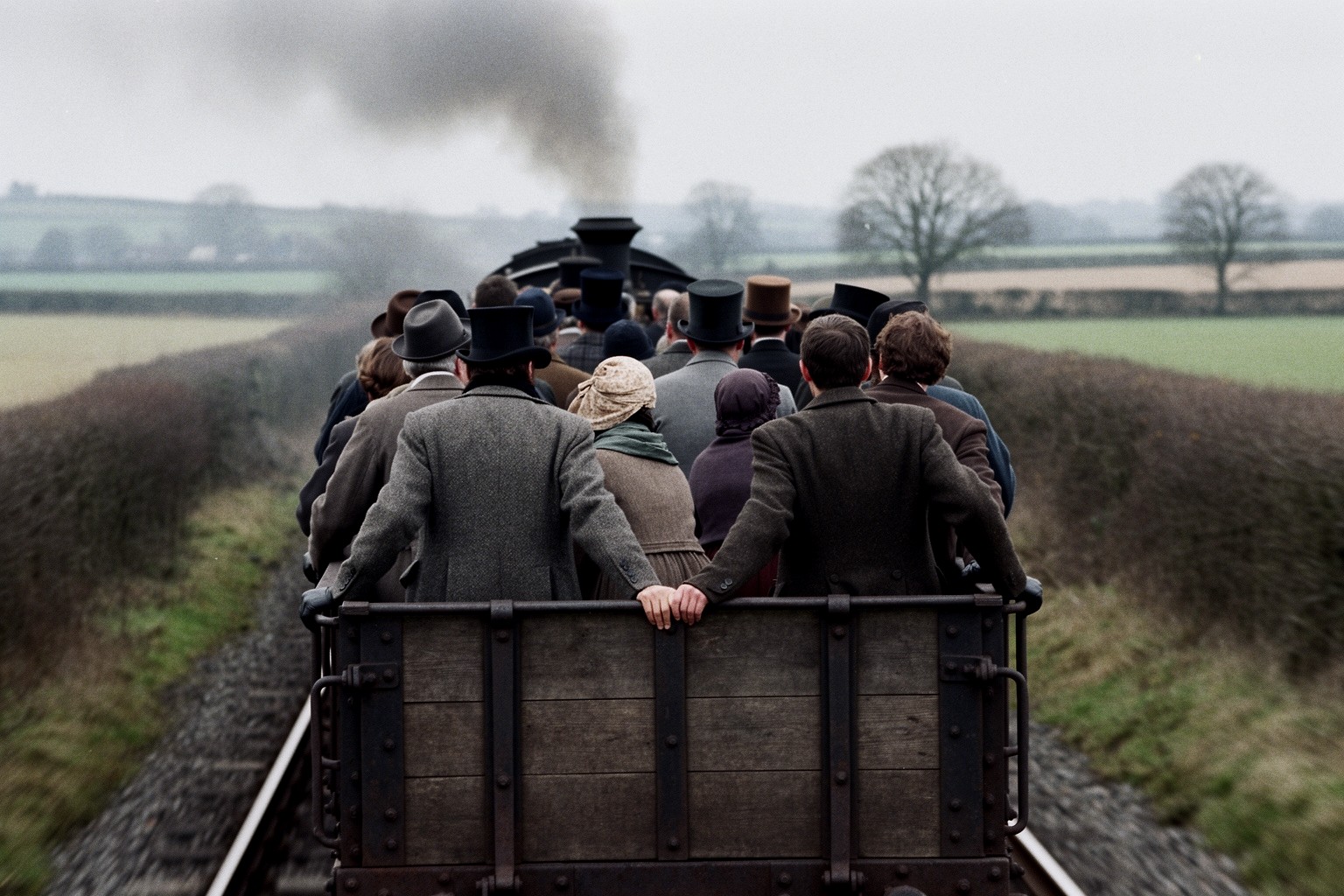
George Stephenson drove the engine, Locomotion No. 1, at the head of a long train of wagons. Some carried coal and flour. Many more carried people, who climbed onto open trucks or simply hung on wherever there was room. A rider on horseback carrying a flag led the way at the start. Crowds lined the track to watch the train pass Darlington and roll on to the quays at Stockton.
The line had been built for coal. Collieries inland needed a cheaper way to move it to the river Tees than carts on rutted roads, and the railway delivered that from its first week.
But on an ordinary day after the opening, the scene looked very different. Early locomotives broke down often, horses hauled much of the coal, and passengers rode in horse-drawn coaches that private operators ran on the company's rails.
Full steam haulage on the line came only in the 1830s. By then the Liverpool and Manchester Railway had opened in 1830, steam-hauled from its first day, and the template for the railway age was set further south.
Checked against: Company records of the Stockton and Darlington Railway; contemporary regional newspaper reports; standard histories of British railways; National Railway Museum collections
Germany voted out the chancellor who had reunited it
Illustration generated by AI for The Day Vault.
On September 27, 1998, German voters ended Helmut Kohl's sixteen years as chancellor. No post-war chancellor had served longer. He had steered reunification in 1990 and helped push the euro into being.
His challenger, Gerhard Schröder of the Social Democrats, ran on jobs. Unemployment was high, and highest in the east. In 1990 Kohl had promised easterners "blooming landscapes." By 1998, many of them had seen factories close instead.
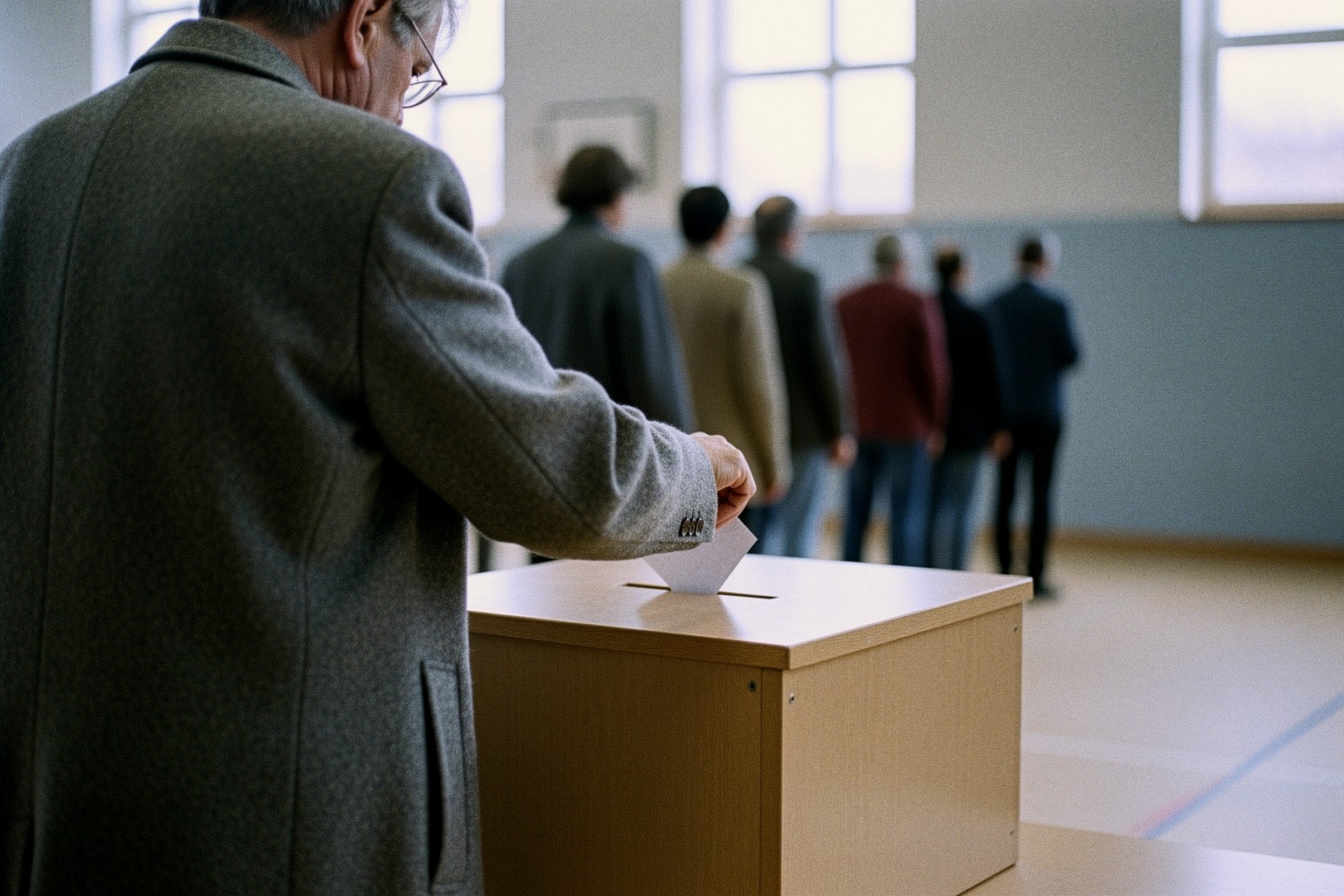
Until then, chancellors had changed through coalition switches, resignations or a parliamentary vote. This was the first time West or reunited Germany's voters had thrown out a sitting government at the ballot box. Schröder formed a coalition with the Greens, putting them in a federal government for the first time.
The Greens had grown out of the peace movement, and their best-known figure, Joschka Fischer, became foreign minister.
Within months he was arguing for German warplanes over Yugoslavia, as Germany joined NATO's 1999 air campaign in its first combat mission since 1945.
Checked against: Official German federal election results; contemporary newspaper and broadcast coverage of the 1998 election; standard political histories of the Federal Republic; biographies of the chancellors involved.
On September 27, 1777, the Continental Congress met in the courthouse at Lancaster, Pennsylvania. For that day, a market town of farmers and gunsmiths was the seat of the American government.
The delegates had not planned the trip. British troops under General William Howe had been closing on Philadelphia all month. When a warning reached Congress in the night of September 18, members left the city in a hurry, on horseback and by carriage, heading west. Howe's army marched into Philadelphia on September 26.
Lancaster looked like a sensible refuge. It was one of the largest inland towns in the colonies, surrounded by rich farmland and already serving as a supply depot for the Continental Army. The courthouse stood on the central square, and the delegates gathered there to carry on.
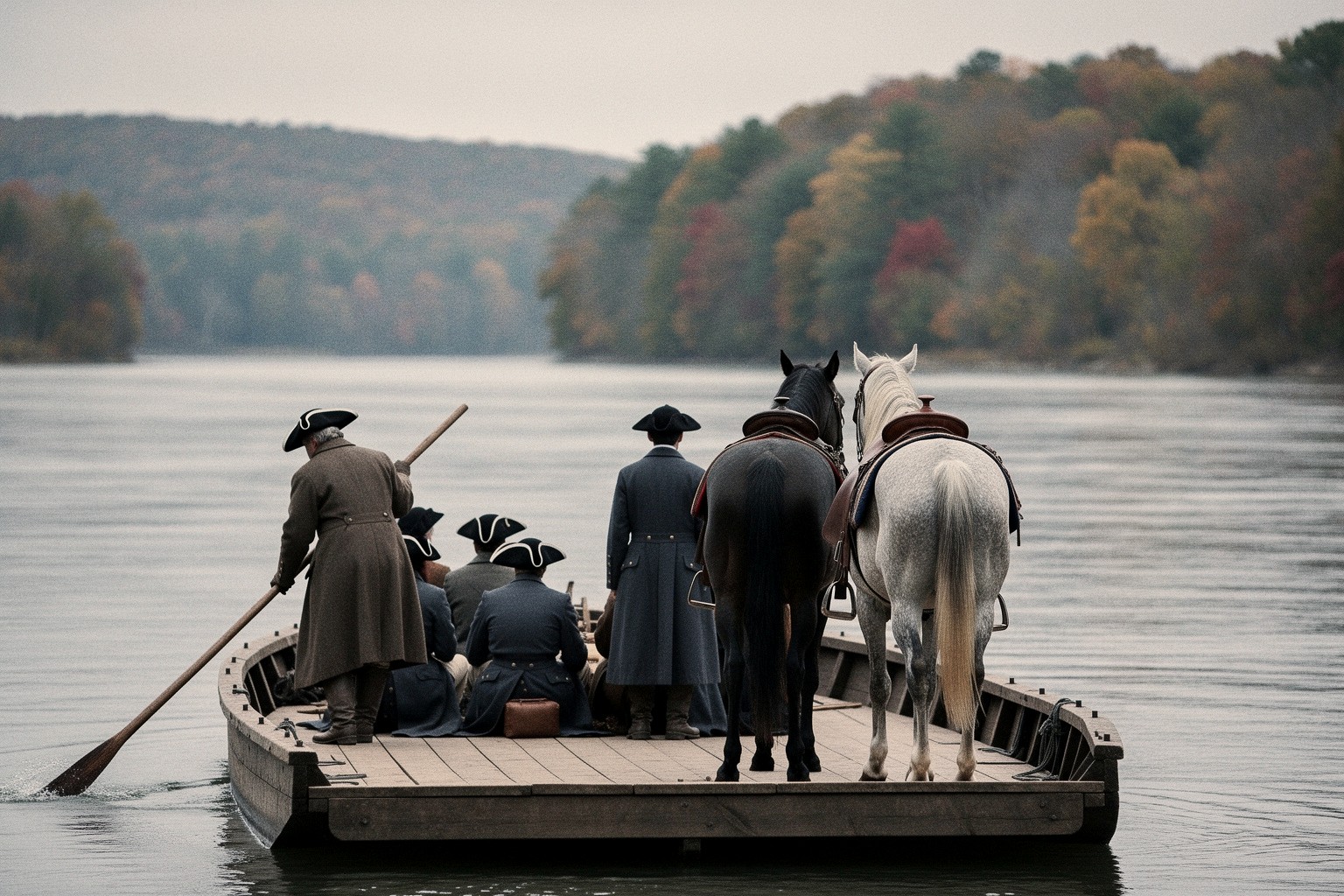
Then they decided Lancaster was still too close. After a single session, Congress voted to move again, to York, so that the broad Susquehanna River would lie between the government and the British.
They crossed and reconvened in York on September 30. Congress stayed there for nine months, and it was in York, behind the river, that it adopted the Articles of Confederation, the country's first constitution, in November 1777.
Checked against: Journals of the Continental Congress; letters of the delegates to Congress; Pennsylvania state and county historical society records; standard histories of the 1777 Philadelphia campaign
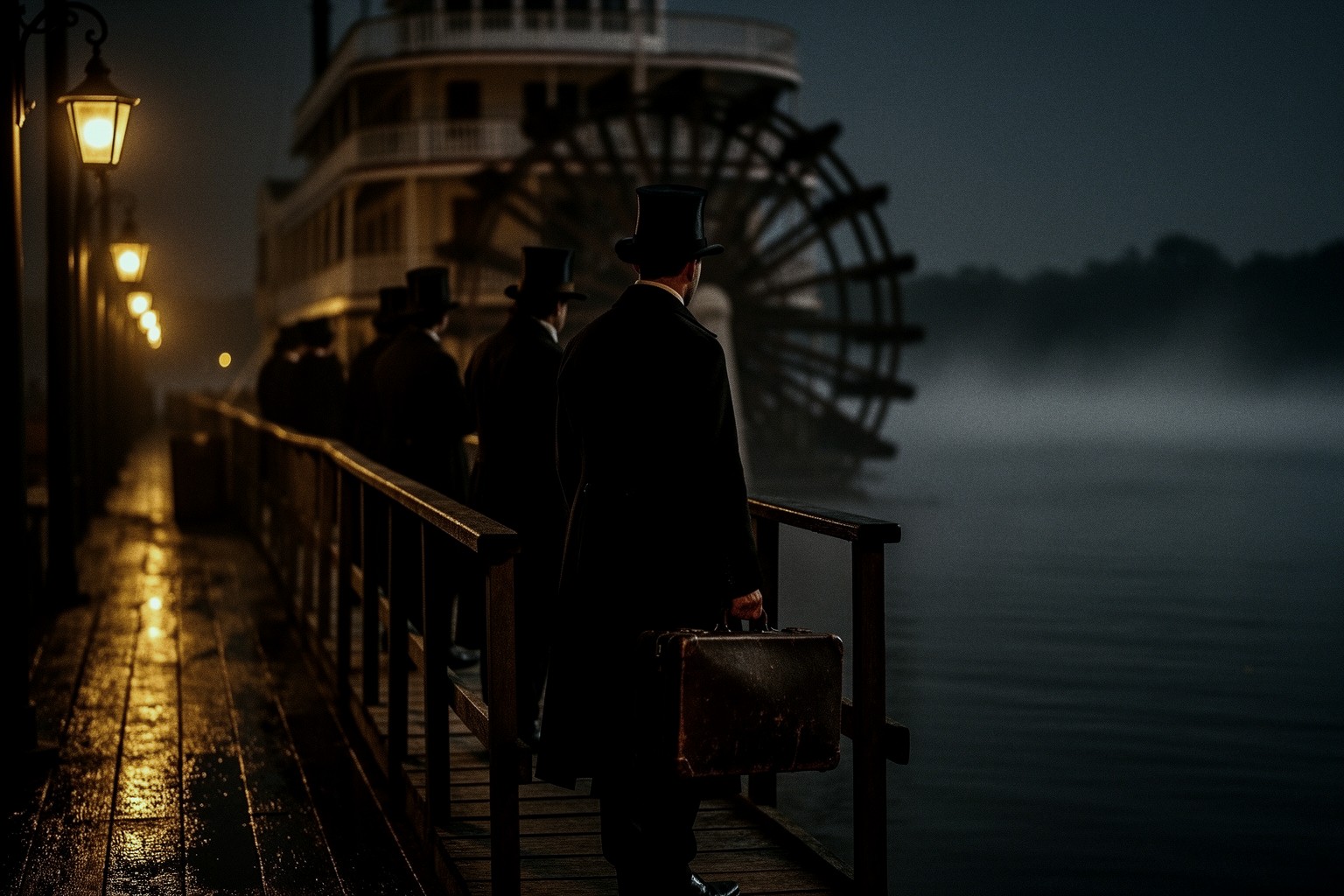
On September 27, 1849, Edgar Allan Poe left Richmond, Virginia, on a steamboat bound for Baltimore. He was forty, newly engaged, and planning to travel north to bring his aunt back south to live with him.
Then the record goes blank. For nearly a week, no reliable account places him anywhere. No letters, no hotel register, no friend who later said, with confidence, that he had seen him.
On October 3, a newspaper typesetter found him at a Baltimore tavern being used as a polling place on election day. Poe was barely conscious and wearing cheap, ill-fitting clothes that were not his own. He was carried to a hospital, drifted in and out of delirium for four days, and died on October 7 without ever explaining what had happened to him.
Eight years earlier, Poe had published the story that invented modern detective fiction, in which a calm, clever man reconstructs a crime from the smallest overlooked clues.
His own disappearance left almost none. Historians still argue over drink, illness, and the election-day gangs said to have dragged strangers from polling place to polling place, voting them again and again.
Checked against: Major Poe biographies; letters of the attending physician at Washington College Hospital; contemporary Baltimore and Richmond newspaper reports; archives of the Edgar Allan Poe Society of Baltimore
The pope approved the Jesuits, then capped them at sixty
Illustration generated by AI for The Day Vault.
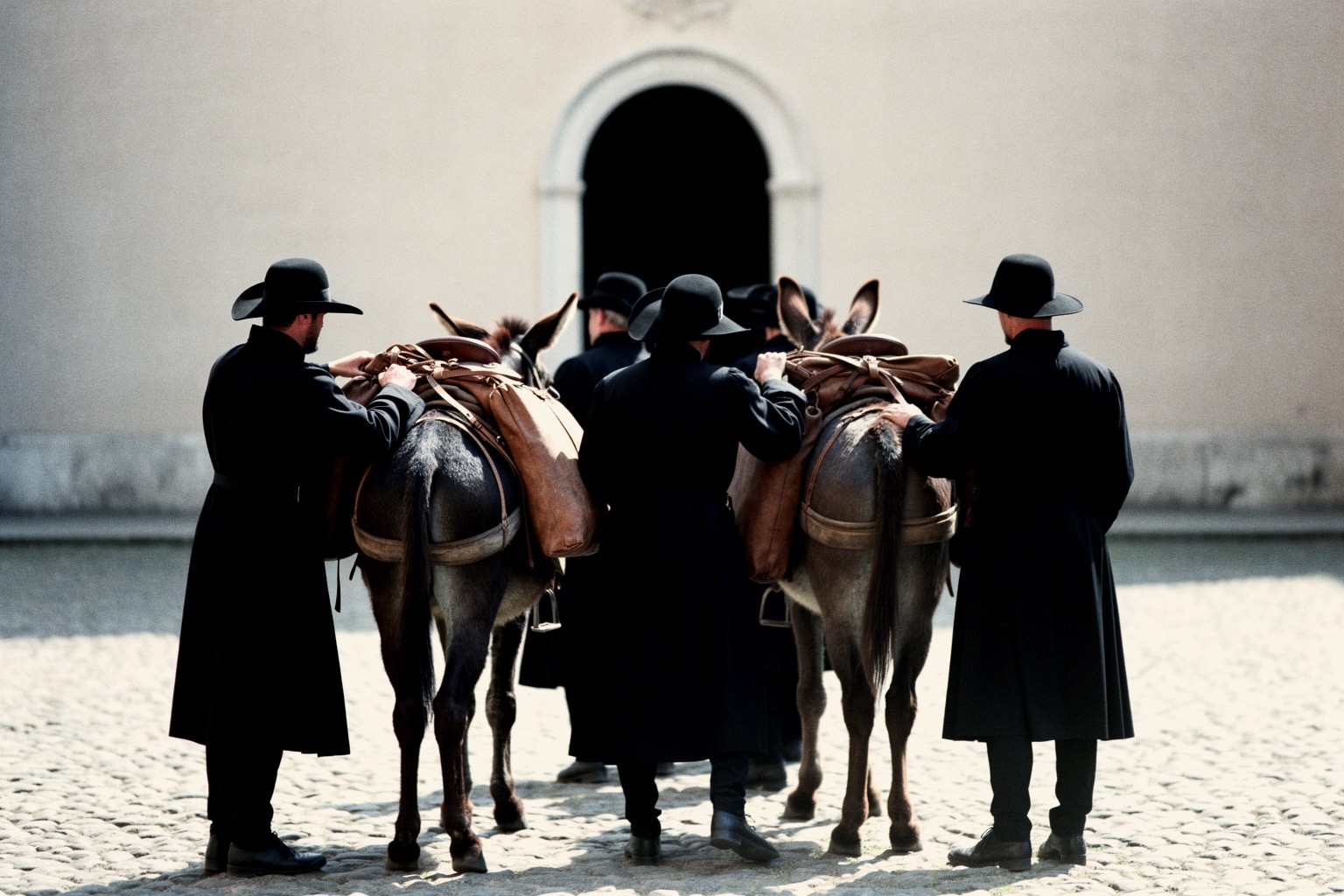
On September 27, 1540, Pope Paul III signed the bull Regimini militantis Ecclesiae. It formally approved a new religious order: the Society of Jesus.
Its founders were a small band of companions led by Ignatius of Loyola, a Basque former soldier who had gathered fellow students at the University of Paris. In 1534 they took vows together in a chapel on Montmartre, planning to go to Jerusalem. When war in the Mediterranean kept them from sailing, they offered themselves to the pope instead.
Approval was not a given. Several cardinals in Rome felt the church already had too many orders. The companions' plan also looked odd. They would keep no fixed choir prayers, wear no distinctive habit, and send members wherever they were needed.
So the bull that created the Society also put a ceiling on it: no more than sixty professed members.
The limit lasted less than four years. Paul III lifted it in 1544. By the time Ignatius died in 1556, the order counted roughly a thousand men, working from Brazil to Japan.
Checked against: The text of the 1540 papal bull and its 1544 successor; standard scholarly histories of the Society of Jesus; biographies of its founder drawing on Jesuit archives
The censor left on Thursday. The musical opened on Friday.
Illustration generated by AI for The Day Vault.
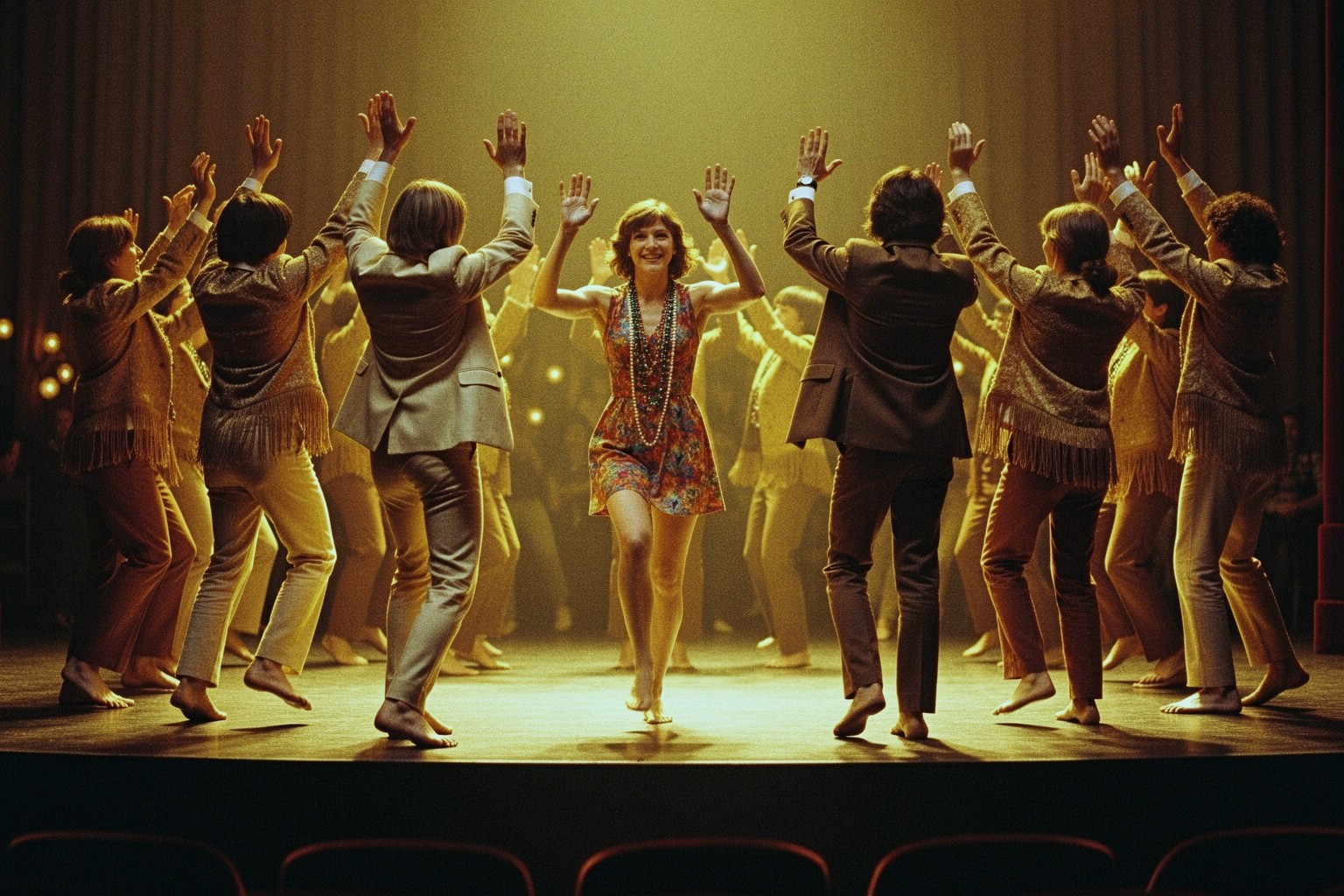
On 27 September 1968, a rock musical called Hair opened at the Shaftesbury Theatre in London. Its producers had been waiting for one date. The day before, the Theatres Act 1968 came into force and ended the Lord Chamberlain's power to license plays.
For more than two centuries, every script staged in Britain had passed through his office first. His readers struck out swearing, blasphemy, sex and jokes about the royal family. A show with drug references, an anti-war message, a burning draft card and a brief nude scene would never have reached a British stage.
Without a censor, Hair played to full houses. At the end of each night the cast called the audience up to dance, and Londoners in suits and evening dresses climbed onto the stage. The show the old system would have banned became a West End fixture and ran for years.
No official was left who could close it, but in the summer of 1973 part of the theatre's ceiling came down and closed it anyway.
After nearly five years, the run that outlasted the censor's office ended under fallen plaster.
Checked against: UK Parliament records of the Theatres Act 1968; British Library holdings of Lord Chamberlain's play licensing files; London theatre histories and contemporary newspaper reviews.
He joked the show would run forever, then left within three years
Illustration generated by AI for The Day Vault.
On September 27, 1954, NBC carried a late-night program called Tonight! to the whole country for the first time. It had already run for a year as a local New York show. Now it went national, broadcast live from a Manhattan theatre.
The host was Steve Allen, a comedian and songwriter who sat at a piano between bits. The format he used that first season is still the template: a monologue, a desk, a band, guests on a couch, and stunts that spilled out of the studio and onto the street outside.
On the first night Allen joked to viewers that the program would go on forever. It was a throwaway line about how long the show felt. Few people had stayed up for television that late, and network schedules at the time made no assumption that anyone would.
The man who promised forever did not stay long. NBC gave Allen a Sunday prime-time show opposite Ed Sullivan. He handed some Tonight nights to another host, and he left the late show entirely in January 1957.
The program outlived its first host by decades. Under a string of successors it is still on the air, and the joke has turned out to be its most accurate prediction.
Checked against: NBC network archives and program logs; television histories of the late-night format; Steve Allen's own memoirs; contemporary newspaper television listings and reviews from September 1954
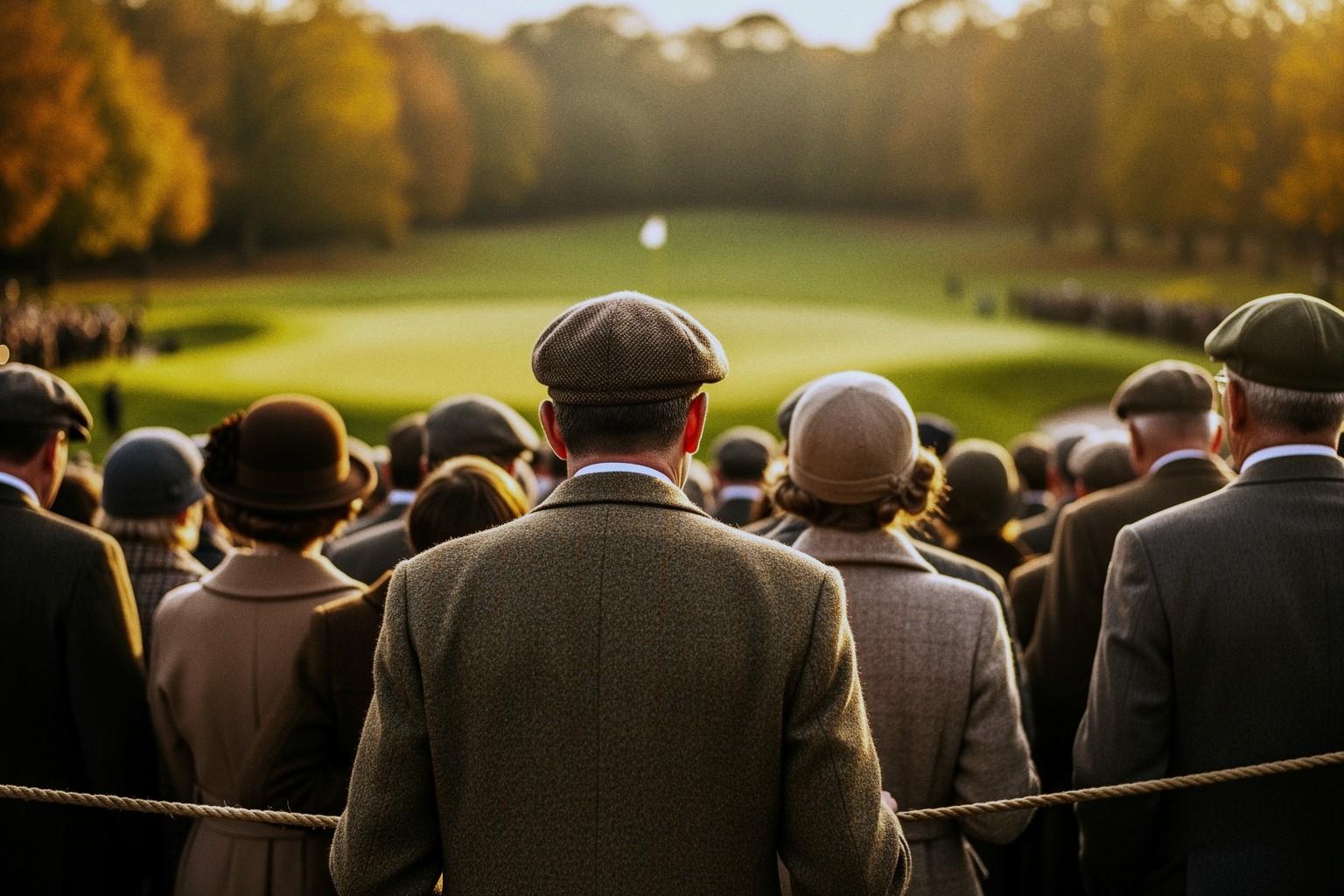
On September 27, 1930, Bobby Jones beat Eugene Homans 8 and 7 in the final of the U.S. Amateur at Merion, outside Philadelphia. It was the fourth major title he had won that year.
Earlier that summer he had taken the British Amateur at St Andrews, the Open Championship at Hoylake and the U.S. Open at Interlachen. No golfer had won all four in a single season. No golfer has since, partly because the two amateur events no longer count as majors.
Jones was 28, and golf paid him nothing. He was an amateur with a law degree and a practice in Atlanta. Newspapers called the feat the Grand Slam, borrowing a term from the card table. Crowds that followed him around Merion had to be held back by ropes and marshals.
Within two months, he announced he was retiring from competitive golf.
He went on to make instructional films for money, help design Augusta National and found the Masters, a tournament he played in but never won. The best season the sport had seen was his last.
Checked against: Contemporary newspaper reports of the 1930 U.S. Amateur; USGA and R&A championship records; published biographies of Bobby Jones; Augusta National and Masters tournament histories.
The most famous equation in physics wasn't in the paper
Illustration generated by AI for The Day Vault.
On September 27, 1905, the journal Annalen der Physik received a three-page paper from a 26-year-old clerk at the Swiss patent office in Bern. It was the fourth major paper Albert Einstein had sent in that year.
Its question was modest: does a body's inertia depend on how much energy it contains? Building on the relativity paper he had submitted that June, he argued that it does. A body that gives off energy as light loses a small amount of mass.
He had no university post and no laboratory. He suggested the idea might one day be tested with radium salts, which seemed to release energy without running down.
The equation the paper is famous for does not appear in it. He called energy L and the speed of light V, and stated the result in words: the body's mass falls by L divided by V squared.
The tidy E = mc² took years to settle into print. The first clear laboratory check came in 1932, when Cockcroft and Walton split lithium nuclei and found the missing mass had become energy.
Checked against: Annalen der Physik volume 18 (1905) with its recorded receipt date; the Collected Papers of Albert Einstein (Princeton University Press); standard histories of special relativity; Proceedings of the Royal Society reports on Cockcroft and Walton's 1932 experiments.
The car that defined the assembly line was built without one
Illustration generated by AI for The Day Vault.
On September 27, 1908, workers at Ford's Piquette Avenue plant in Detroit finished the first production Model T. It was a tall, plain car with a four-cylinder engine and high ground clearance, built to survive the rutted farm roads that wrecked lighter machines.
Ford announced it to the public a few days later. Orders came in faster than the narrow brick factory could fill them, and within a few years the company had moved production to a far larger plant in Highland Park, just north of the city.
The car went on to sell more than fifteen million units before production ended in 1927. Its name became shorthand for mass production itself: interchangeable parts, identical cars, and workers who stayed in one spot while the work came to them.
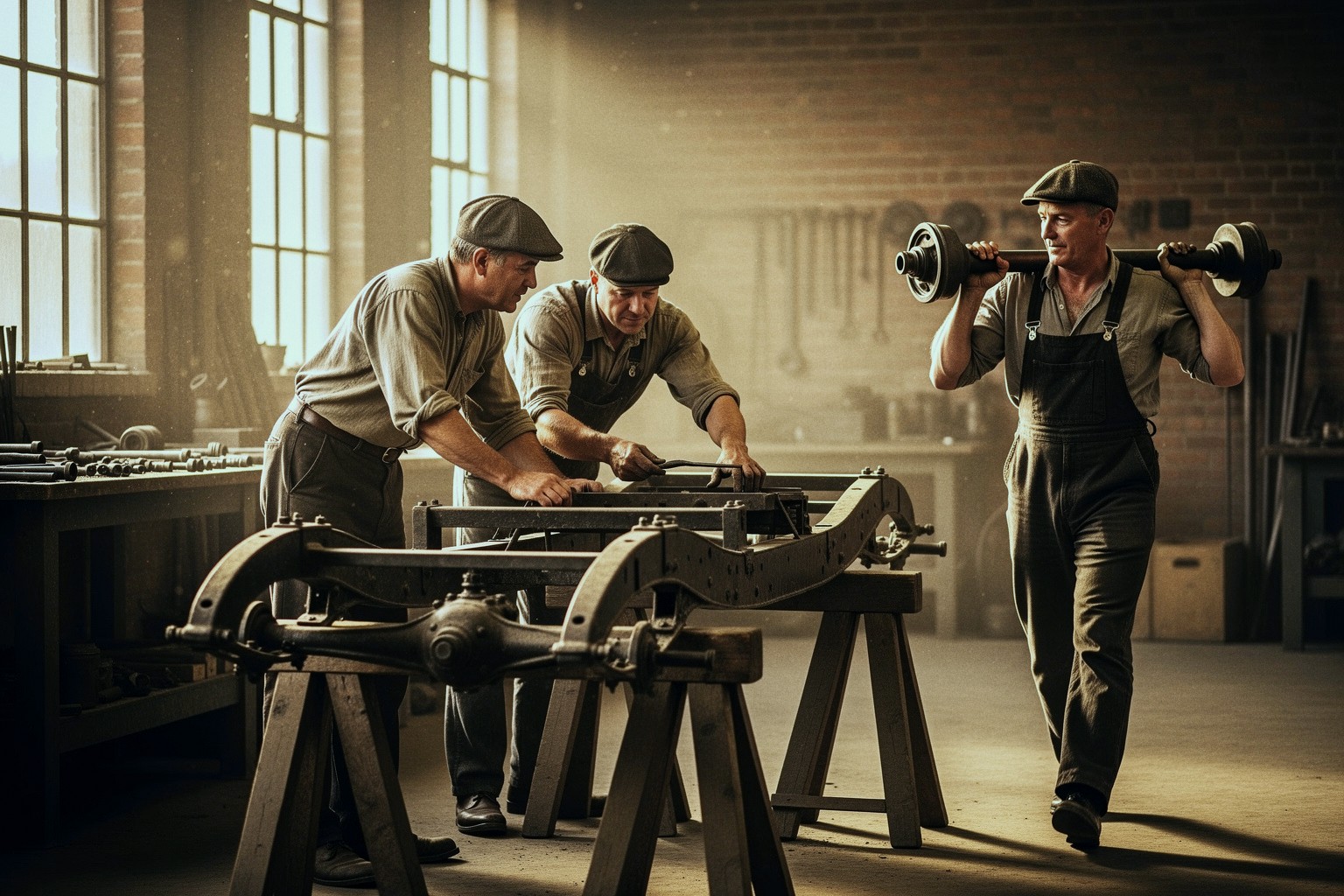
But the first Model Ts were built nothing like that. Each chassis sat still on a stand, and small teams of men walked from car to car, carrying their parts and tools with them.
The moving assembly line arrived five years later, in 1913. Once the chassis travelled past the workers instead, the time to assemble one fell from more than twelve hours to about ninety minutes.
Checked against: Corporate archives of the manufacturer, museum collections on early automobile production, standard histories of American industrialisation and biographies of the company's founder