On September 29, 1982, a 12-year-old girl in Elk Grove Village, Illinois, woke with a cold, took an Extra-Strength Tylenol capsule, and died within hours. Her name was Mary Kellerman.
That same day, in nearby Arlington Heights, a postal worker named Adam Janus collapsed after taking the same medicine. Relatives gathered at his home that night. His brother and sister-in-law took capsules from the same bottle and died too. Within days, seven people across the Chicago area were dead. The capsules held potassium cyanide.
Police cars drove through neighborhoods with loudspeakers, telling residents not to take Tylenol. Investigators looked first at the factory. Johnson & Johnson pulled about 31 million bottles from shelves across the country.
But the poison had not gone in at the factory. Someone had bought bottles, laced them one at a time, and put them back on store shelves for strangers to buy. No one was ever charged with the murders.
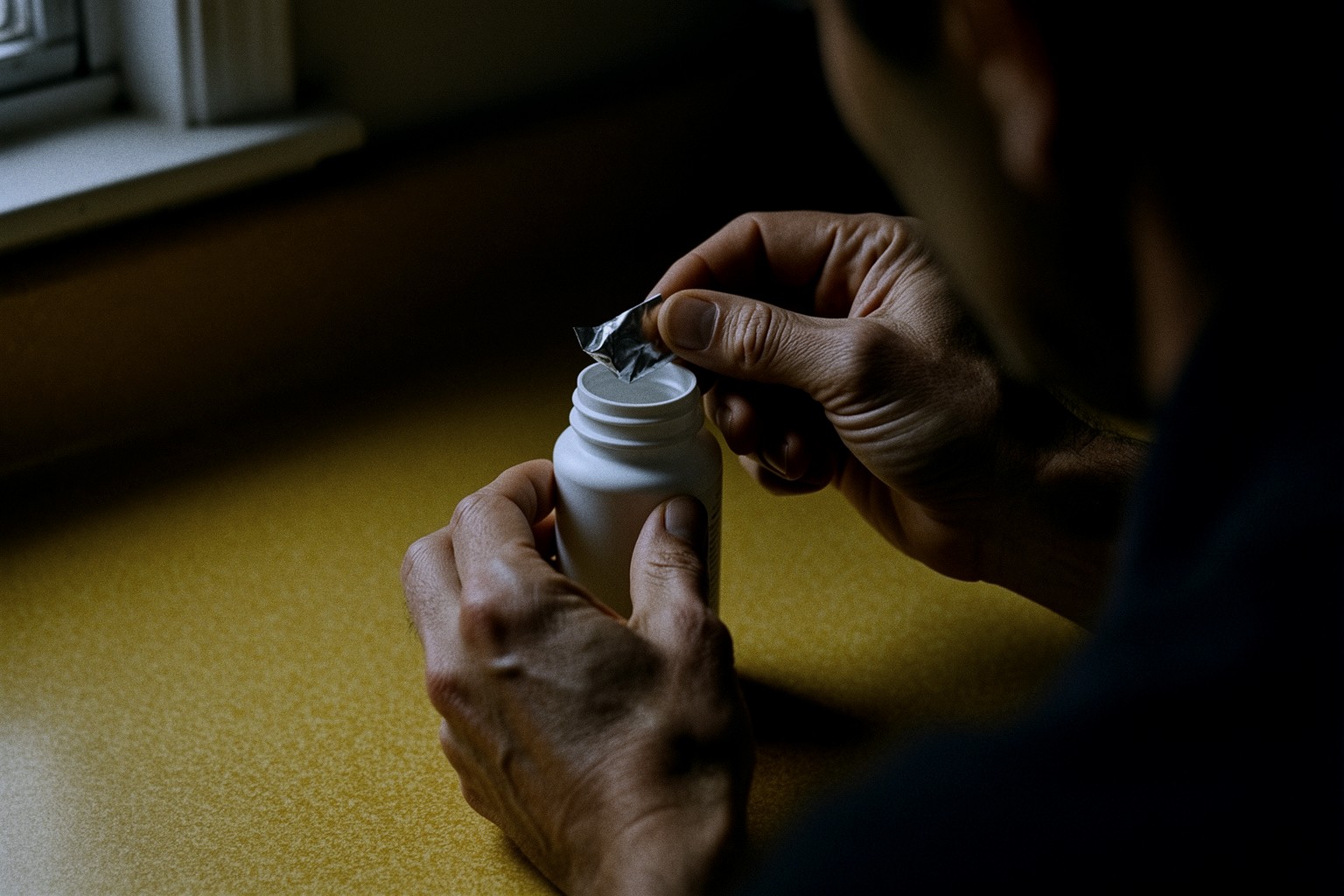
Before that autumn, most medicine bottles could be opened and closed again without a trace. Within weeks the FDA required tamper-resistant packaging on over-the-counter drugs, and in 1983 Congress made tampering with consumer products a federal crime. The foil seal under the cap dates from those seven deaths.
Checked against: Contemporary Chicago newspaper and wire-service coverage; FDA tamper-resistant packaging regulations of November 1982; text of the Federal Anti-Tampering Act of 1983; congressional hearing records; corporate histories of the recall.
On September 29, 1957, a tank of radioactive waste exploded at the Mayak plant in the southern Urals. Its cooling system had failed. Heat built inside until the contents blew, throwing off the heavy concrete lid and sending a cloud of contamination drifting northeast across farmland.
It was a chemical blast, not a nuclear one, but the fallout was real. Villages in its path were emptied. Livestock were slaughtered, crops destroyed, houses pulled down. Families were moved out, often without being told why.
Nothing appeared in Soviet newspapers. The West learned of it in pieces, most publicly in 1976, when the exiled biologist Zhores Medvedev described it in New Scientist. Moscow did not formally acknowledge the accident until 1989. It now ranks as the third most serious nuclear accident on record, behind Chernobyl and Fukushima.
Yet the world knows it as the Kyshtym disaster, after a town where it did not happen.
The plant's real home was a closed city, then called Chelyabinsk-40, which appeared on no public map. Outsiders reached for the nearest town that officially existed, and the borrowed name has outlasted the secret it was covering for.
Checked against: IAEA event classifications, Soviet and Russian government disclosures from 1989 onward, Zhores Medvedev's published accounts, academic histories of the Soviet nuclear programme
The House said no. Four days later it said yes to more.
Illustration generated by AI for The Day Vault.
On September 29, 2008, the US House of Representatives voted down a $700 billion plan to rescue the American banking system. The count was 228 to 205. Ninety-five Democrats joined 133 Republicans in voting no.
Members had been hearing from home. Calls and emails to Capitol Hill ran heavily against the plan, which many voters saw as a gift to the banks that had caused the crisis. Every House seat was on the ballot in five weeks.
Wall Street watched the vote as it happened. The Dow Jones Industrial Average closed down 777 points that afternoon, its largest single-day point drop to that date. Leaders of both parties had warned this would happen if the bill failed.
Four days later, the House passed the rescue anyway.
To win votes, the Senate attached extended tax breaks and raised federal deposit insurance from $100,000 to $250,000 per account. Treasury's first draft had run to about three pages. The version that passed 263 to 171 on October 3 ran to hundreds, and President George W. Bush signed it that same afternoon.
Checked against: Congressional roll-call records for September 29 and October 3, 2008; contemporary reporting from major newspapers and wire services; historical Dow Jones index data; the text of the Emergency Economic Stabilization Act of 2008.
The Hindenburg Line fell to men in ferry lifebelts
Illustration generated by AI for The Day Vault.
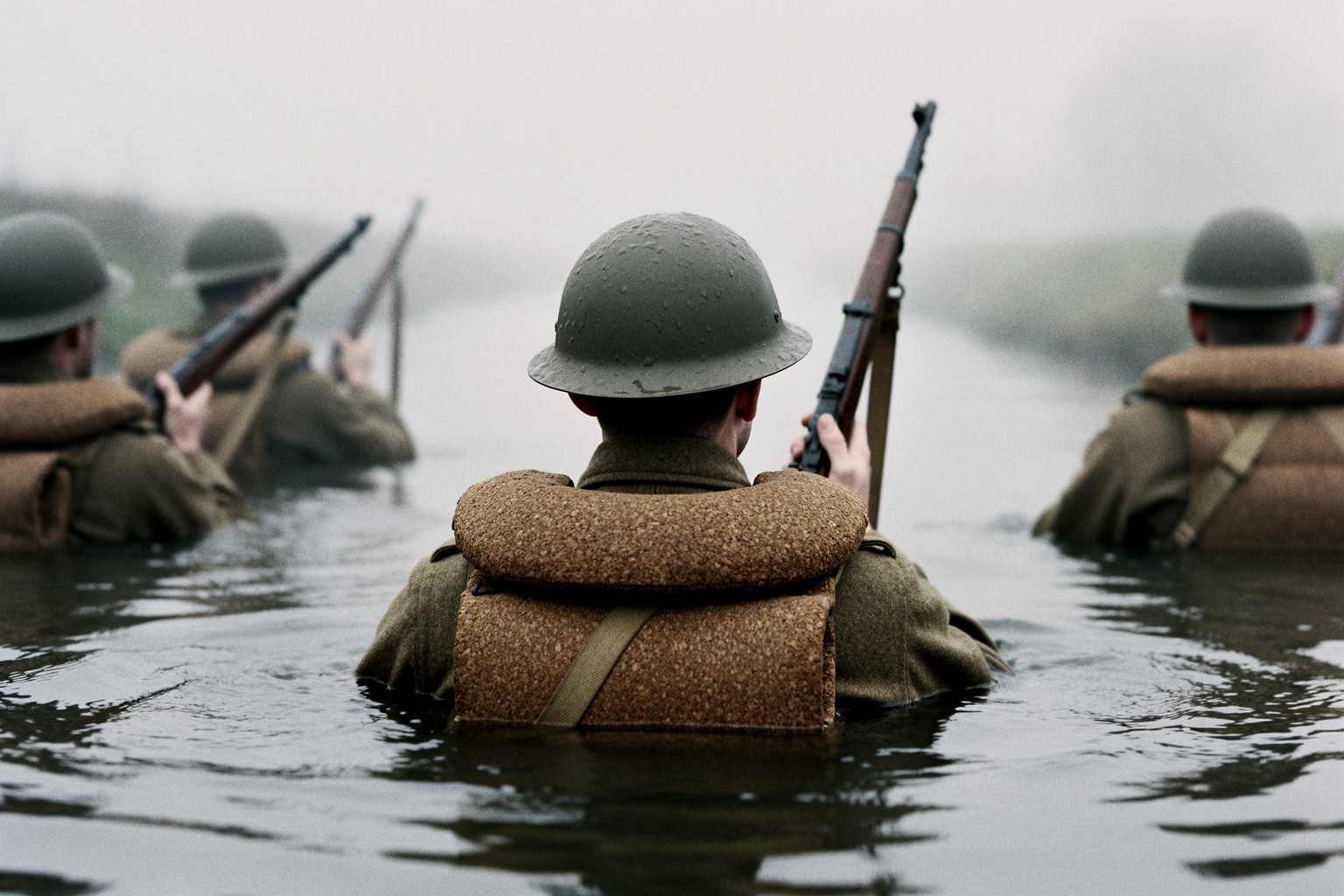
On September 29, 1918, British troops of the 46th Division crossed the St Quentin Canal near Bellenglise, in northern France. The canal formed part of the Hindenburg Line, the fortified belt Germany had built and treated as its strongest position on the Western Front.
The water ran through a deep cutting with steep sides, covered by machine guns. So the attackers borrowed from the cross-Channel ferries. They wore cork lifebelts and carried collapsible boats, rafts and lines. Thick morning fog hid them. Some men swam, some waded through mud, some hauled themselves up the far bank on ropes. A small party rushed the Riqueval bridge and cut the demolition wires before German engineers could blow it.
By nightfall the division had pushed through the line and taken thousands of prisoners. It was one of the most celebrated single days of the British army's war.
That same day, at army headquarters in the Belgian town of Spa, Ludendorff and Hindenburg told the Kaiser's government that Germany could not win and had to seek an armistice.
Within days, Berlin asked President Wilson for terms. The guns on the Western Front stopped six weeks later.
Checked against: British official history of the First World War; 46th Division war diaries and divisional history; Imperial War Museum photographic archive; German government records and memoirs covering the Spa conference of September 29, 1918
On the evening of September 29, 1913, Rudolf Diesel boarded the steamer Dresden at Antwerp for the overnight crossing to Harwich. The inventor of the engine that bears his name was travelling to London on business with two companions.
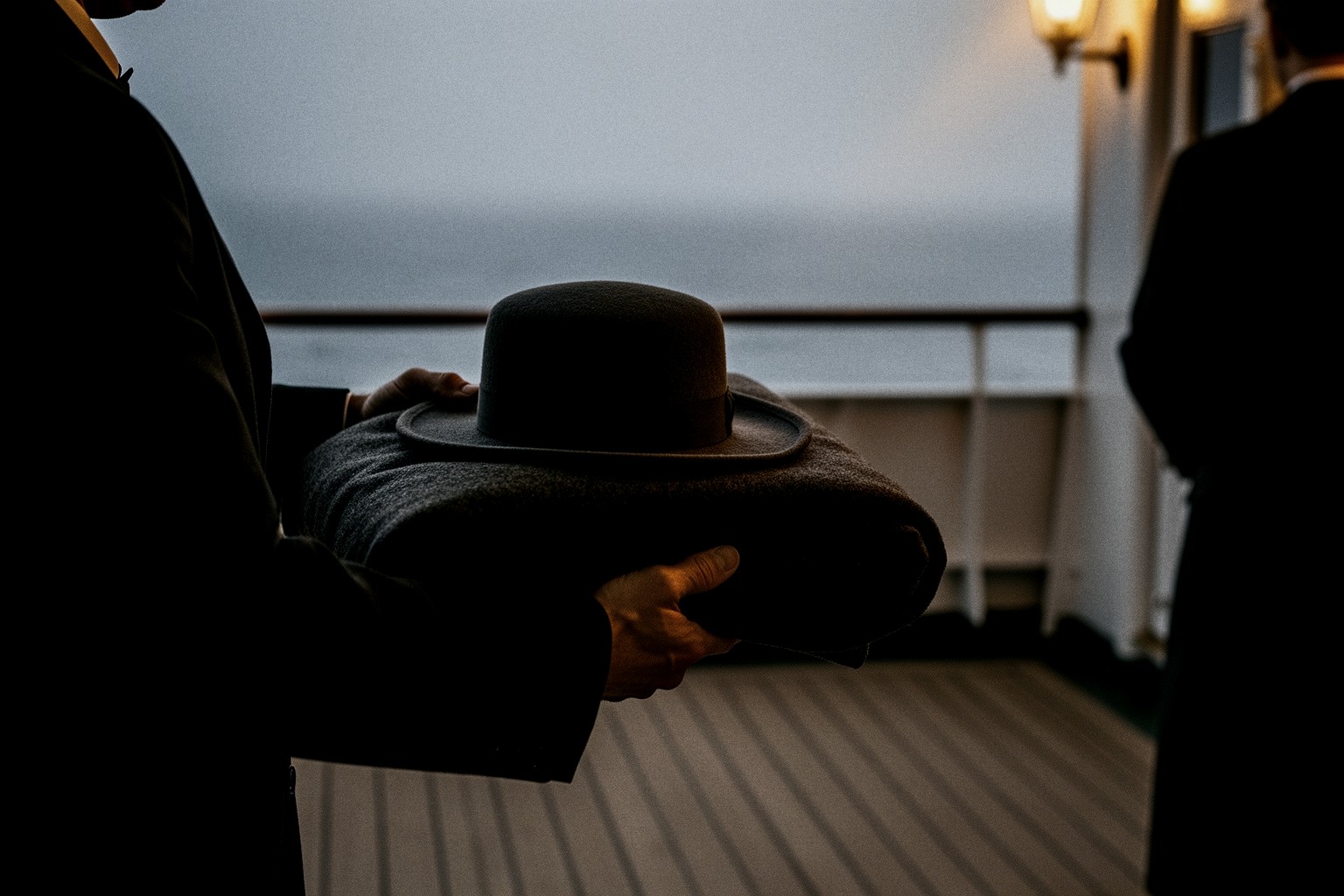
He dined with them, walked the deck, and went to his cabin around ten, asking to be called early in the morning. When the morning came, the cabin was empty. The bed had not been slept in. His nightshirt was laid out on it. His overcoat and hat were found folded beneath the stern railing.
No one saw him go. The sea had been calm. Within days, newspapers offered explanations: money troubles, despair, a foreign agent, a man who knew too much about the engines that navies wanted.
About ten days later, a Dutch crew found a badly decomposed body in the North Sea, took the small belongings from its pockets, and, in rough weather, let the body go back to the water.
Diesel's son Eugen identified the pill case, wallet and spectacle case. There was no grave and no examination. The question of what happened on the Dresden that night is still unanswered.
Checked against: Contemporary British, German and Dutch newspaper reports; biographies of Rudolf Diesel; histories of the Antwerp-Harwich steamer service
The nun found him. The first statement said otherwise.
Illustration generated by AI for The Day Vault.
On the morning of September 29, 1978, Pope John Paul I was found dead in his bed in the Apostolic Palace. He was 65. He had been pope for 33 days, one of the shortest reigns in the Church's history.
Albino Luciani, the son of a migrant labourer from the mountains north of Venice, had won crowds with his smile and his plain sermons. He refused a coronation and chose a simpler inauguration Mass. Many Catholics read it as a sign of a humbler papacy to come.
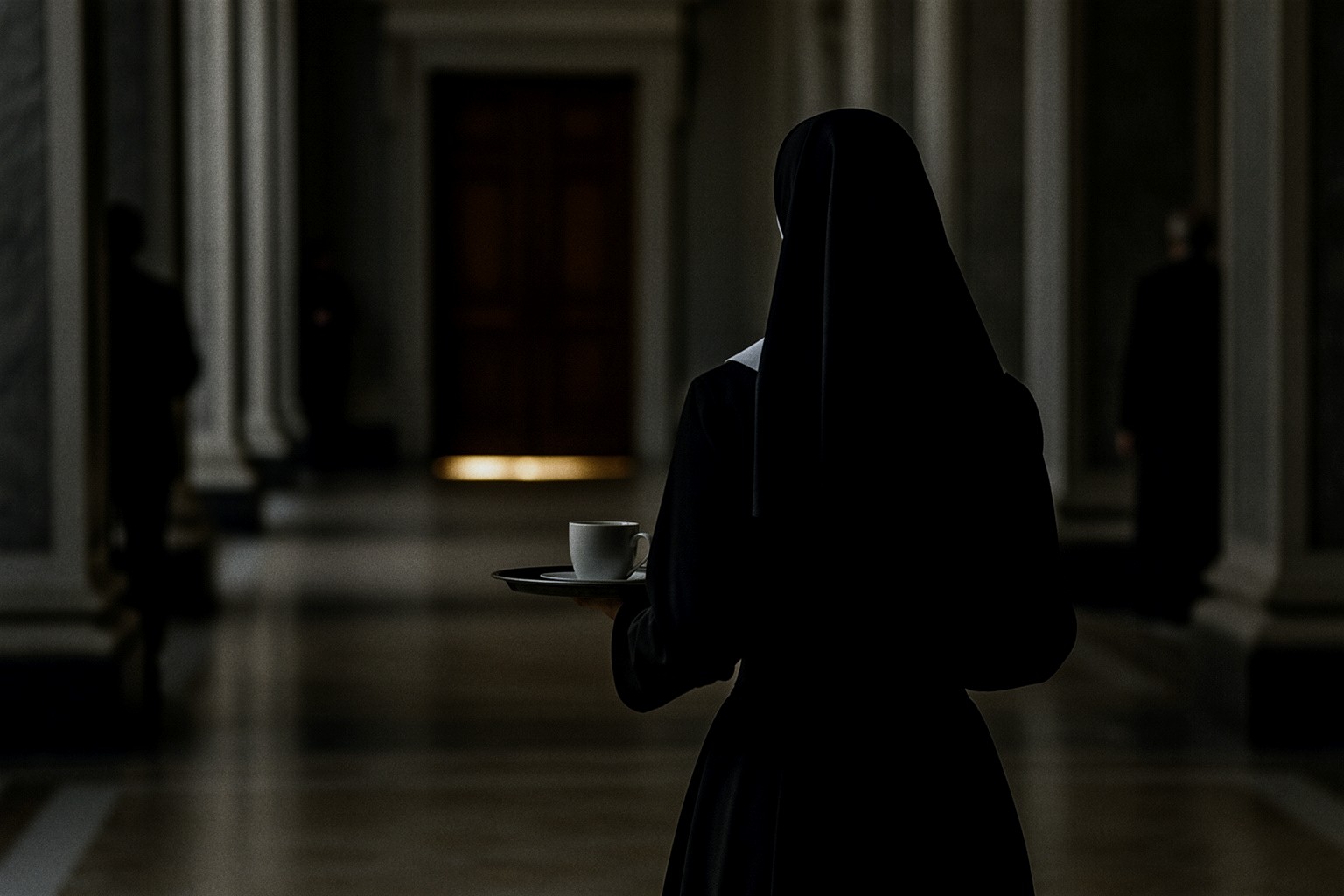
Before dawn, a nun who brought him coffee each morning knocked and got no answer. She went in. His reading lamp was still on. Doctors attributed the death to a heart attack. No autopsy was performed.
The Vatican's first account said his secretary had found him, and within days that story came apart. It had been the nun, and what he had been holding when he died was disputed.
Corrections made, it was later said, out of propriety became raw material for decades of murder theories, including a bestselling book in 1984.
Checked against: Vatican press office statements of 1978; contemporary Italian and international newspaper reports; biographies of John Paul I; John Cornwell's 1989 investigation into the death.
Jerry Lee Lewis was born on September 29, 1935, in Ferriday, Louisiana, a small cotton town near the Mississippi River. The family was poor. When the boy showed a gift for the keyboard, his father mortgaged the farm to buy him a piano.
He did not grow up alone at it. His first cousins Mickey Gilley and Jimmy Swaggart lived close by, and both learned to play too. By 1957 Lewis was recording at Sun Records in Memphis. "Whole Lotta Shakin' Goin' On" and "Great Balls of Fire" made him one of the loudest acts in American music. He played standing up, kicked the bench away and hit the keys with his heel.
Gilley followed him into the business and became a country star. His Texas honky-tonk, Gilley's, grew big enough to lend its name to a dance-floor craze. Two cousins, two careers built on the same rolling left hand.
The third cousin played that way too, in church, and became one of the most-watched television evangelists in America, preaching that rock and roll was the devil's music.
For years the cousin who played for the congregation preached against the music the cousin who played for the crowd had helped make famous.
Checked against: Published biographies of Jerry Lee Lewis, Sun Records session histories, contemporary newspaper archives, and interviews with the Lewis, Gilley and Swaggart families.
On September 29, 1954, the Cleveland Indians and the New York Giants opened the World Series at the Polo Grounds. Cleveland had won 111 games that season, an American League record. The Giants were underdogs in their own park.
In the eighth inning, with the score tied 2-2 and two Cleveland runners on base, Vic Wertz drove a ball deep to center field. Willie Mays turned his back to the plate and ran. He caught it over his shoulder near the wall, spun, and fired the ball back to the infield. Cleveland did not score.
The play became the most replayed catch in baseball. Film of Mays sprinting away from home plate still runs in documentaries, and the play needs no other name. It is simply The Catch.
But the game was decided by a ball that would have been an easy out almost anywhere else.
In the tenth inning, pinch-hitter Dusty Rhodes lifted a fly ball down the right-field line, where the Polo Grounds' fence stood unusually close to home plate. It dropped over for a three-run homer. The Giants won 5-2 and went on to sweep the Series. In most ballparks, Wertz's drive would have been a home run.
Checked against: Contemporary newspaper game reports, Major League Baseball official box scores, baseball reference histories and player biographies, ballpark dimension records
On September 29, 1957, the New York Giants played their last game at the Polo Grounds. They lost 9-1 to the Pittsburgh Pirates. The score was the least important thing that happened that afternoon.
The Giants had played in the horseshoe-shaped ballpark in upper Manhattan since 1891. That August, owner Horace Stoneham had confirmed the club was leaving for San Francisco. Across the river, Brooklyn's Dodgers were widely expected to head west as well. New York was about to lose two National League teams in one winter.
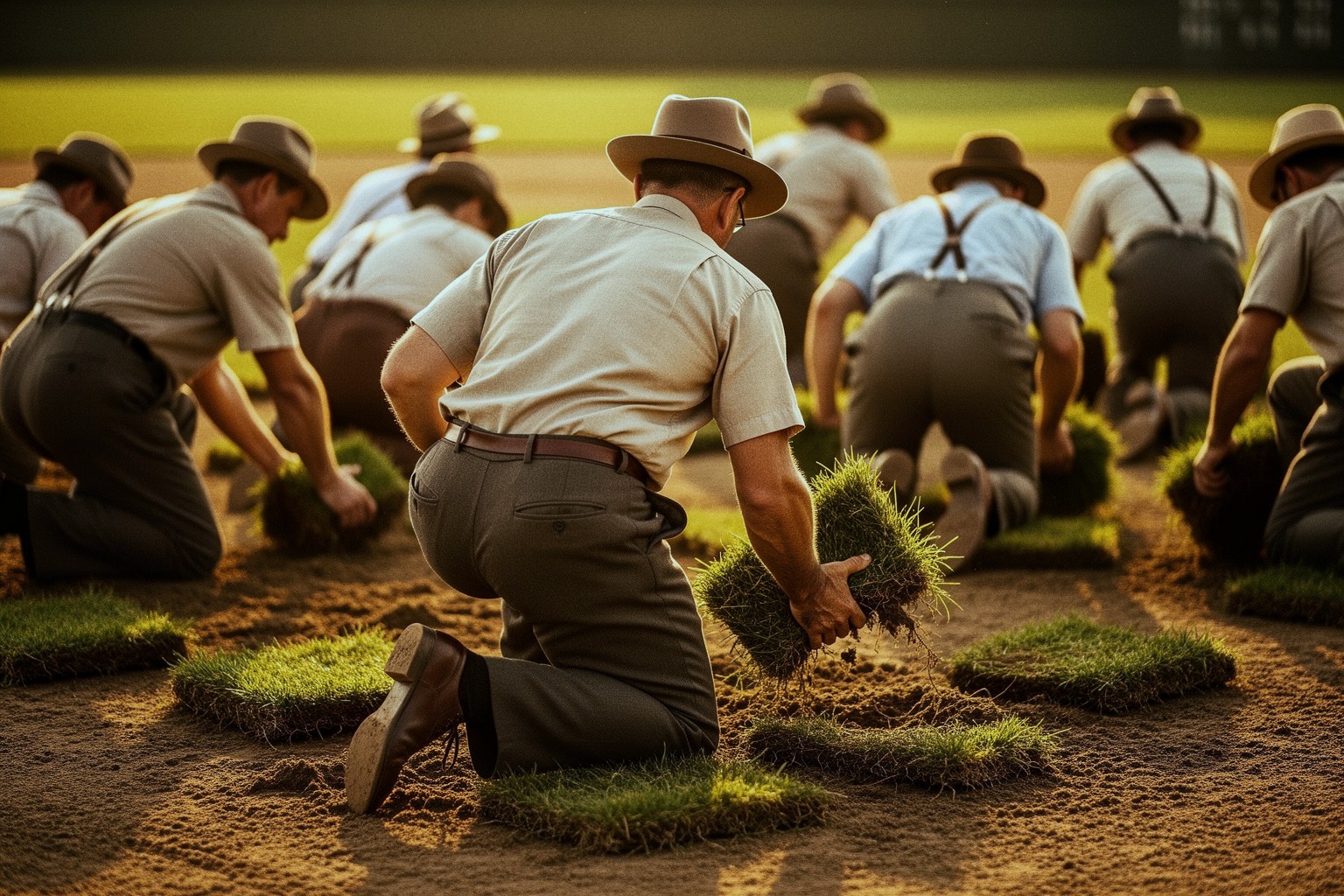
When the final out landed, fans poured over the railings. Players sprinted for the clubhouse in deep center field, hundreds of feet away. Behind them, the crowd pulled up the bases and tore loose clumps of turf to carry home. Some gathered beneath the clubhouse windows and stayed there, refusing to leave.
The Polo Grounds was not finished with baseball.
In 1962 the newly formed New York Mets moved in while their own stadium was being built. They lost 120 games that first season, on the same grass people had dug up as a keepsake. The wrecking crews did not arrive until 1964.
Checked against: Contemporary New York newspaper game reports; team and league records; histories of the Giants' move to San Francisco; histories of the early New York Mets
They added a way out. It would not have saved the last crew.
Illustration generated by AI for The Day Vault.
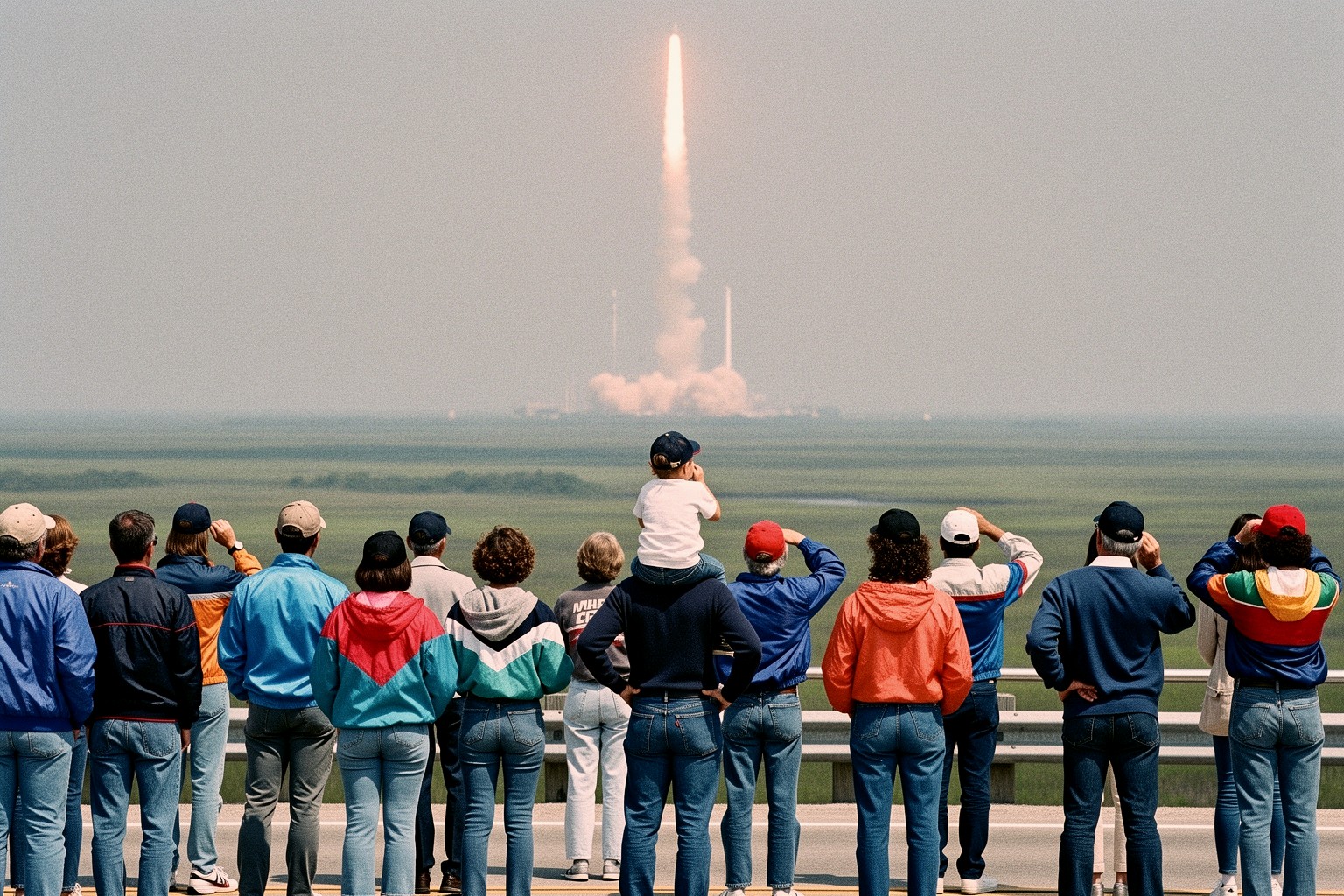
On September 29, 1988, the space shuttle Discovery lifted off from Kennedy Space Center in Florida. It was the first American crewed launch since Challenger broke apart 73 seconds after liftoff on January 28, 1986, killing all seven people aboard.
The 32 months in between went into repairs and redesign. The joints of the solid rocket boosters, where a failed O-ring seal had let hot gas escape, were rebuilt. Crews traded their light blue flight coveralls for orange pressure suits with parachutes and oxygen. All five astronauts on Discovery were veterans of earlier flights.
NASA also gave the crew a way out. A long curved pole could be pushed out through the side hatch. Astronauts would hook onto it, slide down, and drop clear of the wing before opening their parachutes.
The pole only worked if the orbiter was already gliding, intact and under control, on its way home.
Challenger's crew never had any of those conditions. The new system was built for a slow emergency, not a sudden one. Discovery never needed it. It deployed a communications satellite, circled the Earth for four days, and rolled to a stop in the California desert on October 3.
Checked against: NASA mission archives and press kits, the Rogers Commission report on the Challenger accident, contemporary newspaper and broadcast coverage of the launch
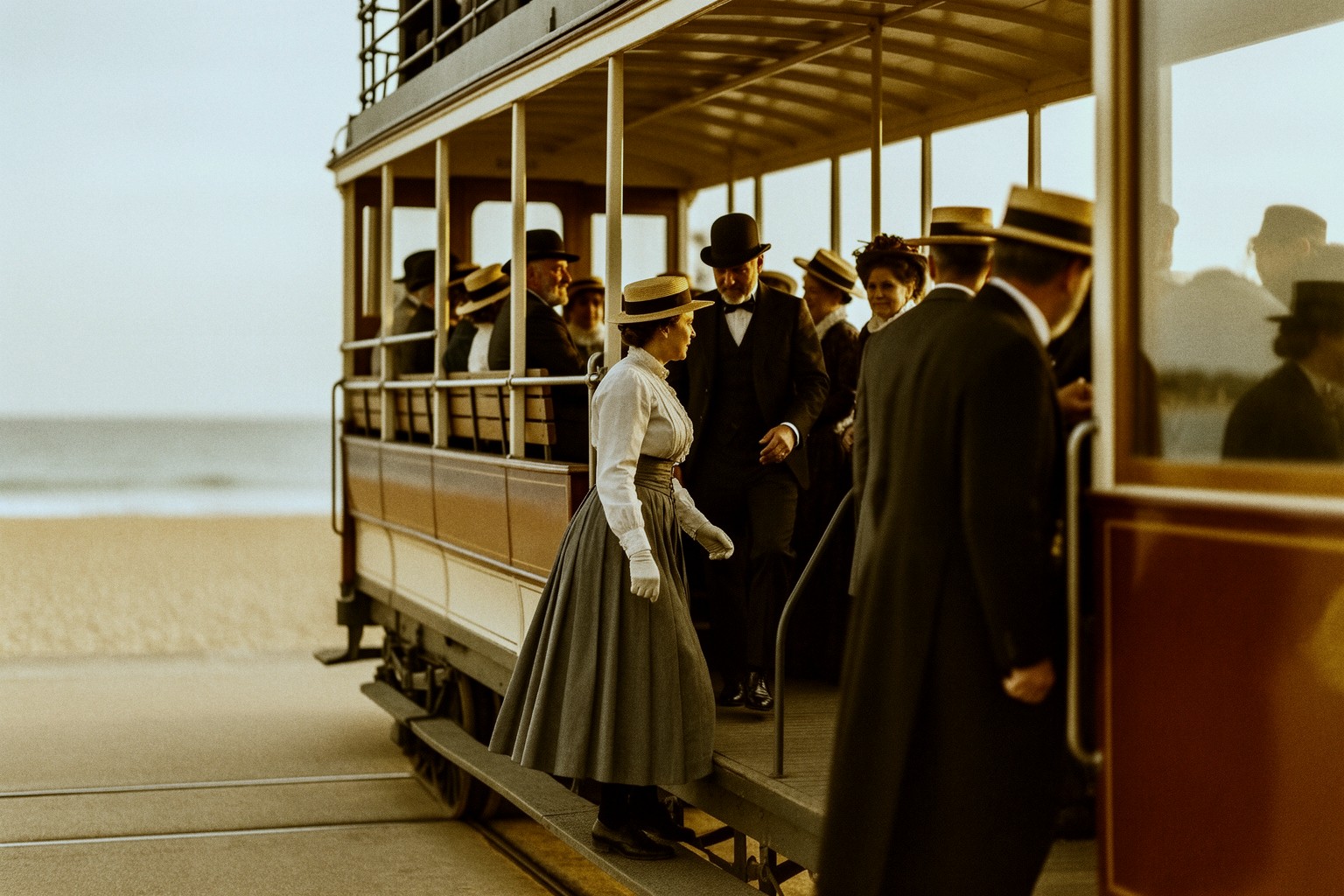
On 29 September 1885, electric trams began carrying passengers along the seafront at Blackpool. It was one of the first electric street tramways anywhere in the world, running in an ordinary public road beside the promenade.
The power did not come from overhead wires. It ran through a conduit, a channel sunk between the rails, and each car collected current through a narrow slot in the road surface. Nothing hung above the street. Nothing spoiled the view of the sea, which was the whole point of a seaside resort.
Holidaymakers crowded aboard. For a town that sold fresh air and promenades, a quiet car with no horse and no smoke was its own attraction, and the line was soon extended along the front.
But the sea sat right beside the track, and wind-blown sand and salt water kept working their way down into the slot, where they shorted and clogged the system meant to keep the view clear.
By 1899 the conduit had been abandoned and replaced with ordinary overhead wires. The wires worked. Blackpool's trams went on to outlast every other first-generation town tramway in Britain, and they still run along the same seafront.
Checked against: Local and municipal histories of Blackpool; tramway society and transport museum records; histories of British electric traction; contemporary newspaper reports of the 1885 opening