The tooth came out painlessly. The credit never settled.
Illustration generated by AI for The Day Vault.
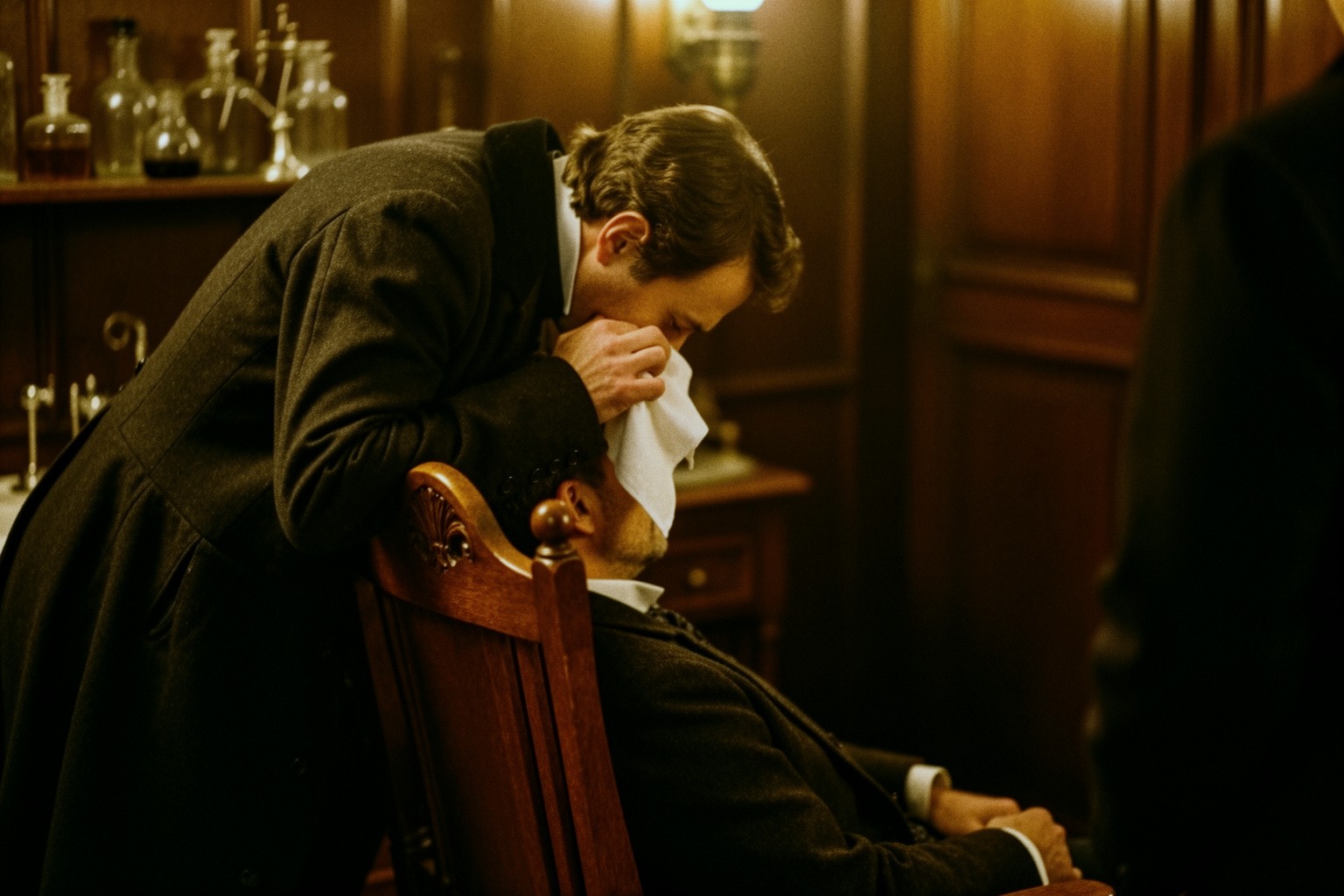
On September 30, 1846, a Boston dentist named William Morton pulled a tooth from a patient who did not feel it. Eben Frost had come in that evening with a toothache. Morton soaked a handkerchief in sulfuric ether and held it over his face.
For centuries, surgery had meant speed. Patients were awake and held down, so the best surgeons were the fastest ones. Morton had been testing ether on animals and on himself. Frost woke with the tooth gone and no memory of pain.
Two weeks later, on October 16, Morton etherized a patient at Massachusetts General Hospital while a surgeon cut a tumor from his neck in front of a room of doctors. Within months, surgeons in London were using ether too.
A Georgia doctor, Crawford Long, had already removed a neck tumor from a patient under ether in 1842. He just had not published it.
Morton tried to patent the discovery and disguised the ether under a new name, Letheon. Doctors used it anyway and paid him nothing. He spent the rest of his life petitioning Congress for credit and a reward, fighting Long, the chemist Charles Jackson and his old partner Horace Wells. He died broke in 1868 without winning either.
Checked against: Massachusetts General Hospital archives; histories of anesthesia in medical journals; biographies of William T. G. Morton; records of Morton's patent and congressional petitions
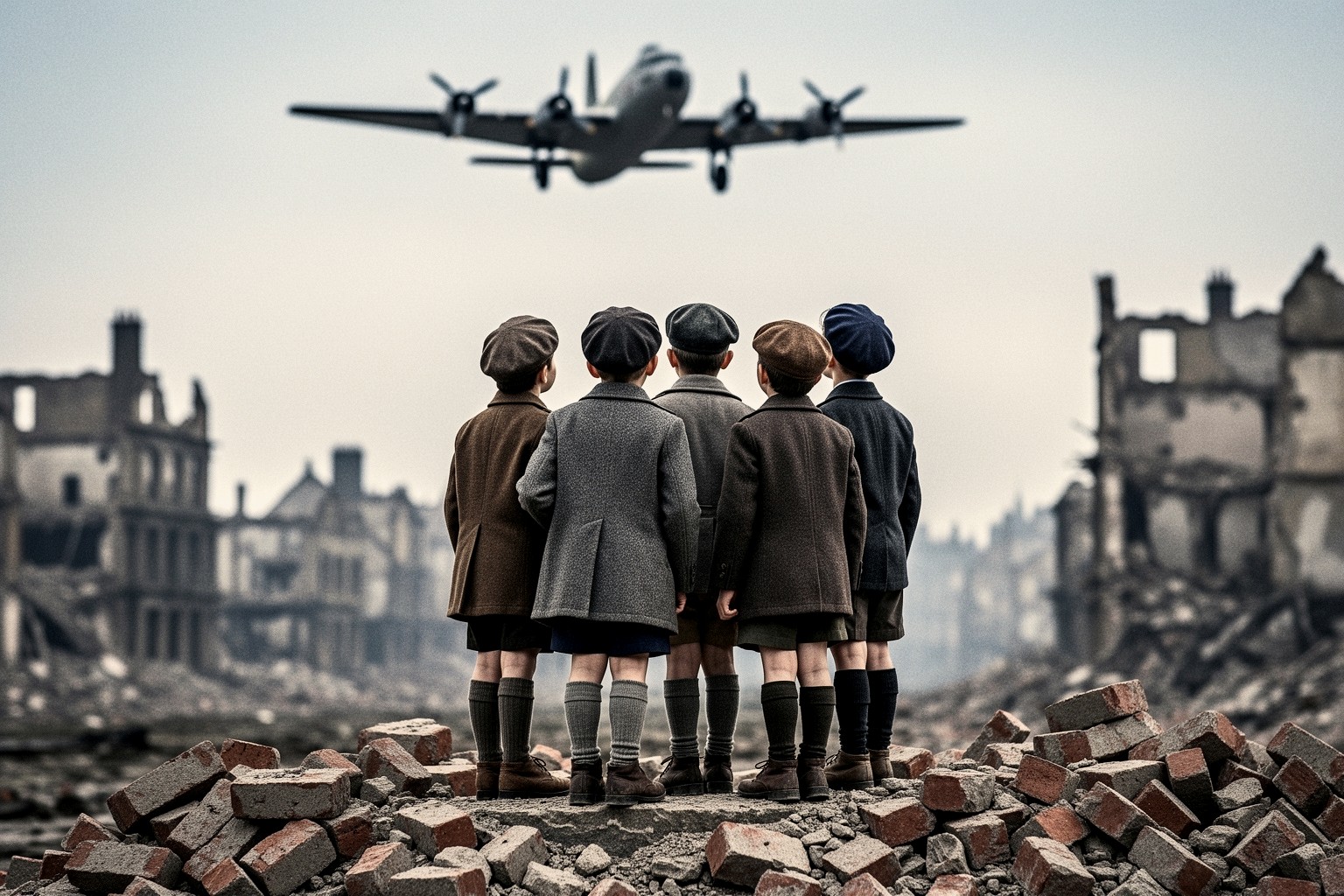
On September 30, 1949, the last aircraft of the Berlin Airlift landed in the city. For fifteen months, American and British crews had supplied more than two million West Berliners almost entirely from the sky.
The Soviet Union had cut road, rail and canal links to West Berlin in June 1948. The Western allies answered with cargo planes. Coal made up most of the tonnage, because a city cannot heat homes or run power stations on flour. At the peak, aircraft landed every few minutes, day and night. Over one April weekend in 1949, crews brought in nearly 13,000 tons in twenty-four hours.
By the end, the planes had made roughly 278,000 flights and delivered about 2.3 million tons. More than a hundred people died in crashes and accidents along the way.
Moscow had lifted the blockade in May. For the last four and a half months, the planes flew only to stockpile coal and food in case the roads closed again.
A week after the final landing, the Soviet zone declared itself a separate state, the German Democratic Republic. West Berlin sat inside it, stocked and waiting.
Checked against: Military histories of the Berlin Airlift, US Air Force and Royal Air Force historical records, Cold War diplomatic histories, contemporary newspaper archives
The speech said it was settled. The riot had already begun.
Illustration generated by AI for The Day Vault.
On September 30, 1962, federal marshals escorted James Meredith onto the campus of the University of Mississippi. He was a 29-year-old Air Force veteran, and the federal courts had ordered the all-white university to admit him. Governor Ross Barnett had personally turned him away more than once.
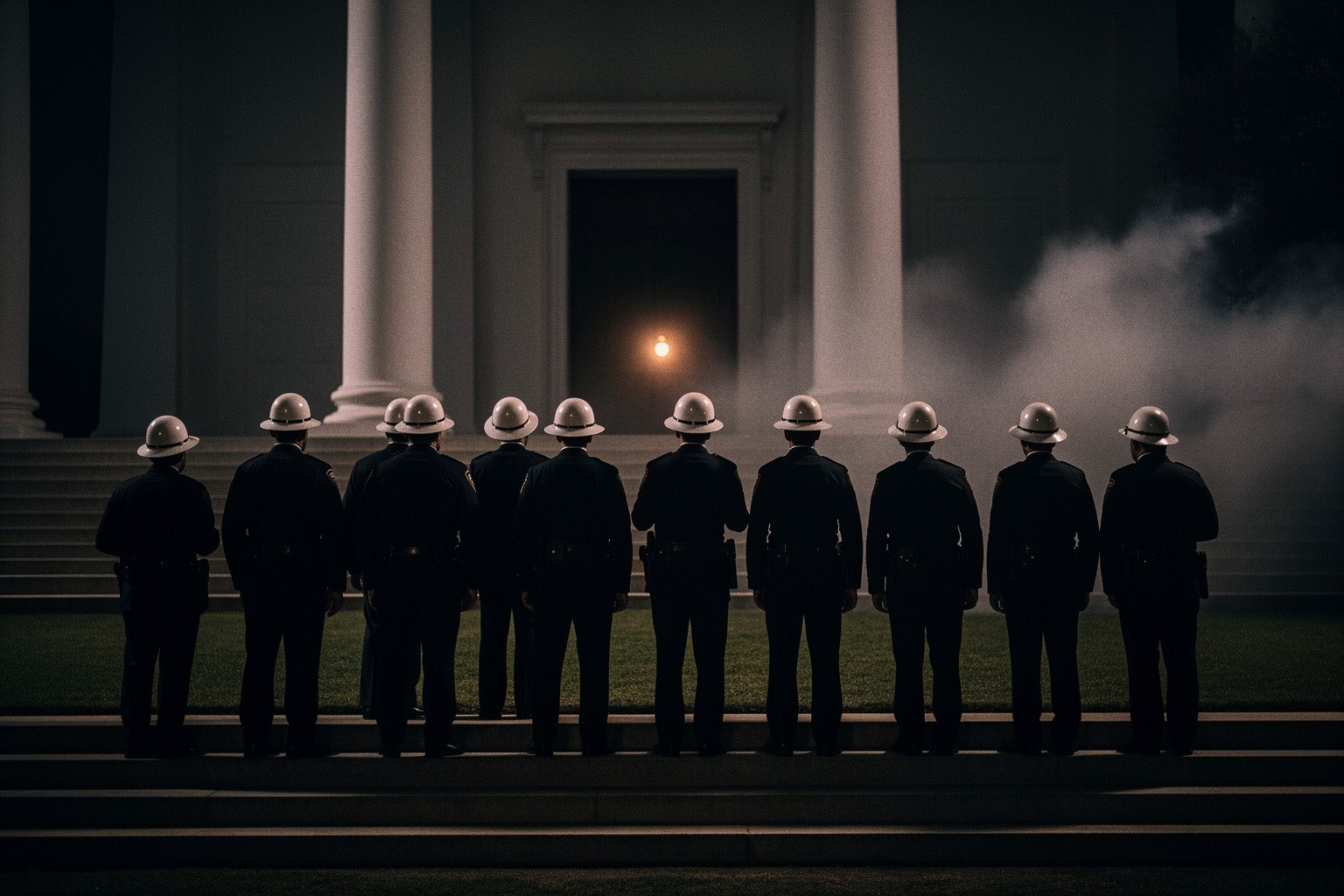
Several hundred marshals in white helmets formed a line outside the Lyceum, the university's administration building. Meredith was taken to a dormitory elsewhere on campus. A crowd gathered on the lawn, and by nightfall it was throwing bricks and bottles. The marshals answered with tear gas.
That evening President Kennedy went on national television. He appealed to Mississippi's sense of honor, spoke to the students directly, and asked them to let the law take its course.
By the time he finished, the violence he was trying to head off was already raging a short walk from Meredith's room.
Gunfire through the night killed two men, a French journalist and a local repairman. Army troops reached the campus before dawn, and on the morning of October 1 Meredith registered for classes.
Checked against: Justice Department records, contemporary newspaper and wire reports, presidential library recordings of the broadcast, and histories of the civil rights movement
The navy commissioned it. Then it sat at the pier.
Illustration generated by AI for The Day Vault.
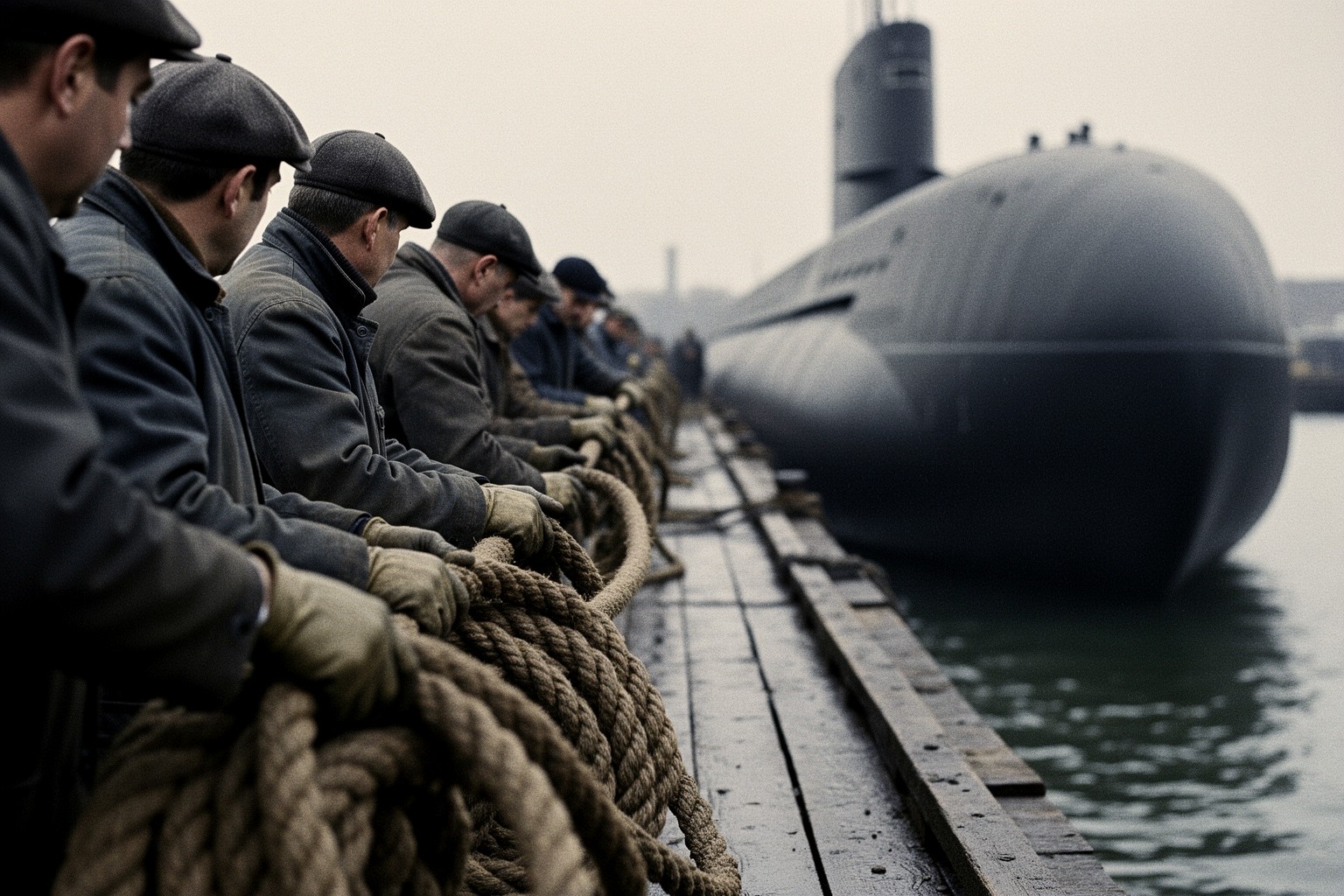
On September 30, 1954, the US Navy commissioned USS Nautilus at Groton, Connecticut. It was the first submarine in the world built to run on a nuclear reactor.
Every submarine before it was really a surface boat that could dive. Diesel engines need air, so underwater crews ran on batteries and had to come up within hours to recharge them. A reactor needs no air. In principle, Nautilus could stay down as long as its food and its crew held out.
Hyman Rickover had driven the program hard, getting a land-based prototype reactor running in the Idaho desert before the boat was even launched. Nautilus was christened in January. Now it had its commissioning ceremony, its crew and its flag.
Then it stayed tied up at the shipyard for three and a half months, its reactor not yet ready to take it anywhere.
On January 17, 1955, it finally cast off, and the crew signalled the message the navy had been waiting for: underway on nuclear power. Within four years it had crossed beneath the North Pole without surfacing.
Checked against: US Navy commissioning records, Naval History and Heritage Command ship histories, histories of the naval nuclear propulsion program, contemporary newspaper reports
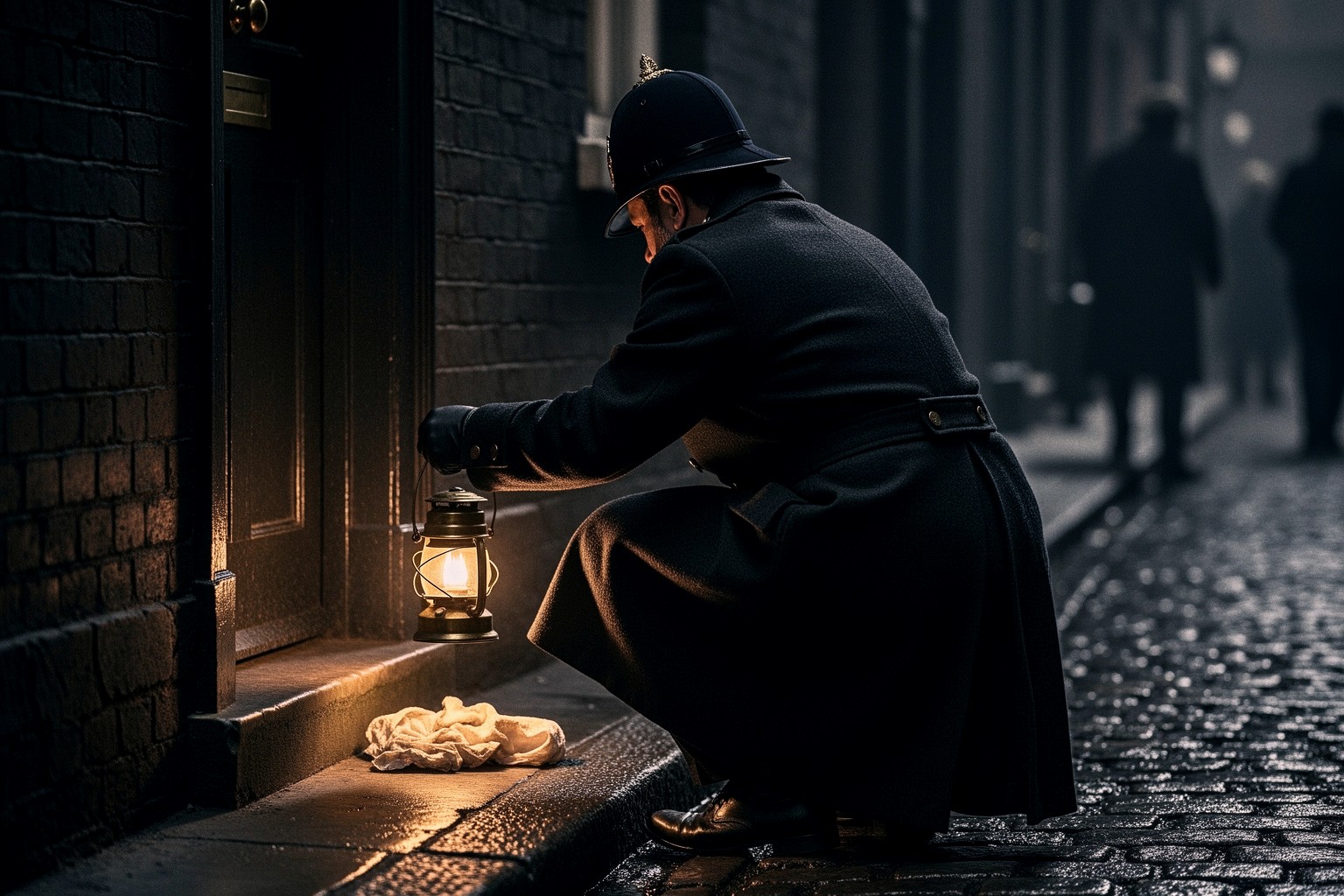
On 30 September 1888, two women were killed in London's East End less than an hour apart. Elizabeth Stride was found in Dutfield's Yard, off Berner Street, around 1 a.m. Catherine Eddowes was found in Mitre Square, a short walk west, at roughly 1:45.
Eddowes had been mutilated, and part of her apron was missing. At about 2:55 a.m., a Metropolitan Police constable, Alfred Long, found it in a doorway on Goulston Street, stained with blood. On the brick wall above it was a line of writing in chalk that mentioned Jews.
It may have been the only message the killer ever left. The City of London Police, who had Mitre Square, wanted it photographed once the light came up. But Goulston Street belonged to the Metropolitan force, and its commissioner, Sir Charles Warren, came to see it himself. Many Jewish immigrants lived on the street, and hostility toward them had been rising with each killing.
Warren ordered the chalk washed off before dawn, and it was.
He meant to prevent a riot. Instead, the only possible handwriting in the case survives as constables' copies, and those do not agree on spelling. Whether the killer wrote it at all is still argued. Nobody was ever charged.
Checked against: Metropolitan and City of London Police files held at the National Archives; inquest reports in London newspapers of October 1888; standard histories of the Whitechapel murders
She chose the smallest life. Her book went everywhere.
Illustration generated by AI for The Day Vault.
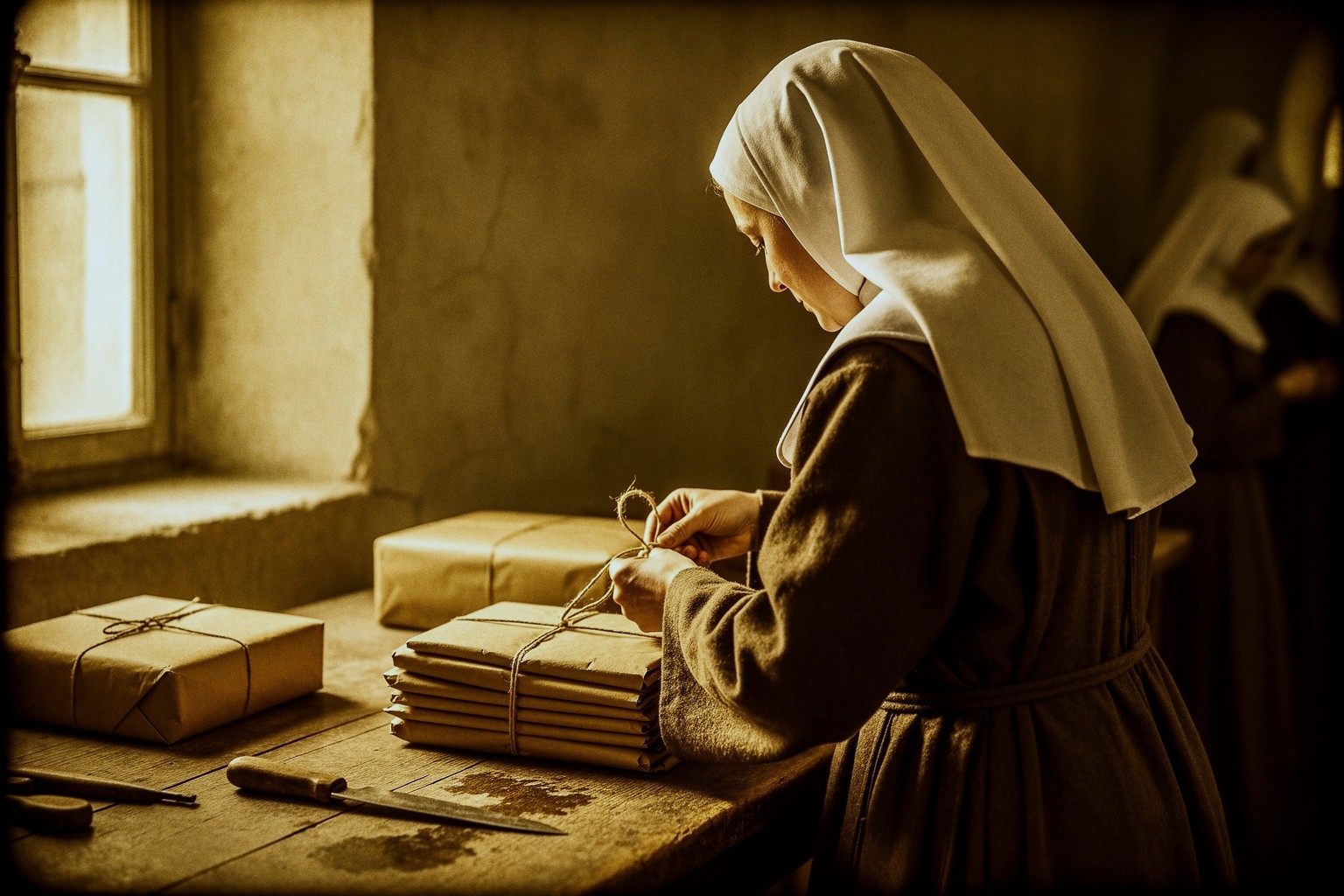
On September 30, 1897, Thérèse Martin died of tuberculosis in the Carmelite convent at Lisieux, in Normandy. She was 24. She had entered the enclosed order at 15 and spent the rest of her short life behind its walls.
Her days there were quiet even by convent standards: prayer, chores, the care of younger novices. She wrote no theology in the usual sense. In her last years, at her superiors' request, she filled notebooks with an account of her childhood and what she called her "little way": doing small, unseen things with great love.
Carmelite custom was to send a short notice about a dead sister to the order's other houses. Her sisters edited the notebooks into a book and printed it in 1898, a modest run meant for a narrow, cloistered readership.
The book was meant for other nuns, but readers outside the walls got hold of it and began writing back, asking for more copies, then for relics, then for her canonisation.
Rome made her a saint in 1925, only 28 years after her death. In 1927 it named her patron of foreign missions, alongside Francis Xavier. Apart from one pilgrimage to Rome, she had rarely left Normandy.
Checked against: Carmelite archives at Lisieux; Vatican canonisation records; critical editions of her autobiographical manuscripts; scholarly biographies of Thérèse of Lisieux
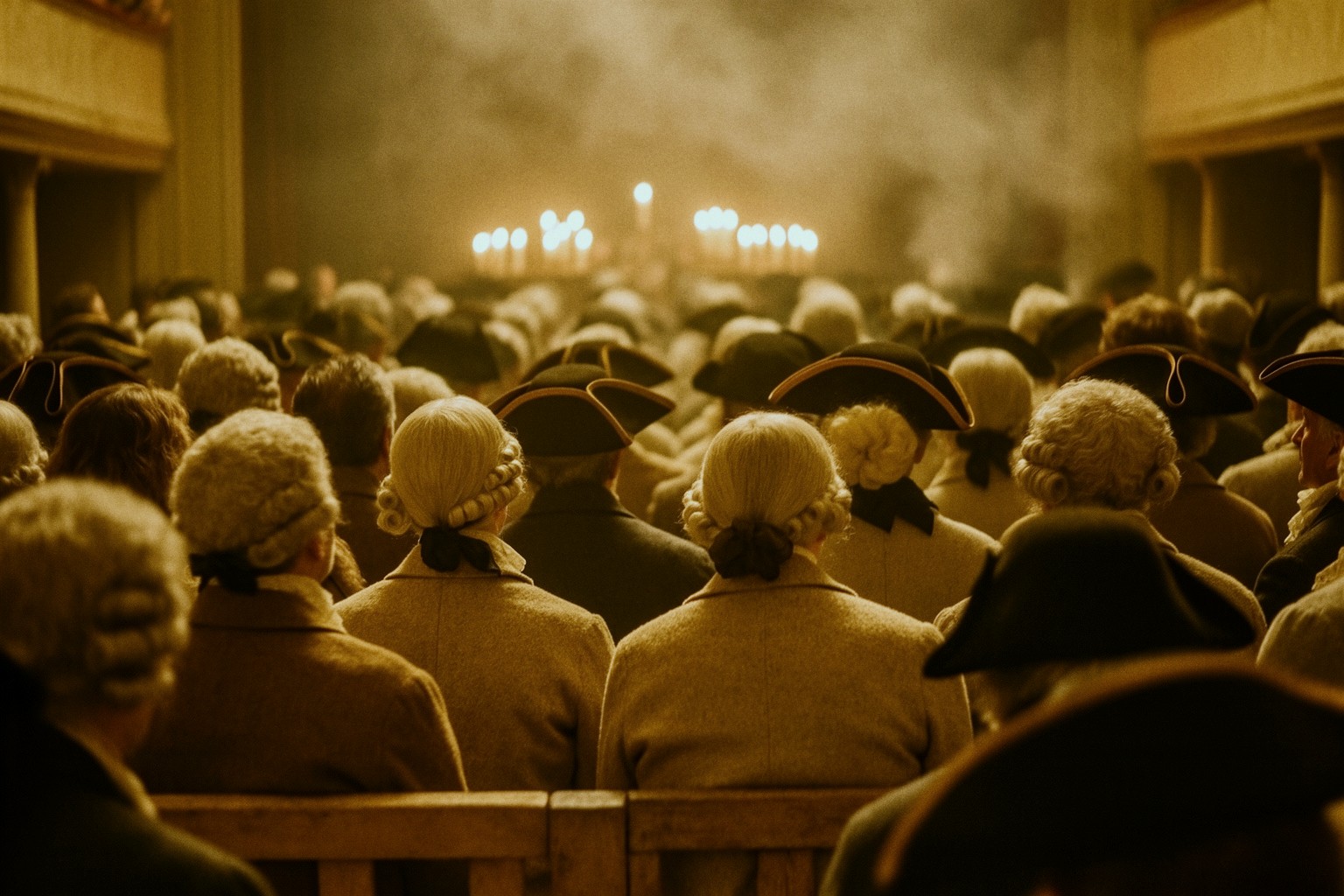
On 30 September 1791, The Magic Flute opened at the Theater auf der Wieden, a wooden playhouse in a suburb outside Vienna's city walls. Mozart led the orchestra himself.
It was not court opera. It was a Singspiel, sung and spoken in German and written for a paying public rather than an imperial box. The librettist, Emanuel Schikaneder, ran the theatre and played the bird-catcher Papageno himself. The production offered a serpent, trials by fire and water, stage machinery, and tunes an audience could carry home.
Mozart had come almost straight from Prague, where another of his operas, La clemenza di Tito, had premiered earlier that month. He was also working on a commissioned Requiem. The new opera drew crowds, and performances followed through October to full houses.
By November, he was ill in bed.
He died on 5 December, aged 35, with the Requiem unfinished, while the suburban theatre was still selling tickets to his opera.
Checked against: Mozart's surviving family letters from autumn 1791; the theatre's original playbill for the premiere; standard Mozart biographies and opera reference works; Viennese theatre histories of the Theater auf der Wieden.
On September 30, 1982, NBC aired the first episode of Cheers, a half-hour comedy set in a basement bar in Boston. It came from Glen and Les Charles and director James Burrows, who had worked together on Taxi.
The premise was small on purpose. A former Red Sox relief pitcher, now sober, runs the bar. An overeducated graduate student is abandoned there by her fiancé and ends up taking a job as a waitress. Almost all of the action stays inside one room, among the same handful of regulars.
Viewers did not come. The show finished its first season near the bottom of the network ratings. For most comedies, that is the number that ends things before the next fall schedule is printed.
That same year, the television academy named it the outstanding comedy series of the season.
NBC held on. Summer reruns found the audience the premiere had missed, and Cheers stayed in that basement for eleven seasons. When its final episode aired in May 1993, it drew one of the largest audiences in American television history.
Checked against: Contemporary network ratings reports, Television Academy Emmy records, trade press coverage from the period, and published histories of American television comedy
The double was number 3,000. There would be no 3,001.
Illustration generated by AI for The Day Vault.
On September 30, 1972, Roberto Clemente of the Pittsburgh Pirates lined a double off Jon Matlack of the New York Mets at Three Rivers Stadium. It was the 3,000th hit of his major-league career.
Only ten players had reached the mark before him. Clemente had come up from Puerto Rico in 1955 and spent eighteen seasons with the Pirates. He won four batting titles, twelve Gold Gloves and a World Series, and earned a reputation for a throwing arm that baserunners learned not to test.
He acknowledged the crowd from second base. The Pirates had already clinched their division, so the game itself meant little. The milestone was the point, and he had reached it with days of the season to spare.
It was the last regular-season hit he would ever get.
That December, an earthquake struck Nicaragua, and Clemente organised relief flights from Puerto Rico. On New Year's Eve, he boarded an overloaded cargo plane carrying supplies to Managua. It crashed into the sea shortly after takeoff from San Juan, and his body was never found. The Hall of Fame waived its five-year waiting period and inducted him in 1973. He was the first player born in Latin America to enter.
Checked against: Major League Baseball official records and box scores; Baseball Hall of Fame archives; contemporary newspaper coverage from Pittsburgh and San Juan; published biographies of the player; aviation accident reports from 1972-73
He photographed one nebula. Others sorted the stars.
Illustration generated by AI for The Day Vault.
On September 30, 1880, Henry Draper pointed a camera-fitted telescope at the Orion Nebula and held the exposure for 51 minutes. The result was the first photograph ever made of a nebula.
Draper was a New York physician who did astronomy on the side, from an observatory he built at Hastings-on-Hudson. He had already photographed the Moon, and in 1872 he became the first to photograph the spectral lines of a star. Orion was harder. It is a faint cloud of glowing gas, and the telescope had to follow it smoothly across the sky for the whole exposure.
The picture is soft, a smudge with a bright core. It was enough. Draper improved the method and pushed his exposures longer. His larger goal was to photograph the spectra of stars by the thousand.
He died in November 1882, aged 45, before that survey began.
His widow, Anna Palmer Draper, paid Harvard College Observatory to carry it out in his name. A team of women did the work, and Annie Jump Cannon classified more than 225,000 stars by their spectra. Astronomers still label stars with HD numbers. The letters stand for Henry Draper.
Checked against: Harvard College Observatory annals and history of the Henry Draper Catalogue; Draper's published accounts of his photographic work; histories of astrophotography; biographies of Annie Jump Cannon
Shortly after 1 a.m. on September 30, 1938, the leaders of Britain, France, Germany and Italy signed an agreement in Munich. It handed the Sudetenland, a border region of Czechoslovakia with a large German-speaking population, to Germany. German troops would begin moving in the next day.
Czechoslovakia had not been invited to the talks. Its delegates waited at a hotel and were told the terms once they were settled. The region they lost held most of the country's border fortifications.
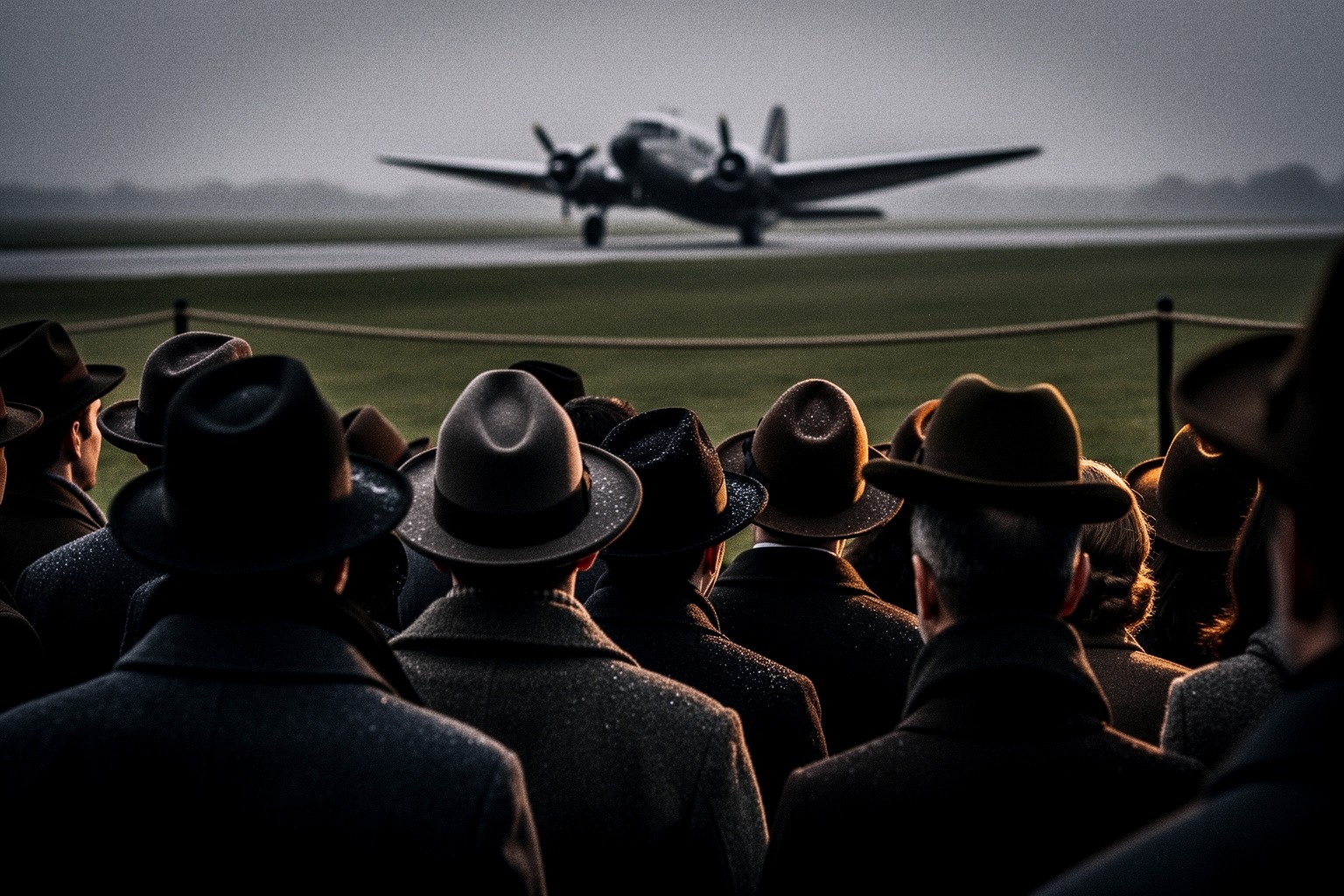
Later that morning, Neville Chamberlain asked Adolf Hitler to sign a short extra declaration: Britain and Germany would never go to war with one another again. Hitler signed. Chamberlain flew home to Heston aerodrome and held the paper up for the waiting crowd. That evening, outside Downing Street, he said he believed it was peace for our time.
On March 15, 1939, German troops marched into Prague and took the rest of Czechoslovakia anyway.
By the end of that month, Britain had pledged to defend Poland. That September, it went to war over the pledge.
Checked against: Text of the Munich Agreement and the Anglo-German declaration; British parliamentary records and Cabinet papers; contemporary newsreel and newspaper coverage; standard histories of the 1938 Czechoslovak crisis