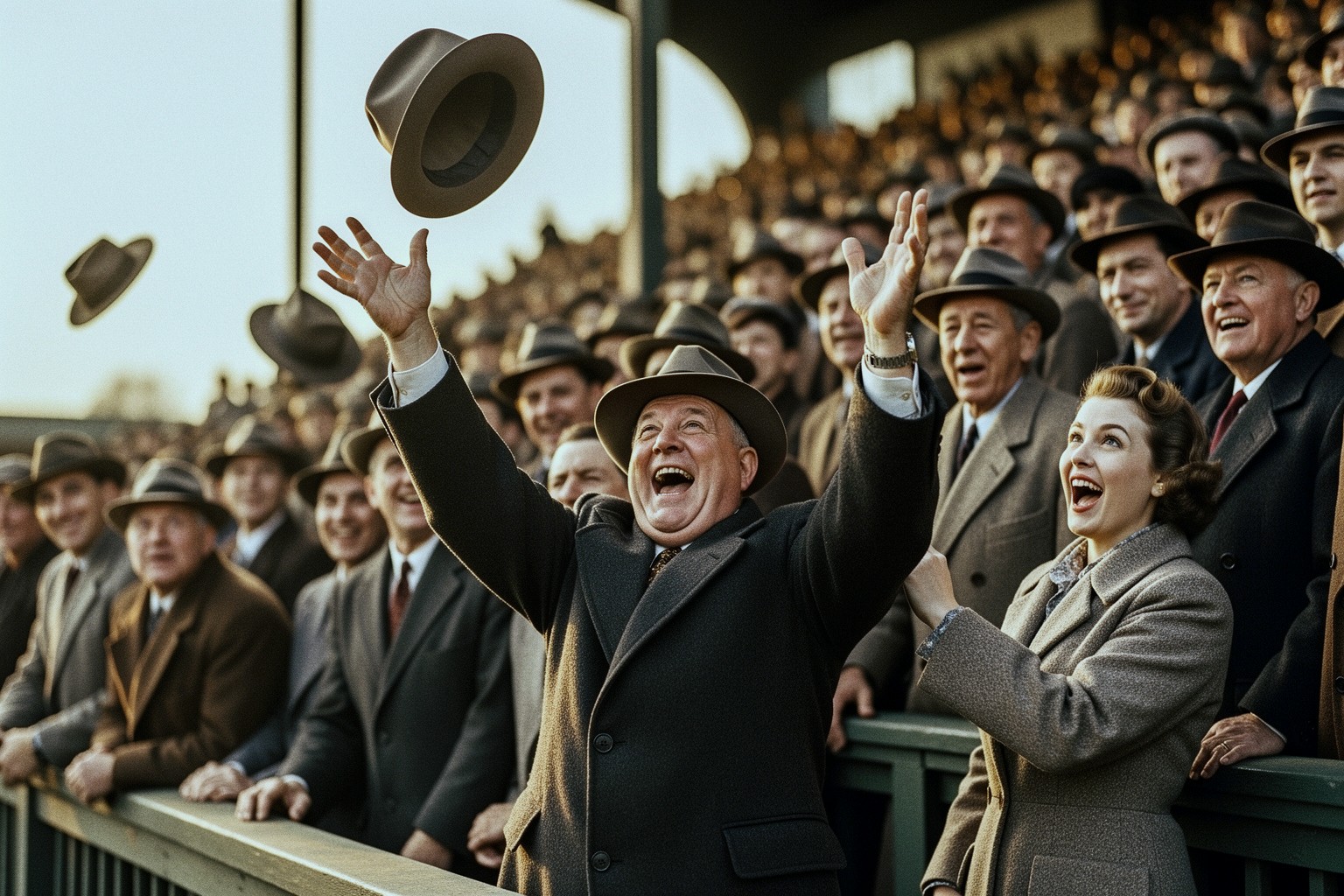
On October 3, 1951, Bobby Thomson of the New York Giants hit a three-run home run in the bottom of the ninth inning at the Polo Grounds. The Giants beat the Brooklyn Dodgers 5-4 and won the National League pennant.
They had no business being there. In mid-August the Giants trailed Brooklyn by 13½ games. Then they won 37 of their last 44 to force a three-game playoff. In the deciding game they came to bat in the ninth down 4-1.
Ralph Branca threw a fastball. Thomson lined it into the left-field seats, and radio announcer Russ Hodges shouted "The Giants win the pennant!" again and again. Strangers hugged in the aisles. Newspapers called it the Shot Heard 'Round the World.
Fifty years later, the Wall Street Journal reported that for much of that comeback the Giants had been stealing the opposing catcher's signs with a telescope in their center-field clubhouse, relaying each pitch by buzzer to the bullpen.
Thomson insisted he never took a sign on that pitch, and no one could prove he had. The most famous swing in baseball has been argued over ever since, by people who still can't agree on what they saw.
Checked against: Contemporary newspaper coverage, official box scores and league records, surviving radio broadcast recordings, the 2001 Wall Street Journal investigation and the book that followed it, player memoirs and interviews.
Britain joined the nuclear club four weeks too late
Illustration generated by AI for The Day Vault.
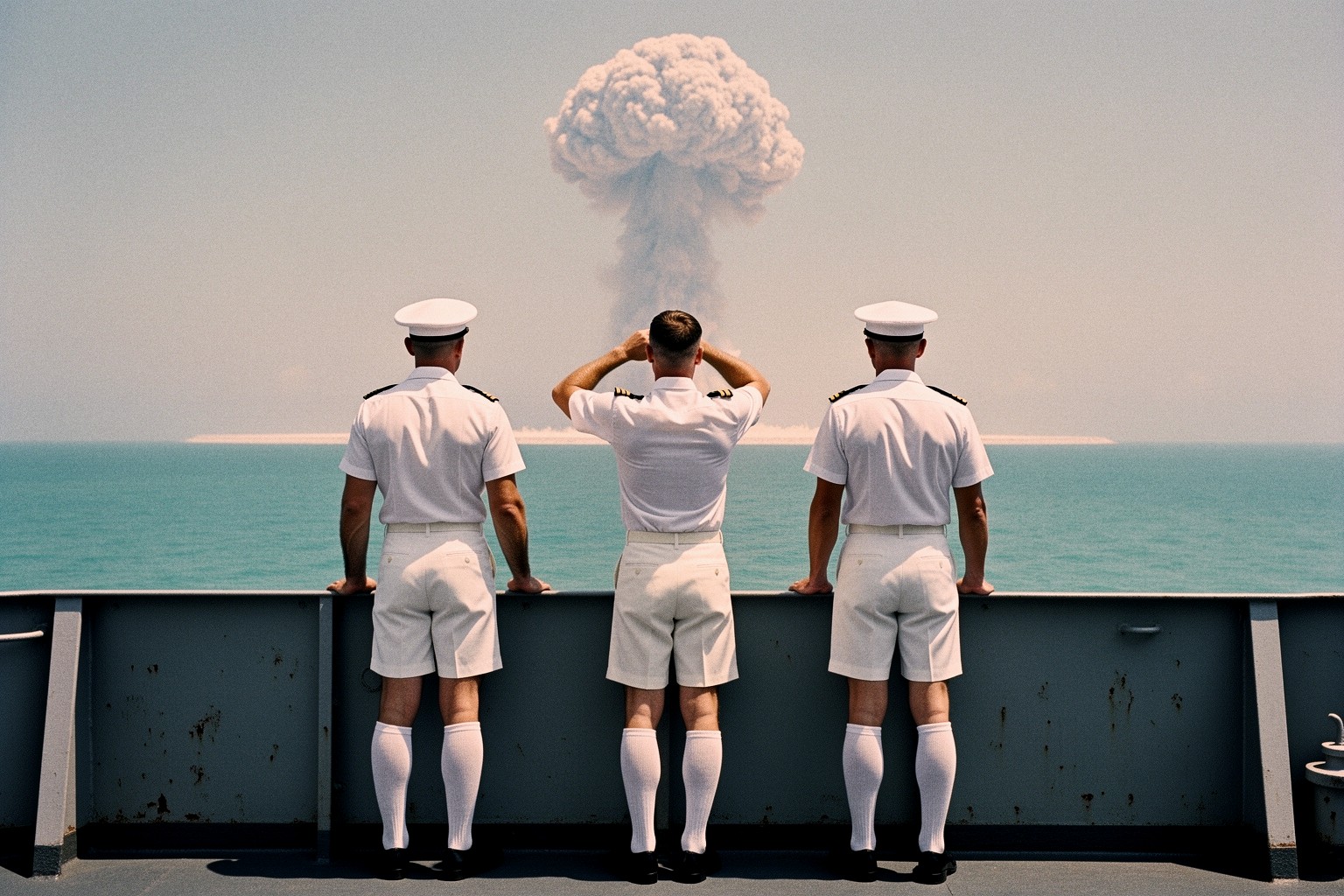
On October 3, 1952, Britain detonated its first atomic bomb. It did not sit on a tower or fall from a plane. It sat inside the hull of an old frigate, HMS Plym, anchored in a lagoon off the Montebello Islands, north-west of Australia.
The setting was deliberate. Planners feared an enemy might sail a bomb into a British port, and they wanted to know what one would do to a harbour. The blast, roughly 25 kilotons, destroyed most of the frigate and gouged a crater in the seabed.
Britain had built the weapon alone. British scientists had worked alongside Americans during the war, then the 1946 McMahon Act shut them out of American nuclear work. The Montebello test was meant to show that Britain still belonged at the top table.
Four weeks later, on November 1, the United States tested its first hydrogen bomb, a device hundreds of times more powerful than Britain's.
Britain's new weapon was out of date before it entered service, and London started again, chasing a hydrogen bomb of its own. It got one in 1957, and in 1958 it got the American partnership it had wanted all along.
Checked against: UK Ministry of Defence and Atomic Weapons Establishment histories; Royal Navy records; official histories of the British nuclear programme; Australian Royal Commission into British nuclear tests
East Germany didn't merge with the West. It joined.
Illustration generated by AI for The Day Vault.
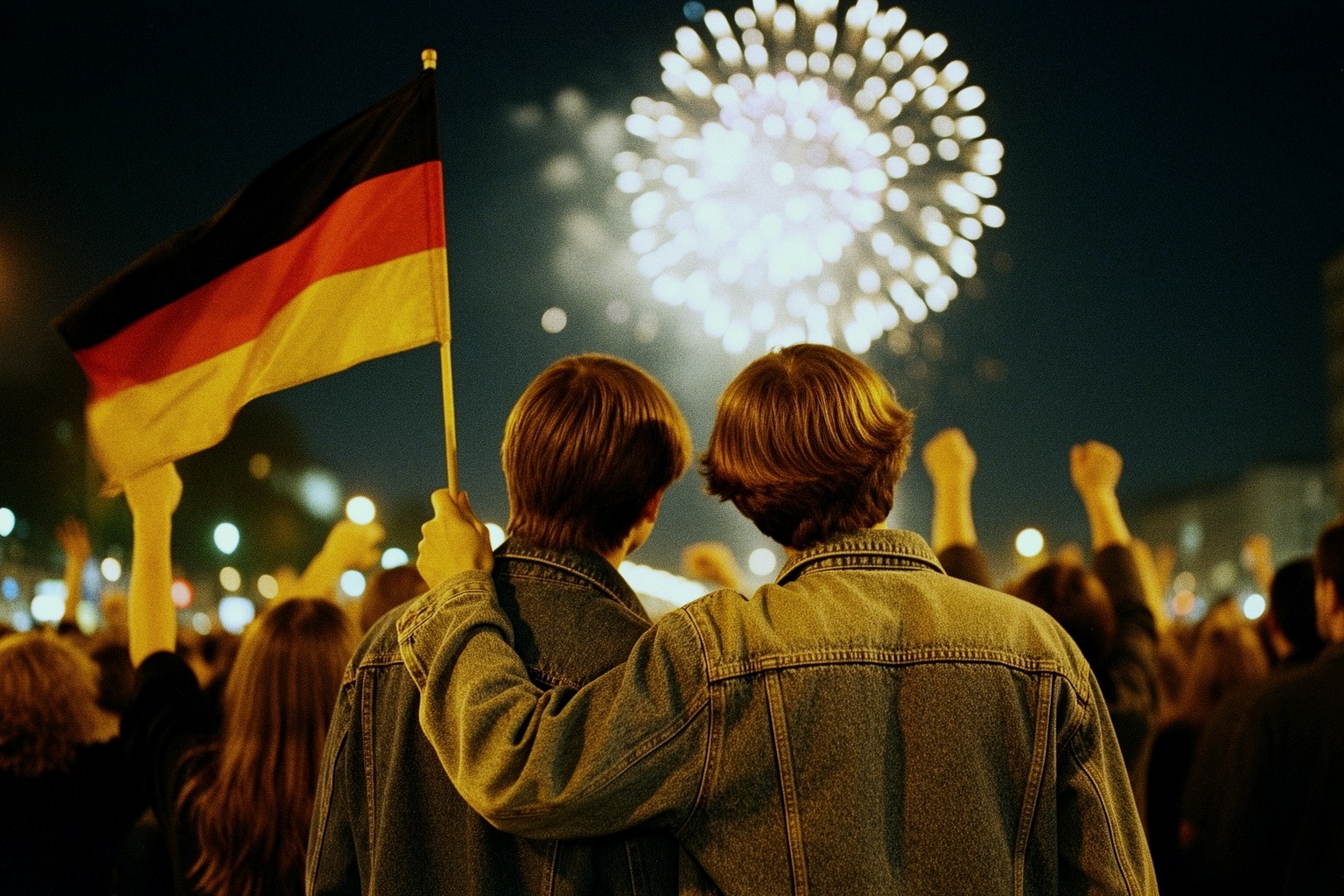
At midnight on October 3, 1990, the German Democratic Republic ceased to exist. A black, red and gold flag rose outside the Reichstag in Berlin while a crowd packed the lawn below and fireworks went up over the city.
It had taken under eleven months. The Berlin Wall opened on November 9, 1989. East Germans voted in their first free election in March 1990. On August 23 their parliament, the Volkskammer, voted to join the Federal Republic. In September, the two German states and the four wartime Allies signed a treaty in Moscow that ended the Allies' remaining rights over Germany.
West Germany's 1949 Basic Law offered two routes to unity. Article 146 imagined a new constitution, freely adopted by the whole German people. Article 23 let other German territories simply join the existing state, as the Saarland had in 1957.
East Germany took the second route. There was no merger and no new constitution. Five eastern states signed up to rules drafted in the West forty-one years earlier.
The old Article 23 was then repealed, so no other territory could join that way. The Basic Law had been written as a stopgap until Germany was whole. It still governs the country.
Checked against: The German Basic Law and its amendment history; the 1990 Unification Treaty and the Treaty on the Final Settlement with Respect to Germany; Volkskammer records; contemporary newspaper and broadcast coverage; standard histories of German reunification
On October 3, 1993, about 160 American special operations troops flew into central Mogadishu to seize two lieutenants of the Somali militia leader Mohamed Farrah Aidid. The plan called for roughly an hour on the ground, in daylight.
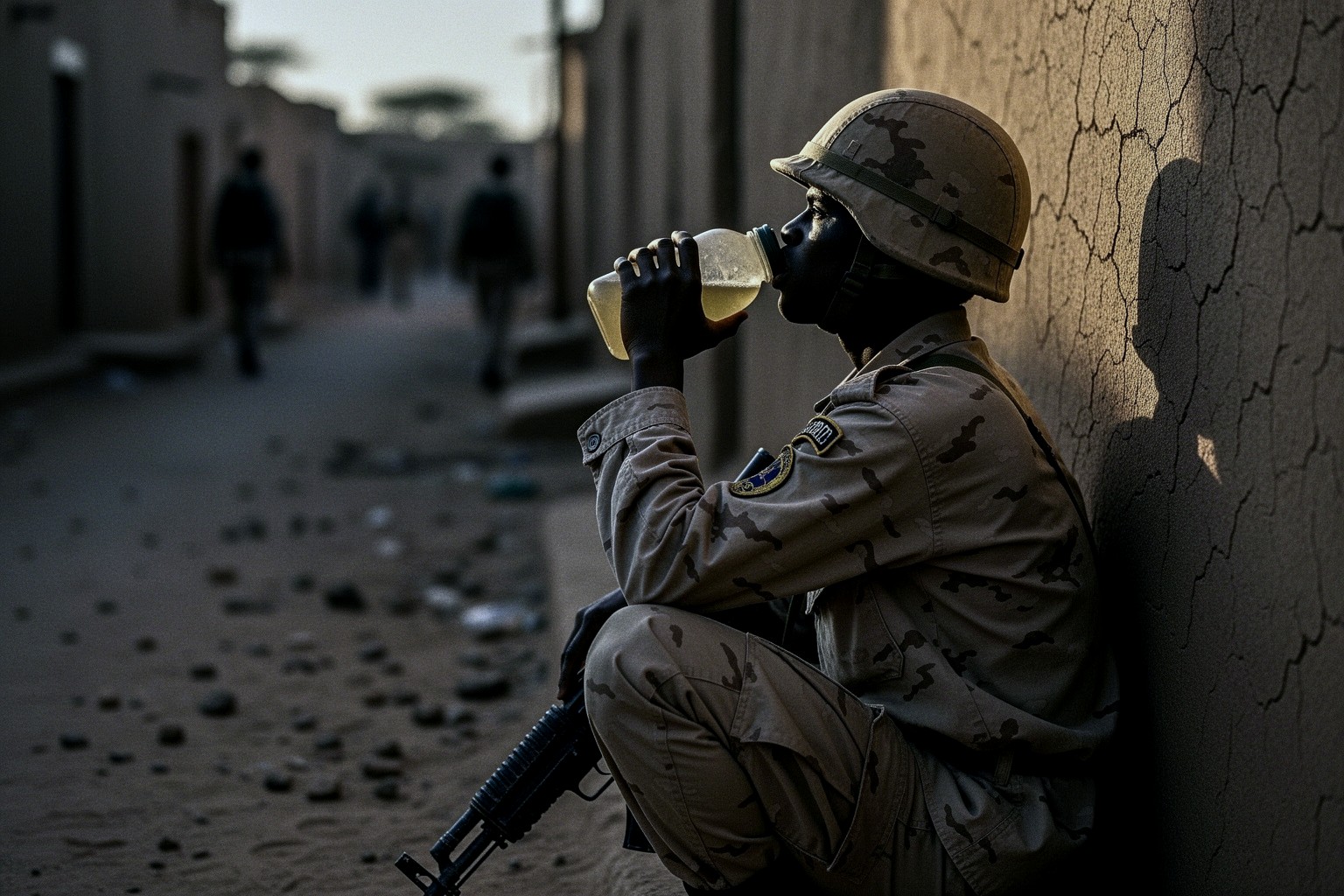
Because it would be over before dark, some Rangers left their night-vision goggles behind. Others skipped extra water. Then a rocket-propelled grenade brought down a Black Hawk helicopter, and soon afterwards a second one fell.
The vehicle convoy sent to collect everyone got lost in narrow streets under heavy fire. Soldiers spent the night pinned inside houses near the first crash site, rationing their canteens. A rescue column of UN armoured vehicles, crewed by Malaysian and Pakistani troops, reached them after dawn. Eighteen Americans were dead. Somali deaths ran into the hundreds.
Measured against its orders, the raid worked: the two lieutenants were captured, along with about twenty others.
It did not matter. Within a week President Bill Clinton set a date to bring American forces home, and when genocide began in Rwanda six months later, Washington kept its distance, wary of another Mogadishu.
Checked against: US Army official histories of Task Force Ranger, US Senate Armed Services Committee review of the operation, contemporary newspaper reporting, book-length journalistic accounts based on participant interviews
On October 3, 1849, a compositor at the Baltimore Sun named Joseph Walker found a man slumped and barely conscious at Ryan's tavern on East Lombard Street. It was Edgar Allan Poe. His suit was cheap and badly fitted, his hat battered. Neither was his.
Poe had left Richmond about a week earlier, bound north for New York by way of Philadelphia. Nobody has accounted for the days in between. Walker sent word to an acquaintance of Poe's, Dr. Joseph Snodgrass, who had him taken by carriage to Washington College Hospital.
Poe drifted between agitation and delirium for four days and died early on October 7. He never said where he had been. That day the tavern was a polling place. It was election day in a city where gangs were known to seize strangers, ply them with drink and march them to vote again and again in changes of clothes.
The one man placed to settle it was his doctor, John Moran, who kept telling the story for decades, with new details and a more dignified patient each time.
No hospital record or death certificate survives. So every theory, from drink to rabies to a kidnapping by vote-riggers, is still standing.
Checked against: Biographies of Poe; surviving correspondence of Joseph Snodgrass; Baltimore newspapers of October 1849; histories of nineteenth-century Baltimore elections
On October 3, 1863, Abraham Lincoln proclaimed a national day of thanksgiving for the last Thursday of November. He asked Americans to set it apart as a day of "Thanksgiving and Praise to our beneficent Father who dwelleth in the Heavens." The country was at war. Gettysburg was three months past.
The push came from a magazine editor. Sarah Josepha Hale, who ran Godey's Lady's Book, had spent years writing editorials and letters to governors and presidents asking for one shared national day. Until then, each state picked its own date, and some picked none.
George Washington had proclaimed a national thanksgiving on the same calendar date, October 3, in 1789. It did not become a habit. Lincoln's did. Every president after him issued a proclamation, and the last Thursday of November held for three quarters of a century.
In 1939, November had five Thursdays, and Franklin Roosevelt moved the holiday a week earlier to give stores a longer Christmas shopping season.
Many states refused and kept the old date, so families, schools and football schedules split across two Thursdays. Congress ended the muddle in late 1941 by fixing Thanksgiving to the fourth Thursday of November, where it has stayed.
Checked against: Presidential proclamation texts held in federal archives; Library of Congress collections; biographies of Sarah Josepha Hale; contemporary newspaper coverage of the 1939 date change; congressional records of the 1941 joint resolution.
The photo she tore up wasn't the one they rehearsed
Illustration generated by AI for The Day Vault.
On October 3, 1992, Sinéad O'Connor was the musical guest on Saturday Night Live. For her second song she sang Bob Marley's "War" a cappella, standing still under a single light, with lyrics reworked to address child abuse.
As the last line ended, she held a photograph of Pope John Paul II up to the camera. She tore it into pieces, said "Fight the real enemy," and threw the fragments toward the lens. The studio audience sat in silence. No applause sign was lit, and nobody started one.
NBC's phone lines filled with complaints that night and for days after. The network was fined nothing, because there was no rule she had broken. It simply had not been warned. Two weeks later, at a Madison Square Garden concert honouring Bob Dylan, she was booed so loudly that she abandoned her planned song and sang "War" again instead.
In the dress rehearsal hours earlier, the photograph she held up had been of a child.
When NBC rebroadcast the episode, it used the dress rehearsal footage. For years, the version viewers could see again was the one with the child.
Checked against: Contemporary US newspaper and wire coverage of the broadcast and the Dylan tribute concert; NBC broadcast records; later interviews and the performer's published memoir
Same day, same audience. The slower show lasted 25 years longer.
Illustration generated by AI for The Day Vault.
On October 3, 1955, American television launched two programmes for children on the same day. CBS put Captain Kangaroo on in the morning. That afternoon, ABC premiered The Mickey Mouse Club, Walt Disney's hour of cartoons, serials and a troupe of young performers called the Mouseketeers.
Disney had the money, the famous characters and a theme song that children across the country were soon singing. The cast wore felt caps with round black ears, and before long every child watching wanted a pair. It was loud, quick and built to sell.
Captain Kangaroo went the other way. Bob Keeshan, 28 years old and best known as the silent clown Clarabell on Howdy Doody, put on a grey wig and a walrus moustache to play a gentle older man. He spoke softly, read picture books aloud and let the quiet moments run long.
The flashier show burned out first. Disney stopped making new episodes of the original Mickey Mouse Club in 1959, after four seasons.
Captain Kangaroo stayed on CBS until 1984, long enough for children who had watched the first morning broadcast to sit their own children down in front of it.
Checked against: Broadcast network histories, television reference encyclopedias, contemporary newspaper TV listings and reviews, published biographies and obituaries of the host
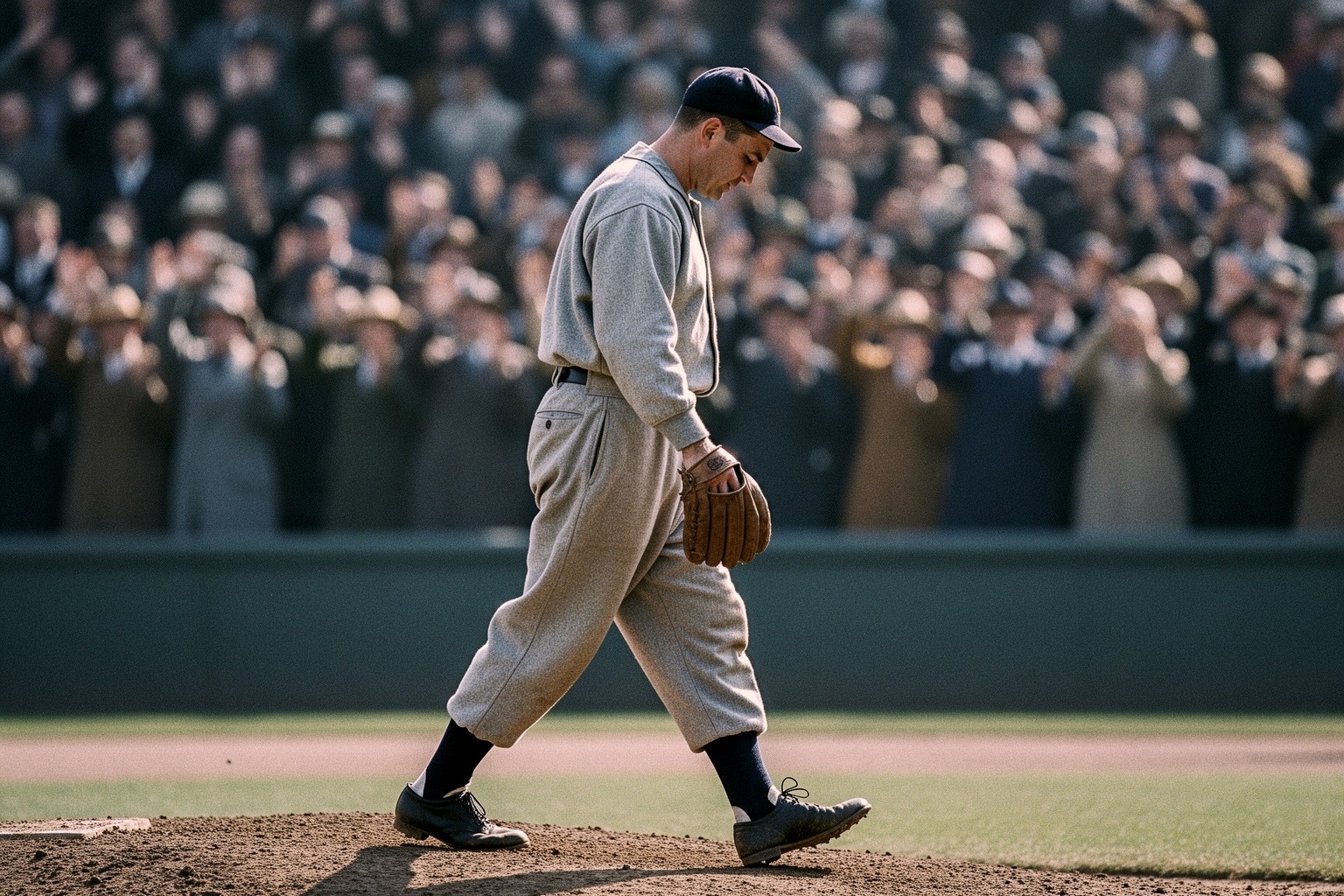
On October 3, 1947, at Ebbets Field in Brooklyn, Yankees pitcher Bill Bevens took a no-hitter into the ninth inning of Game 4 of the World Series. Nobody had ever thrown one in a World Series.
It was not a tidy no-hitter. Bevens walked batters all afternoon, ten by the end, a Series record, and the Dodgers had already scratched out a run without a hit. Still, New York led 2-1 with two outs in the ninth.
Then the walks caught up with him. Carl Furillo took ball four. A pinch-runner, Al Gionfriddo, stole second. Yankees manager Bucky Harris ordered Pete Reiser walked on purpose, putting the winning run on base. Brooklyn sent up a veteran bench player, Cookie Lavagetto, to pinch-hit.
Lavagetto lined a double off the right-field wall. Both runners scored, and Bevens lost the game on the only hit he allowed.
The Yankees still won the Series in seven. Bevens pitched in relief in the final game, and he never appeared in the major leagues again.
Checked against: Official World Series box scores and play-by-play records, contemporary newspaper game reports from New York and Brooklyn, baseball reference encyclopedias, and published histories of the 1947 Dodgers and Yankees.
It reached the edge of space. It was built to hit cities.
Illustration generated by AI for The Day Vault.
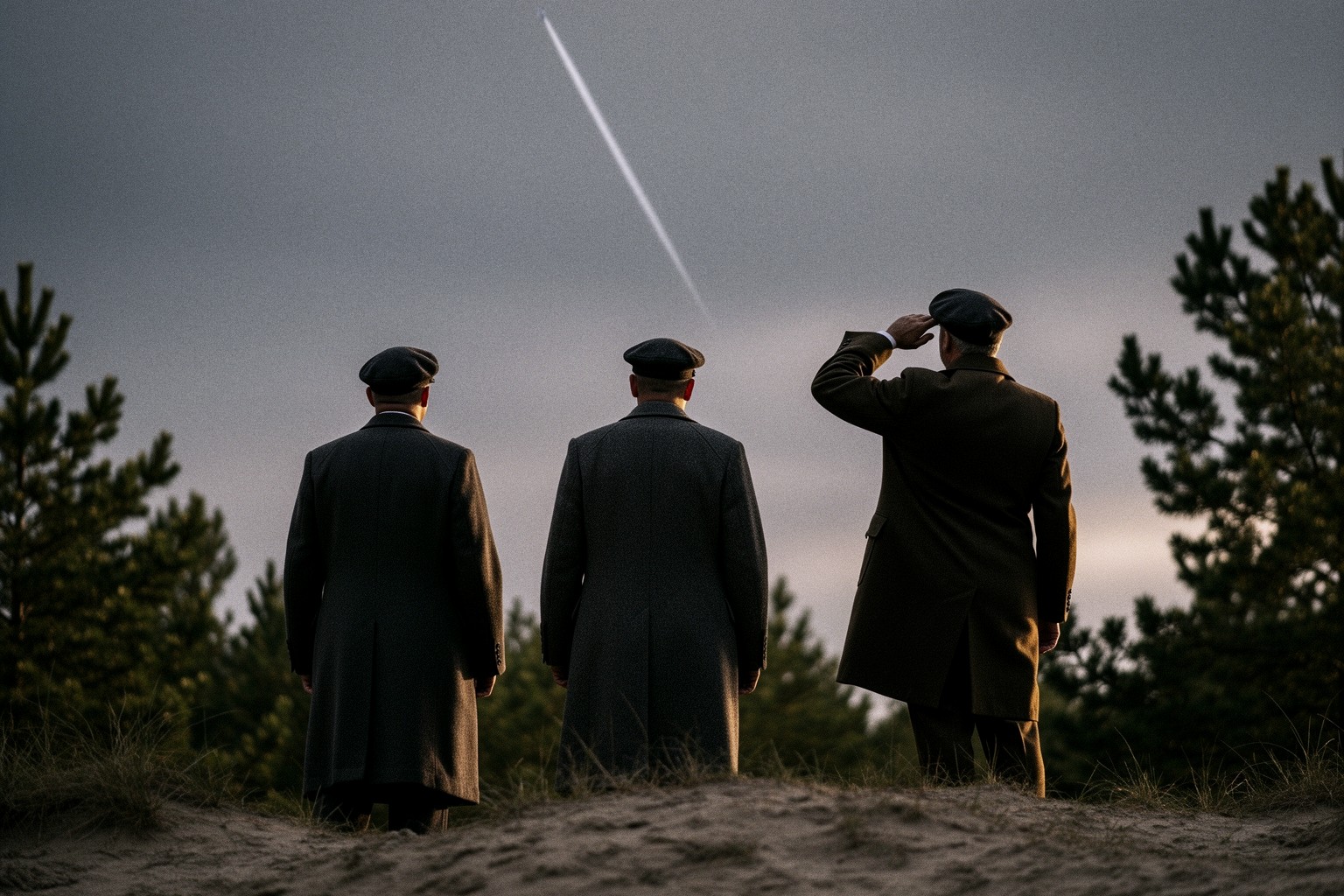
On October 3, 1942, a 14-metre rocket lifted off from Peenemünde on Germany's Baltic coast and kept climbing. After two failed launches earlier that year, the A-4 flew cleanly, reached about 85 kilometres and came down in the sea nearly 200 kilometres away.
No machine built by people had gone that high. The rocket burned alcohol and liquid oxygen, steered itself with graphite vanes set in its own exhaust, and broke the sound barrier on the way up. Almost every large liquid-fuelled rocket that followed borrowed from that layout.
The German army had paid for it as long-range artillery. Renamed the V-2, it went into mass production and from September 1944 was fired at London, Antwerp and Paris. It fell faster than sound, so people on the ground heard nothing before it struck.
More people died building the V-2 than were killed by it. Prisoners from the Mittelbau-Dora camp assembled it in tunnels under the Harz mountains, and thousands died there from starvation, disease and execution.
When the war ended, the rocket's engineers were taken in by the United States and the Soviet Union, and their work carried both countries into orbit. Few of the prisoners' names appear in that history.
Checked against: Histories of the Peenemünde rocket programme; Allied intelligence reports on German rocketry; records and published research of the Mittelbau-Dora concentration camp memorial; histories of early spaceflight
The fastest plane came home with holes burned in it
Illustration generated by AI for The Day Vault.
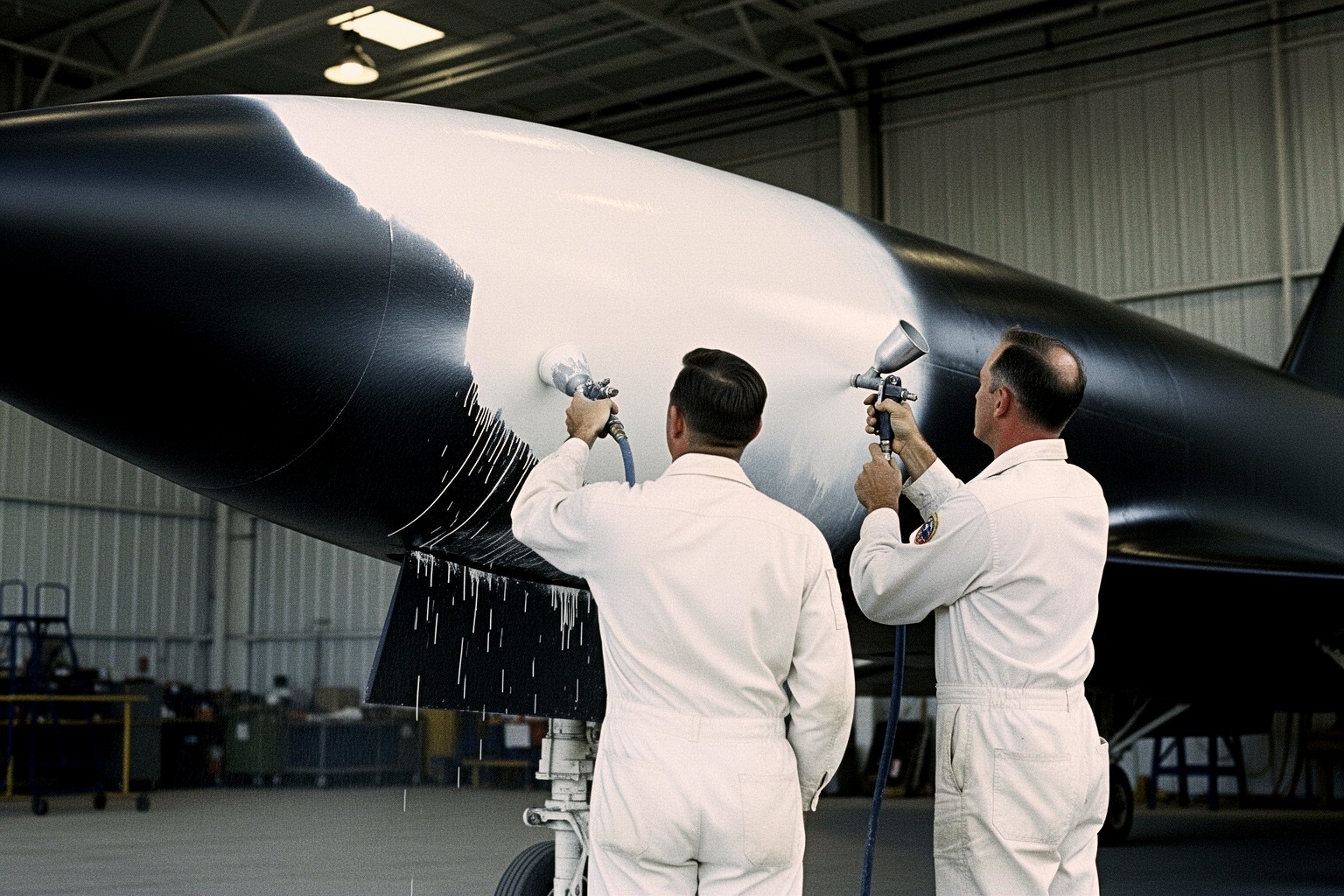
On October 3, 1967, Air Force pilot William "Pete" Knight dropped from under the wing of a B-52 over the Mojave Desert and lit the rocket engine of an X-15. Minutes later he was moving at Mach 6.7, about 4,520 miles per hour. No crewed, winged, powered aircraft has flown faster since.
The plane had been rebuilt for the job. It carried two external fuel tanks for a longer burn. Its skin was coated in a pink ablative compound to soak up the heat, then sealed under a layer of white. Under its tail hung a dummy ramjet, a test shape for engines that might one day breathe air at those speeds.
Knight hit his number, shut down the engine and glided toward Rogers Dry Lake. The record was clean. The landing was not.
On the ground, crews found the heat had burned clean through the tail structure. Shock waves off the dummy ramjet had concentrated the temperature there, and the ramjet itself had torn loose and fallen somewhere in the desert.
The aircraft was repaired but never flew again. It went to a museum, and the record it set on its last flight still stands.
Checked against: NASA Dryden flight research histories; U.S. Air Force Flight Test Center records; aviation histories of the X-15 program