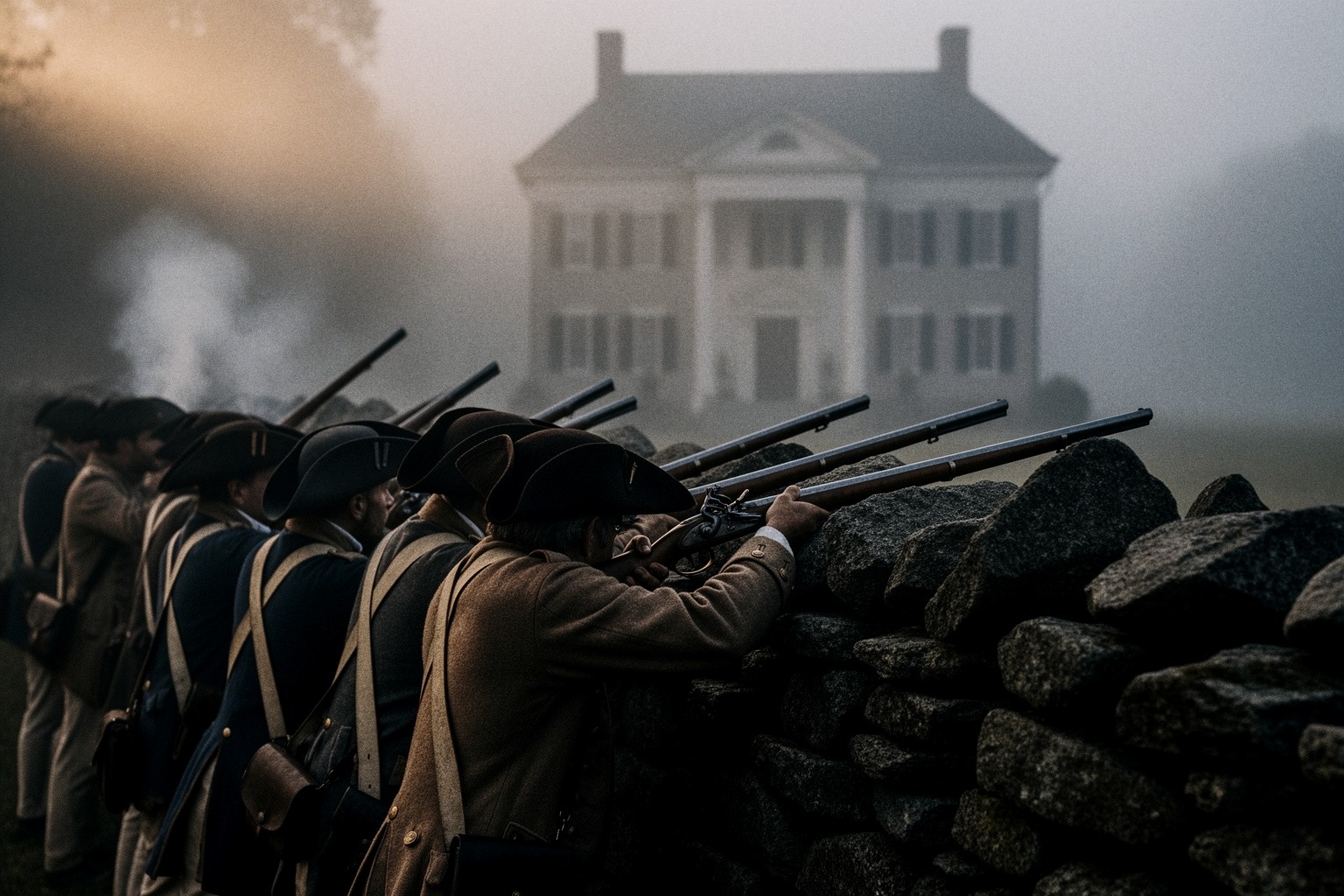
On October 4, 1777, George Washington attacked the British army camped at Germantown, a village just outside Philadelphia. The British had taken the city about a week earlier. Washington's plan sent four columns marching through the night to strike at dawn along different roads.
Fog came with the sunrise. The leading Americans drove back the British pickets, and for a while the attack worked. Then a few companies of British infantry barricaded themselves inside Benjamin Chew's stone country house. Instead of bypassing it, American officers stopped to besiege it. Cannonballs bounced off the walls, and the noise pulled other units toward the house.
In the fog and powder smoke, two American divisions mistook each other for the enemy and opened fire. Men ran low on ammunition. The columns fell back, then broke into retreat. The British held Germantown, and the Americans lost far more men than they killed.
In Paris, the defeat read differently.
French officials saw an army that had been beaten at Brandywine weeks earlier and had marched straight back to attack. Together with the American victory at Saratoga later that month, it helped convince France the rebellion could last. In February 1778, France signed a treaty of alliance with the United States.
Checked against: Continental Army and British officers' correspondence; regimental records; academic histories of the 1777 Philadelphia campaign; historic site records for the Chew house; diplomatic histories of the Franco-American alliance
The beep went round the world before Moscow made a fuss
Illustration generated by AI for The Day Vault.
On October 4, 1957, the Soviet Union launched Sputnik 1 from a test range in Kazakhstan. It was a polished metal sphere 58 centimetres across, trailing four long antennas, and it weighed about 84 kilograms.
It circled the Earth roughly every 96 minutes. Its radio transmitters sent out a steady beep that anyone with a decent shortwave receiver could pick up. Amateur operators across the world tuned in, listened and recorded it. Broadcasters played the sound on air that night.
In the United States, newspapers the next morning gave the story their biggest type. The country that had assumed it led the world in technology was being overflown, every hour and a half, by a Soviet machine it could hear but not touch.
In Moscow, the response was oddly calm: Pravda's first report on October 5 was a plain government statement under a modest headline, with no celebration at all.
Only after foreign alarm filled the world's front pages did the Soviet press turn Sputnik into a triumph. In Washington, the alarm became policy. Within a year Congress had poured money into science education and, in July 1958, created NASA.
Checked against: Contemporary newspaper archives (Soviet and American press, October 1957); NASA History Office publications; scholarly histories of the space race and the Sputnik crisis
In 1991 he stood on a tank to defend it. In 1993 he shelled it.
Illustration generated by AI for The Day Vault.
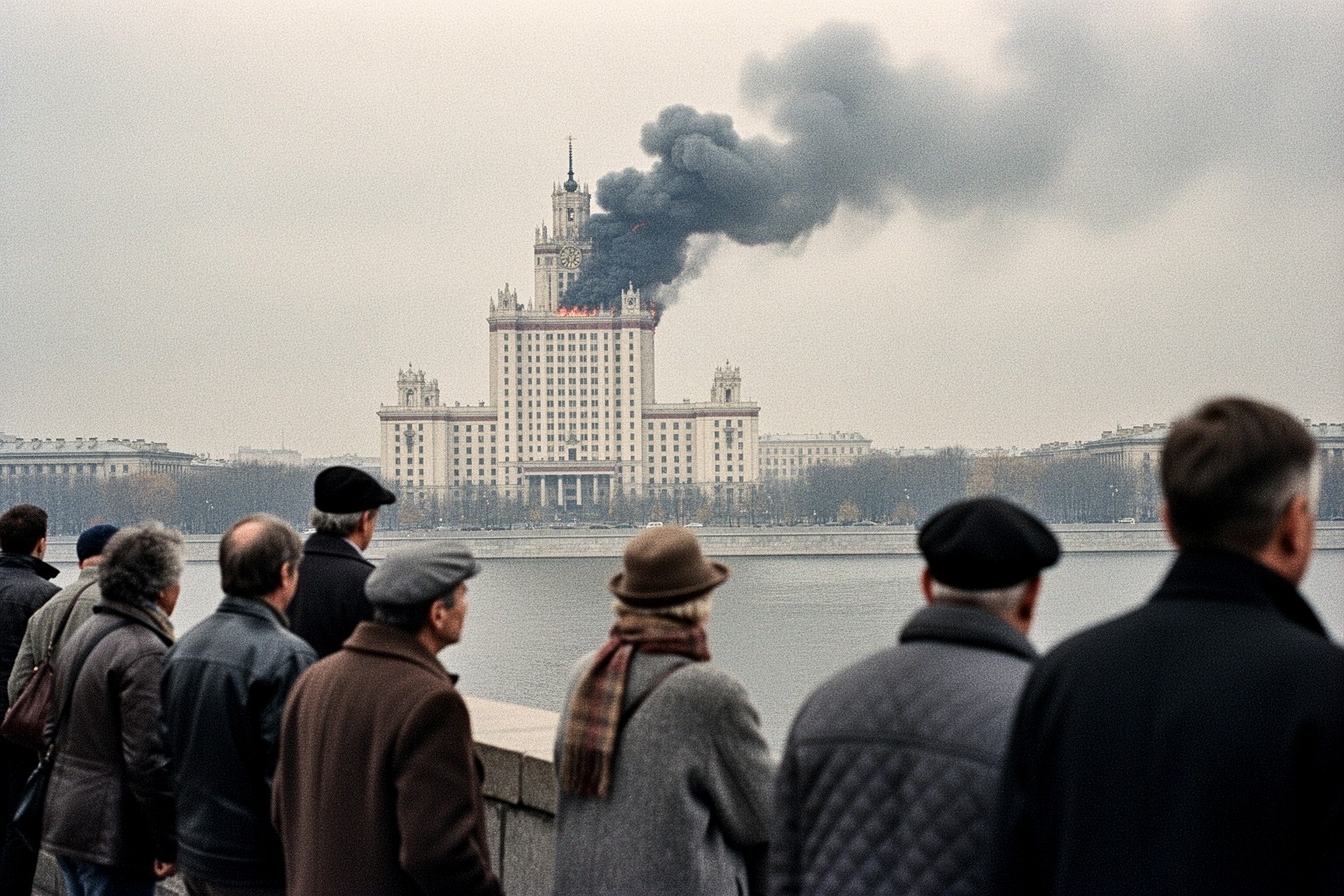
On October 4, 1993, Russian army tanks lined up on a bridge over the Moscow River and fired shells into the White House, the building that housed the country's parliament. By afternoon its upper floors were black with smoke and the deputies inside had surrendered.
The standoff had run for two weeks. On September 21, President Boris Yeltsin dissolved the Supreme Soviet by decree, a move the Constitutional Court ruled unconstitutional. Parliament voted to remove him and swore in his vice president, Alexander Rutskoy, as acting president. Deputies barricaded themselves inside. On October 3 their armed supporters stormed the mayor's office and attacked the Ostankino television centre.
The next morning, Muscovites crowded the embankments to watch the shelling. CNN broadcast it live around the world. By evening, Rutskoy and parliamentary speaker Ruslan Khasbulatov had been led out under arrest.
Two years earlier, in August 1991, Yeltsin had climbed onto a tank outside that same building to defend it against a hardline coup, and the image had made him a hero of Russian democracy.
In December, voters approved a new constitution built around the presidency, giving the office sweeping powers over a weakened parliament. Amended but never replaced, it remains Russia's constitution today.
Checked against: Contemporary news wire reports and broadcast archives; histories of post-Soviet Russia; the 1993 Russian constitutional referendum records; Constitutional Court rulings of September 1993
They met on a train and kept their plans to themselves
Illustration generated by AI for The Day Vault.
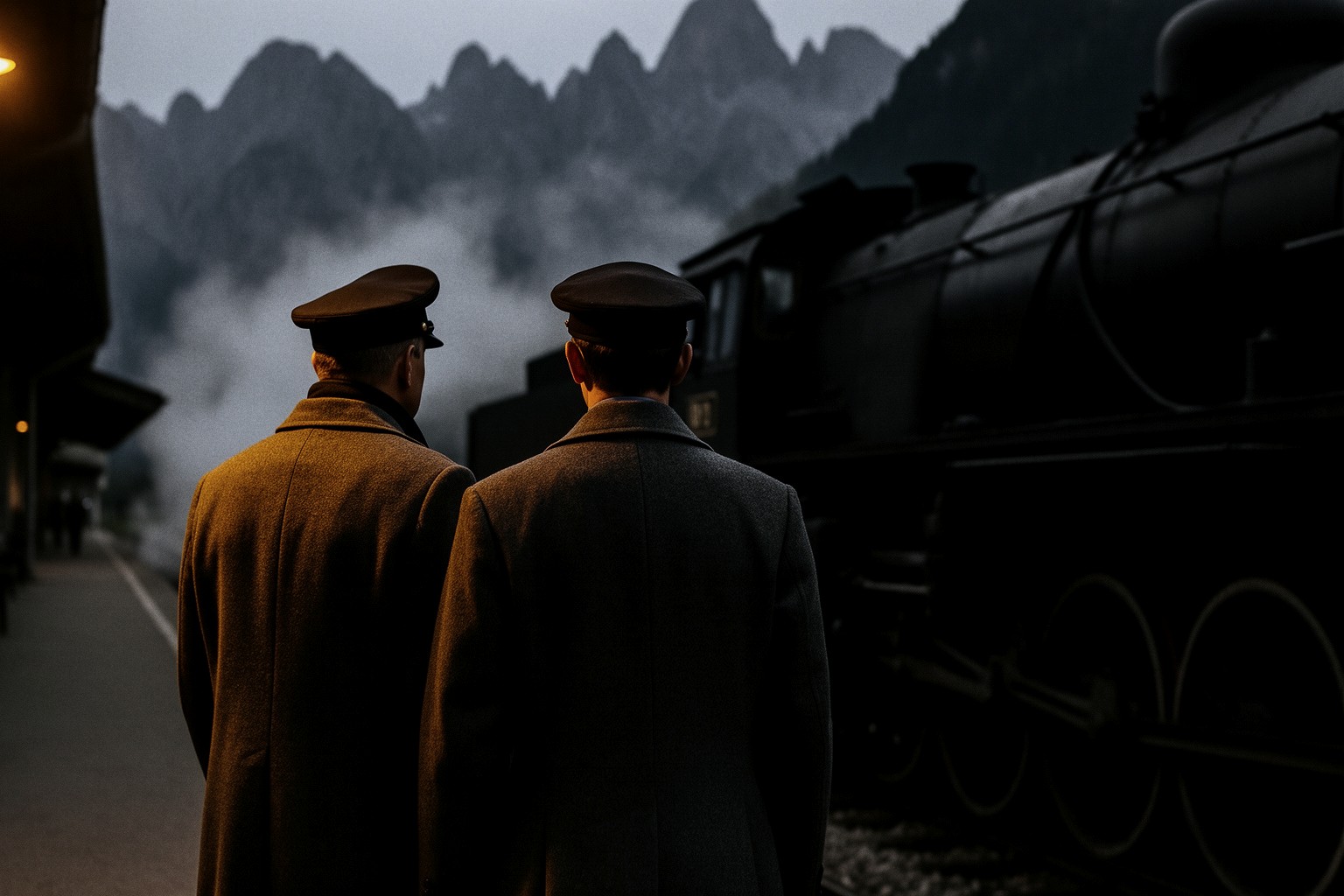
On October 4, 1940, Adolf Hitler and Benito Mussolini met at the Brenner Pass, the Alpine crossing between German-annexed Austria and Italy. They talked in a railway carriage at the frontier station, with their foreign ministers, Joachim von Ribbentrop and Galeazzo Ciano, at the table.
The war was a year old. France had fallen in June. Britain had not, and the air campaign over England had failed to break it. The two dictators discussed what to do next: Spain, Vichy France, the Mediterranean, and how to bring Britain to terms.
On paper it was a meeting of close partners. A week earlier, on September 27, Germany, Italy and Japan had signed the Tripartite Pact in Berlin. The Axis looked wider and firmer than ever.
Neither man told the other what he meant to do. Days later German troops moved into Romania, and Mussolini learned of it after the fact. Ciano's diary records him vowing to repay Hitler in the same coin.
On October 28 Italy invaded Greece from Albania, with Berlin given almost no warning. The Greeks drove the Italians back into Albania, and in April 1941 Germany sent its own army south to finish the job.
Checked against: Ciano's published diaries; captured German Foreign Ministry records; standard histories of the Axis alliance and the Greco-Italian War
The robbery went perfectly. The spending gave it away.
Illustration generated by AI for The Day Vault.
On October 4, 1997, David Ghantt, a vault supervisor at the Loomis Fargo depot in Charlotte, North Carolina, loaded a company van with cash and drove off. The take was $17.3 million, one of the largest cash robberies in American history.
He had not planned it alone. The idea came through a former co-worker and a circle of acquaintances, and the arrangement was simple. Ghantt would cross into Mexico and lie low. The others would keep the money safe in North Carolina and send him his share a little at a time.
So Ghantt waited on the coast, living on what trickled south. Nobody had been hurt, nobody had been caught, and the vault had been emptied by the man trusted to guard it. As a piece of theft, it had gone almost exactly to plan.
Back home, the people minding the money stopped minding it: they moved into a large new house and began paying for things in cash, fast, in full view of the neighbours.
Investigators followed the purchases rather than the robbery. By March 1998 Ghantt had been arrested in Mexico, his partners rounded up in North Carolina, and most of the money was back in the hands of the company he had worked for.
Checked against: FBI case records, federal court filings from the Western District of North Carolina, contemporary reporting in North Carolina newspapers
She died on the 4th and was buried the next day, the 15th
Illustration generated by AI for The Day Vault.
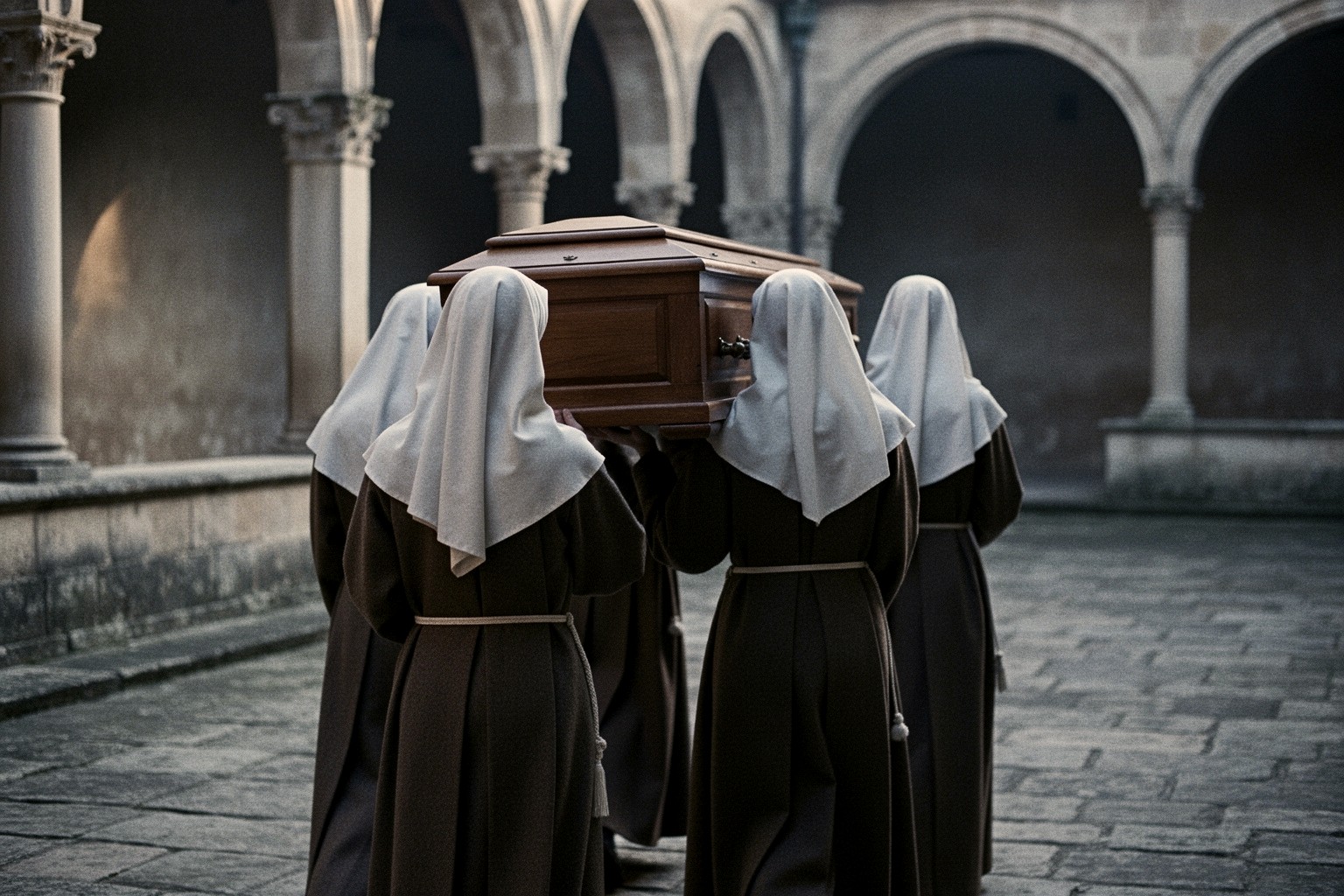
On the night of 4 October 1582, Teresa of Ávila died in the Carmelite convent at Alba de Tormes in Spain. The nuns buried her the following day. That day was 15 October.
Nobody had lost count. Pope Gregory XIII had ordered it. His bull Inter gravissimas, issued that February, cut ten days from the calendar so that Thursday 4 October would be followed by Friday 15 October. Spain, Portugal, Poland and most of Italy made the jump that week.
The problem was Easter. The Julian calendar ran about eleven minutes long each year. Over twelve centuries the spring equinox had drifted from 21 March, the date the Church used to fix the feast, to around 11 March. Gregory's astronomers removed the surplus days and trimmed future leap years so the drift would not return.
The fix was sound astronomy, but it carried a pope's signature, and much of Protestant Europe refused to take its dates from Rome.
Britain and its colonies kept the old calendar for another 170 years, often keeping Easter on a different Sunday from their Catholic neighbours. When Parliament finally gave in, Wednesday 2 September 1752 was followed by Thursday 14 September. Eleven days vanished, one more than Gregory had needed.
Checked against: Text of the papal bull Inter gravissimas; Carmelite records and standard biographies of Teresa of Ávila; scholarly histories of the Gregorian calendar reform; the British Calendar (New Style) Act 1750
The band played the song. The singer never came back.
Illustration generated by AI for The Day Vault.
Janis Joplin was found dead on October 4, 1970, in her room at the Landmark Motor Hotel in Hollywood. She was 27. The cause was a heroin overdose.
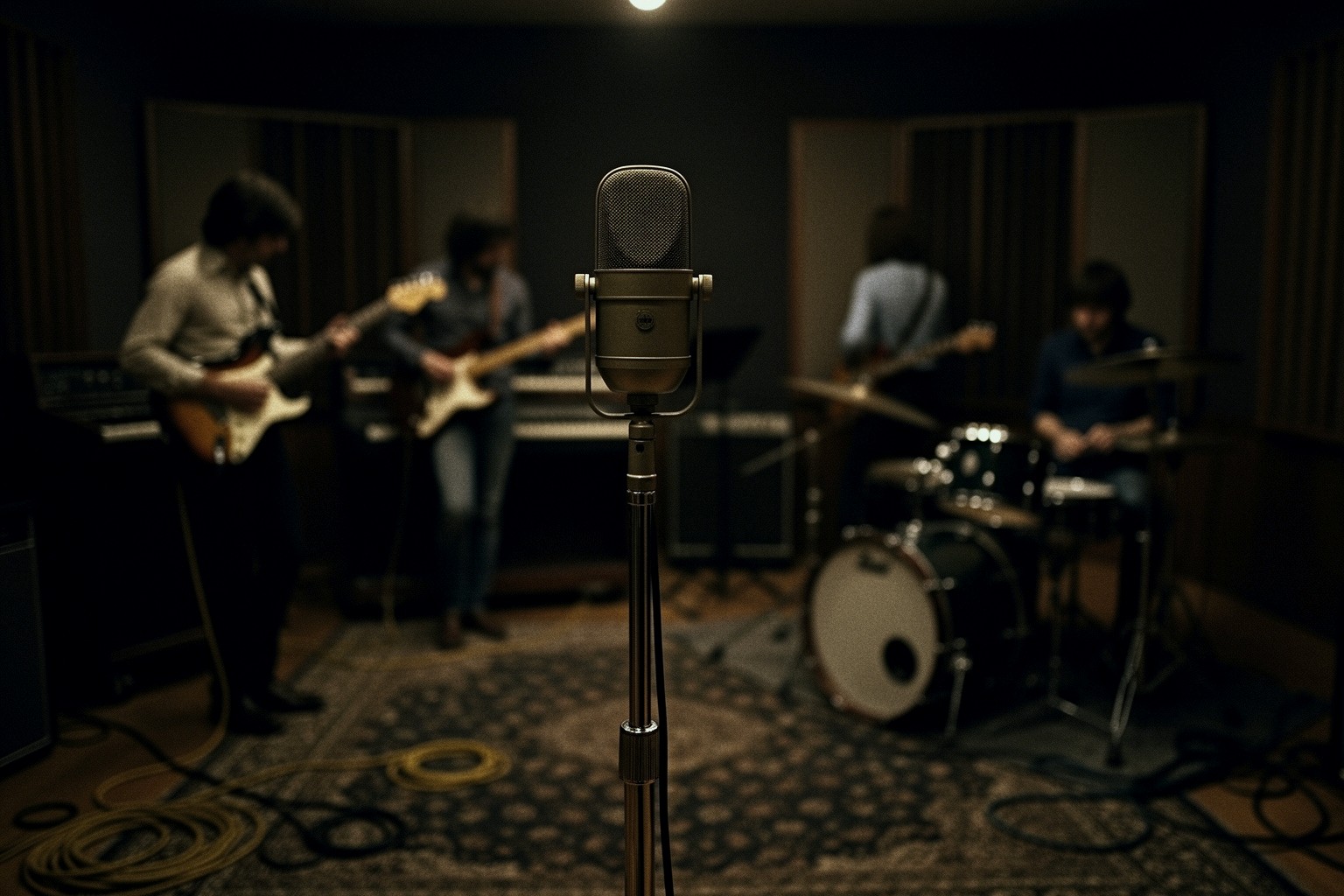
She had spent weeks recording a new album with the Full Tilt Boogie Band, the steadiest group she had worked with, and producer Paul Rothchild. The sessions were going well. Days before she died, she sang "Mercedes Benz" with no band behind her, a short, rough number that made it onto the record as it was.
The album, Pearl, came out in January 1971. Her recording of Kris Kristofferson's "Me and Bobby McGee" became a number one single, the only one of her career. Pearl went to number one on the album chart as well. A singer known for live shows had her biggest success after she could no longer perform.
One track on Pearl has no Janis on it at all. "Buried Alive in the Blues" stayed an instrumental because she was due to add her vocal at a session she never reached.
The band's take was released untouched. On her best-selling album, the musicians play a full song around the place where her voice should be.
Checked against: Contemporary Los Angeles newspaper coverage and coroner's findings; Billboard chart archives; album credits and liner notes for Pearl; published biographies of the singer
She got a million dollars. She did not get a welcome.
Illustration generated by AI for The Day Vault.
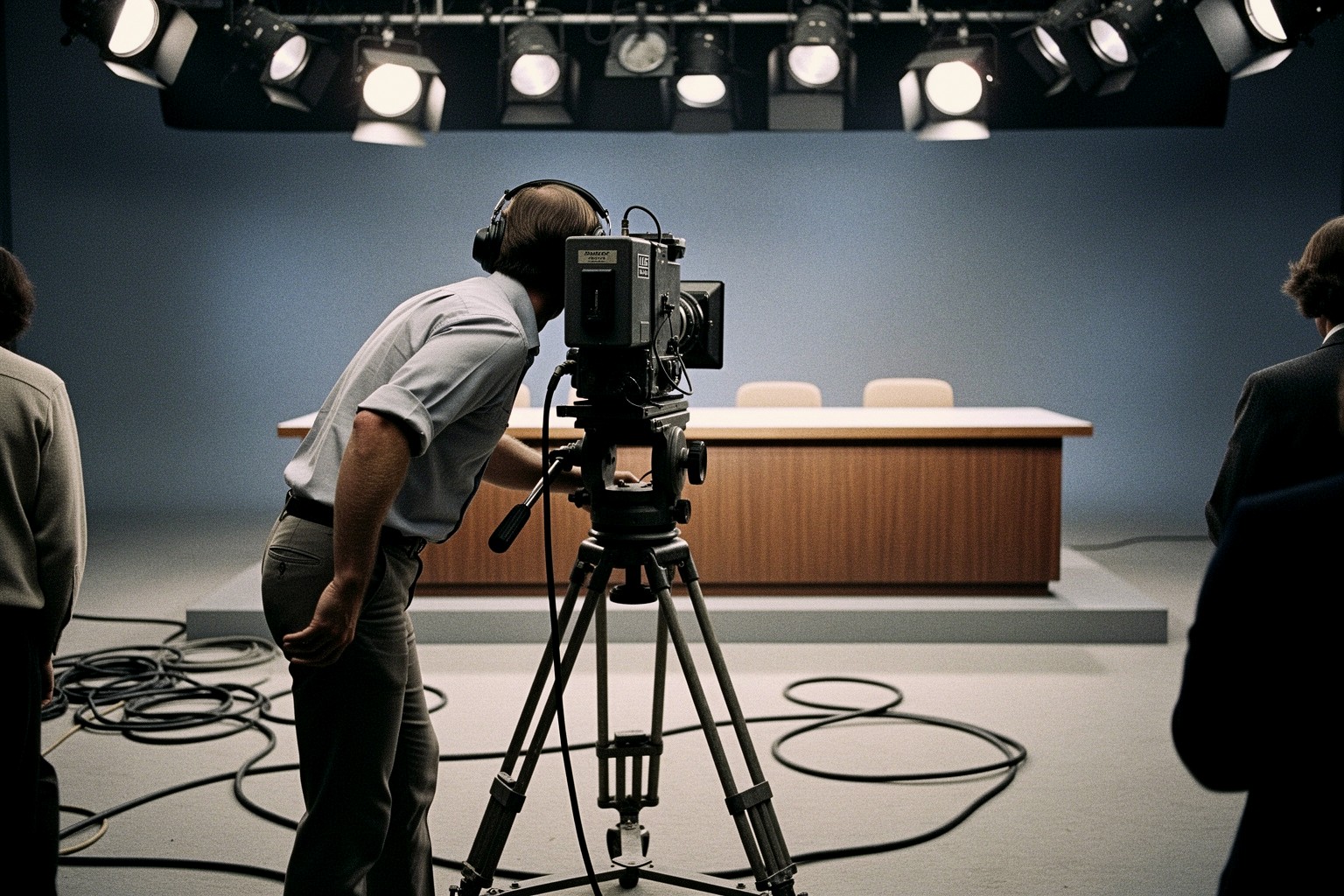
On October 4, 1976, Barbara Walters sat down beside Harry Reasoner on the ABC Evening News. She was the first woman to co-anchor a network evening newscast in the United States.
The headline was the money. ABC's five-year deal was reported at a million dollars a year, split between the newscast and prime-time specials. No television journalist had been paid like that, and critics and rival newsmen said so loudly. To some it looked like show business in a news jacket.
ABC wanted the attention. Its evening news ran a distant third behind CBS and NBC, and Walters had built a large following over years on the Today show. The network bet that viewers would follow her across the dial.
The contract could buy her a chair, but not a partner. Reasoner had not wanted a co-anchor, the chill between them showed on camera night after night, and the ratings barely moved.
By 1978 ABC broke up the pairing. Reasoner went back to CBS, and Walters turned to interviews and specials, where she thrived. Thirty years passed before a woman anchored a big-three weekday evening newscast on her own.
Checked against: ABC News archives and network press materials; contemporary coverage in major US newspapers and newsweeklies; histories of American broadcast journalism; published memoirs and biographies of the anchors involved
Brooklyn finally beat the Yankees. Then the team left Brooklyn.
Illustration generated by AI for The Day Vault.
On October 4, 1955, the Brooklyn Dodgers beat the New York Yankees 2-0 in Game 7 of the World Series at Yankee Stadium. It was the first championship in the franchise's history.
It had been a long wait. The Dodgers had lost the Series to the Yankees in 1941, 1947, 1949, 1952 and 1953. "Wait till next year" had become the borough's shrug, repeated every October until it sounded like a family joke.
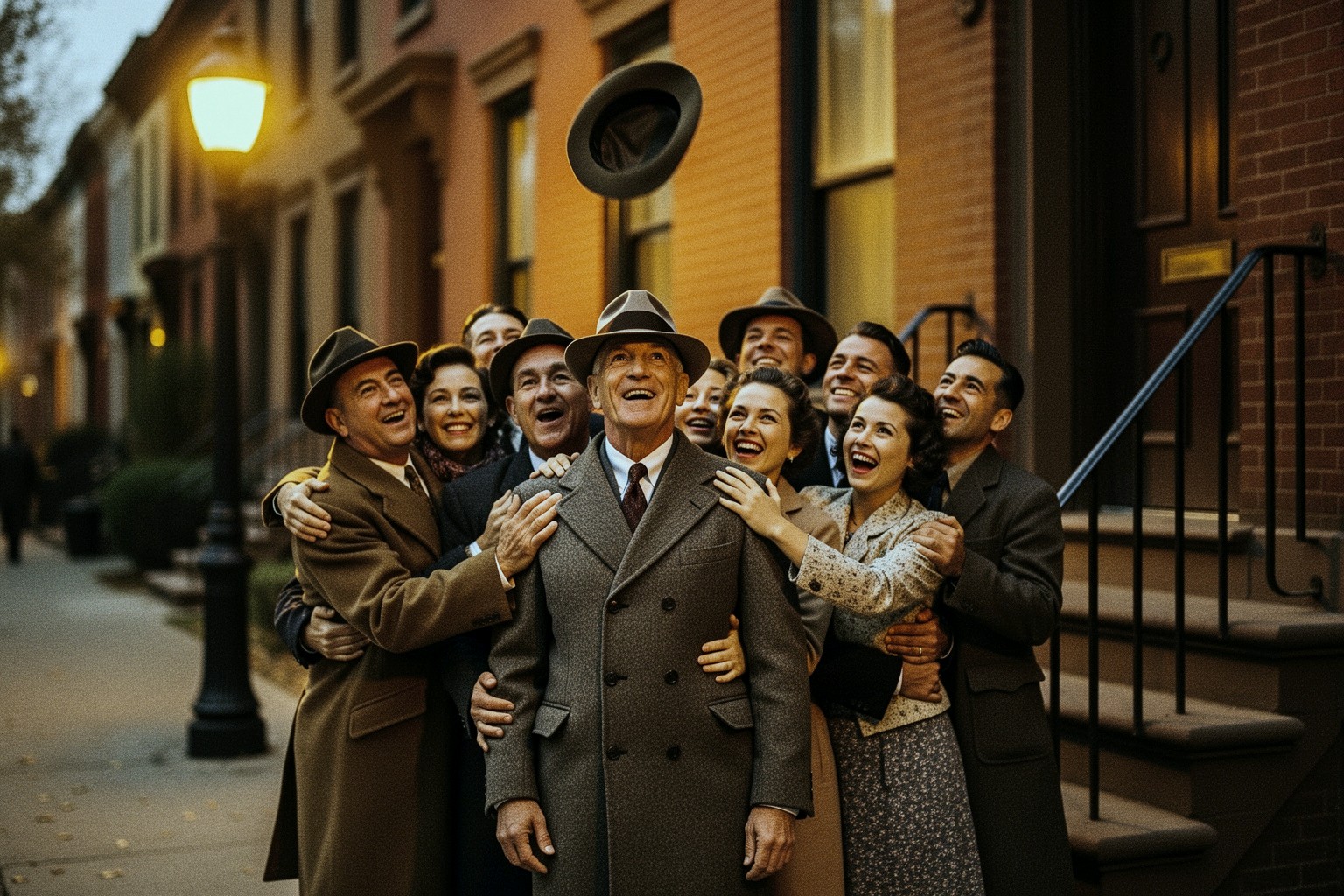
Johnny Podres, a 23-year-old left-hander, pitched the shutout. Gil Hodges drove in both runs. In the sixth inning, with two Yankees on base, Sandy Amoros sprinted toward the left-field line, caught a drive from Yogi Berra and threw to Pee Wee Reese, who relayed to first for a double play. Back in Brooklyn, people poured out of apartments and bars, honking horns and hugging strangers on the sidewalks well into the night.
Two years later, owner Walter O'Malley moved the team to Los Angeles.
The 1955 title is the only World Series Brooklyn ever won. Ebbets Field was demolished in 1960, and an apartment complex now stands where the borough once waited for next year.
Checked against: Major League Baseball official records, contemporary New York newspaper archives, baseball histories of the Brooklyn Dodgers, Baseball Hall of Fame materials
It won the prize for private spaceflight. Then it never flew again.
Illustration generated by AI for The Day Vault.
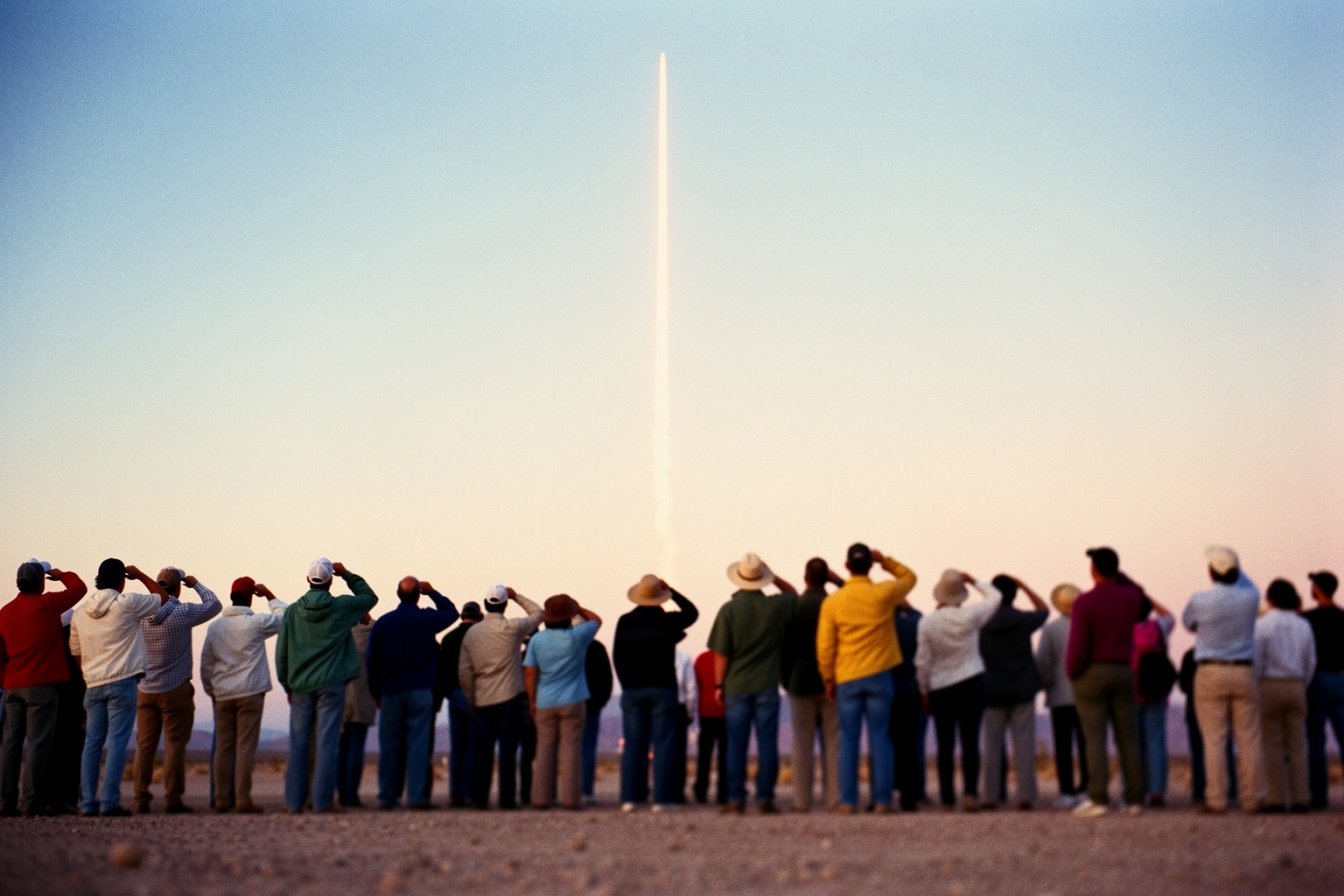
On October 4, 2004, a privately built rocket plane called SpaceShipOne climbed above 100 kilometres over the Mojave Desert and glided back to the runway. It was the craft's second trip to space in five days, and it won the $10 million Ansari X Prize.
The rules were strict. No government money in the design. A pilot plus the weight of two passengers. The same vehicle had to reach space twice within two weeks. Burt Rutan's company, Scaled Composites, built a long-winged carrier jet called White Knight to haul the rocket plane to about 14 kilometres. There it dropped free, lit its engine and pointed almost straight up.
Brian Binnie flew the winning trip, topping out near 112 kilometres. Commentators called it the start of space tourism. Richard Branson's Virgin Group had already licensed the technology for a bigger successor that would carry paying passengers.
SpaceShipOne never flew again, and the tourist era it promised kept slipping.
The winner went on display at the Smithsonian's National Air and Space Museum in 2005. Paying passengers did not reach space aboard its successor until 2023.
Checked against: Ansari X Prize Foundation records, Scaled Composites flight data, Smithsonian National Air and Space Museum collection notes, contemporary wire-service and newspaper coverage
They planned four presidents to the waist. They got four heads.
Illustration generated by AI for The Day Vault.
On October 4, 1927, workers began carving Mount Rushmore in the Black Hills of South Dakota. The sculptor, Gutzon Borglum, wanted Washington, Jefferson, Theodore Roosevelt and Lincoln shown from the waist up, sixty-foot faces atop granite bodies.
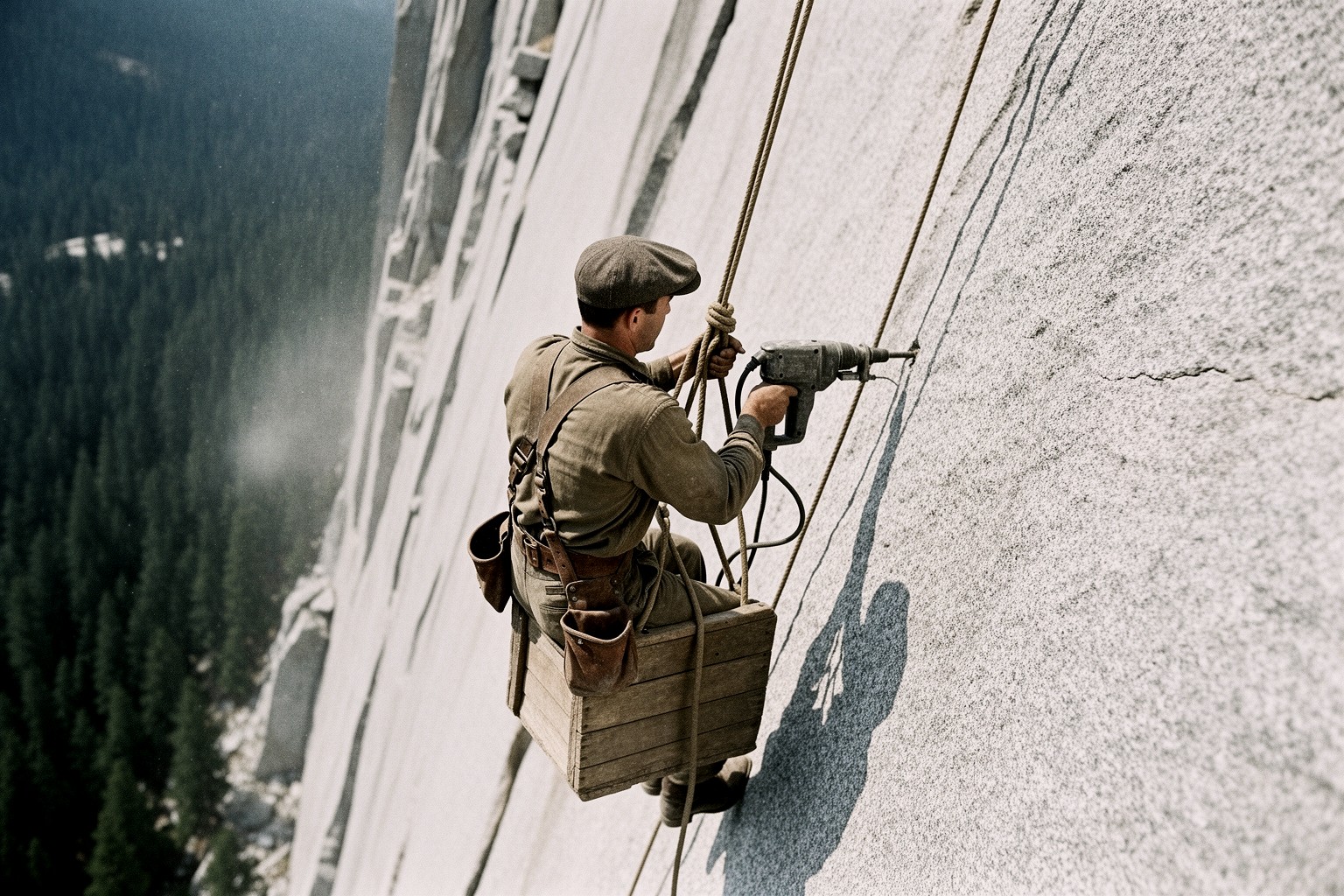
The crews were mostly local men, many of them former miners. They rode down the cliff in bosun's chairs, drilled holes and packed them with dynamite. Blasting removed about ninety per cent of the rock. The rest came off with jackhammers and hand tools. Nearly four hundred men worked the mountain over fourteen years, and none of them died on the job.
The granite did not always cooperate. Jefferson was first carved on Washington's right. The stone there was cracked, so crews blasted that face off the mountain and started again on the other side.
Money arrived in fits, then the Depression and the coming war squeezed it further, and in March 1941 Borglum died with the faces still unfinished.
His son Lincoln took charge for a few months, and on October 31, 1941, the work stopped for good. The bodies were never carved. The rubble the crews blasted off still lies in a slope beneath the four heads.
Checked against: National Park Service histories of Mount Rushmore National Memorial; biographies of Gutzon Borglum; contemporary newspaper coverage; South Dakota State Historical Society archives