The movies learned to talk. Their champion missed it.
Illustration generated by AI for The Day Vault.
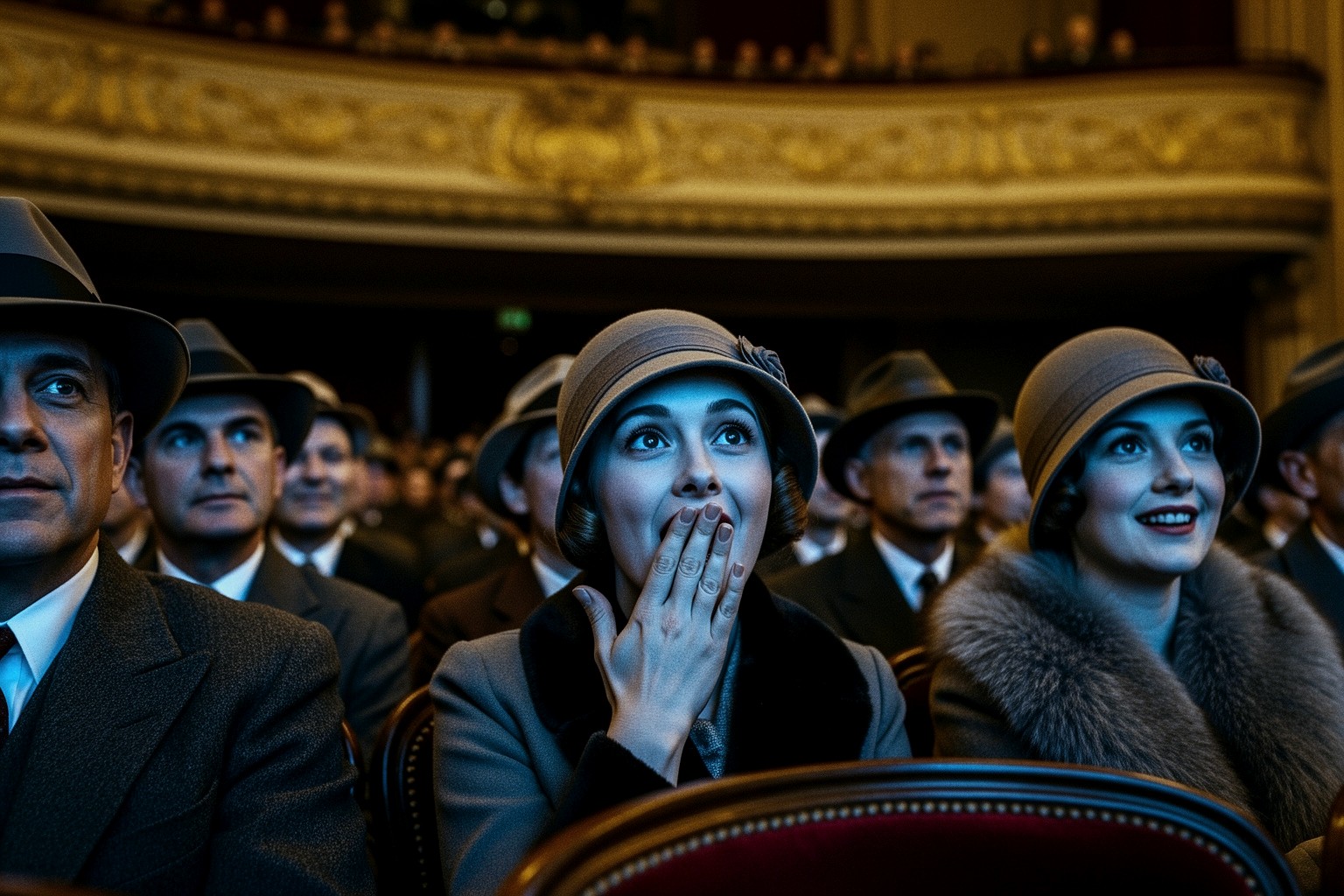
On October 6, 1927, The Jazz Singer opened at the Warner Theatre in New York. Most of it was an ordinary silent film, with title cards and an orchestral score. But in a few scenes, Al Jolson sang, and the audience heard him, his voice played in step with the picture from a large disc spinning beside the projector.
Then he spoke. After one song he ad-libbed, "Wait a minute, wait a minute, you ain't heard nothin' yet!" A little later he chatted with his screen mother at a piano. It was barely two minutes of talk in a feature-length film. The crowd responded as if it were the whole show.
The system was called Vitaphone, and Warner Bros. had bet heavily on it while bigger studios held back. The push came mostly from one brother, Sam Warner, who had spent years convincing the others that sound was worth the risk.
Sam Warner died in Los Angeles on October 5, the day before the premiere.
His brothers Harry, Albert and Jack went west for the funeral instead of sitting in the theatre. They were not in the room when the audience first heard a voice come off the screen.
Checked against: Contemporary New York newspaper reviews of the premiere; studio histories of Warner Bros.; film-history accounts of the Vitaphone sound system; biographies of the Warner brothers
On October 6, 1789, Louis XVI left the Palace of Versailles for Paris. He did not choose the day. Thousands of Parisians, many of them market women, had walked roughly twelve miles through rain the day before, furious at the price and scarcity of bread.
Before dawn, part of the crowd forced its way into the palace. Two royal bodyguards were killed. By mid-morning the king had stepped onto a balcony above a packed courtyard and agreed to move his family to the capital.
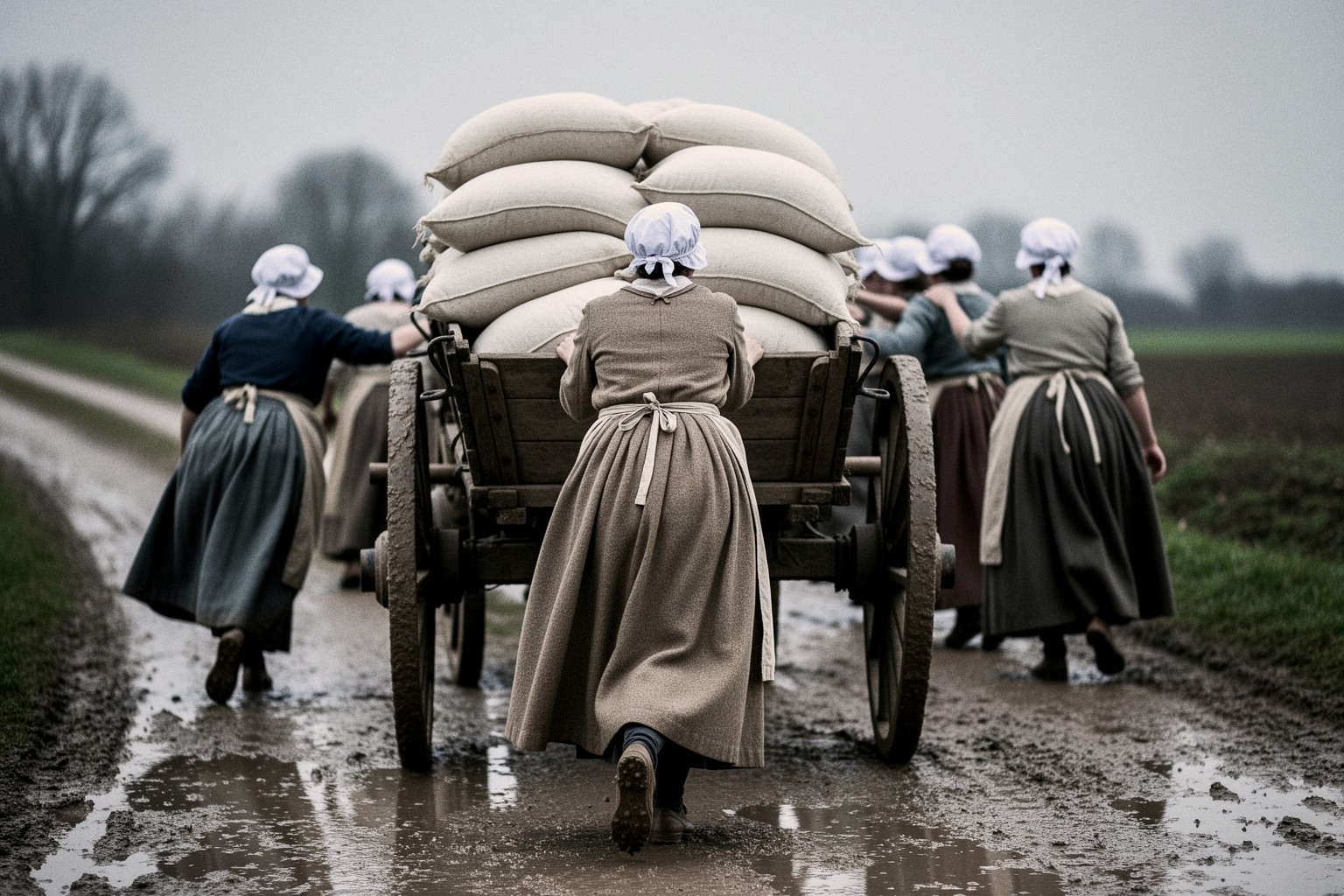
The procession took most of the day. Wagons of flour from the palace stores rolled alongside the royal carriage, and the crowd sang that it was bringing home the baker, the baker's wife and the baker's boy. The guards' heads rode on pikes near the front.
But the baker could not bake. The crowd had not brought home a provider; it had taken a hostage.
The family was lodged in the neglected Tuileries Palace under the eyes of the National Guard, and the National Assembly soon followed them into the city. Louis XVI never saw Versailles again.
Checked against: Standard histories of the French Revolution, contemporary eyewitness memoirs from the Versailles court, records of the National Assembly, and academic studies of the October Days.
He was given a second chance. He used it to say it again.
Illustration generated by AI for The Day Vault.
On October 6, 1976, President Gerald Ford walked onto the stage of the Palace of Fine Arts Theatre in San Francisco for his second debate with Jimmy Carter. The subject was foreign policy, supposedly the sitting president's strong ground.
Asked about the Helsinki agreements with Moscow, Ford said: "There is no Soviet domination of Eastern Europe and there never will be under a Ford administration." The questioner, Max Frankel of The New York Times, offered him a chance to step back. Ford went further instead, naming Yugoslavia, Romania and Poland.
He meant something defensible: that the people of those countries did not accept Moscow's control. That is not what he said. Soviet tanks had crushed Hungary in 1956 and Czechoslovakia in 1968, and millions of American voters had family behind the Iron Curtain.
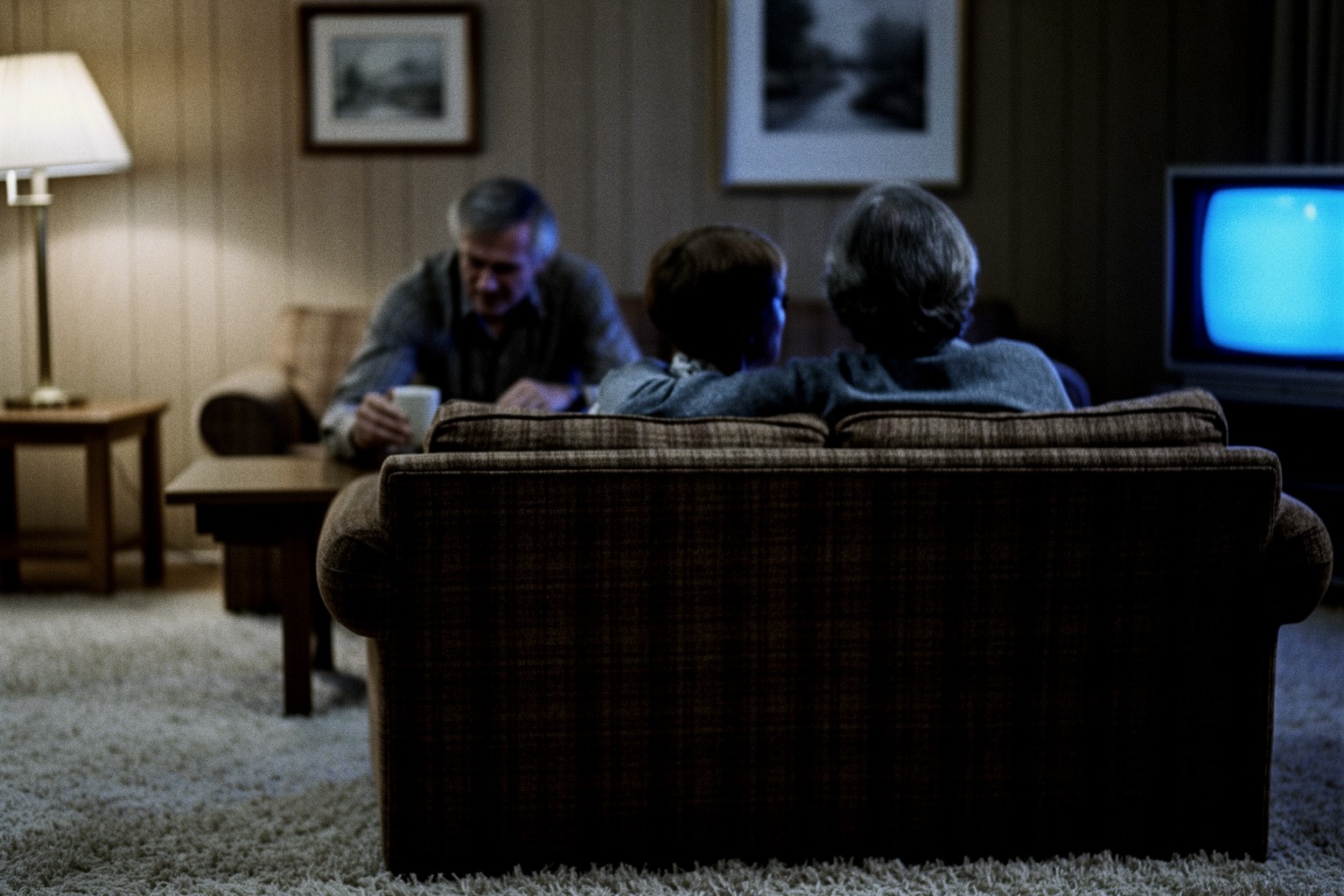
Most viewers barely flinched. Snap polls taken that night scored the debate roughly even. It was the days of coverage that followed, replaying the line again and again, that turned it into the night's only story.
Ford took several days to say plainly what he had meant. In November he lost to Carter by about two points of the popular vote.
Checked against: Commission and network debate transcripts; contemporary newspaper coverage; presidential library records; post-election studies of debate polling and media effects
The wall was made of sand. The army brought water.
Illustration generated by AI for The Day Vault.
On October 6, 1973, Egyptian troops crossed the Suez Canal into Israeli-held Sinai. It was Yom Kippur, the holiest day of the Jewish year, and the assault began in the early afternoon, when much of the opposing army was at home or in synagogue.
Along the east bank ran the Bar Lev Line: a chain of fortified strongpoints behind a steep embankment of packed sand. It was built so that boats could not unload vehicles and tanks could not climb out of the water. Planners on both sides assumed that breaching it would take explosives, bulldozers and many hours under fire.
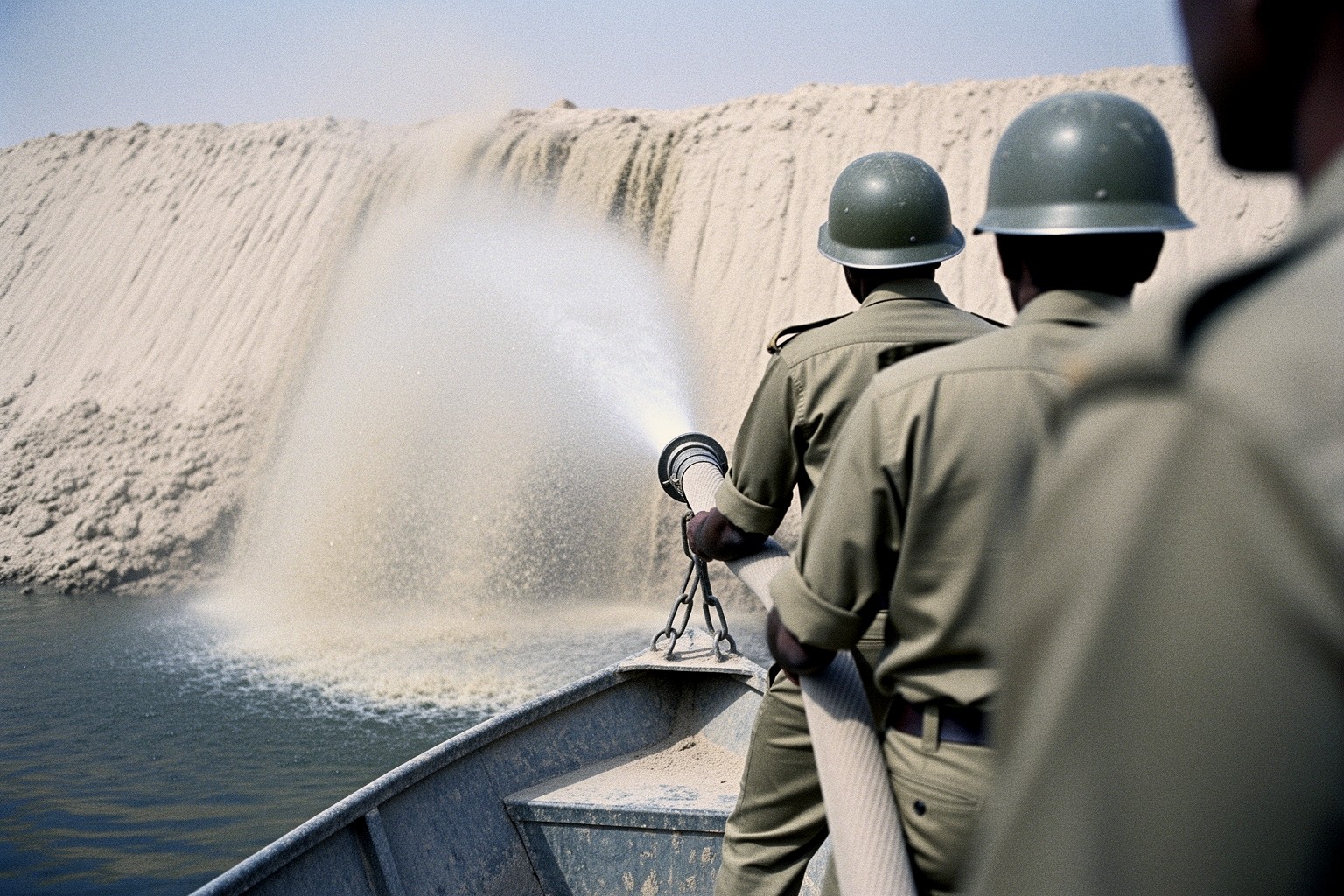
An Egyptian engineer who had worked on the Aswan High Dam had watched pressurised water move earth there. He proposed doing the same on the canal. The army acquired high-pressure pumps, mounted them on boats and trained their crews quietly, far from the front.
The barrier built to hold back an army was undone by the canal it stood beside, with water drawn straight from it.
The jets cut channels through the sand within hours, carving openings wide enough for vehicles. By the next morning, pontoon bridges spanned the canal and Egyptian tanks were moving into Sinai.
Checked against: Military histories of the 1973 October War, Egyptian and Israeli official accounts, memoirs of commanders on both sides, and engineering studies of the canal crossing
The safe was too heavy. So they threw it off the train.
Illustration generated by AI for The Day Vault.
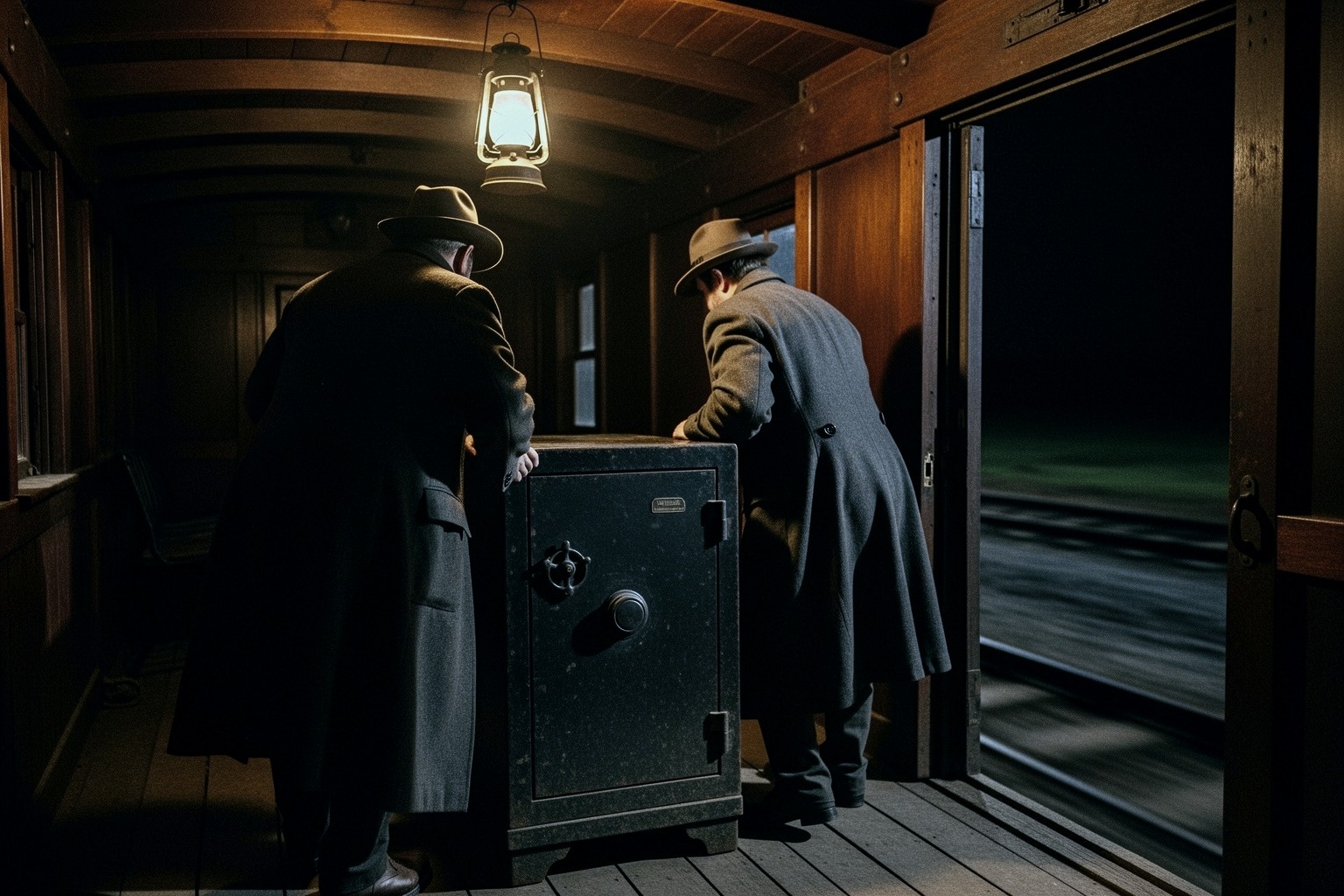
On October 6, 1866, a few miles outside Seymour, Indiana, masked men boarded an Ohio & Mississippi Railroad train as it pulled away into the dark. They walked through to the Adams Express car, cornered the messenger, and emptied the safe he could open.
A second safe would not open. They shoved it out the door anyway, jumped after it, and let the train roll on without them. They never got that one open either.
It is usually counted as the first peacetime train robbery in the United States. The men were local, from the Reno family of Jackson County: brothers John and Simeon, with an accomplice. They were arrested, but the case went nowhere. Witnesses in a county the Renos had frightened for years did not care to testify.
Getting away with it was the worst thing that could have happened to them.
Freed, the gang kept stopping trains, and the express companies hired the Pinkerton agency to run them down. The courts never finished the job. In December 1868 a vigilante mob forced its way into the jail at New Albany and hanged three Reno brothers, Frank, William and Simeon, inside it.
Checked against: Indiana state and county histories, histories of the Pinkerton National Detective Agency, contemporary Indiana and Ohio newspaper reports, railroad and express company histories
They crossed an ocean for freedom. Then they asked who else deserved it.
Illustration generated by AI for The Day Vault.
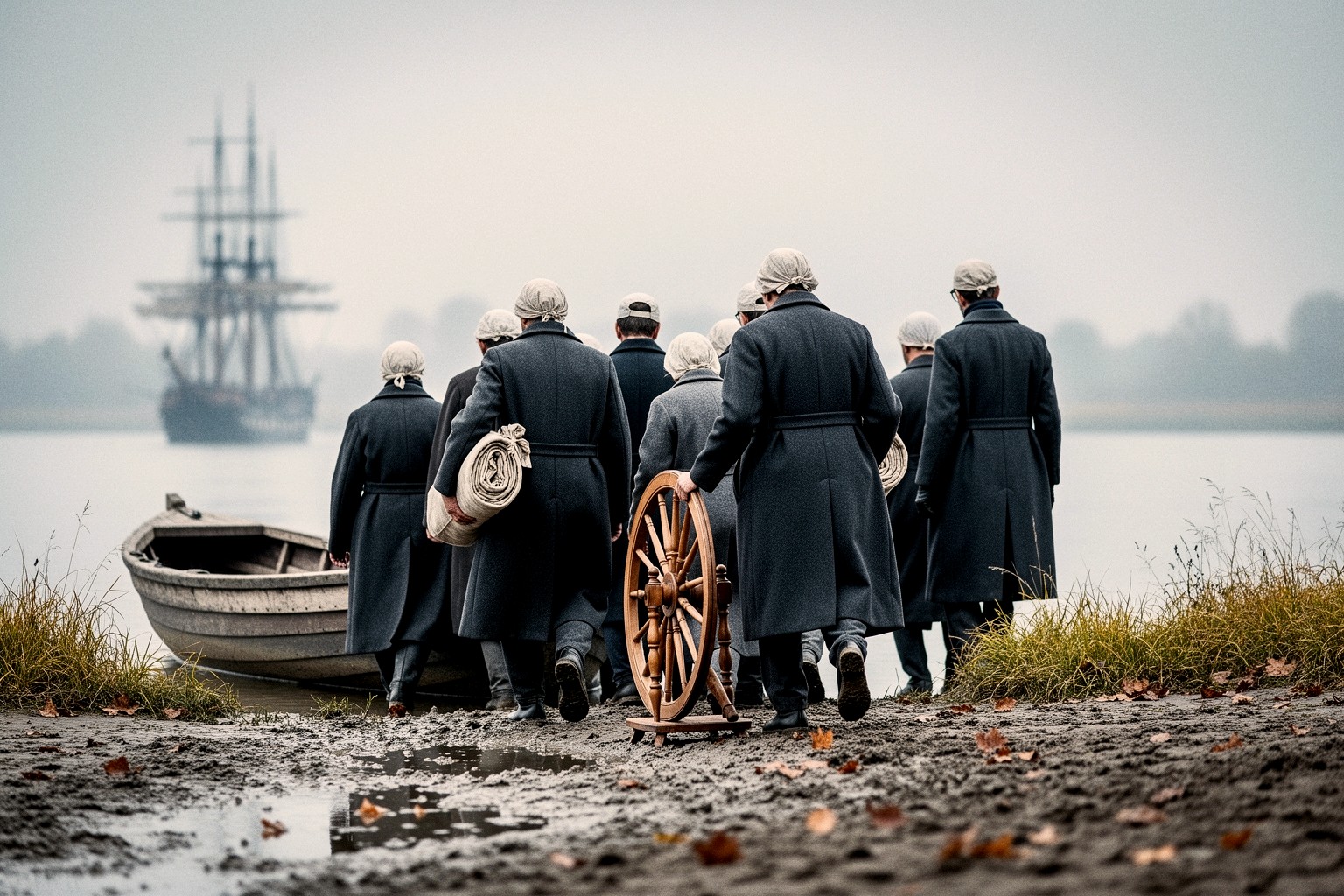
On October 6, 1683, the ship Concord reached Philadelphia after more than two months at sea. Aboard were thirteen families from Krefeld, a weaving town on the lower Rhine. Most were Quakers with Mennonite roots. They had come for one thing: the right to worship without fines or prison.
William Penn's colony promised exactly that. The families walked a few miles north of the city and laid out a settlement of their own. They called it Germantown, and they went back to what they knew: flax, looms and long silent meetings for worship.
Their new neighbours had brought something else. In Pennsylvania, as across the English colonies, Quakers bought and sold enslaved Africans. Some of the colony's leading Friends held people in bondage. So did Penn.
In April 1688, four Germantown men put their objection on paper: people who had fled persecution for their faith had no business holding others in bondage. It was the first organised protest against slavery in the English colonies.
Their monthly meeting passed it up to the quarterly meeting. The quarterly meeting passed it up again. The yearly meeting judged the matter too weighty to decide, and the paper was filed away. It was not found again until 1844. Philadelphia's Quakers did not move to disown slaveholding members until 1776.
Checked against: Germantown and Philadelphia Quaker meeting records; passenger accounts of the Concord voyage; the surviving 1688 Germantown protest manuscript; academic histories of colonial Pennsylvania and Quaker antislavery
The school was out of money. So the choir left town.
Illustration generated by AI for The Day Vault.
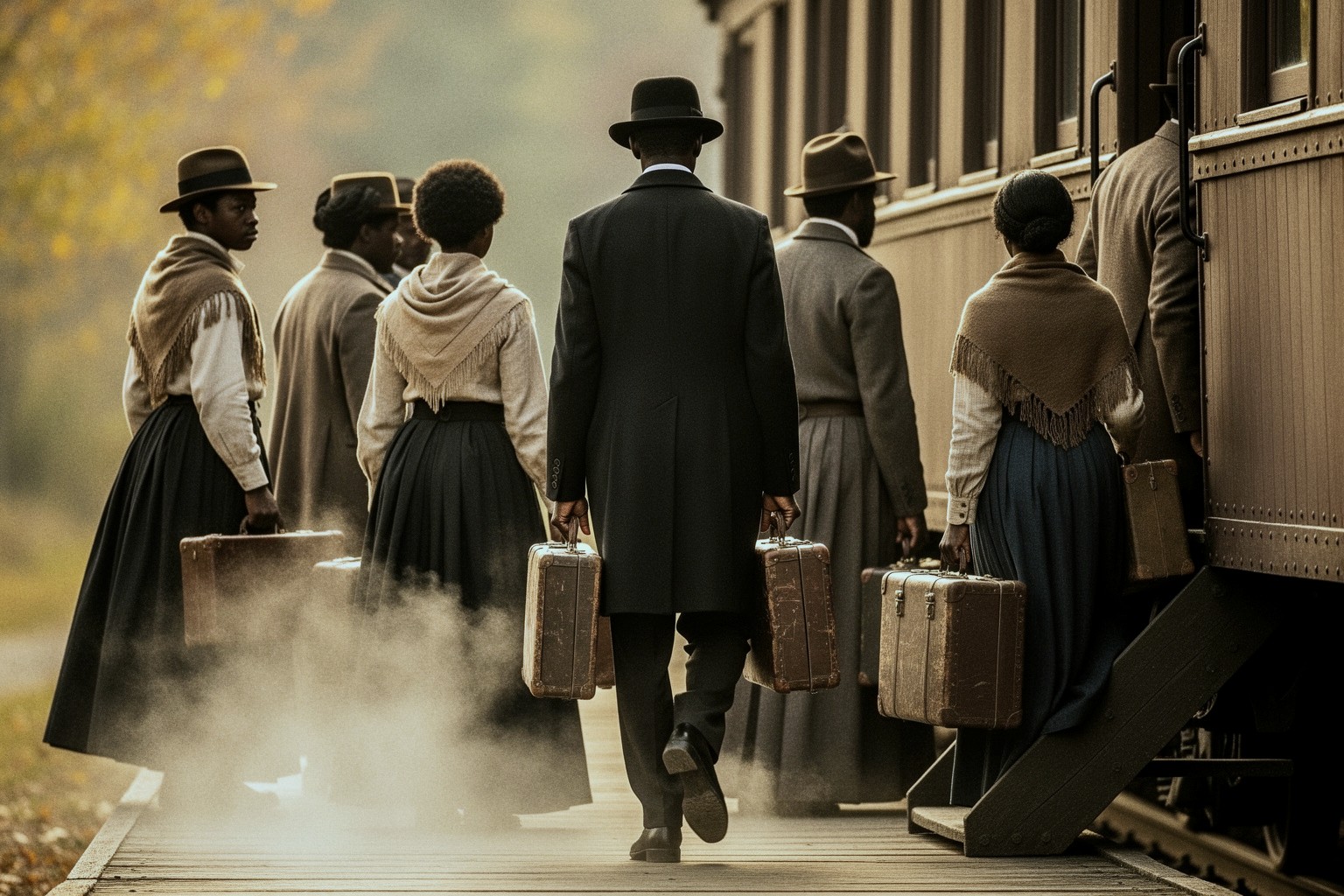
On October 6, 1871, nine students left Nashville to sing for money. Fisk University, founded after the Civil War to educate freed slaves, was nearly bankrupt. Its buildings were former army barracks, and they were rotting.
George L. White, the school's treasurer and music teacher, gambled what little the treasury had left on train fares. Most of his singers had been born into slavery. Their plan was to tour the North, perform respectable concert music, and send the proceeds home.
It went badly. Halls were half empty. Collections barely covered lodging. Some hotels refused to rent them rooms. In Ohio, White named the group the Jubilee Singers, after the biblical year in which slaves are set free, and kept going.
What filled the seats was not the polished repertoire. It was the spirituals, songs from the slave quarters that the students had been reluctant to sing in front of white strangers.
Within two years they had sung for President Grant and Queen Victoria. The money built Jubilee Hall, which still stands on the Fisk campus, and spirituals moved from the fields into the concert hall.
Checked against: Fisk University archives; contemporary newspaper concert reviews; Ella Sheppard's published recollections; academic histories of the Fisk Jubilee Singers and of African American music
He had nothing left to win. So he picked up a bat.
Illustration generated by AI for The Day Vault.
On October 6, 1993, Michael Jordan walked into a press conference at the Chicago Bulls' training centre in Deerfield, Illinois, and retired from basketball. He was 30 years old.
He had just won his third straight NBA championship and his third straight Finals MVP award. He was the most famous athlete on the planet. He told reporters he had lost the desire to play and had nothing left to prove. Three months earlier, his father, James, had been murdered beside a North Carolina highway. Networks cut into regular programming to carry the announcement live, and sports pages treated it as the end of an era.
Fans assumed he would move on to golf, business, and endorsements. For about four months, that seemed to be the story.
In February 1994 he signed a minor-league contract with the Chicago White Sox, a team owned by the same man who owned the Bulls. He reported to spring training to start again as a rookie in another sport.
He spent the summer riding buses with the Double-A Birmingham Barons and batted .202. In March 1995 he returned to the Bulls, and they won three more championships.
Checked against: Contemporary newspaper and wire-service reports of the October 1993 press conference; NBA and minor-league statistical records; published biographies and sports histories
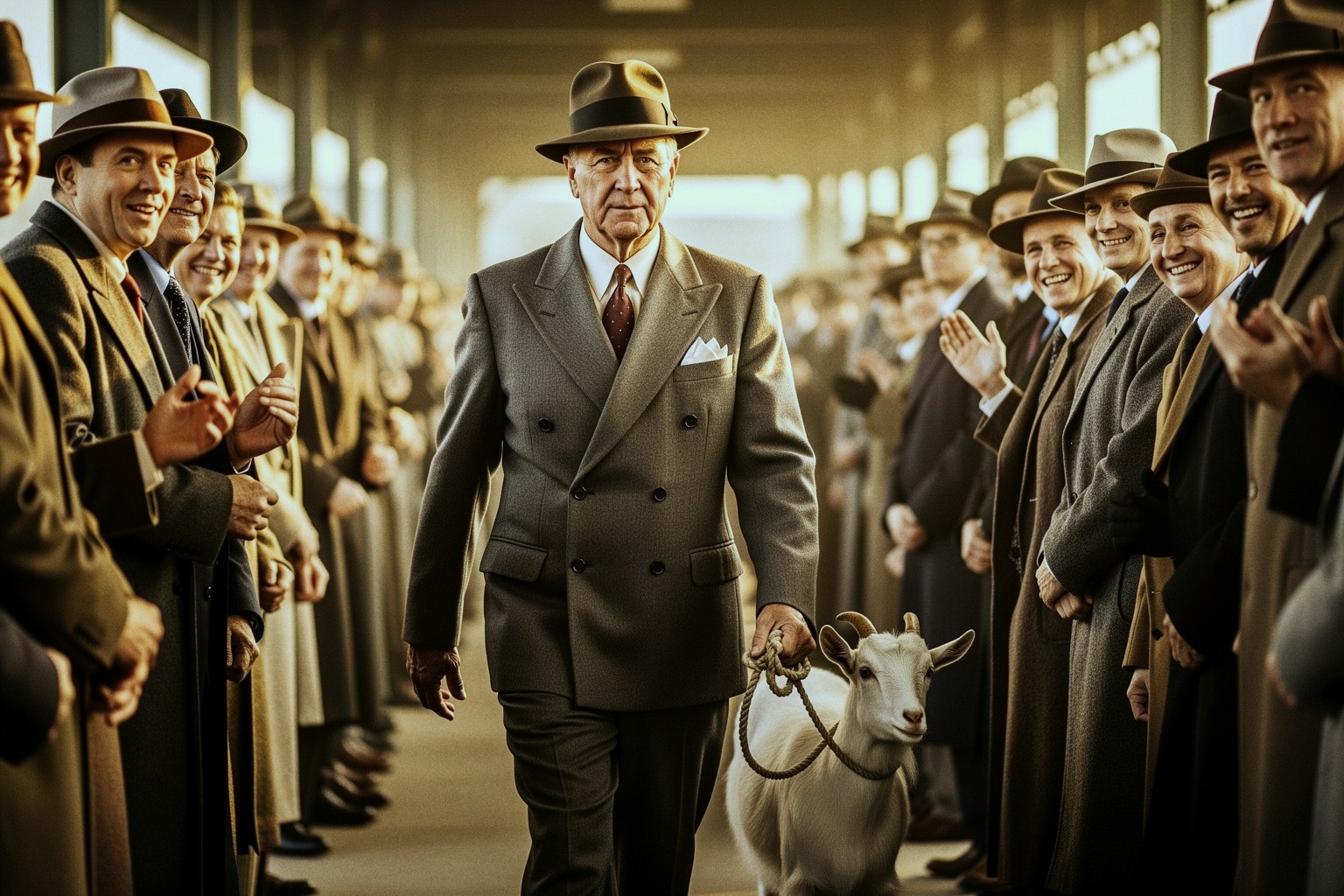
On October 6, 1945, Chicago tavern owner Billy Sianis walked into Wrigley Field for Game 4 of the World Series holding two box-seat tickets. One was for him. The other was for his goat.
The Cubs led the Detroit Tigers two games to one. Chicago had not won a championship since 1908, and the city could feel its chance. Sianis, a Greek immigrant who ran a bar across from Chicago Stadium, saw a chance of his own. A goat in the box seats was free publicity.
The goat got in. Before the game was over, ushers walked man and animal back out. By most accounts, fans had complained about the smell. Detroit won that afternoon, 4-1.
Detroit took the series in seven games, and the Cubs did not play in another World Series for 71 years.
Sianis was said to have cursed the team as he left. For decades afterwards, whenever Chicago collapsed in late season, reporters went back to the tavern to ask about the goat. The drought ended only in 2016, when the Cubs finally won it all.
Checked against: Contemporary Chicago newspaper coverage of the 1945 World Series; official MLB postseason records; Chicago Cubs team histories; histories of the Billy Goat Tavern
Theory said it couldn't exist. It went round in four days.
Illustration generated by AI for The Day Vault.
On October 6, 1995, two Swiss astronomers, Michel Mayor and Didier Queloz, stood up at a conference in Florence and announced a planet orbiting 51 Pegasi, a Sun-like star about 50 light-years away in the constellation Pegasus.
They had not seen it. Nobody could. They had watched the star's light shift back and forth in a steady rhythm, using a spectrograph at the Haute-Provence Observatory in southern France. Something heavy was tugging the star toward Earth and away again.
Planets had been found before, circling the dead core of an exploded star. This was the first around an ordinary star like our own. Within days, astronomers in California pointed their own instruments at 51 Pegasi and saw the same wobble.
The planet should not have been there. It was roughly half the mass of Jupiter, yet it circled its star every 4.2 days, far closer than Mercury sits to the Sun. Planet hunters had been searching for Jupiter twins on slow, decade-long orbits, because theory said giant planets formed far out in the cold.
Teams went back to data they had already gathered and looked again. More than five thousand planets have been confirmed since, and in 2019 Mayor and Queloz shared the Nobel Prize in Physics.
Checked against: Nature paper by Mayor and Queloz (November 1995); Nobel Prize in Physics 2019 announcement and laureate lectures; histories of exoplanet astronomy; contemporary science press coverage.
The opera was for a wedding. The groom stayed in France.
Illustration generated by AI for The Day Vault.
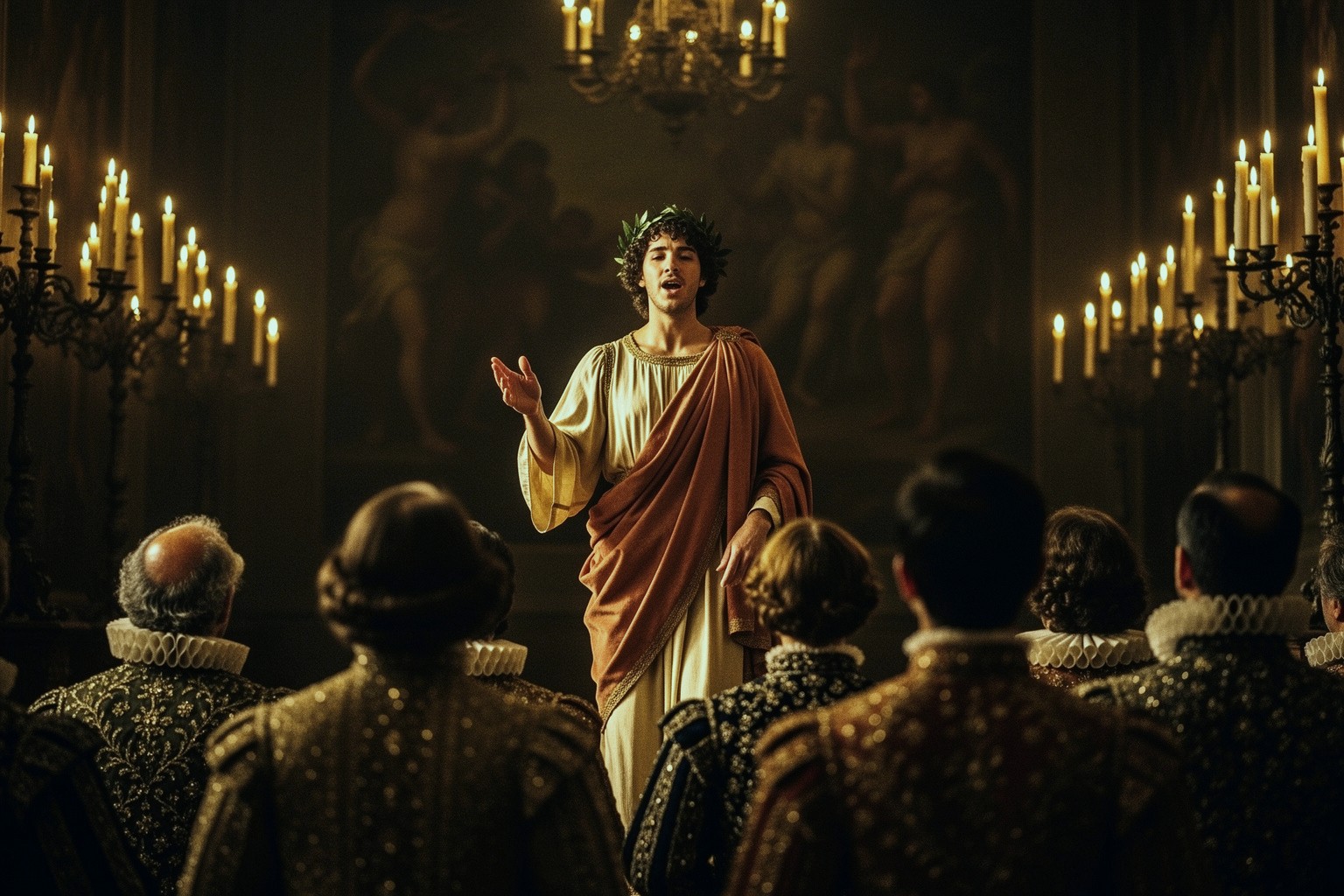
On October 6, 1600, a small company performed Euridice at the Palazzo Pitti in Florence. It is the oldest opera whose music survives complete.
The composer, Jacopo Peri, set Ottavio Rinuccini's verse in a new style. Instead of the dense interwoven voices of the madrigal, his singers carried the drama in sung speech over a spare accompaniment. Peri sang the role of Orpheus himself.
The occasion shaped the story. Euridice was written for the wedding festivities of Maria de' Medici and King Henry IV of France, so Rinuccini cut the ending everyone knew. His Orpheus does not look back. He leads his wife out of the underworld, and the piece ends in celebration.
The king was not in the room. The marriage had been performed by proxy in Florence Cathedral the day before, with a stand-in at the altar, and Henry never left France.
The bride was fêted for weeks as a queen without a husband, then sailed for Marseille. She met Henry for the first time that December in Lyon. The happy ending written for the couple had played to only one of them.
Checked against: Histories of early opera and Florentine court music; the printed score of Peri's Euridice (1601); Medici court festival accounts; biographies of Marie de' Medici and Henry IV.