On October 9, 1635, the General Court of Massachusetts Bay banished Roger Williams, the minister at Salem. His offences were ideas. He argued that the king's charter gave colonists no right to Native land unless they bought it, and that magistrates had no business punishing people for what they believed about God.
The court gave him six weeks to leave, then relented. He could stay until spring if he stopped spreading his views. He didn't. Neighbours kept gathering at his house to hear him. That winter the colony decided to arrest him and put him on a ship back to England.
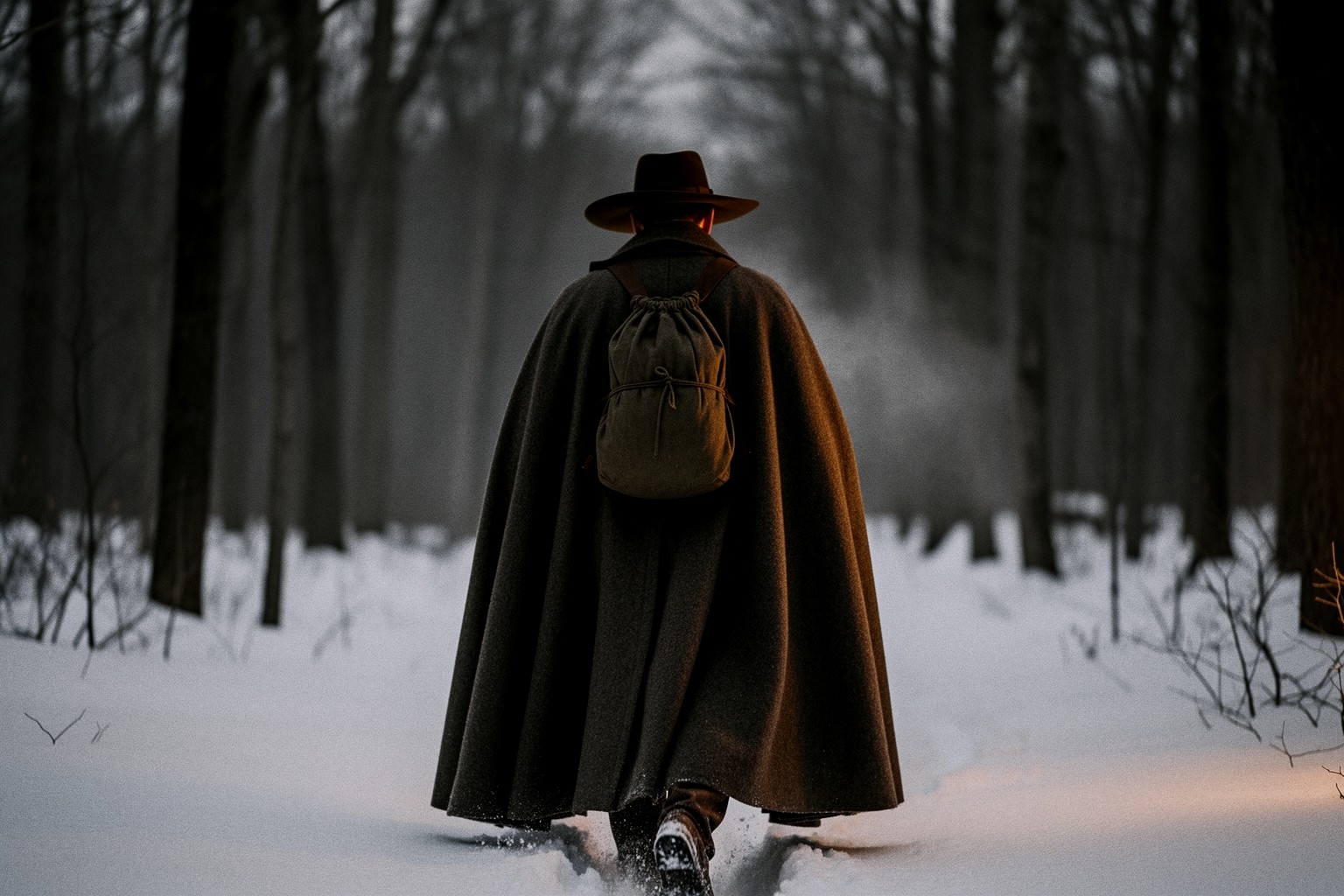
Williams heard first. In January 1636 he slipped out of Salem and went south through the snow, sheltering with the Wampanoag, whose language he had learned while trading. In spring he obtained land from Narragansett sachems at the head of Narragansett Bay and called the settlement Providence.
Massachusetts had expelled him to keep his ideas out of the colony. Instead it handed them a colony of their own.
Providence took in dissenters Boston would not tolerate, and in 1663 Rhode Island won a royal charter guaranteeing that no one there would be punished for differences of opinion in matters of religion.
Checked against: Massachusetts Bay General Court records; Roger Williams's surviving letters; the 1663 Rhode Island royal charter; biographies and histories of colonial New England
Seventy thousand people walked a ring road. Nobody fired.
Illustration generated by AI for The Day Vault.
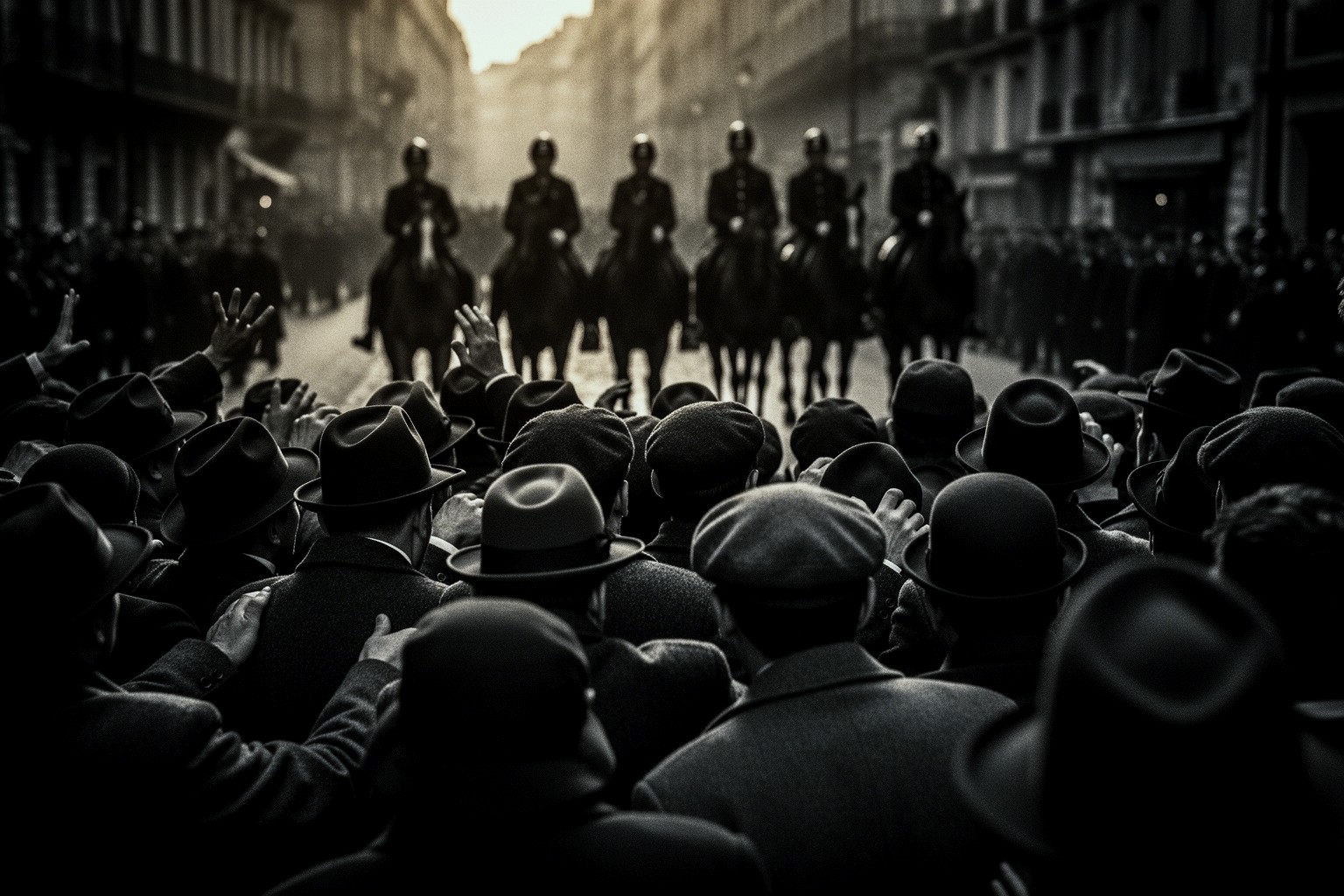
On 9 October 1989, about 70,000 people walked the ring road around central Leipzig, in East Germany. It was a Monday. For weeks, crowds had gathered after the peace prayers at the city's Nikolaikirche, and each week there were more of them.
The state was ready. Riot police, army units and armed factory militia were deployed in the city. Hospitals cleared beds and stocked extra blood. Two days earlier, as East Germany celebrated its 40th anniversary, police had beaten and arrested protesters in East Berlin and other cities.
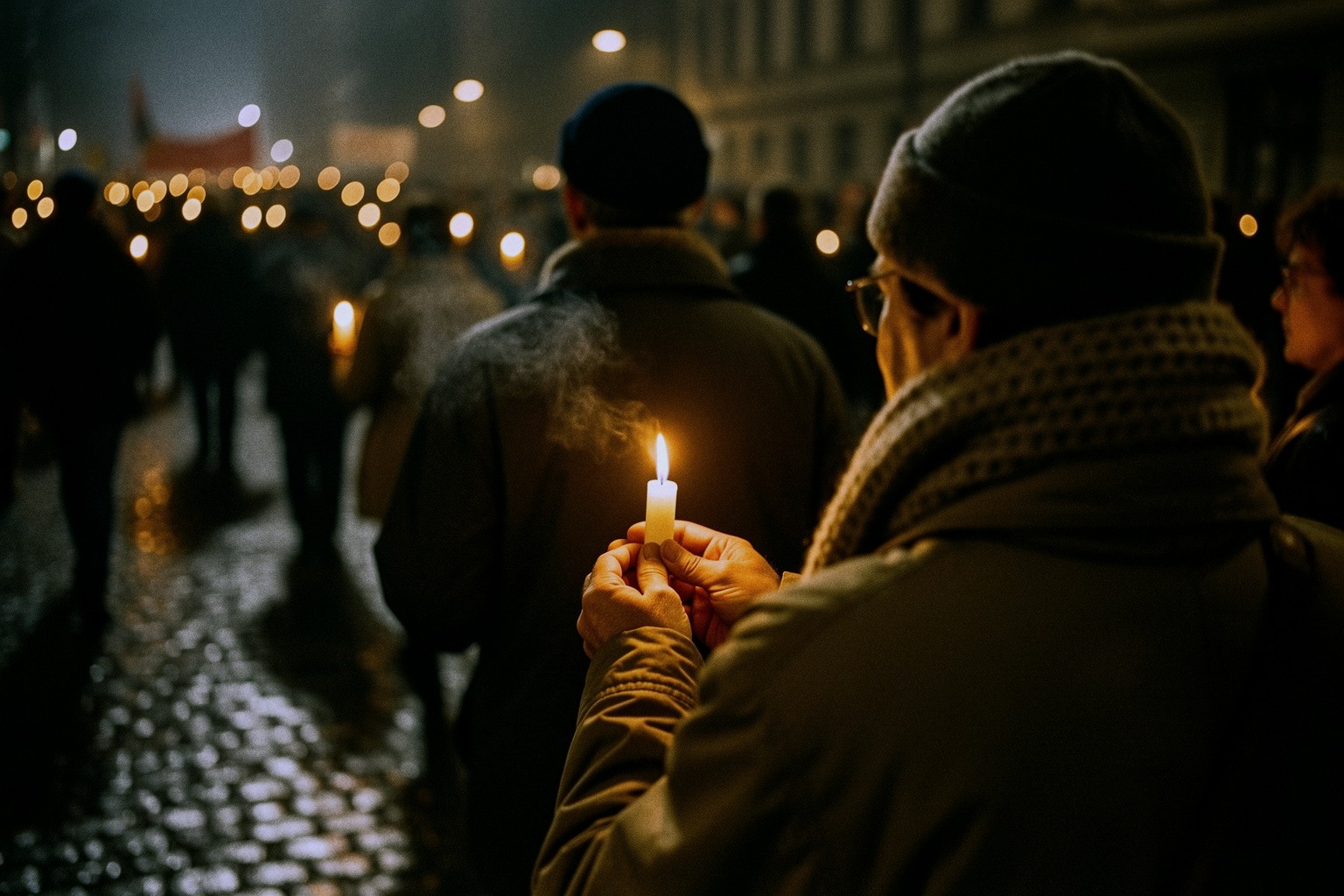
The marchers carried candles, which take two hands to shield from the wind and leave none free for anything else. They chanted "Keine Gewalt" (no violence) and "Wir sind das Volk" (we are the people). They passed the district headquarters of the Stasi, the secret police, and kept walking.
The order to shoot never came. No one in authority was willing to give it, and the forces lining the streets stood back and let the crowd go round.
The next Monday, more than 100,000 marched in Leipzig. A month to the day later, the Berlin Wall was open.
Checked against: Histories of the 1989 East German revolution; contemporary Western and East German press reports; Leipzig city and church archives; published accounts by participants and former officials.
The prize came first. The record was supposed to follow.
Illustration generated by AI for The Day Vault.
On October 9, 2009, the Norwegian Nobel Committee announced that the Peace Prize would go to Barack Obama, nine months into his presidency. The committee cited his efforts to strengthen international diplomacy and his vision of a world without nuclear weapons.
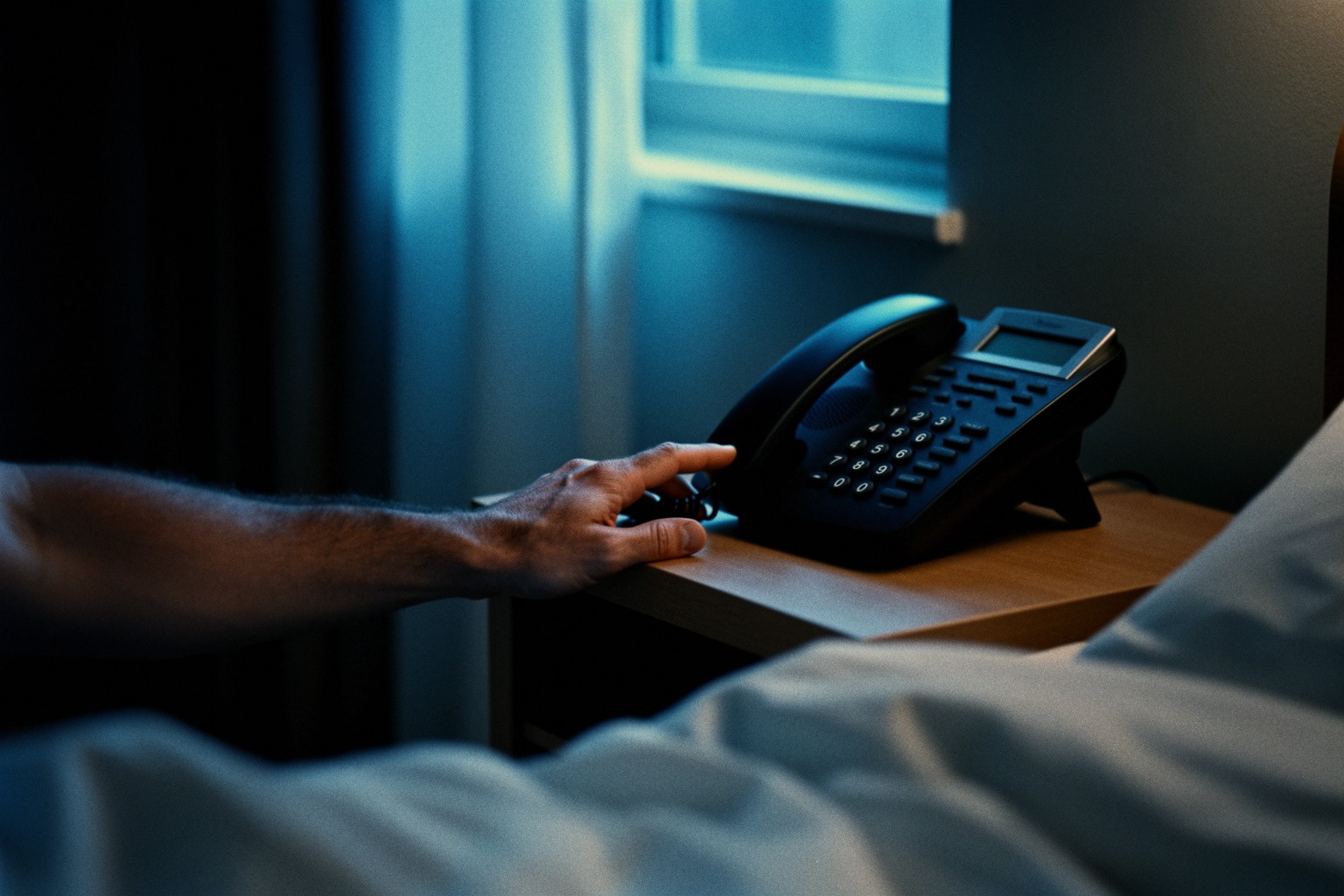
The news broke at 11 a.m. in Oslo, before dawn in Washington. His press secretary phoned to wake him. By late morning the president stood in the Rose Garden and said he did not view the award as recognition of his own accomplishments, but as a call to action.
The reaction split fast. Critics asked what he had actually done. Some supporters asked the same question, more quietly. He was still commander in chief of two wars, in Iraq and Afghanistan, and weighing whether to send more troops.
Nominations for that year's prize had closed on February 1, twelve days after he took the oath of office.
In December he flew to Oslo, accepted the medal, and spent much of his speech defending the idea of a just war. Years later the committee's former secretary, Geir Lundestad, wrote in his memoir that the award had not achieved what the committee hoped.
Checked against: Norwegian Nobel Committee press announcement; White House transcript of remarks; contemporaneous wire and newspaper reports; Nobel Prize nomination rules; Geir Lundestad's 2015 memoir
On October 9, 1967, Bolivian soldiers executed Ernesto "Che" Guevara in a mud-walled schoolhouse in La Higuera, a hamlet in the country's southeastern hills. He had been captured the day before after a firefight in a nearby ravine. His small guerrilla band had already been worn down by months of hunger, sickness and desertion.
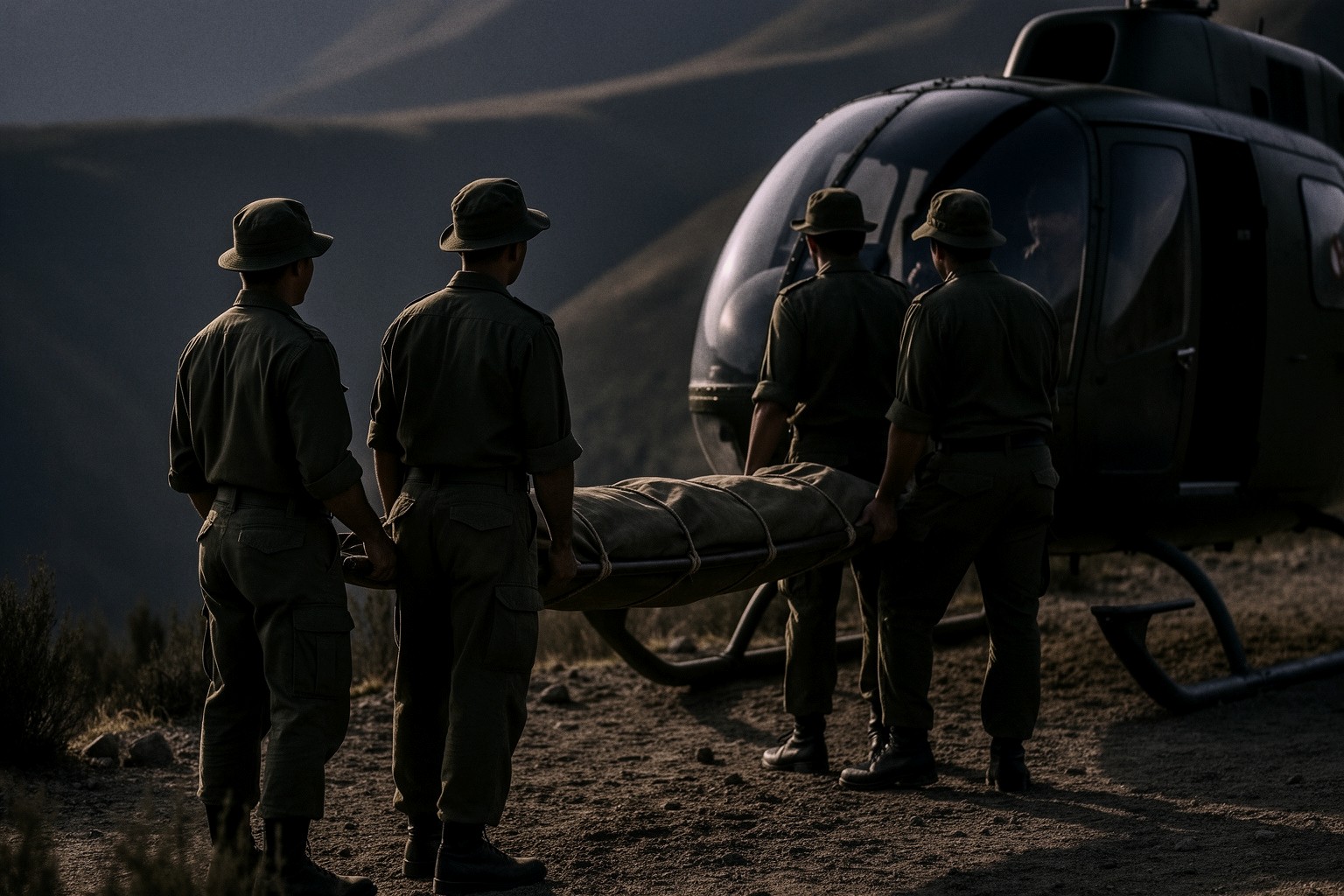
The army needed the world to believe it had won. His body was strapped to the landing skid of a helicopter and flown to the town of Vallegrande. There, officers laid it out on a concrete washtub in the hospital laundry. Reporters, soldiers and townspeople filed past, and photographers took pictures.
Then the body vanished. His hands were cut off and preserved so his fingerprints could be checked. The rest of him was buried in secret, and for decades the army would not say where.
The photographs meant to end a legend started one. To many who saw them, the half-open eyes and bare chest looked like a saint in a church painting.
In 1997, a team digging beside the Vallegrande airstrip found his bones. Cuba took them to a mausoleum in Santa Clara, built for a man the army had tried to make disappear.
Checked against: Declassified US government cables on the Bolivian campaign; published biographies of Guevara; contemporary wire-service reports from Vallegrande; reports from the 1997 Cuban-Argentine forensic recovery team
The film showed one gunman. It did not tell the whole story
Illustration generated by AI for The Day Vault.
On 9 October 1934, King Alexander I of Yugoslavia stepped off a warship in Marseille to begin a state visit meant to strengthen his alliance with France. Within minutes of leaving the quay, he was dead.
A man jumped onto the running board of the open car and fired into it at close range. The king slumped in his seat. Beside him, the French foreign minister, Louis Barthou, was hit in the arm. A mounted officer cut the gunman down with a sabre, and the crowd beat him where he fell. Bystanders were shot in the confusion.
Newsreel cameras were rolling along the route. The footage of the car, the scramble and the rearing horses ran in cinemas around the world, one of the first assassinations ever caught on film. The killer was identified as Vlado Chernozemski, a Bulgarian revolutionary working with Croatian Ustaše separatists.
But the film could not show who killed Barthou.
He bled to death from an arm wound that was never properly treated. Decades later, an examination of the bullet found it was police-issue, fired by one of the officers shooting into the chaos. The conspirators had come for a king. The minister was killed by the men guarding him.
Checked against: French police and judicial records of the 1934 investigation; surviving newsreel footage; contemporary French and international newspaper reports; later ballistic findings published in French historical scholarship; academic histories of interwar Yugoslavia and the Ustaše
He knelt by a wet stranger's fire and left Oxford behind
Illustration generated by AI for The Day Vault.
On October 9, 1845, John Henry Newman, the best-known clergyman in the Church of England, was received into the Roman Catholic Church in a small cottage at Littlemore, outside Oxford.
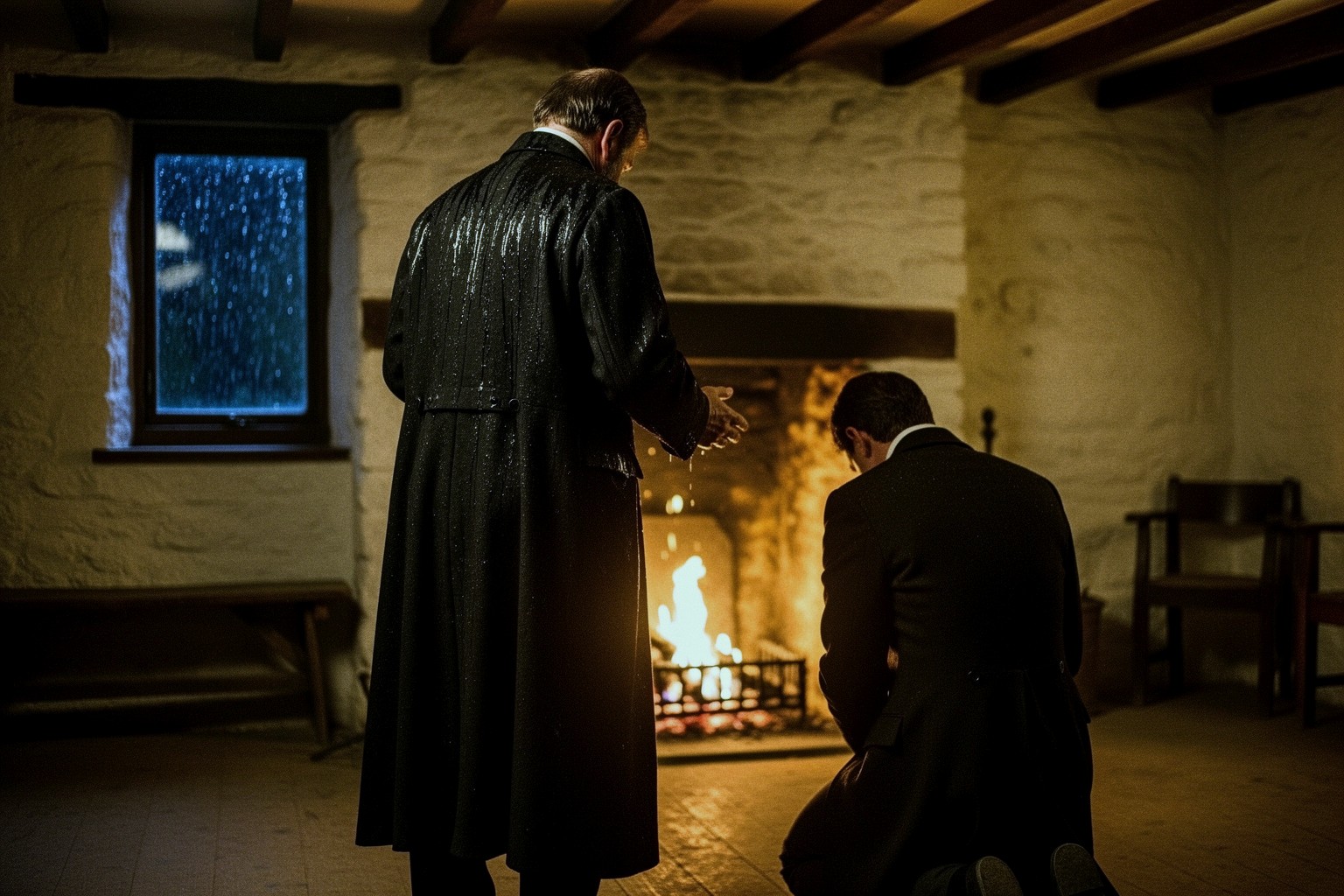
The night before, an Italian Passionist priest named Dominic Barberi had arrived by coach in heavy rain. He was standing at the fire drying his clothes when Newman knelt in front of him and asked to be received. Two of Newman's companions came into the church with him.
For a decade Newman had led the Oxford Movement, arguing that the Church of England was a true branch of the ancient church. Now he had argued himself out of it. Days earlier he had resigned his fellowship at Oriel College. Friendships, family ties and the university life he loved fell away.
His new church was not sure it wanted him either. For decades many Catholic leaders treated him with suspicion, and his idea that doctrine develops over time struck them as dangerous.
He was made a cardinal in 1879, at 78. In 2019 the church that had kept him at arm's length declared him a saint.
Checked against: Newman's published letters and diaries; his autobiography, Apologia Pro Vita Sua; standard scholarly biographies of Newman and of Dominic Barberi; Vatican canonisation records.
Camille Saint-Saëns was born in Paris on October 9, 1835. He grew into the serious man of French music: organist at the Madeleine, composer of symphonies, operas and concertos, a pianist who had given a public recital at ten.
In 1886, the same year he completed his Organ Symphony, he wrote something lighter for a private Mardi Gras concert. It was a suite of short pieces about animals. Lions roar, tortoises plod through a can-can slowed to a crawl, and an elephant lumbers on a double bass. One movement mocks pianists grinding through scales. Another, called Fossils, quotes his own Danse macabre.
Then he put it away. He let only one movement, The Swan, be published while he lived. He feared the rest would make him look frivolous. His will allowed the full suite to appear after his death.
The joke he hid to protect his reputation became the work most people know him by.
He died in December 1921. The Carnival of the Animals had its first public performance in early 1922, and it has filled school halls and children's concerts ever since.
Checked against: Standard biographies of Saint-Saëns; music reference works such as Grove Music Online; published scholarly editions and programme notes for The Carnival of the Animals.
She left the king of late night. He never forgave her.
Illustration generated by AI for The Day Vault.
On October 9, 1986, a new American television network went on the air for the first time. The Fox Broadcasting Company had no prime-time lineup yet. It had one programme, late at night: The Late Show Starring Joan Rivers.
Rivers had been Johnny Carson's permanent guest host on The Tonight Show since 1983. When she signed with Fox that spring, Carson was widely reported to have heard the news secondhand. He never spoke to her again. She would not return to The Tonight Show for nearly three decades, and only after he had died.
The bet was simple. A brand-new network would build its name on a comedian who knew the late-night format from the inside, competing directly with the man who had handed her his chair. Affiliates signed on. The set was bright, the band was live, and the audience came in.
Ratings sagged within months, and in May 1987, weeks after Fox's first prime-time shows had aired, the network let her go.
Guest hosts kept the desk warm through the summer. One of them, Arsenio Hall, did well enough to land a late-night show of his own two years later.
Checked against: Contemporary trade press coverage of the Fox network launch and The Late Show's cancellation; national newspaper reporting from 1986-87; published biographies and memoirs of Joan Rivers and Johnny Carson; television history reference works.
On October 9, 1934, the St. Louis Cardinals met the Detroit Tigers in Game 7 of the World Series at Navin Field in Detroit. Dizzy Dean was pitching for St. Louis, and by the sixth inning the Cardinals had the game well out of reach.
Then Joe Medwick hit a triple and slid hard into third base, straight into Tigers third baseman Marv Owen. The two men tangled before they were pulled apart. When Medwick jogged out to left field for the bottom of the inning, the bleachers were ready for him.
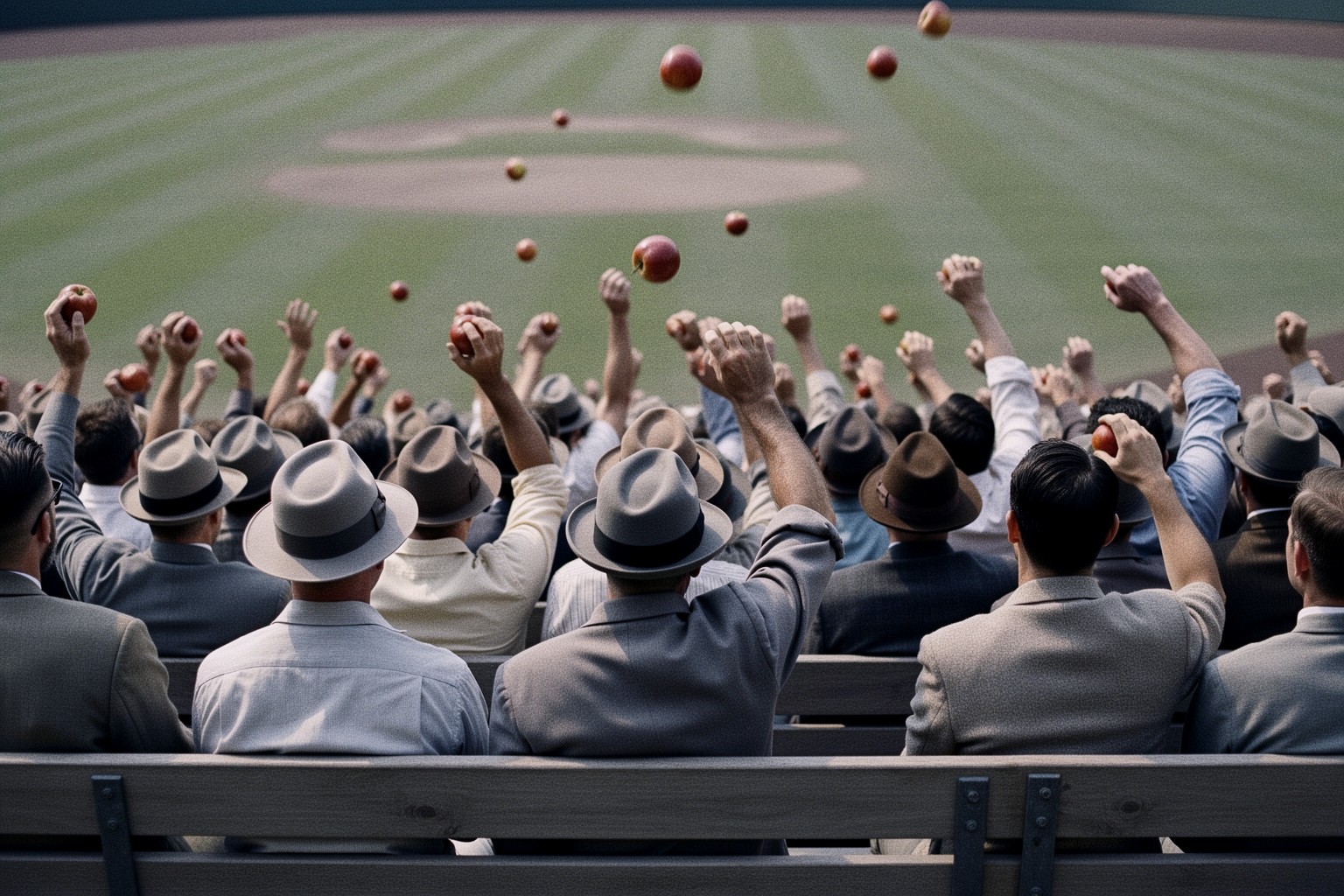
Detroit fans pelted him with fruit, vegetables and bottles. He backed away, returned, and got another barrage. Groundskeepers cleared the grass and play stalled. Commissioner Kenesaw Mountain Landis, watching from a box seat, called the players and managers over, then ordered Medwick out of the game.
Landis was not punishing Medwick. He was taking him off the field so the game could be finished at all.
It finished without him. Dean completed the shutout, the Cardinals won 11-0, and Medwick went home a world champion after being sent off by a crowd, not an umpire.
Checked against: Contemporary newspaper wire reports, official World Series box scores, Baseball Hall of Fame archives, published histories of the 1934 Cardinals
Half the East Coast filmed it. A parked car caught it.
Illustration generated by AI for The Day Vault.
On October 9, 1992, just before 8 p.m., a fireball crossed the sky over the eastern United States. It broke into glowing fragments as it went, and people saw it from Kentucky to New York for more than forty seconds.
It was a Friday night, and in that part of the country Friday night meant high school football. Parents in the stands had camcorders running. At least sixteen people caught the fireball on tape. Astronomers used the overlapping footage to reconstruct the meteor's path through the atmosphere and its orbit around the Sun, a rare result at the time.
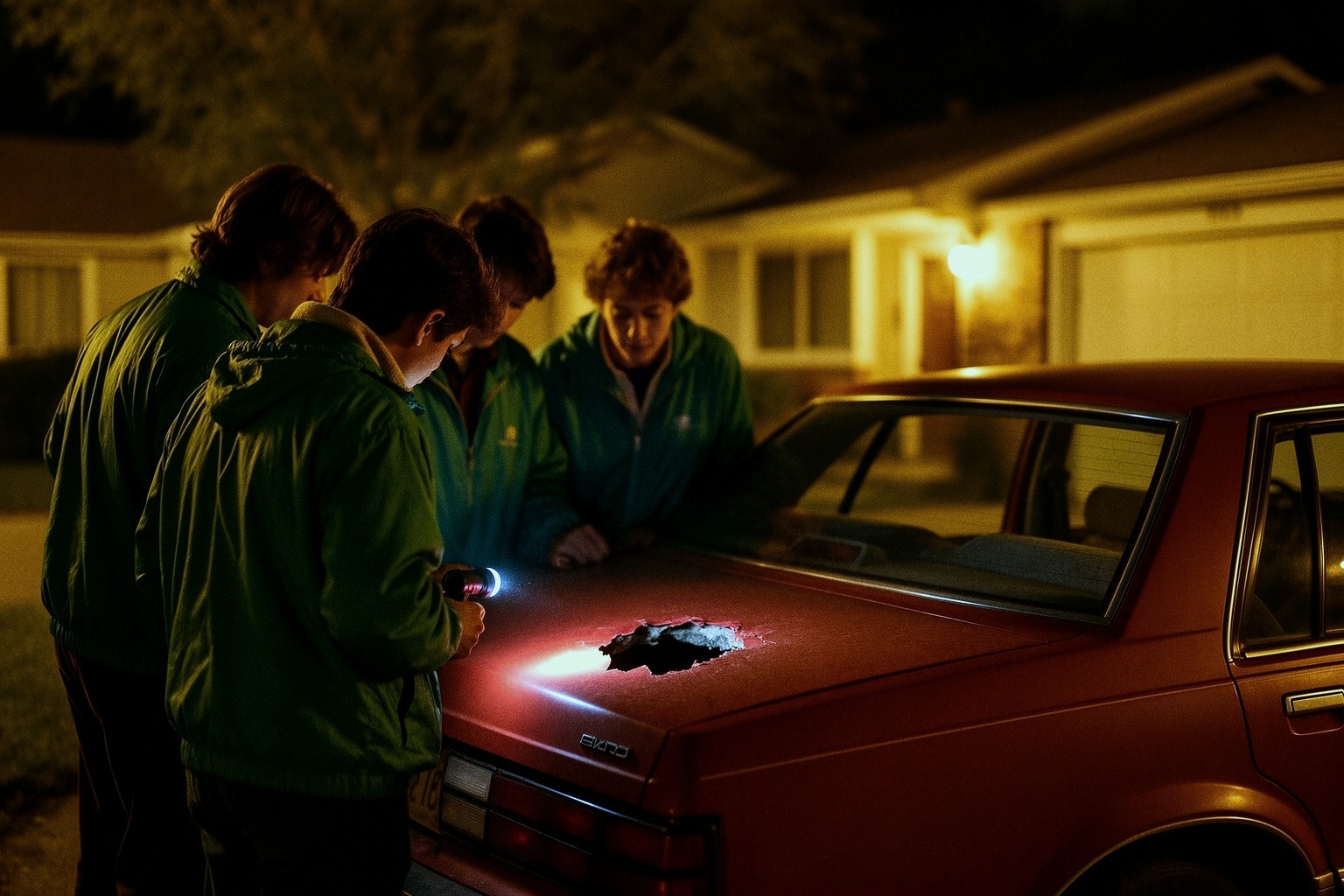
In Peekskill, New York, 18-year-old Michelle Knapp heard a crash outside her house. Her red 1980 Chevrolet Malibu had a hole punched clean through the trunk. Under the car lay a dark stone weighing about 12 kilograms, heavier than a bowling ball.
The best-documented meteor of its era had ended its long trip as a rear-end collision with a parked car.
Knapp sold the stone and the car to collectors. The Malibu went on display in museums, the hole in its trunk still there.
Checked against: Meteoritical Society bulletin records; peer-reviewed papers on the meteor's trajectory and orbit; contemporary newspaper and wire coverage; natural history museum catalogue entries
At 10:39 on the night of October 9, 1963, a slab of Monte Toc about two kilometres long broke away and slid into the reservoir behind the Vajont Dam in northern Italy. Some 260 million cubic metres of rock reached the water in under a minute.
The lake had nowhere to go. A wave climbed the far side of the valley, then poured over the crest of the dam and dropped into the narrow gorge below. It came out the other end onto the town of Longarone, asleep on the Piave river.
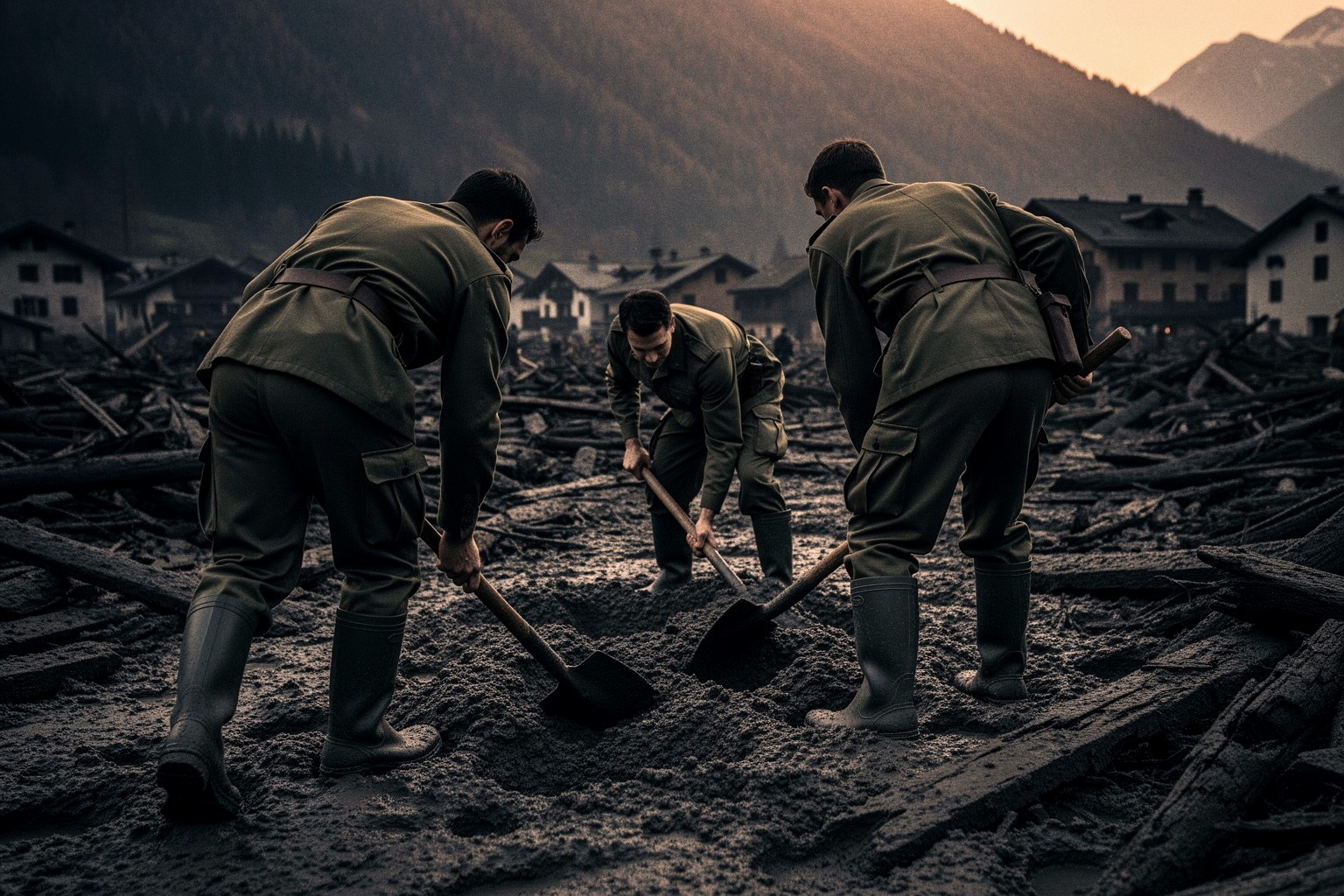
Longarone and several smaller villages were gone within minutes. Nearly two thousand people died. Geologists had warned for years that the mountainside was moving. The operators had been raising and lowering the water level to watch how the slope responded.
At first light, survivors and soldiers found the dam, then among the tallest in the world, almost untouched.
It still stands at the head of the gorge, a curved wall of concrete holding back rubble instead of water. It had done exactly what it was built to do. The reservoir was never filled again.
Checked against: Italian court records from the Vajont trials; post-disaster geological and engineering studies; contemporary Italian and international newspaper reports; published histories of the disaster