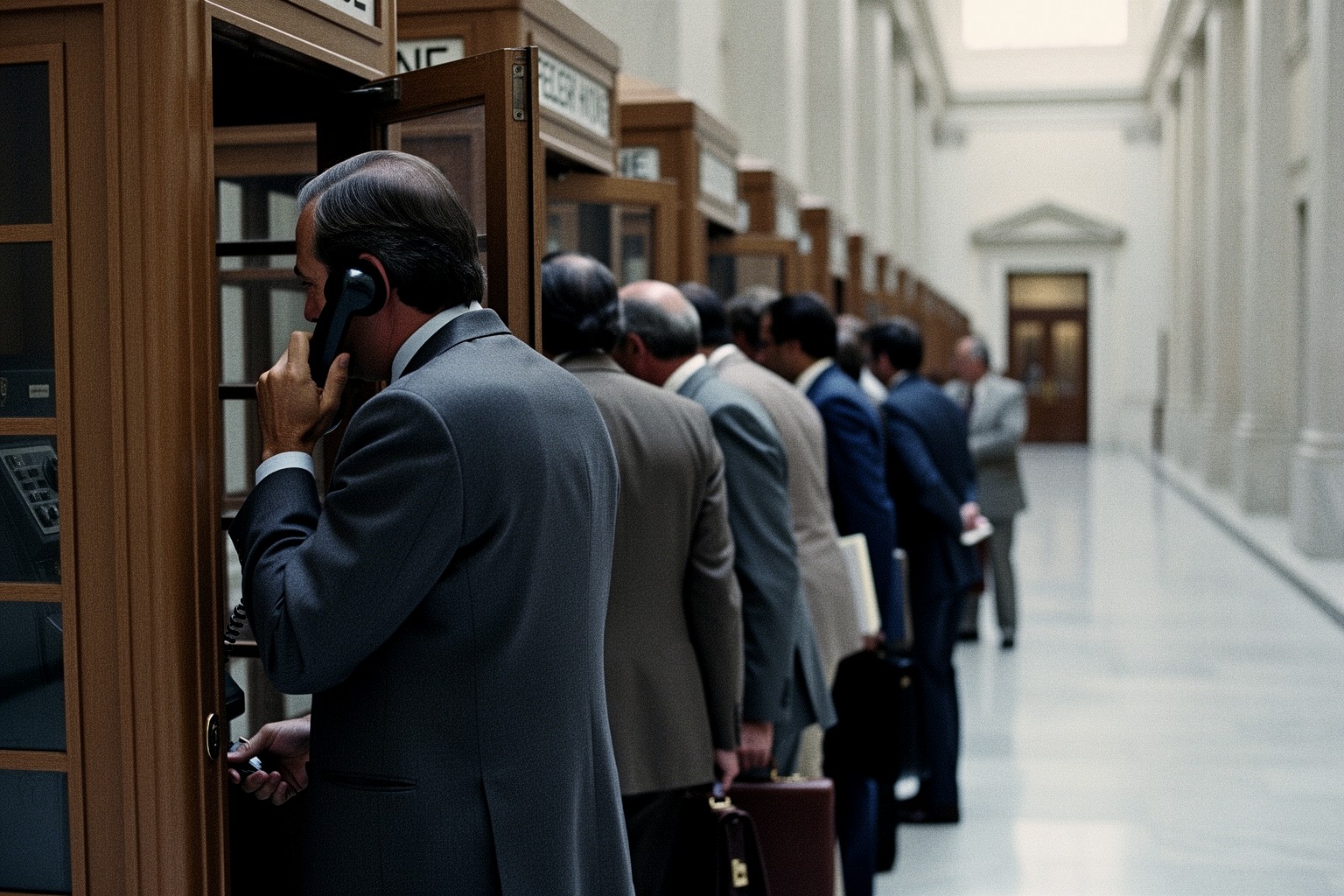
On October 10, 1973, Vice President Spiro Agnew resigned. His one-sentence letter went to Secretary of State Henry Kissinger, as federal law requires. That afternoon he stood before a judge in a federal courtroom in Baltimore.
Prosecutors had spent months building a bribery case. Maryland engineering firms told investigators they had handed him cash for state contracts while he was county executive and governor. Some said the payments continued after he moved into the vice presidency.
Agnew pleaded no contest to a single count of tax evasion on income he had not reported in 1967. The judge fined him $10,000 and gave him three years of unsupervised probation. He became the second vice president to resign, after John C. Calhoun in 1832, and the first to do so under criminal charges.
The plea closed one scandal, but it also handed Richard Nixon, already deep in Watergate, an empty office to fill.
Two days later Nixon nominated House Minority Leader Gerald Ford, the first use of the 25th Amendment to fill a vice-presidential vacancy. Ten months after that, Nixon resigned, and Ford became president without having won a national election.
Checked against: Contemporary newspaper coverage, the federal court record of the Baltimore proceeding, Justice Department filings, Senate historical office records, and Watergate-era political histories
A bomb went off by accident. The leader read about it in Denver.
Illustration generated by AI for The Day Vault.
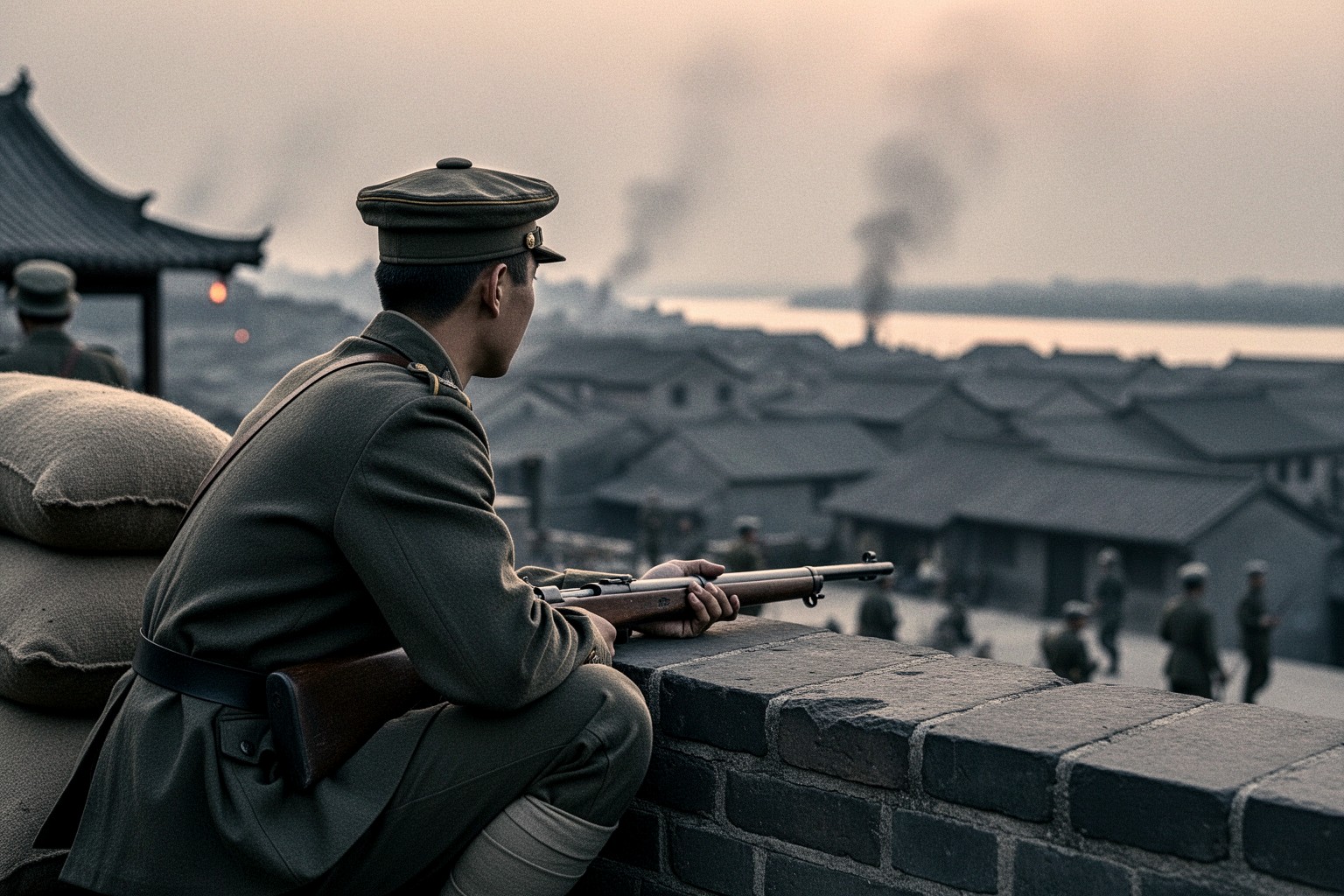
On the night of October 10, 1911, soldiers of a Qing army engineering battalion in Wuchang mutinied. They seized the arsenal and turned their rifles on the dynasty that paid them. By morning the provincial governor-general had fled the city.
They had not planned to move that night. A day earlier, in the Russian concession across the river in Hankou, a bomb being assembled by revolutionaries exploded by accident. Police raided the building and found membership rolls. Men on those lists faced arrest and execution, so they rose before anyone could come for them.
It spread faster than anyone expected. Over the following weeks, province after province declared independence from Beijing. A dynasty that had ruled China since 1644 was suddenly bargaining for its survival.
Sun Yat-sen, who had spent sixteen years plotting exactly this, was in Denver, Colorado, raising money, and learned of it from an American newspaper.
He did not rush home. He went to London and Paris first, seeking loans and recognition, and reached Shanghai in late December. On January 1, 1912, he was sworn in as provisional president of a republic other men had started without him. Six weeks later, the last emperor abdicated.
Checked against: Standard academic histories of the 1911 Revolution and late Qing China; biographies of Sun Yat-sen; Sun's own published recollections of hearing the news in Denver.
The president said sorry over breakfast. The counter stayed closed.
Illustration generated by AI for The Day Vault.
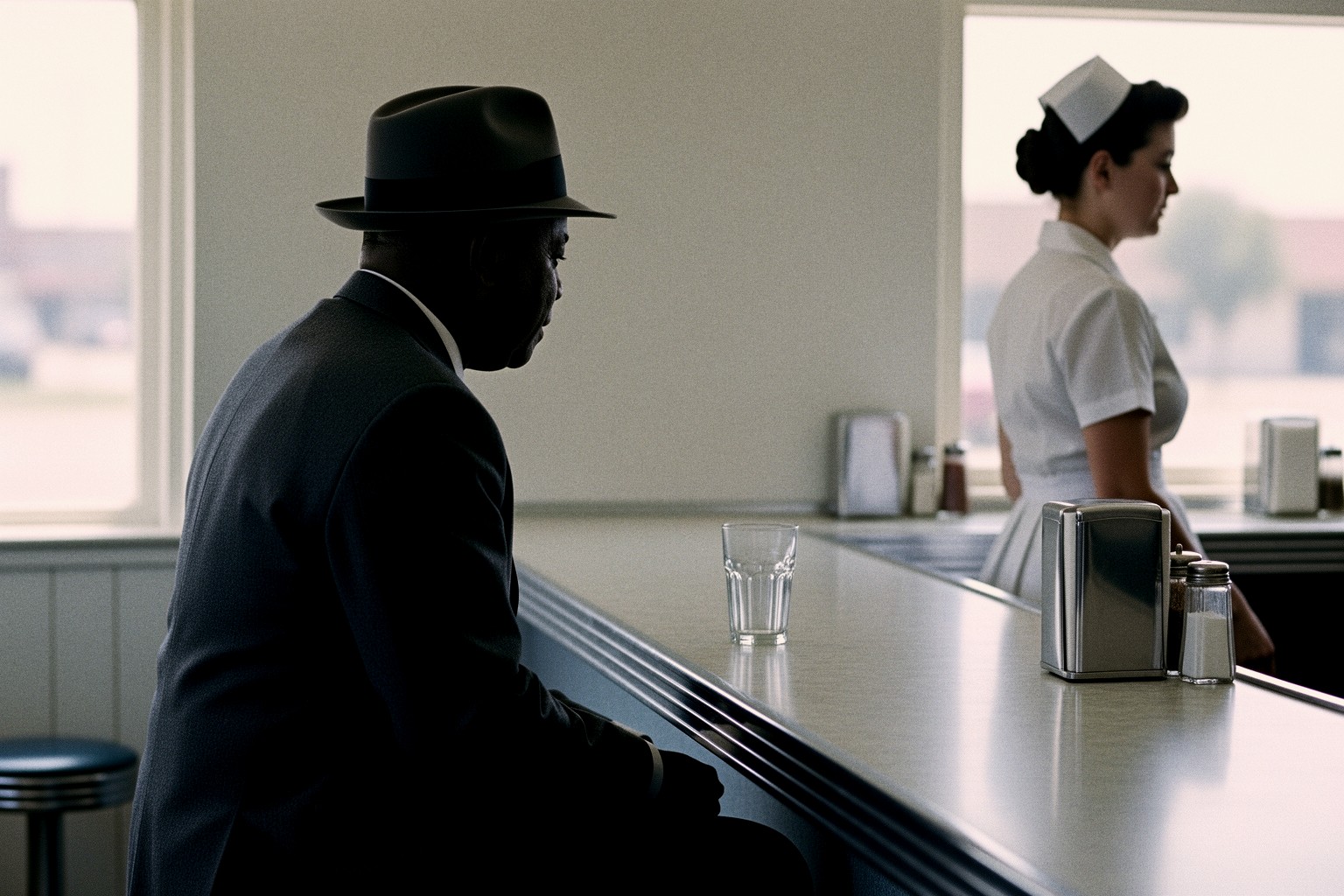
On October 10, 1957, President Dwight Eisenhower hosted Ghana's finance minister, Komla Agbeli Gbedemah, for breakfast at the White House. The meal was an apology.
Days earlier, Gbedemah had stopped at a roadside restaurant in Dover, Delaware, while travelling in the United States. Ghana had won independence that March, and he was one of the most senior officials of the first sub-Saharan African colony to break free. The restaurant refused to serve him because he was Black.
The story reached the newspapers fast. It was an awkward moment for Washington. The Cold War was a contest for the loyalty of newly independent nations, and Moscow was happy to point at American segregation. Only weeks before, federal troops had escorted nine Black students into Central High School in Little Rock. A president who wanted Africa's goodwill could not let a visiting minister be turned away at a lunch counter.
The breakfast repaired things for one man. Black Americans were turned away from the same counters every day, and nobody invited them to the White House.
Within a few years the State Department was quietly asking highway restaurants near Washington to serve African diplomats, a fix aimed at the passport, not the skin. Segregation in such places stayed legal until 1964.
Checked against: Contemporary newspaper reporting (1957), Eisenhower presidential library records, histories of Cold War civil rights diplomacy
The Navy forced the plane down. Then Italy surrounded the Navy.
Illustration generated by AI for The Day Vault.
On October 10, 1985, American fighter jets intercepted an Egyptian airliner over the Mediterranean and forced it to land in Sicily. On board were the four Palestinian men who had hijacked the Italian cruise ship Achille Lauro days earlier.
During the hijacking they had shot Leon Klinghoffer, a 69-year-old American passenger who used a wheelchair, and pushed his body overboard. Egypt had negotiated their surrender and was flying them to Tunis. Washington decided the flight would not get there.
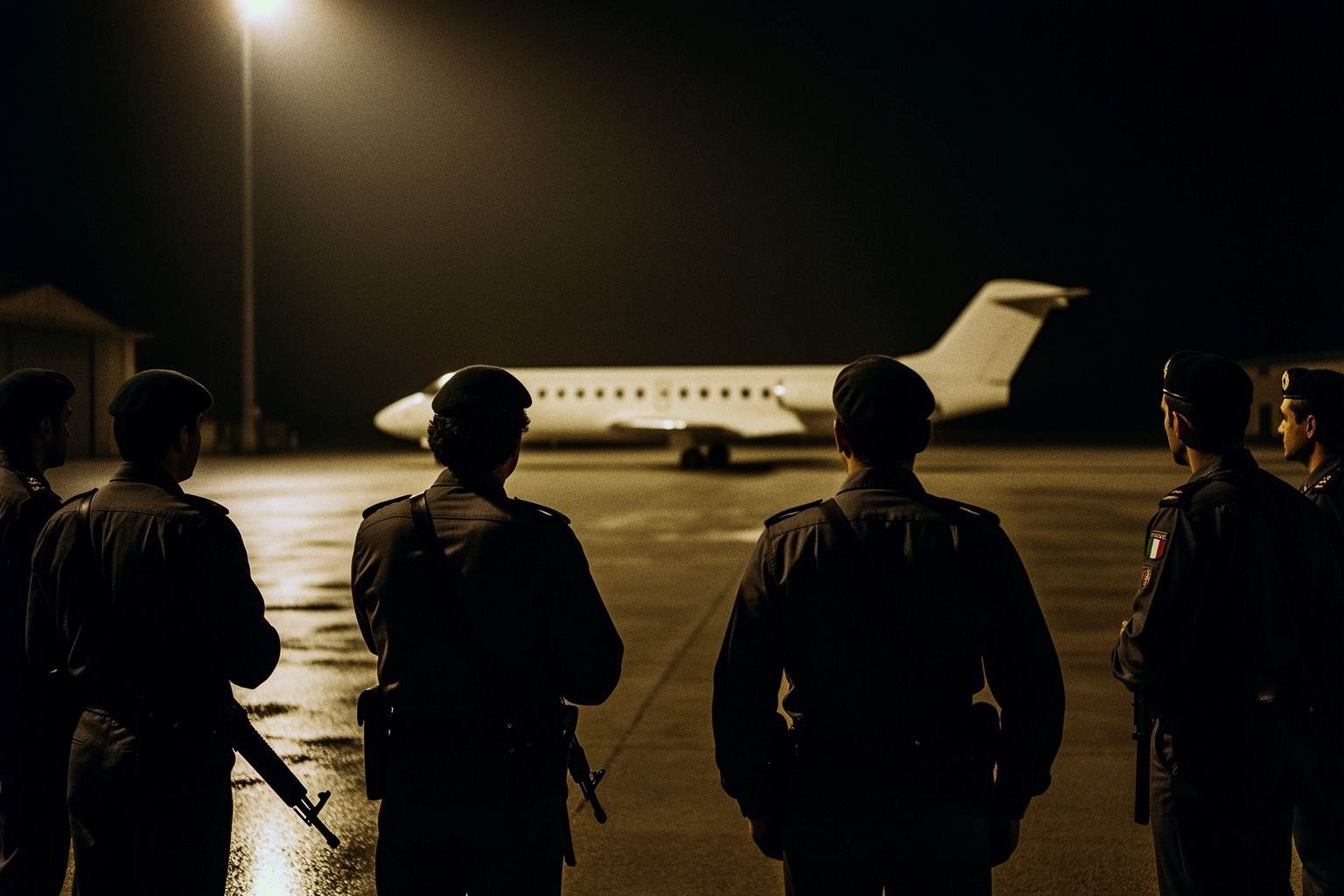
Navy F-14s from the carrier Saratoga found the airliner in the dark and steered it to Sigonella, a NATO air base Italy shares with the United States. On the tarmac, American special forces ran out and ringed the jet. Also aboard was Abu Abbas, leader of the faction behind the attack.
Then Italian carabinieri arrived and ringed the Americans.
It was Italian soil, and Prime Minister Bettino Craxi would not hand anyone over. After hours of armed standoff on the runway, President Reagan backed down. Italy tried the hijackers in its own courts. Abbas it let go. Within days he was on a flight to Yugoslavia, and he stayed out of American reach for nearly two decades.
Checked against: Contemporary wire service and newspaper reports; U.S. State Department and Italian parliamentary records; published histories of the Achille Lauro affair and U.S.-Italian relations; Italian court records of the hijackers' trial
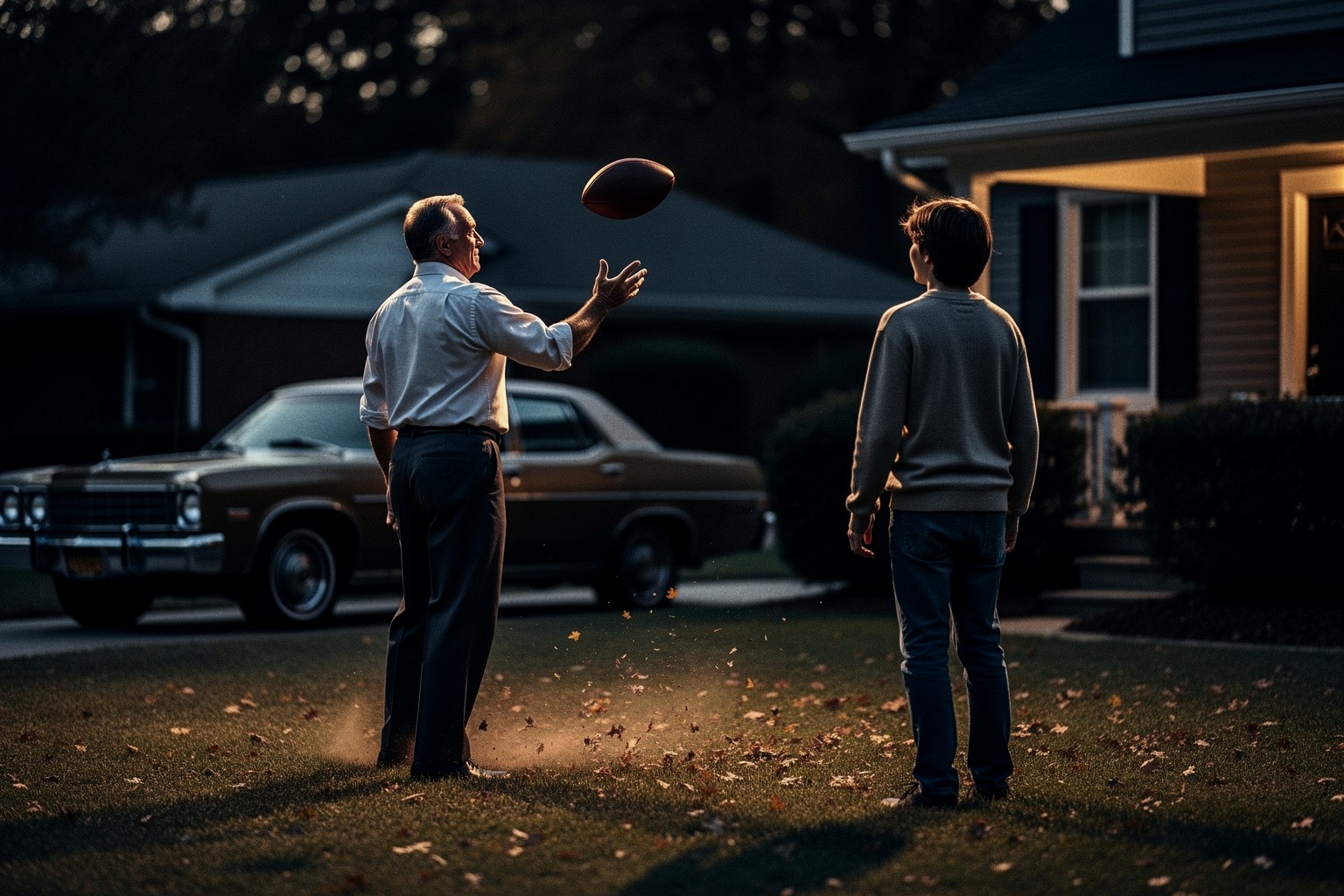
He was tossing a football on his lawn. Then a car stopped.
Illustration generated by AI for The Day Vault.
On October 10, 1970, Pierre Laporte, Quebec's minister of labour, was playing football with his nephew on the front lawn of his home in Saint-Lambert, across the river from Montreal. A car pulled up. Armed men forced him into it and drove away.
The kidnappers belonged to a cell of the Front de libération du Québec, a separatist group that had spent years planting bombs in mailboxes and armouries. Five days earlier, another FLQ cell had seized the British trade commissioner James Cross in Montreal. Now there were two hostages, and the demands arrived by communiqué.
On October 16, Ottawa invoked the War Measures Act, the first time it had been used in peacetime. Soldiers patrolled Montreal's streets. Police arrested hundreds of people without charge, among them poets, singers and union organisers with no link to either kidnapping.
The next evening, Laporte's body was found in the trunk of a car near the Saint-Hubert air base, south of the city.
The sweeping powers had not found him in time. His kidnappers were caught in a farmhouse in late December, after weeks of ordinary police work. Cross had already been freed in exchange for his captors' passage to Cuba. In 1988, Parliament repealed the War Measures Act and replaced it with a narrower Emergencies Act.
Checked against: Canadian newspaper archives from October 1970; parliamentary records of the War Measures Act proclamation; court records of the FLQ trials; histories of the October Crisis by Canadian historians
The caliph won by sunset. The grief has outlasted his dynasty.
Illustration generated by AI for The Day Vault.
On 10 October 680, on a dry plain beside the Euphrates in what is now Iraq, the army of the Umayyad caliph Yazid I killed Husayn ibn Ali, grandson of the Prophet Muhammad, along with most of the men travelling with him. The place was Karbala.
Husayn had refused to swear allegiance to Yazid. Letters from Kufa urged him to come and lead them, so he set out from Mecca with his family and a small band of followers. By the time he neared the city, support there had collapsed. The governor's troops blocked his path and, for days, cut his camp off from the river.
The fighting on the tenth day of Muharram lasted a single day. Tradition counts seventy-two men on Husayn's side, against an army thousands strong. His head was carried to the governor in Kufa, then on to Damascus. The women and children, among them his sister Zaynab, were taken as captives.
By every military measure, the caliph had won easily, and the Umayyads would rule for another seventy years.
But the killing turned a quarrel over succession into the founding grief of Shia Islam. Every year on Ashura, millions mourn Husayn at his shrine in Karbala and in streets across the world, long after the dynasty that killed him fell.
Checked against: Classical Islamic chronicles such as al-Tabari's History; modern academic histories of early Islam and the Umayyad caliphate; scholarly encyclopedias of Islam
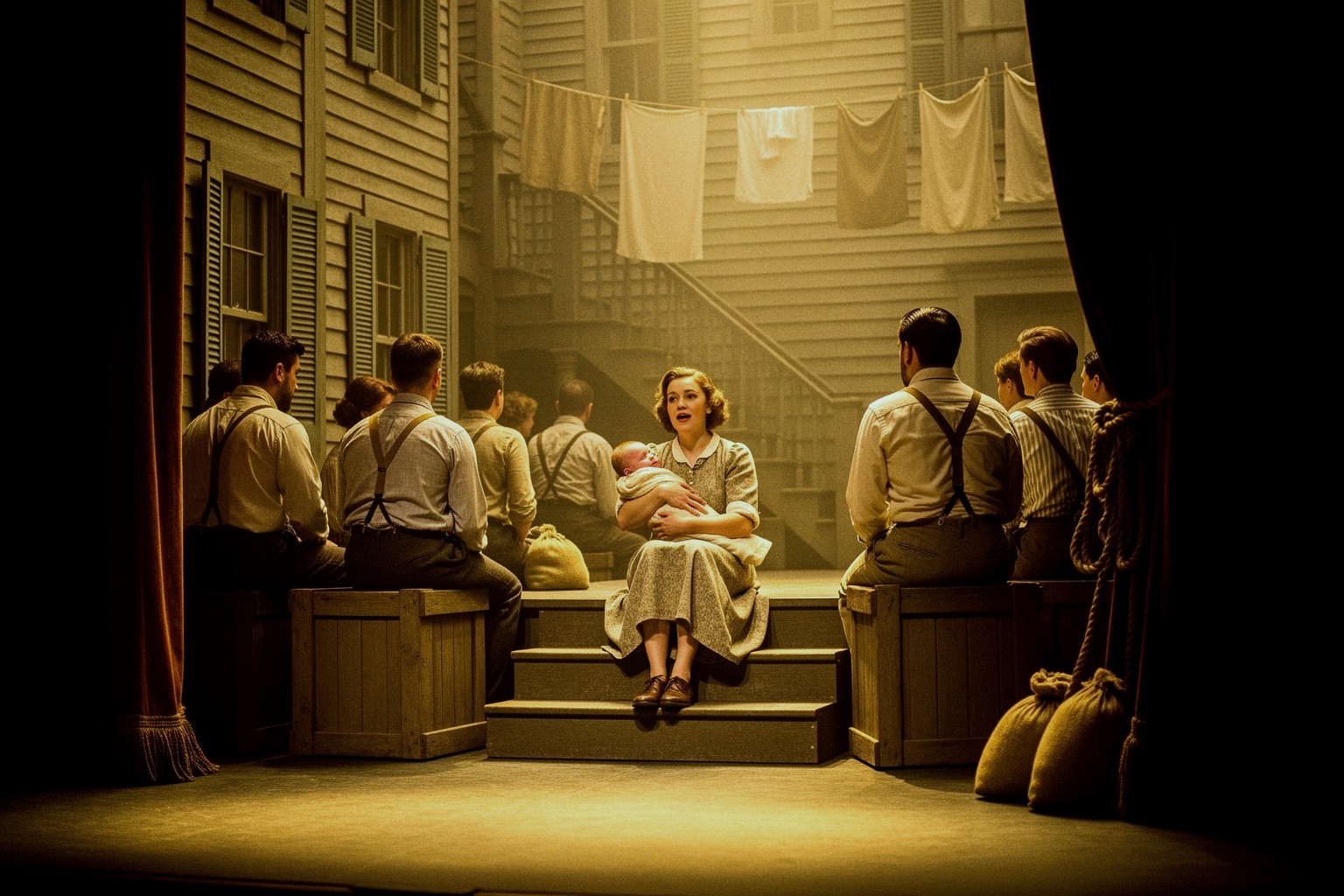
On October 10, 1935, Porgy and Bess opened at the Alvin Theatre in New York. George Gershwin had spent most of two years on it, working with DuBose Heyward, whose novel supplied the story, and with his brother Ira on the lyrics.
It was set among the fishermen and dock workers of Catfish Row, a tenement court in Charleston, and Gershwin insisted on a cast of classically trained Black singers. Broadway had never staged anything like it: a full opera, with sung dialogue, put before a commercial audience.
The critics could not agree on what they had seen. Drama reviewers found it too operatic. Music reviewers found it too much like a show. The songs were praised almost everywhere, with "Summertime" first among them.
It closed after 124 performances and lost its backers' money.
Gershwin died in 1937, aged 38, of a brain tumour. Five years later a revival cut much of the sung dialogue into spoken lines and outran the original. He never saw his opera make a profit.
Checked against: Contemporary New York newspaper reviews, Gershwin biographies, Broadway production records, histories of American opera
They married each other again in the bush. It lasted less than a year.
Illustration generated by AI for The Day Vault.
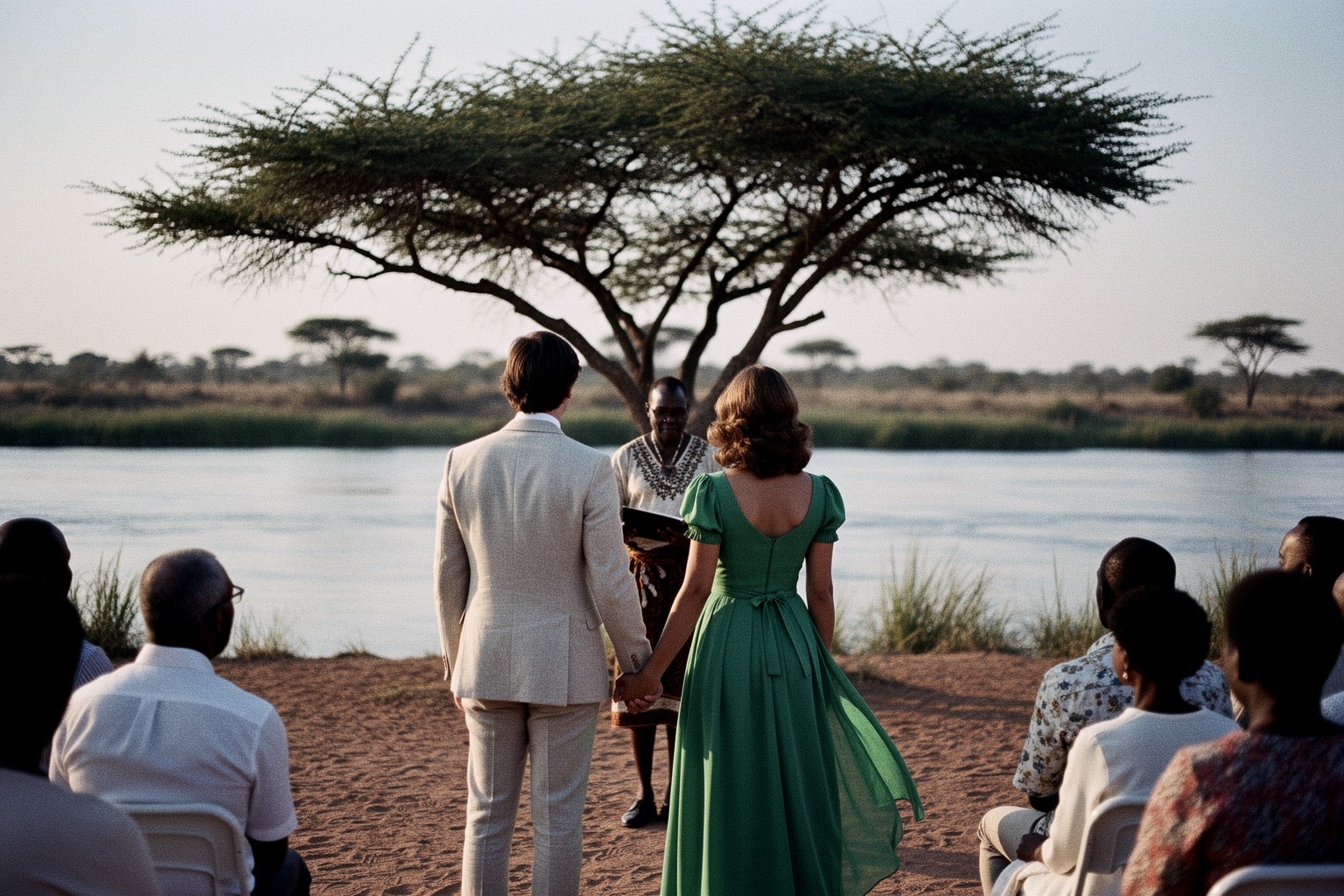
On October 10, 1975, Elizabeth Taylor and Richard Burton married each other for the second time. They held the ceremony on a riverbank in Chobe National Park, in northern Botswana, a long way from the photographers who had followed them for more than a decade.
They first met on the set of Cleopatra and married in Montreal in 1964. That marriage ran ten years and kept the gossip pages fed: the famous diamonds, the yacht, the public rows, the string of films they made together. It ended in divorce in 1974, and both said they were finished.
Sixteen months later they were standing by a river in southern Africa. A local district commissioner performed the service. There were few guests and no crowd, which for the two most photographed people of their era made it close to a private wedding. Newspapers around the world ran the story as a love affair that would not quit.
It quit almost at once. Within months the couple had separated again, and the second divorce was settled in the summer of 1976.
Burton married Suzy Hunt that August. In December, Taylor married John Warner, a Virginia politician who was later elected to the United States Senate.
Checked against: Contemporary wire-service and newspaper reports from October 1975; published biographies of both actors; Burton's posthumously published diaries
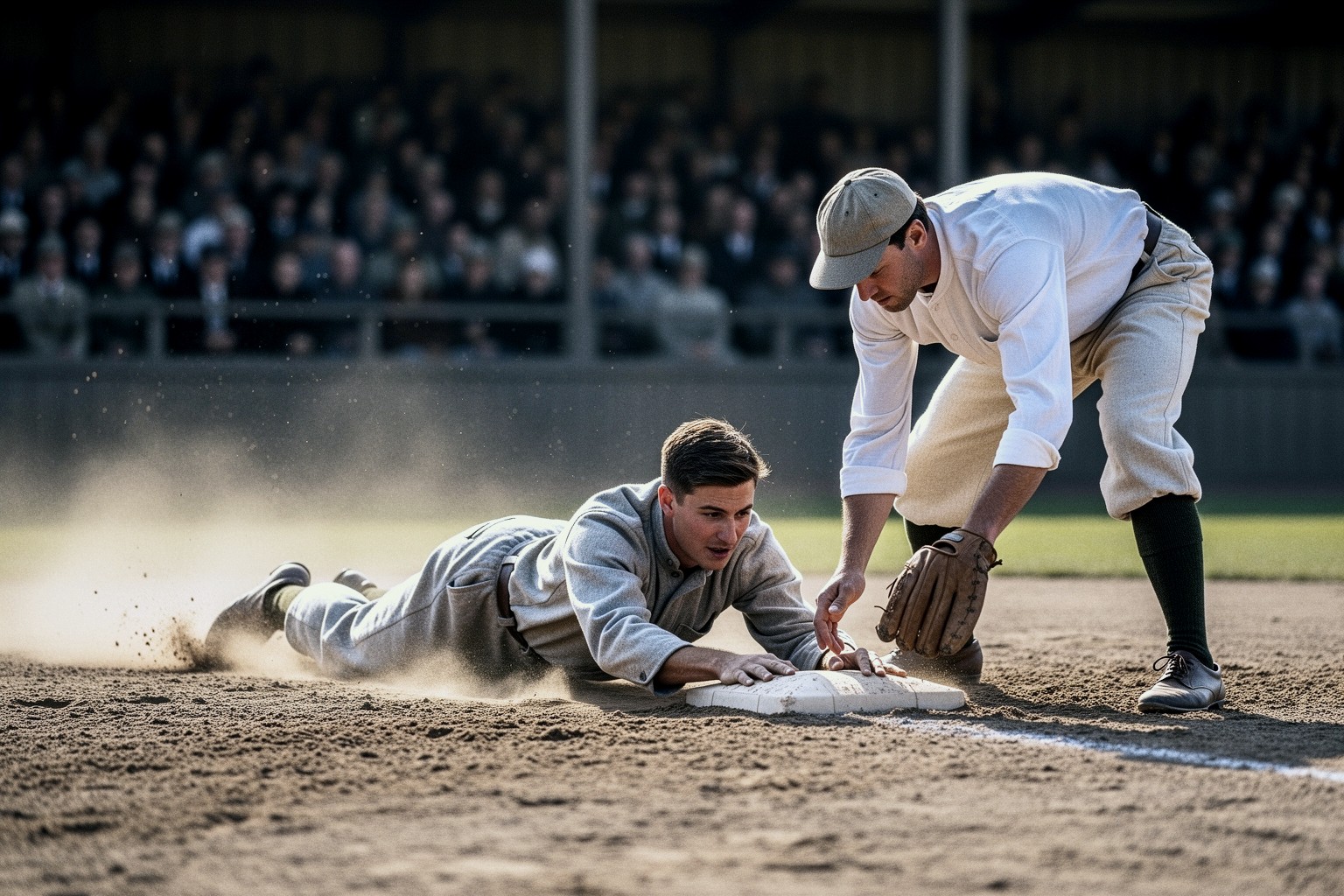
The series was saved in the seventh. It ended on the basepaths.
Illustration generated by AI for The Day Vault.
On October 10, 1926, the St. Louis Cardinals beat the New York Yankees 3-2 at Yankee Stadium to win Game 7 of the World Series. It was the first championship in the franchise's history.
The game turned in the seventh inning. The Yankees had the bases loaded with two out, and the rookie Tony Lazzeri came to the plate. Rogers Hornsby, the Cardinals' player-manager, walked to the mound and called in Grover Cleveland Alexander, a 39-year-old who had pitched a complete game the day before.
Alexander struck Lazzeri out. He held the one-run lead through the eighth, then got two quick outs in the ninth. The Cardinals needed one more.
Alexander walked Babe Ruth. With Bob Meusel batting and Lou Gehrig on deck, Ruth broke for second.
Catcher Bob O'Farrell threw to Hornsby, Hornsby put the tag on, and the season was over. No other World Series has ended with a runner caught stealing.
Checked against: Official box scores and play-by-play records, contemporary newspaper game reports from New York and St. Louis, league and club histories, baseball reference almanacs
A brewer found Neptune's moon. It was going the wrong way.
Illustration generated by AI for The Day Vault.
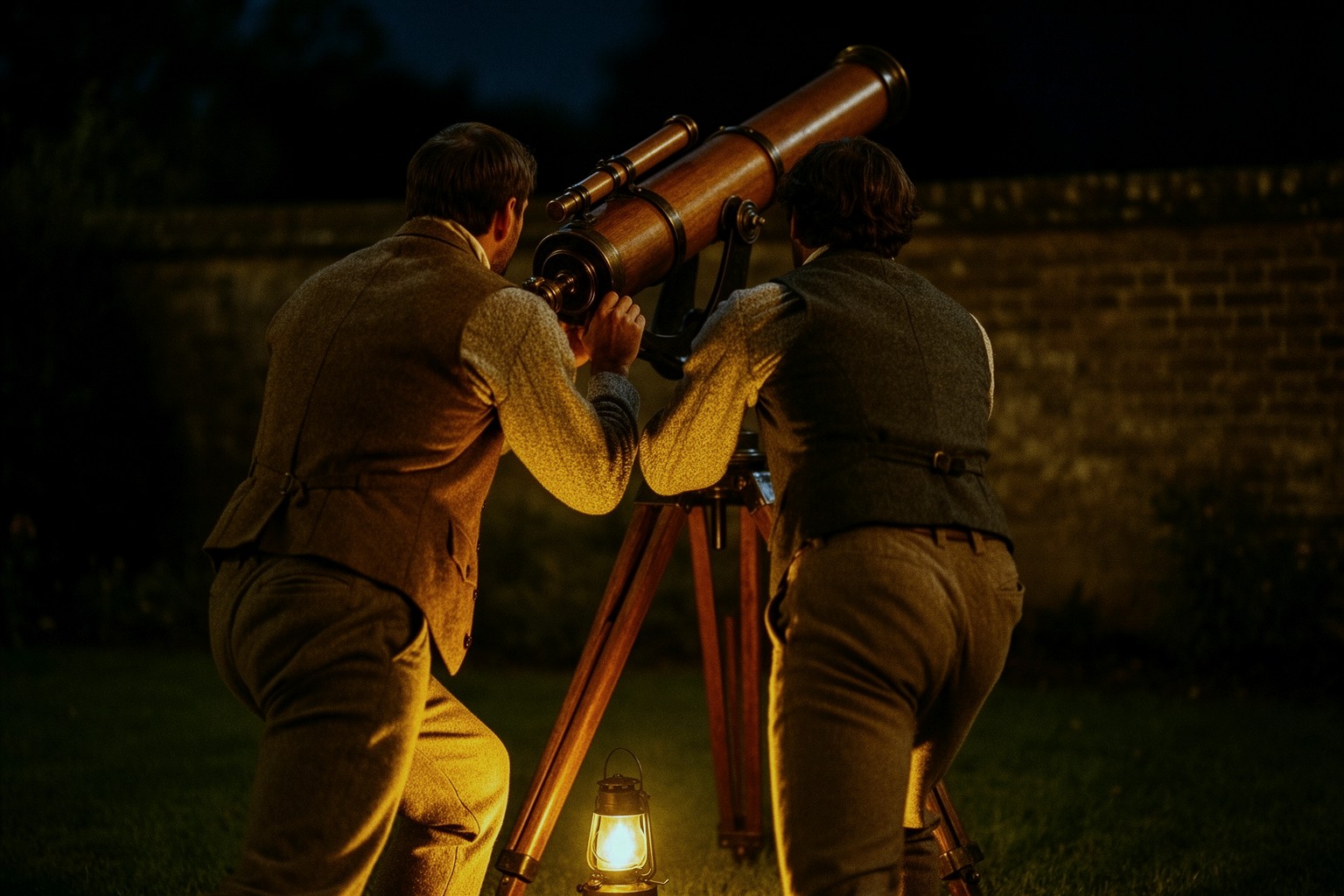
On October 10, 1846, William Lassell spotted a moon circling Neptune. The planet itself had been identified at the Berlin observatory only seventeen days earlier.
Lassell was a Liverpool brewer, not a professional astronomer. He had built his own telescope, a reflector with a 24-inch metal mirror, and mounted it in the grounds of his house outside the city. When news of Neptune reached England, John Herschel wrote urging him to search for moons.
Within weeks Lassell had one: a faint point that kept pace with the planet night after night. For decades it had no proper name. Astronomers called it simply the satellite of Neptune until "Triton" caught on in the twentieth century. In 1989, Voyager 2 flew past and found a frozen surface streaked with dark plumes.
Triton orbits backwards, against the direction of Neptune's spin. It is the only large moon in the solar system that does.
A moon moving the wrong way almost certainly did not form where it is. Neptune most likely captured it from the icy Kuiper belt beyond, and tides are now slowly drawing it in toward the planet that took it.
Checked against: Lassell's reports in the Monthly Notices of the Royal Astronomical Society; histories of the discovery of Neptune; NASA Voyager 2 mission records; planetary science reviews of Triton's orbit and origin
The president pushed a button. The hills kept sliding.
Illustration generated by AI for The Day Vault.
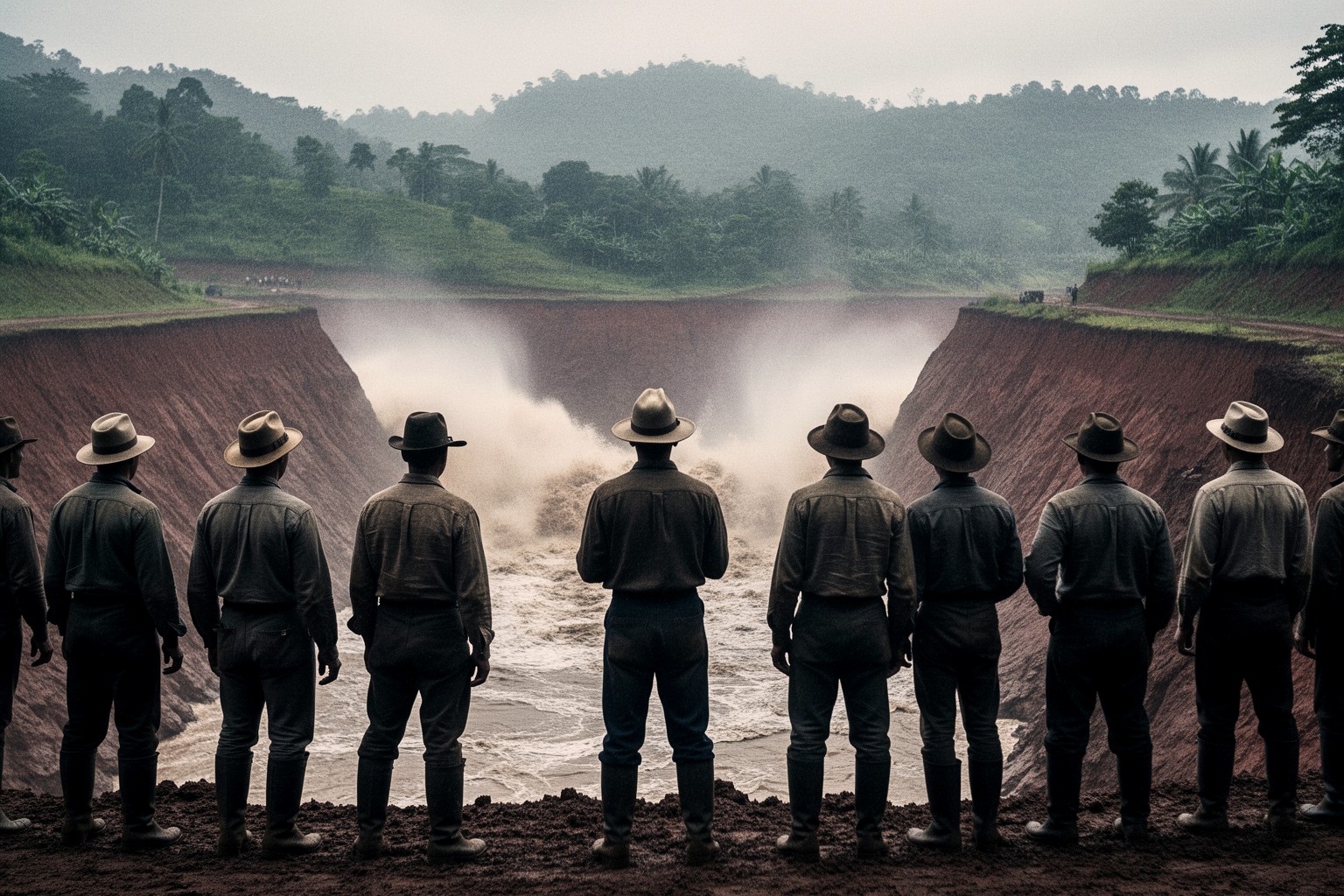
On October 10, 1913, Woodrow Wilson pressed a telegraph key at the White House. The signal ran by wire and undersea cable to Panama, where it set off dynamite packed into the Gamboa dike. The dike was the last earthen wall holding back the water of Gatun Lake from the Culebra Cut, the deepest excavation on the canal route.
The blast tore the dike open. Water poured into the cut that men had spent years blasting and shovelling out of the continental divide. Crowds lined the banks to watch the dry trench become a channel. Newspapers treated it as the moment two oceans met.
The cut had cost more effort than any other stretch of the canal. Its clay and shale walls kept collapsing into the trench, burying steam shovels and rail track. Engineers had answered every slide the same way: dig it out again.
Flooding the cut did not stop the hills. The Cucaracha slide was already blocking the channel, and once the water was in, dredges had to float in and dig it out from the lake side.
The canal opened to traffic in August 1914. In 1915 the banks slid again, and the canal closed for months.
Checked against: Panama Canal Commission records; contemporary newspaper reports; standard histories of the canal's construction