The first salute to the pledge didn't survive the war
Illustration generated by AI for The Day Vault.
On October 12, 1892, American schoolchildren stood beside their desks and recited a brand-new pledge to the flag. The day marked 400 years since Columbus reached the Americas, and the pledge had been written for the occasion.
Its author was Francis Bellamy, a former Baptist minister on the staff of The Youth's Companion, a popular children's magazine. The magazine had spent years selling flags to schools, and it drove the national Columbus Day program that put the pledge into classrooms across the country.
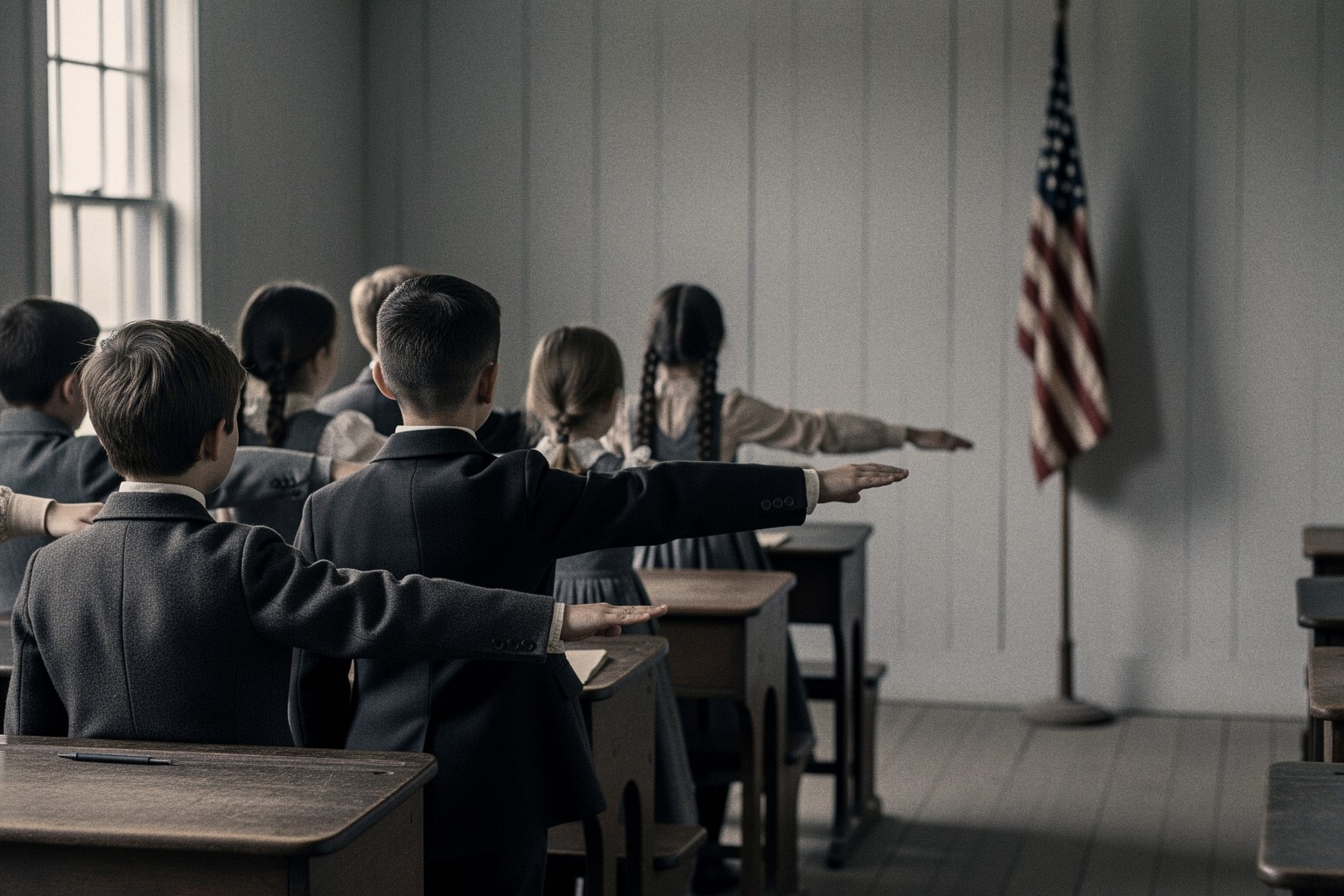
The words were shorter than today's. There was no "under God"; Congress added that in 1954. Children began with a hand raised to the brow, then stretched the right arm straight out toward the flag and held it there while they spoke.
By the late 1930s, that outstretched arm looked almost exactly like the salute filling newsreels from Nazi Germany.
In December 1942, a year after Pearl Harbor, Congress amended the federal flag code: civilians would place a right hand over the heart instead. The pledge kept its words. The arm came down.
Checked against: Library of Congress and Smithsonian histories of the Pledge of Allegiance; archived issues of The Youth's Companion from 1892; the text of the 1942 amendments to the U.S. Flag Code; academic histories of American flag ritual.
Munich threw a royal wedding, and the horses stole it
Illustration generated by AI for The Day Vault.
On October 12, 1810, Crown Prince Ludwig of Bavaria married Princess Therese of Saxe-Hildburghausen in Munich. The royal family invited the city's ordinary citizens to celebrate in the open fields outside the town gates.
The festivities ran for days. People ate, drank and crowded the meadow to watch the spectacle. Munich named the fields Theresienwiese, after the bride. Locals still shorten it to the Wiesn.
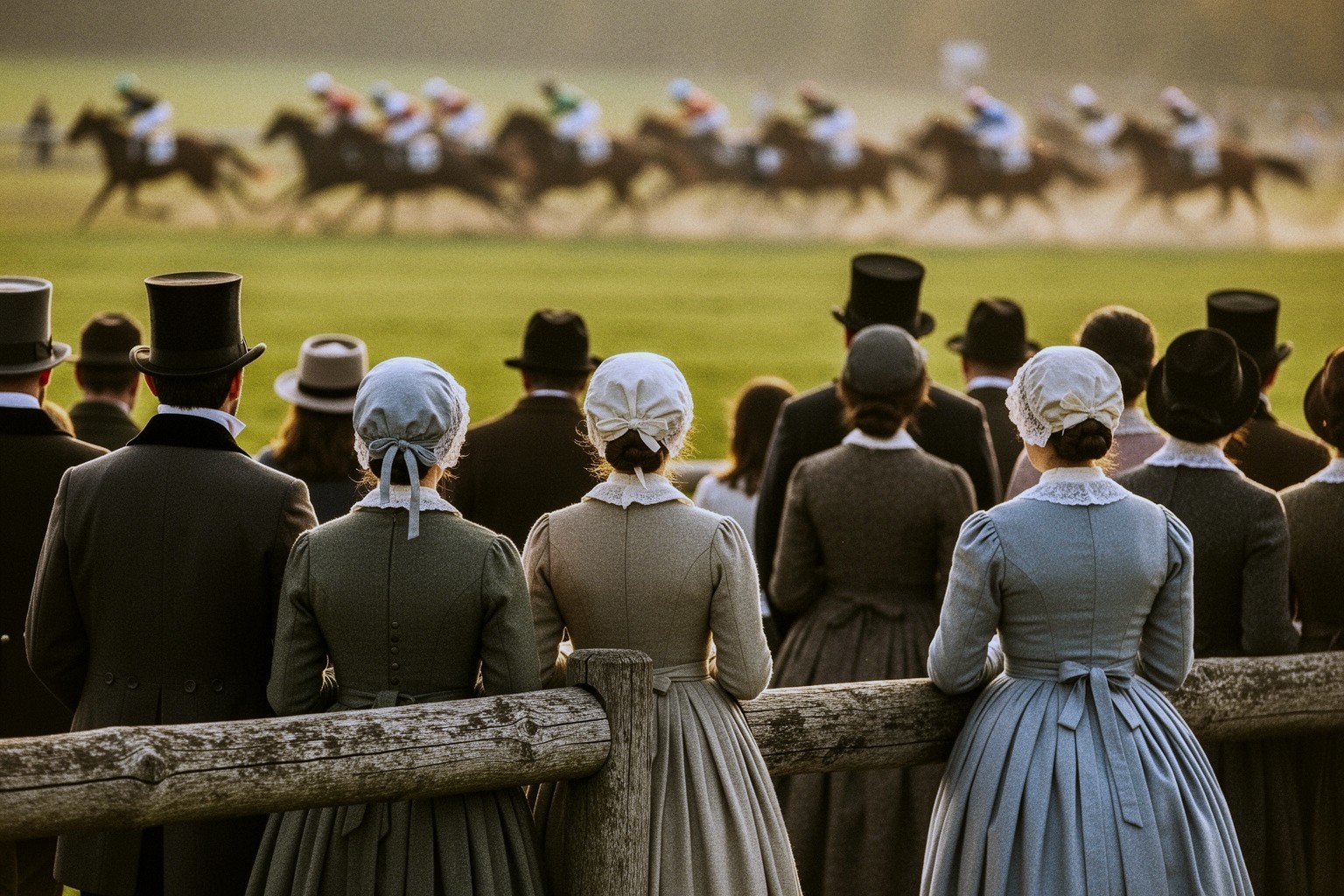
The main event came on October 17: a horse race run in front of the royal family. It went over so well that the organisers decided to stage it again the following year. In 1811 an agricultural show was added. Year by year, a one-off wedding party hardened into a fixed date on the calendar.
The first Oktoberfest, now known around the world for beer, was built around horses, and the drinking was simply what people did while they waited for the race.
The great brewery tents only arrived late in the 19th century. The race kept running until 1960, then dropped off the programme, and the festival carried on without the event that had made it worth repeating.
Checked against: Munich city archives and official Oktoberfest histories; Bavarian royal court records; standard biographies of Ludwig I; German social histories of 19th-century festivals
The prime minister closed the runway. The general landed anyway.
Illustration generated by AI for The Day Vault.
On October 12, 1999, Pakistan's prime minister, Nawaz Sharif, fired his army chief while the man was in the air. General Pervez Musharraf was flying home from Sri Lanka on a commercial airliner full of ordinary passengers.
Sharif named a replacement and ordered that the plane not be allowed to land in Karachi. Controllers told the pilot to go elsewhere. The flight circled, and its fuel ran down.
The army refused to accept the dismissal. Within hours, troops moved on the prime minister's residence, the state television station and Karachi airport. Soldiers took the control tower, and the airliner came down in Karachi with little fuel to spare.
The man the government had tried to keep out of the country stepped off the plane as its ruler.
Musharraf addressed the nation on television before dawn. Sharif was arrested, later convicted of hijacking over the order to turn the flight away, and sent into exile in Saudi Arabia. Musharraf held power for nearly nine years.
Checked against: Contemporary wire reports and international newspaper coverage; Pakistani court records from Sharif's 2000 trial; academic histories of Pakistani civil-military relations
On October 12, 2000, the USS Cole, an American guided-missile destroyer, pulled into the harbour at Aden, Yemen, to refuel. It was meant to be a short, routine stop on the way to the Persian Gulf.
Late that morning a small fiberglass boat came alongside the port side. The two men aboard detonated the explosives they were carrying. The blast tore a hole roughly forty feet wide in the steel hull at the waterline, beside the galley, where sailors were lining up for lunch. Seventeen sailors were killed and 39 were injured.
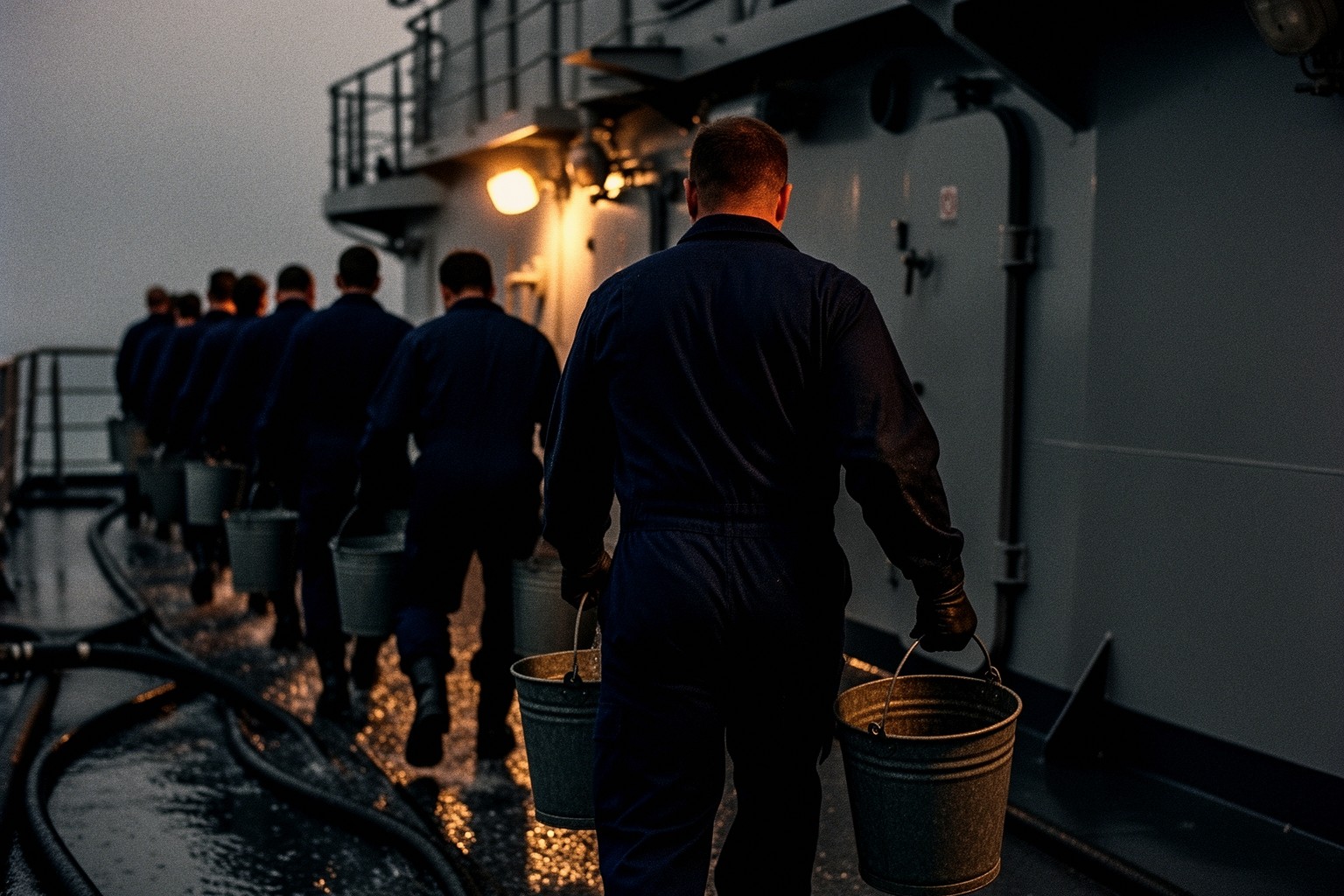
The rest of the crew fought the flooding for days with pumps, buckets and their hands, sleeping on deck in the heat to keep the ship from going under. Investigators traced the attack to al-Qaeda.
The plan had already failed once. That January, the same group had tried to hit another American destroyer in Aden, and their boat, overloaded with explosives, simply sank.
They recovered the boat and the explosives and tried again. Weeks later the Cole left Aden riding on the deck of a Norwegian heavy-lift ship, unable to sail itself.
Checked against: US Navy command investigation; 9/11 Commission Report; contemporary wire and newspaper coverage; congressional hearing records
He used a false name. He still filled in the card.
Illustration generated by AI for The Day Vault.
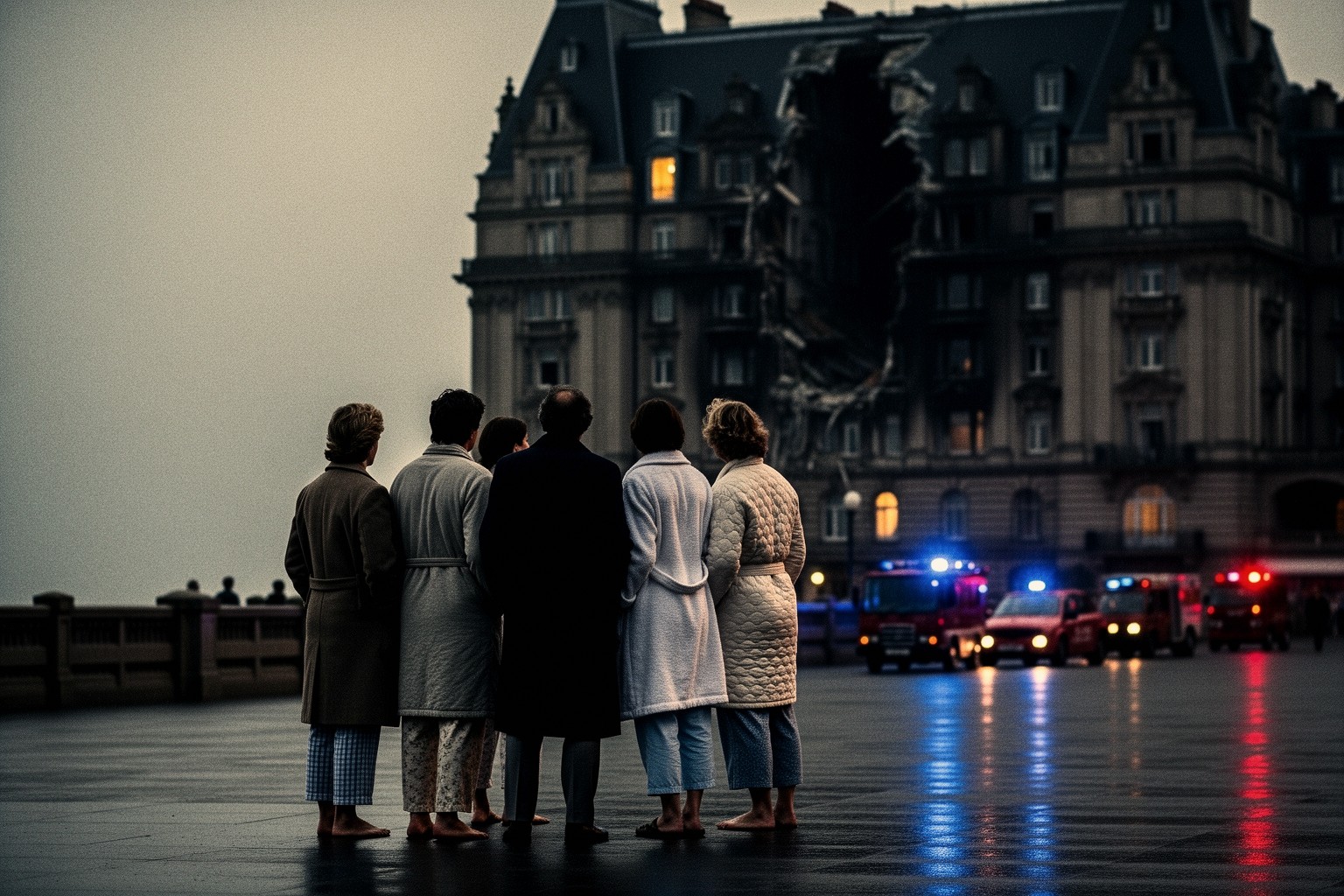
At 2:54 a.m. on October 12, 1984, a bomb exploded inside the Grand Hotel in Brighton, where Britain's governing Conservative Party was staying for its annual conference. A chimney stack collapsed and brought several floors of rooms down through the middle of the building.
Five people died and more than thirty were injured. Prime Minister Margaret Thatcher, still awake and working on her speech, was unhurt, though the bathroom of her suite was wrecked. Guests stood on the seafront in nightclothes while firefighters dug through rubble. The conference opened that morning on schedule.
The IRA claimed the attack. Investigators established that the bomb had been hidden under the bath of room 629 weeks earlier, wired to a long-delay timer, by a guest who had checked in under the name Roy Walsh.
The timer bought the bomber nearly a month of distance. The hotel's paperwork took it back: detectives recovered the registration card for room 629, and on it they found a print belonging to Patrick Magee.
Magee was arrested in Glasgow in June 1985 and convicted the following year. He received eight life sentences and was released in 1999 under the Good Friday Agreement.
Checked against: Contemporary British newspaper reports; trial records from Magee's 1986 conviction; police and Home Office accounts of the investigation; histories of the Troubles
India's first woman saint spent most of her life ill
Illustration generated by AI for The Day Vault.
On 12 October 2008, Pope Benedict XVI declared Sister Alphonsa of the Immaculate Conception a saint in St Peter's Square. She became the first woman from India to be canonised by the Catholic Church.
She was born Anna Muttathupadathu in 1910 in Kerala, home to a Christian community that traces its origins to the first century. Her mother died when she was a baby. As a young woman she joined the Franciscan Clarist sisters, part of the Syro-Malabar Church, one of India's Eastern Catholic churches.
In Kerala the news landed as a celebration. Church bells rang, and families travelled to Bharananganam, the small town where she is buried, to pray at her tomb. An official Indian delegation sat among the crowds in Rome.
Yet almost nothing in her life looked like the stuff of saints. She was sick for most of her adult years, taught only briefly at a convent school, and died in 1946, aged 35, largely unknown beyond her own community.
Her reputation was built after her death, at her graveside. People came to pray, then kept coming, many of them not Christian, until a quiet nun's tomb became a pilgrimage site long before Rome confirmed what Kerala had already decided.
Checked against: Vatican canonisation records and homily texts; contemporary Indian and international news reports from October 2008; biographies published by the Franciscan Clarist Congregation and the Syro-Malabar Church; histories of Christianity in Kerala.
On October 12, 1971, Jesus Christ Superstar opened on Broadway at the Mark Hellinger Theatre. Andrew Lloyd Webber and Tim Rice were in their twenties, and the story of Christ's last week was now a rock musical in midtown Manhattan.
It had not started on a stage. Producers would not back an untested rock opera about Jesus, so the pair recorded it first as a double album, released in 1970. The record sold, people played it at home and sang along, and amateur groups began staging it without permission. A theatre production followed the audience the album had already built.
Broadway went big. Director Tom O'Horgan staged it as spectacle, with elaborate costumes and effects. Religious groups picketed outside on opening night. Inside, the reviews were mixed.
Lloyd Webber later said he disliked that first Broadway production, the one that introduced his work to New York.
A year later London got a plainer staging at the Palace Theatre. It ran for eight years and became, for a time, the longest-running musical in West End history.
Checked against: Broadway production records, contemporary theatre reviews, newspaper reports of the opening-night protests, and published interviews and memoirs by Andrew Lloyd Webber and Tim Rice.
On 12 October 1979, Pan Books published The Hitchhiker's Guide to the Galaxy, a slim paperback by a 27-year-old writer named Douglas Adams.
It was not new material. Adams had first written it as a BBC radio comedy, broadcast in 1978. It follows Arthur Dent, an Englishman who loses his house and then his planet on the same Thursday morning. Earth is demolished to make way for a hyperspace bypass. Arthur escapes in his dressing gown, carrying a towel.
The novel turned the radio scripts into prose, added fresh jokes, and found readers who had never heard the broadcasts. It climbed the British bestseller lists and stayed there, then spawned sequels, a television series, stage shows and, eventually, a film.
Its ending was not really an ending: Adams was so far behind schedule that his publisher told him to finish the page he was on and hand the manuscript in.
So the first book stops partway through the radio story, with its heroes heading off for a bite to eat. The rest of the journey had to wait a year for a second novel, The Restaurant at the End of the Universe, which picked up exactly where the deadline had cut him off.
Checked against: Biographies of Douglas Adams and histories of the Hitchhiker's series; Adams's own published interviews and introductions; BBC radio archive records; publisher catalogues and British bestseller-list archives from 1979.
He ran a marathon in under two hours. The record books didn't move.
Illustration generated by AI for The Day Vault.
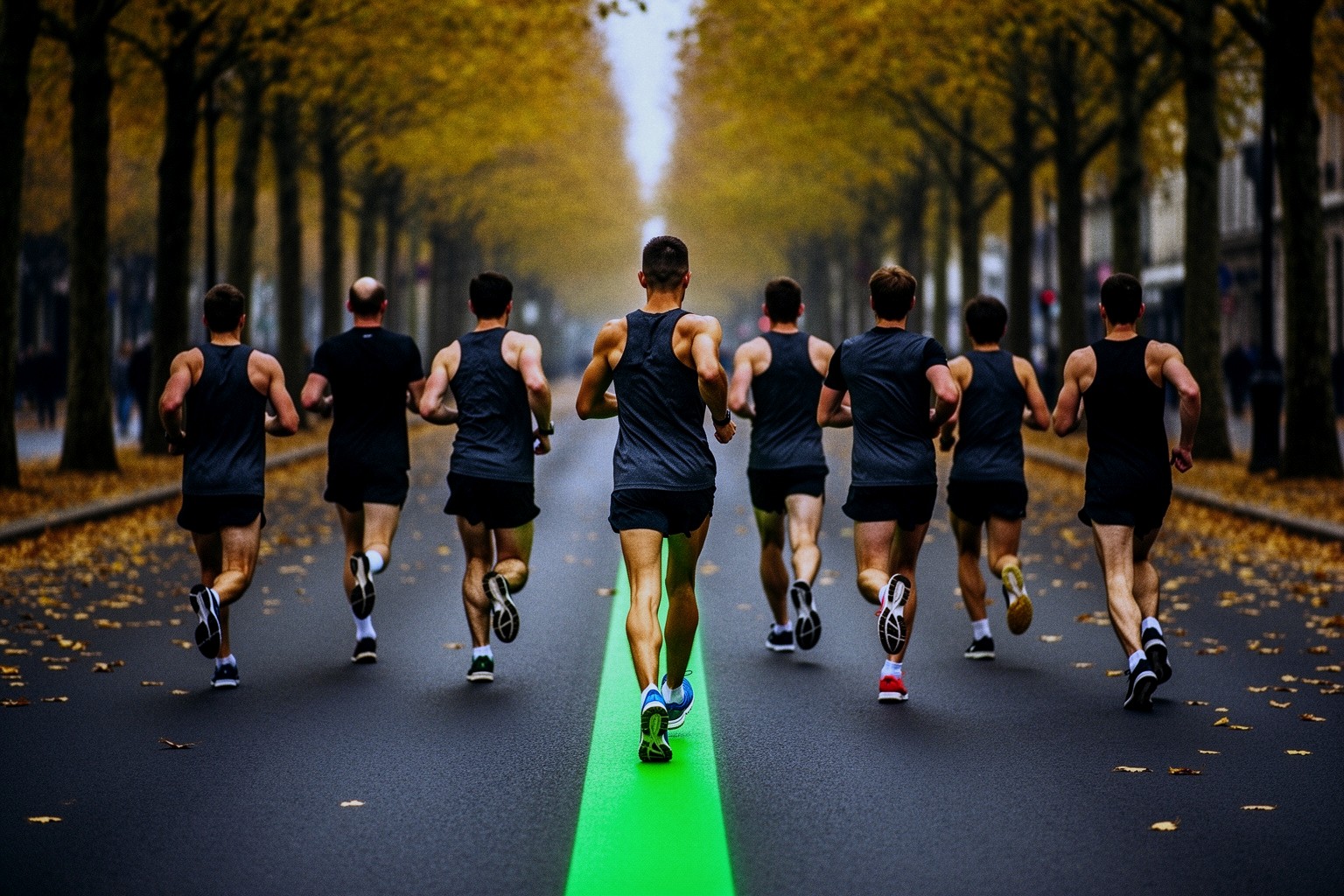
On October 12, 2019, Eliud Kipchoge ran 26.2 miles in 1:59:40 along the Hauptallee, a straight, tree-lined avenue in Vienna's Prater park. No human had covered the marathon distance that fast before.
Nothing about the morning was left to chance. The start time was set by weather forecasts. Forty-one pacemakers, among them Olympic and world medallists, rotated in and out in a tight arrowhead around him, shielding him from the wind. A car rolled ahead projecting a laser line on the road to mark the pace. Cyclists brought him drinks so he never broke stride.
Two years earlier, at the Monza racetrack in Italy, a similar attempt had missed by 25 seconds. This time crowds lined the loops, and Kipchoge spread his arms in the final hundred metres.
None of it counted. Rotating pacers, handed drinks and a closed, invitation-only course broke the rules for record-eligible races, and World Athletics never ratified the time.
The official world record that day was still 2:01:39, his own, set in Berlin a year earlier. The fastest marathon anyone had ever run went into the books as an exhibition.
Checked against: World Athletics records and competition rules; contemporaneous wire-service and broadcast reports from Vienna; major newspaper sports coverage of the 2017 Monza and 2019 Vienna attempts.
On October 12, 1964, the Soviet Union launched Voskhod 1, the first spacecraft to carry more than one person. Three men went up together: Vladimir Komarov, a pilot; Konstantin Feoktistov, an engineer; and Boris Yegorov, a doctor.
The crew was a first in another way too. Feoktistov and Yegorov were not military pilots. A spacecraft designer and a physician had joined the crew, and Yegorov spent the flight watching his colleagues for the effects of weightlessness.
The capsule circled Earth for about a day and came down safely on October 13. Moscow had put a crew in orbit months before the first American two-man Gemini flight.
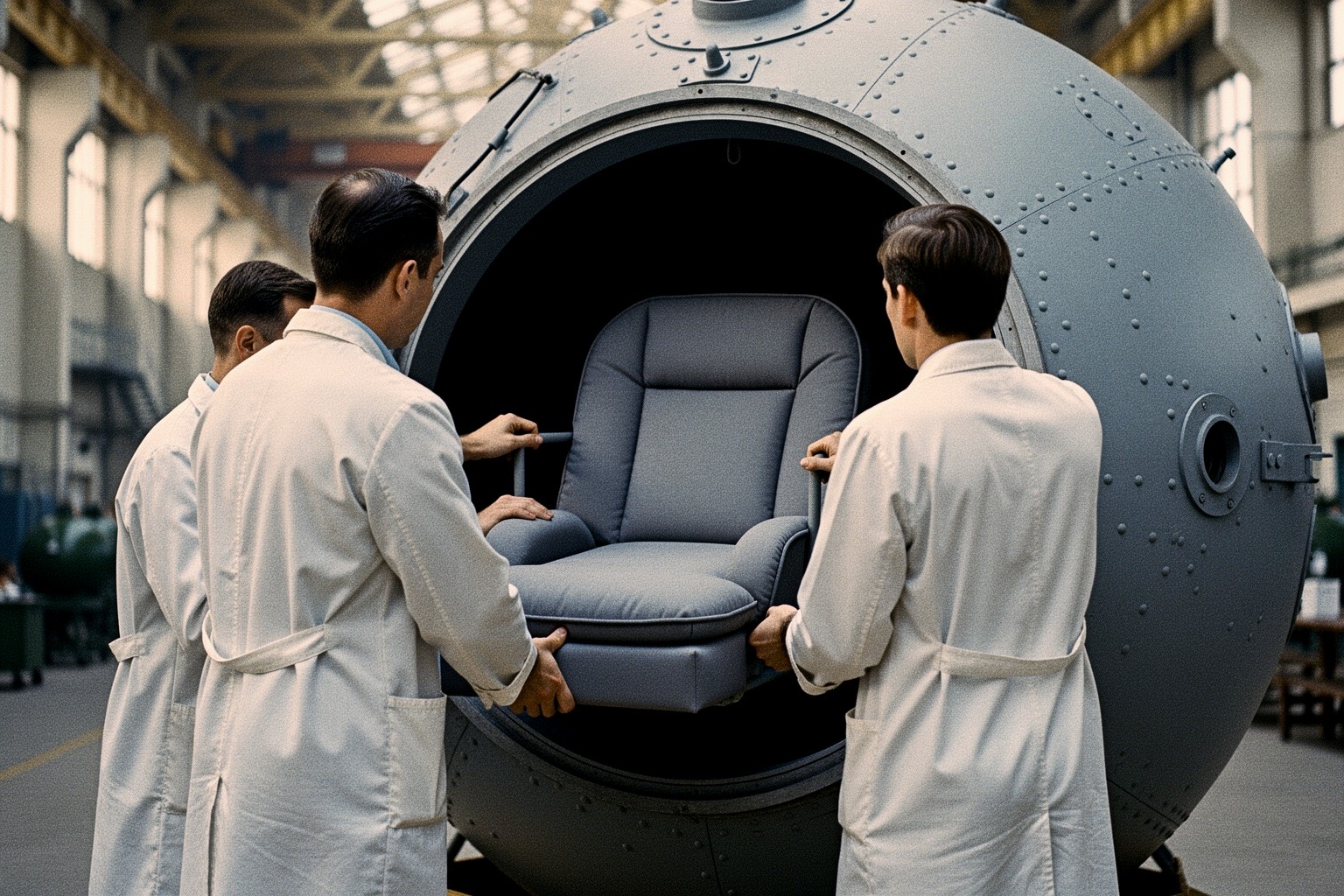
Voskhod was a single-seat Vostok capsule with its ejection seat removed, and the only way to fit three men inside was to leave their spacesuits on the ground.
They flew in light cloth flight suits. Soyuz crews went on flying without pressure suits until 1971, when a valve opened on Soyuz 11 during descent and all three cosmonauts died as the cabin lost its air. After that, Soviet crews wore suits, and Soyuz carried two people instead of three.
Checked against: NASA and Russian space agency mission histories; academic histories of the Soviet space programme; contemporary press coverage from October 1964; official accounts of the Soyuz 11 investigation
On October 12, 1492, five weeks after leaving the Canary Islands, Columbus's three ships reached an island in the Bahamas. The Taíno people who lived there called it Guanahani. Columbus went ashore, planted a royal banner and renamed it San Salvador.
His log tracked the crossing day by day: headings, distances, birds overhead, weed in the water. For centuries navigators have run those figures forward from the Canaries, trying to put a finger on the same beach.
They have never agreed. Watling Island, Samana Cay, Grand Turk and several others have all had serious champions. Each claim rests on a careful reconstruction of the same voyage, and each lands somewhere different.
The log they are all working from is not the log. Columbus's original was lost. What survives is a summary made decades later by the friar Bartolomé de las Casas, partly copied and partly paraphrased.
In 1925 the Bahamas settled the question its own way and renamed Watling Island San Salvador. The map now has an answer. The evidence still doesn't.
Checked against: Las Casas's abstract of the 1492 voyage log, scholarly editions and translations of the diario, navigational reconstructions published by maritime historians, Bahamian government records on the 1925 renaming