On October 13, 1792, a group of Freemasons gathered on a muddy rise above the Potomac and laid the cornerstone of the President's House. The capital around it barely existed. It was a plan on paper, a few cleared fields and a scatter of surveyors' stakes.
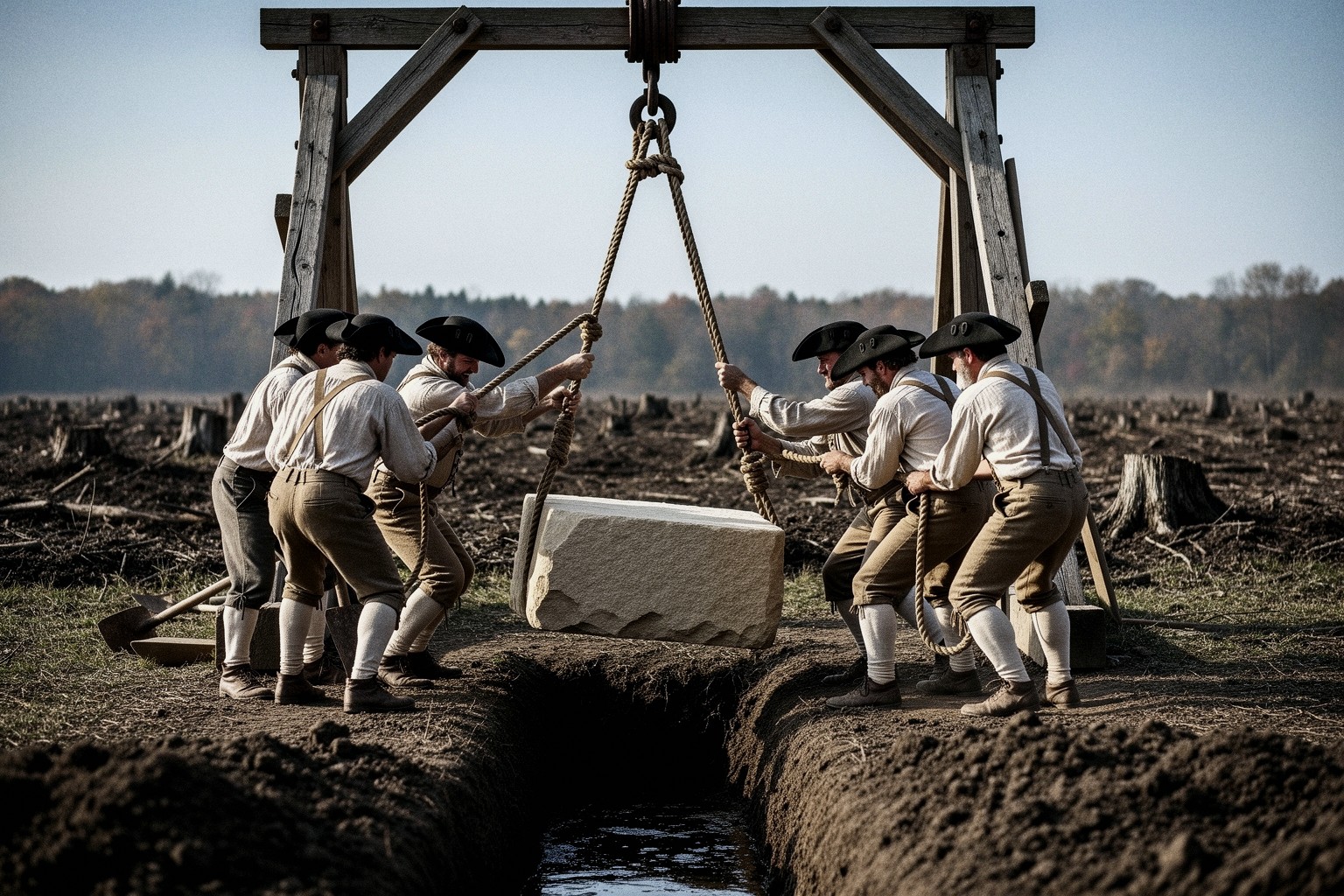
The design belonged to James Hoban, an Irish-born architect who had won the competition that summer. The walls would rise in pale sandstone quarried at Aquia Creek in Virginia, floated up by boat and dragged the rest of the way. A brass plate was set into the first stone to mark the day.
The house went up slowly. John Adams moved in before it was finished, in 1800. British troops burned it in 1814, and the scorched shell was rebuilt and painted white again. Every president since has slept somewhere above that first stone.
Nobody kept a reliable record of exactly where it went.
When Harry Truman's crews gutted the mansion between 1949 and 1952, leaving only the outer walls standing, they went looking for it. They never found it. The oldest piece of the White House is still somewhere inside it, and no one can point to it.
Checked against: White House Historical Association publications; National Park Service histories of the President's Park; contemporary 1792 newspaper accounts; reports and histories of the 1949-1952 Truman reconstruction
The king arrested his bankers. Their estates went elsewhere.
Illustration generated by AI for The Day Vault.
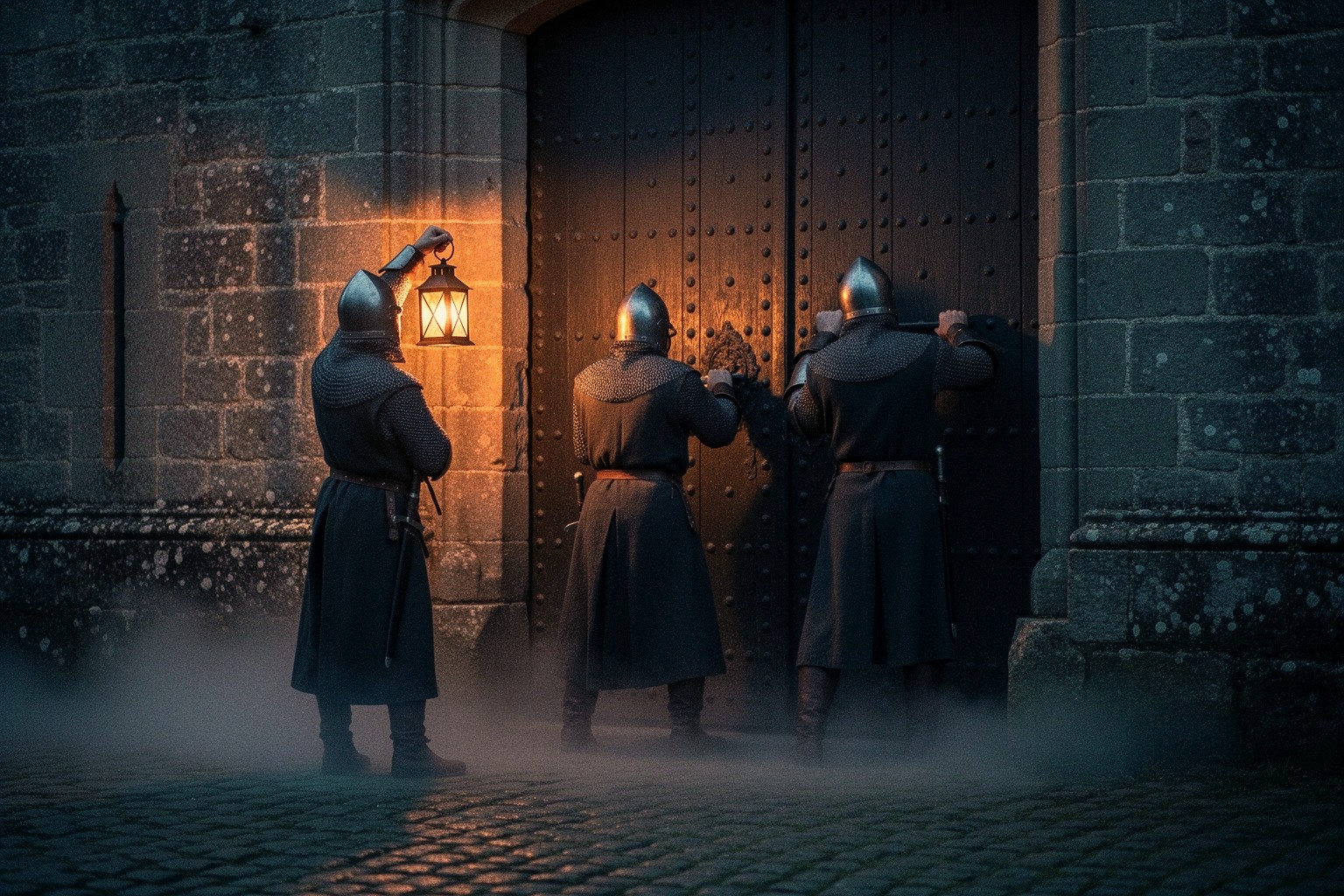
At dawn on Friday, 13 October 1307, royal officers across France arrested every Knight Templar they could find. The orders had gone out a month earlier, sealed, with instructions not to open them before the appointed day. Hundreds of brothers were seized in one morning, among them the order's Grand Master, Jacques de Molay, in Paris.
The charges were spitting on the cross, denying Christ and worshipping an idol. Under torture, many confessed, de Molay among them. Few historians now believe the accusations. Many believe the motive: King Philip IV was deep in debt, and the Templars had served as his bankers, with money and land spread across his kingdom.
Pope Clement V protested, then gave way. In 1312, at the Council of Vienne, he dissolved the order. De Molay withdrew his confession and was burned on an island in the Seine in 1314.
But the papal bull that disposed of the Templars' wealth handed most of their property to a rival military order, the Knights Hospitaller.
Philip had broken the richest order in Christendom, and most of its estates passed to its competitors.
Checked against: Surviving royal arrest orders and trial records; papal bulls of 1312; standard academic histories of the Templars and of Philip IV's reign.
Congress voted for a navy. Then it sold the last ship.
Illustration generated by AI for The Day Vault.
On October 13, 1775, the Continental Congress voted to fit out two armed vessels and send them to sea. Their job was narrow: intercept British ships carrying supplies to the army besieging Boston.
The vote was a fight. Some delegates argued that a handful of colonial ships could never face the most powerful navy on earth, and that trying would only waste money the war could not spare. Others pointed out that George Washington was already sending small schooners after British transports. The majority decided Congress needed ships under its own authority.
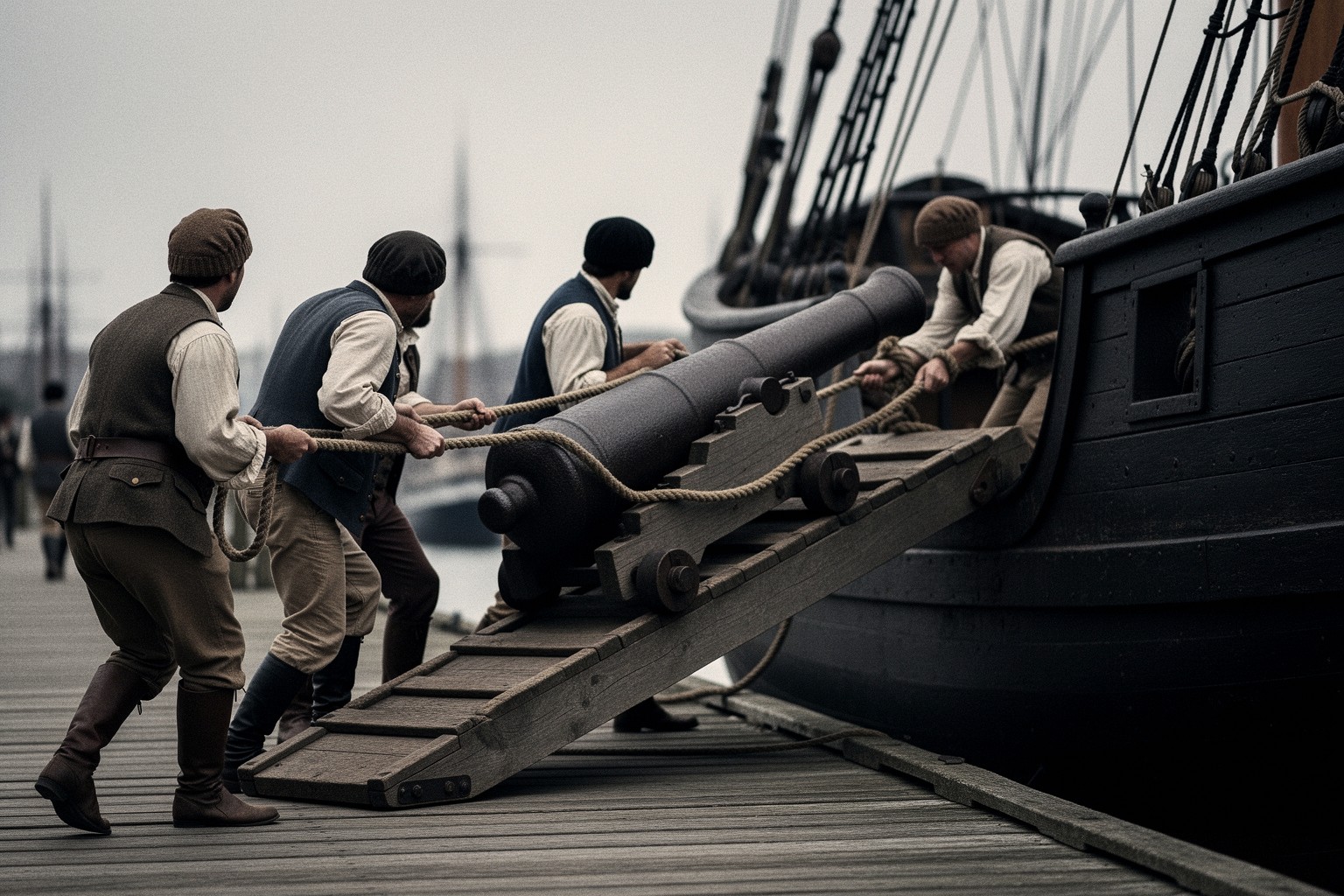
Within weeks Congress added more vessels, drafted rules of discipline for their crews and authorized battalions of marines. Over the next eight years Continental captains took prizes in the Caribbean and off the British coast. Most of the fleet ended up captured, burned or sunk.
Winning the war did not save it. In 1785 a Congress with no money sold the Alliance, its last warship, and the United States was left without a navy at all.
Then Barbary corsairs began seizing American merchant ships and holding their crews for ransom. In 1794 Congress authorized six new frigates, and the Navy still counts October 13 as its birthday.
Checked against: Journals of the Continental Congress; U.S. Navy official histories; scholarly histories of the Continental Navy and the Naval Act of 1794
On October 13, 1812, American troops crossed the Niagara River before dawn and attacked Queenston Heights in Upper Canada. It was the first serious American push into Canada since war had been declared that June.
The landing went badly at first. Then a small party found a fisherman's path up the cliff and seized the British gun battery on the heights. Major General Isaac Brock, the British commander, led a counterattack up the slope and was shot dead.
By early afternoon the Americans held the high ground, with Lieutenant Colonel Winfield Scott organising its defence. They needed only the rest of the army, which was waiting on the New York shore.
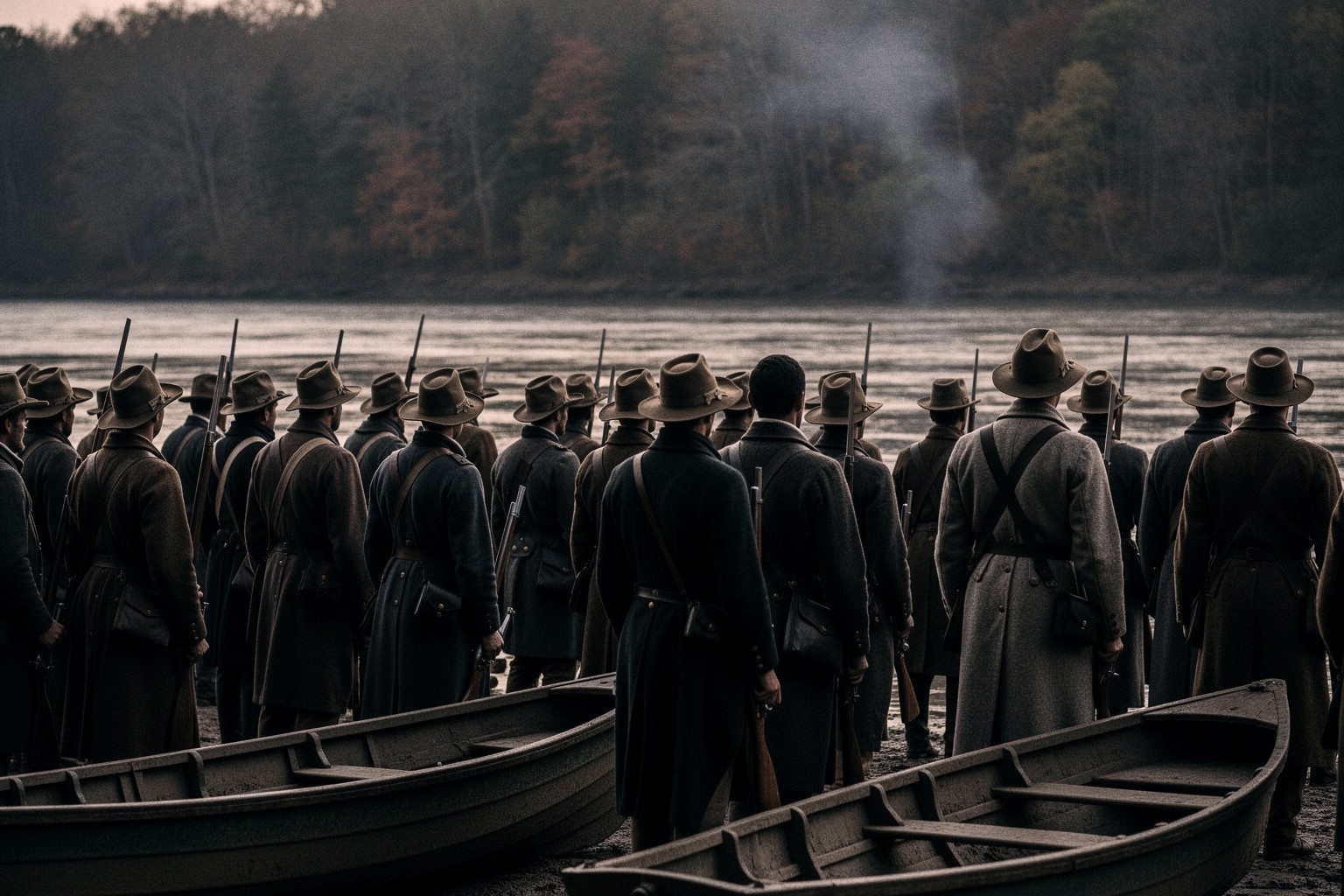
The New York militia refused to get in the boats. Many argued they could not be ordered to fight outside their own country. Others had watched the wounded being rowed back.
That afternoon, British regulars, Canadian militia and Mohawk warriors under Roger Sheaffe circled behind the heights. Pinned against the cliff edge, Scott surrendered. Hundreds of Americans were marched off as prisoners, in sight of the men who had stayed dry.
Checked against: Standard military histories of the War of 1812; official reports by Van Rensselaer and Sheaffe; Canadian and US national battlefield and archival histories
On October 13, 1970, FBI agents arrested Angela Davis at a motel in midtown Manhattan. She had spent two months as one of the most hunted people in America, only the third woman ever placed on the Bureau's Ten Most Wanted list.
The case began on August 7, 1970. Jonathan Jackson, seventeen, walked into a courtroom in Marin County, California, armed the prisoners on trial, took hostages and led them out to a van. In the shooting that followed, four people died, among them the judge and Jackson himself. Some of the guns had been bought in Davis's name.
California charged her with murder, kidnapping and conspiracy, under a law that treats an accomplice as guilty as the one who pulls the trigger. Davis, a philosophy lecturer the University of California's regents had tried to dismiss for her Communist Party membership, went underground rather than surrender. When agents finally knocked, she did not resist.
The guns were hers. Owning them, the jury decided, did not make her part of the plot.
On June 4, 1972, an all-white jury acquitted her on every count. She had already spent sixteen months in jail waiting to hear it.
Checked against: FBI case files and Ten Most Wanted records; California trial transcripts and court records; contemporary newspaper reporting; published biographies and histories of the Marin County courthouse incident
The crowd stared at the sun. Not everyone saw the same thing.
Illustration generated by AI for The Day Vault.
On October 13, 1917, tens of thousands of people stood in a muddy field called the Cova da Iria, near Fátima in central Portugal. They had come because three shepherd children said the Virgin Mary had promised a miracle there at noon.
It had rained all morning. Pilgrims had walked for days, many barefoot, and waited soaked under umbrellas. Lúcia dos Santos, ten, and her younger cousins Francisco and Jacinta Marto had reported monthly visions since May. In August the local administrator had detained them to make them recant. They did not.
Around midday the clouds broke. Many in the crowd later described the sun spinning, changing colour and plunging toward the earth. Some said their wet clothes dried in minutes. Even O Século, Lisbon's anticlerical daily, printed an account from its reporter in the field.
But the accounts disagreed, some people in the crowd saw nothing unusual at all, and no observatory recorded anything strange about the sun that day.
The doubts did not slow the pilgrims. In 1930 the local bishop declared the visions worthy of belief, and the muddy field became one of the largest Catholic shrines in the world, visited by millions every year.
Checked against: Contemporary Portuguese newspaper reports, including O Século; diocesan records of Leiria; academic histories of modern Portuguese Catholicism; standard reference encyclopedias
The papers printed a riot. Some who were there saw a handful of girls.
Illustration generated by AI for The Day Vault.
On October 13, 1963, the Beatles topped the bill on Sunday Night at the London Palladium, the most-watched variety show on British television. They played a short set to the theatre and to millions of living rooms.
The next morning, national papers ran pictures of screaming teenagers and police lines outside the theatre on Argyll Street. Within weeks a new word, Beatlemania, was in British headlines. A Liverpool group with a couple of hit singles had become a national event.
That Sunday night became the founding scene of the story, retold in documentaries and biographies as the moment the dam broke.
Some who were there remembered it differently: people on the street that night later said the crowd outside was small, and that tightly cropped photographs did the rest.
By the time anyone thought to check, it no longer mattered. The next crowds were real.
Checked against: Band biographies and session chronologies, ITV and ATV broadcast records, British national newspaper archives from October 1963, later interviews with press photographers
A bear from darkest Peru. A label from Reading station.
Illustration generated by AI for The Day Vault.
On 13 October 1958, the London publisher Collins brought out A Bear Called Paddington, a slim children's book by a BBC television cameraman named Michael Bond.
The bear was real, more or less. On Christmas Eve 1956, Bond spotted a small toy bear left alone on a shop shelf and bought it as a present for his wife, Brenda. They lived near Paddington station, so that became its name. He began writing stories about it, with no plan beyond seeing what the bear might do.
In the book, the Brown family find him on a platform at Paddington. He is a stowaway from darkest Peru, carrying a battered suitcase, wearing a hat, with a label tied round his neck: Please look after this bear. Thank you. Peggy Fortnum's line drawings gave him a scruffy dignity, and the label became the most famous thing about him.
The label was not whimsy. As a boy in Reading at the start of the Second World War, Bond had watched trains of evacuated London children arrive at the station, each with a name tag and a small case holding everything they had.
Bond later said that sight never left him. He gave it to a bear in a duffel coat, and readers have been taking him home ever since.
Checked against: Michael Bond's published interviews and recollections; publisher and British Library records of the 1958 first edition; BBC archive material on Bond's career; histories of the 1939 wartime evacuation of London children.
One swing ended it. The box scores told a different story.
Illustration generated by AI for The Day Vault.
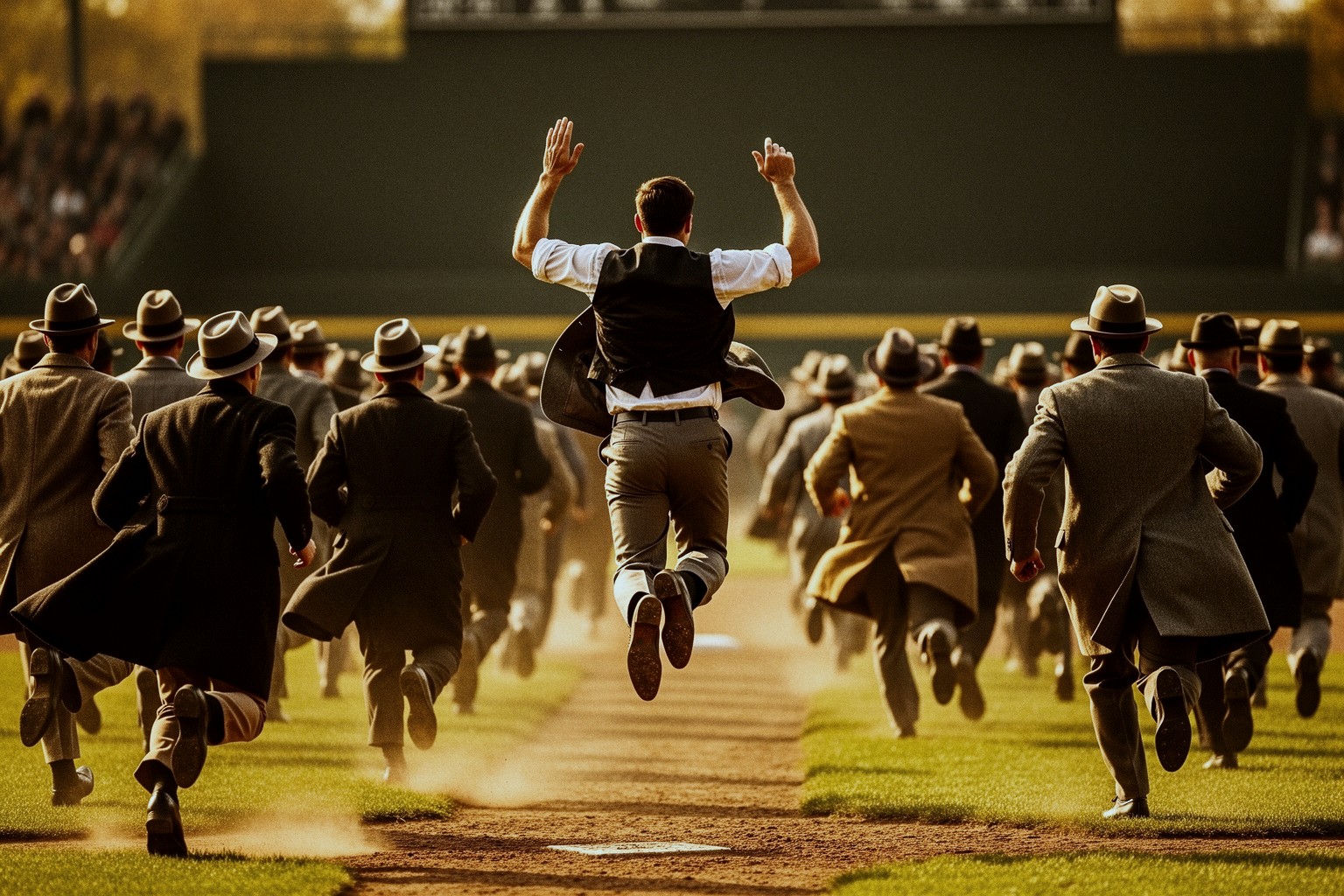
On October 13, 1960, Bill Mazeroski led off the bottom of the ninth inning of Game 7 of the World Series at Forbes Field in Pittsburgh. The score was tied 9-9. He took one pitch from Ralph Terry for a ball, then hit the next over the left-field wall.
It was the first time a World Series had ended on a home run. Fans spilled out of the stands before he reached home plate, running beside him on the basepaths. Teammates waited at the plate, and the city emptied into the streets.
The Pirates had beaten the New York Yankees four games to three. It was Pittsburgh's first championship since 1925.
Over those seven games, the Yankees outscored the Pirates 55 to 27. New York won its three games 16-3, 10-0 and 12-0. Pittsburgh's four wins came by a combined seven runs.
Yankees second baseman Bobby Richardson, who drove in a record 12 runs, was named the series' most valuable player, still the only one chosen from the losing team. Within a week, New York had parted ways with its manager, Casey Stengel.
Checked against: Official World Series box scores and records, contemporary newspaper game reports, baseball reference encyclopedias, Hall of Fame archives
The world picked a line through London. Paris kept its own.
Illustration generated by AI for The Day Vault.
On October 13, 1884, delegates at the International Meridian Conference in Washington voted to make the meridian through the Royal Observatory at Greenwich, near London, zero degrees longitude for the whole world.
The problem was real. Mapmakers and navies counted longitude from whatever line suited them: Paris, Cadiz, Washington, Pulkovo and others. A captain who switched charts had to do arithmetic before he could trust his own position. Most of the world's sea charts already counted from Greenwich, which made the choice practical rather than sentimental.
The vote was 22 to 1. San Domingo, now the Dominican Republic, voted against. Brazil and France abstained. The conference also proposed a universal day beginning at midnight at Greenwich, though it left every country free to set its own clocks.
France simply carried on counting from Paris.
When France finally changed its legal time in 1911, the law did not mention Greenwich at all. It defined French time as Paris mean time set back by nine minutes and twenty-one seconds, which is Greenwich time without the name. The Paris meridian lingered on French maps long after that.
Checked against: Published protocols of the 1884 International Meridian Conference; histories of longitude and time standardisation; the text of the French legal-time law of 1911; Royal Observatory Greenwich institutional histories.
The search stopped. The survivors heard it on the radio.
Illustration generated by AI for The Day Vault.
On October 13, 1972, a Uruguayan Air Force plane carrying an amateur rugby team, their friends and family crashed into the Andes. Forty-five people were aboard. The fuselage slid to a stop on a snowfield high in the mountains, its white roof nearly invisible from the air.
Search planes from Chile, Argentina and Uruguay crossed the range for days. On the ground, the survivors shared out a few chocolate bars and some wine. They melted snow on sheets of metal and slept packed together inside the broken cabin against the cold.
They had found a small transistor radio in the wreckage and got it working. Each day they listened for news of themselves. They believed rescue was a matter of time.
On the eleventh day, the radio reported that the search had been called off.
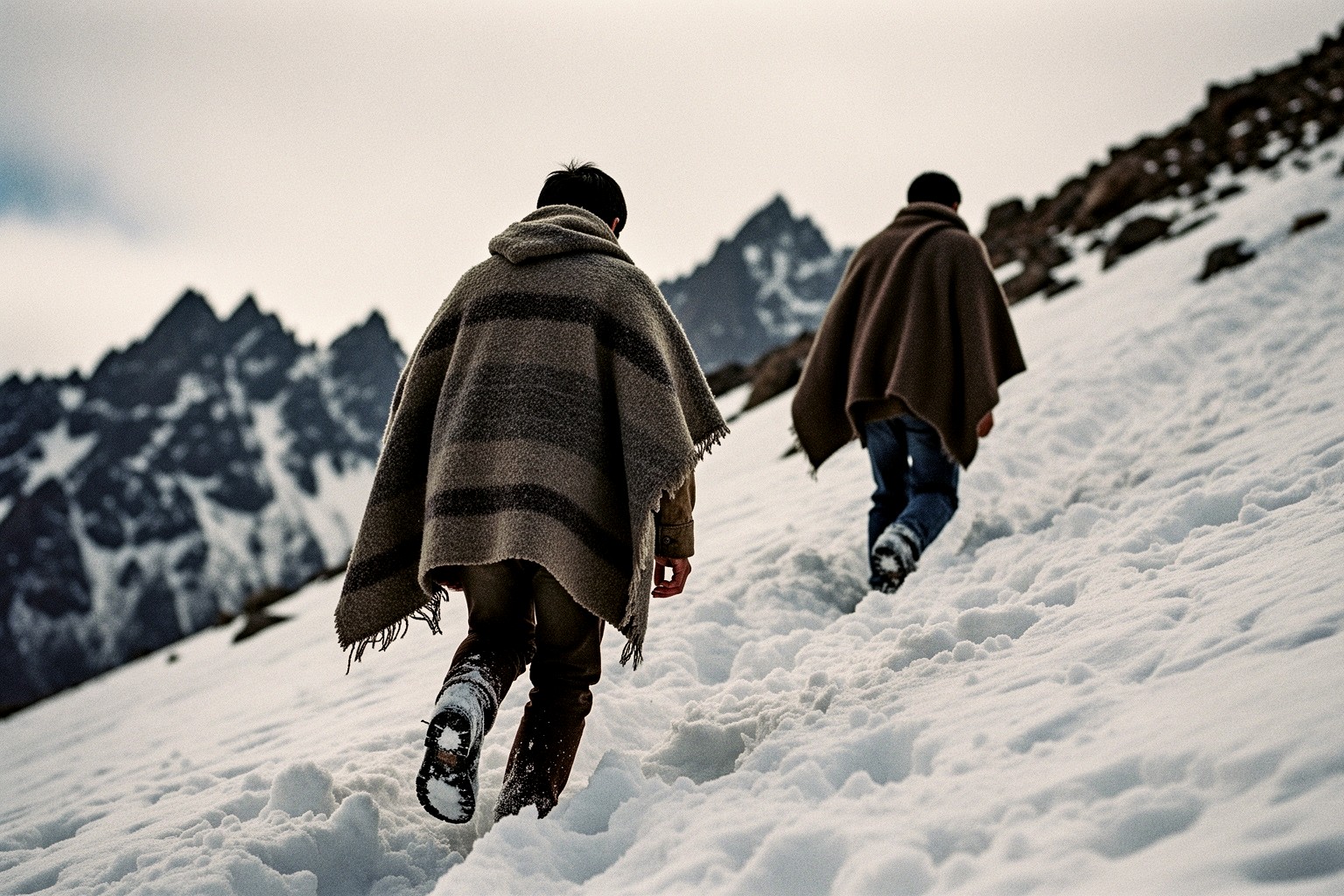
Nobody was coming, so two of them walked. Nando Parrado and Roberto Canessa climbed out of the valley in December and kept going for about ten days until they reached a Chilean herdsman across a river. Two days later, helicopters lifted out the last of the sixteen survivors, 72 days after the crash.
Checked against: Contemporary Uruguayan and Chilean newspaper reports; survivor memoirs and published interviews; Uruguayan Air Force and Chilean rescue records; book-length histories of the crash.