On October 15, 1860, an eleven-year-old in Westfield, New York, sat down and wrote to the Republican candidate for president. Grace Bedell had seen his picture. She had a suggestion.
His face was too thin, she told Abraham Lincoln. He should let his whiskers grow. Ladies liked whiskers, she explained, and ladies would tease their husbands into voting for him. She had four brothers. Some would vote for him already, and she would work on the rest.
Lincoln answered within days, in his own hand. He told her he had no daughters, only three sons. The election was three weeks away. He was fifty-one, clean-shaven, and had worn that face through every campaign of his adult life.
In his reply, he asked whether people might call it a silly affectation if he started growing a beard now.
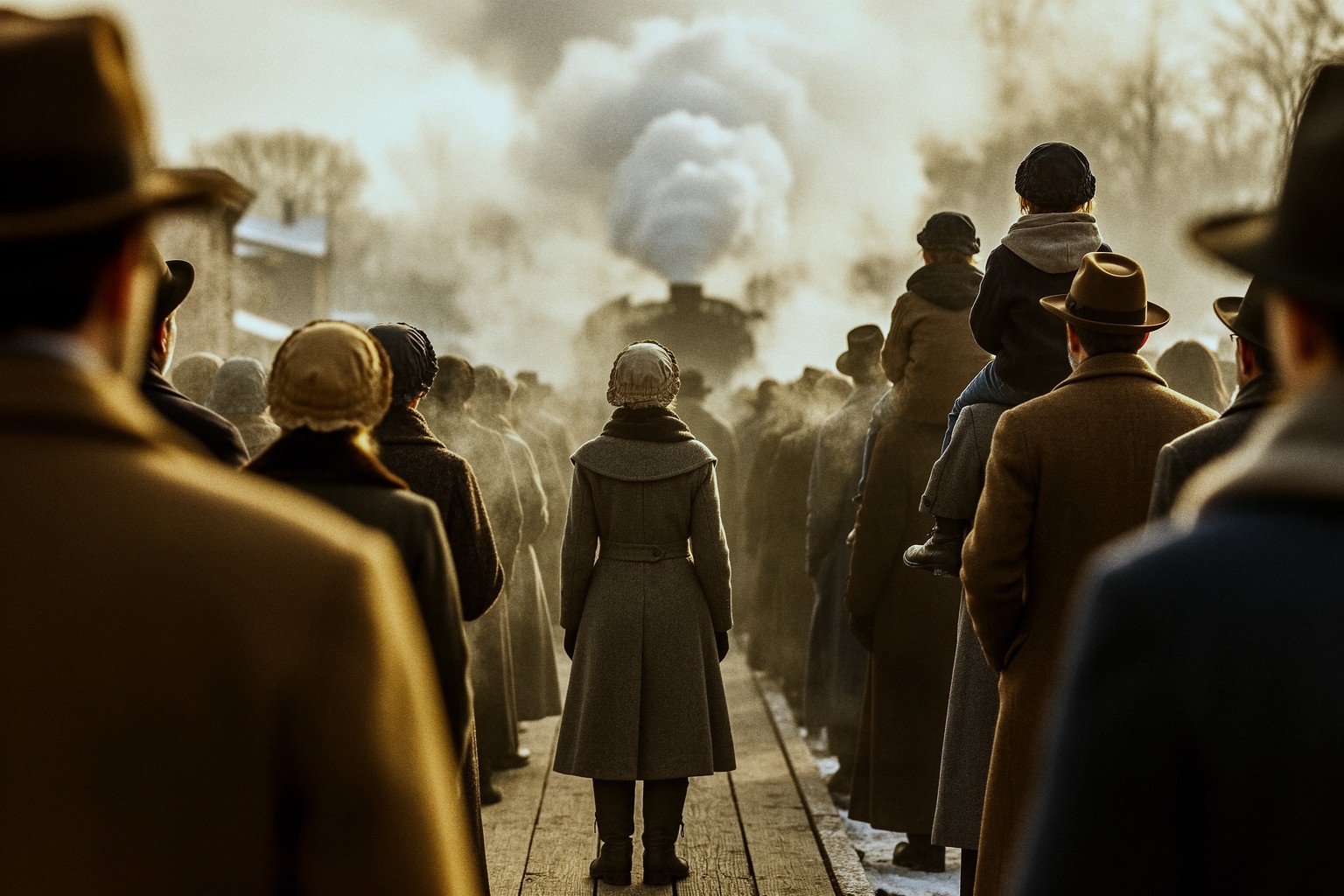
Then he grew one anyway. In February 1861, his train east toward the inauguration stopped at Westfield, and the president-elect stood before the crowd with a full beard. He asked if Grace was there. She was brought forward through the crowd, and he stepped down to meet the girl who had told him to grow it.
Checked against: The Collected Works of Abraham Lincoln (Basler edition); Lincoln's reply of October 19, 1860, held in a manuscript collection; Grace Bedell's original letter, preserved in an archival collection; contemporary New York newspaper accounts of the February 1861 Westfield stop; standard Lincoln biographies
On October 15, 1582, much of Catholic Europe woke up ten days later than it had gone to bed. The day before had been Thursday, October 4. Spain, Portugal, the Papal States, most of Italy and the Polish-Lithuanian Commonwealth simply skipped the dates in between.
The problem was old. Julius Caesar's calendar ran about eleven minutes long every year. Over sixteen centuries the error piled up, and the spring equinox, which the Church used to fix Easter, slid to around March 11. Pope Gregory XIII's reform, worked out by Aloysius Lilius and refined by Christopher Clavius, cut the surplus and tightened the leap-year rule. Century years would be leap years only if divisible by 400.
The jump caught at least one life in the gap. Teresa of Ávila died on the night of October 4. The next morning was October 15.
But a calendar issued by a pope was a hard sell in Protestant and Orthodox countries. Britain held out until 1752. Russia waited until 1918.
For 170 years, merchants writing between London and Paris dated their letters twice, Old Style and New. A letter sent from Paris could reach London carrying a date several days after the day it arrived.
Checked against: Text of the papal bull Inter gravissimas; histories of calendar reform; biographies of Teresa of Ávila; records of Britain's Calendar Act of 1750
On October 15, 1969, millions of Americans took a day off from the Vietnam War. The Moratorium was not one march but thousands of small ones: a pause in ordinary business, spread across campuses, churches and town squares from coast to coast.
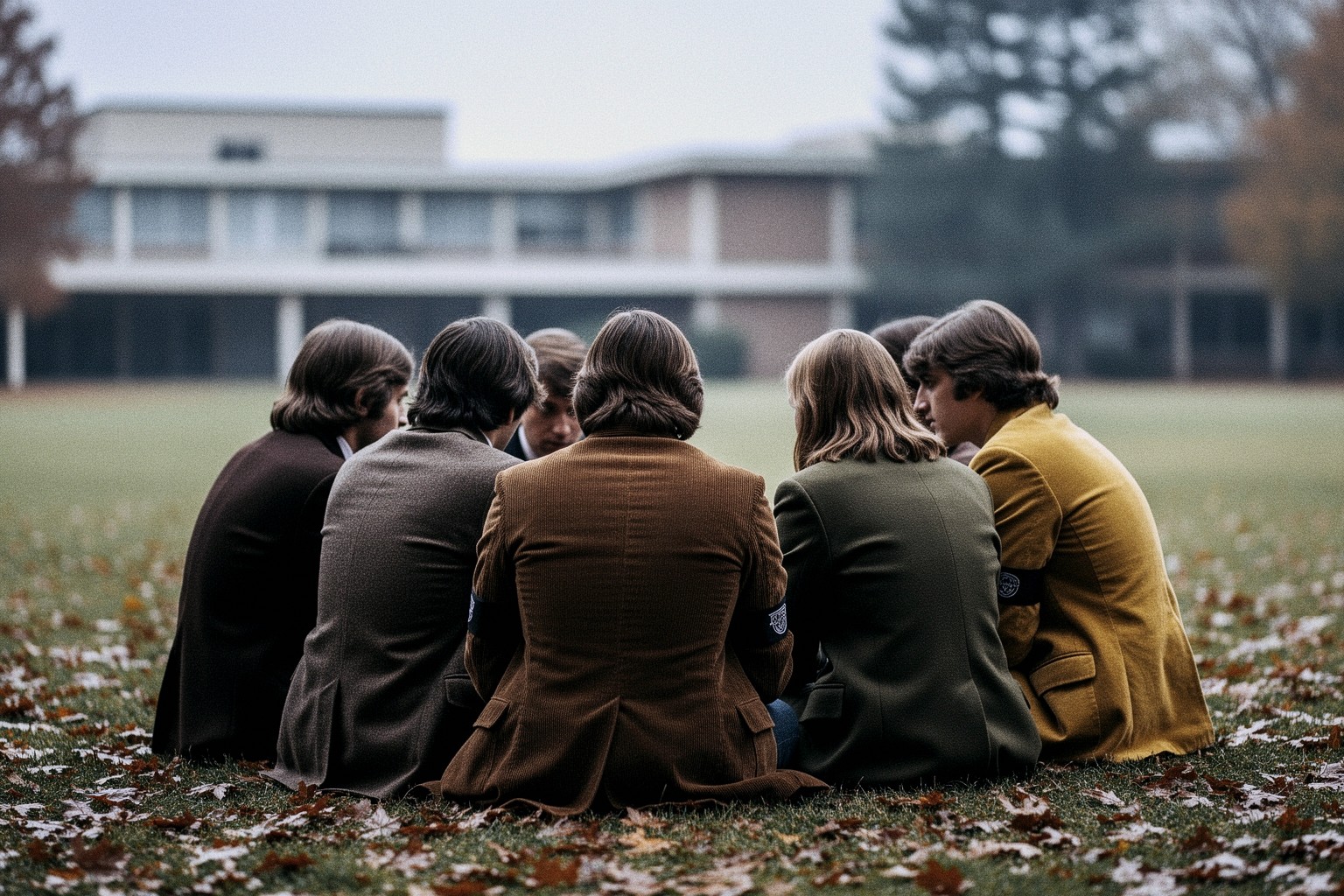
People wore black armbands to the office. Students read aloud the names of the American dead, one after another, for hours. Church bells tolled. In Boston, a crowd of around 100,000 filled the Common. In Washington, a candlelit procession filed past the White House after dark.
It was the largest antiwar protest the country had yet seen, and it was overwhelmingly calm. Organisers had wanted the respectable middle of America to stand beside the students. On that Wednesday, it looked as if it had.
Three weeks later, President Richard Nixon went on national television and appealed past the protesters to what he called the great silent majority of Americans.
Telegrams and letters of support poured into the White House, his approval rose, and the last American combat troops did not leave Vietnam until March 1973.
Checked against: Contemporary national newspaper coverage of October 15-16, 1969; presidential library records of the November 3, 1969 address; Gallup polling archives; academic histories of the Vietnam antiwar movement.
On October 15, 1863, the Confederate submarine H. L. Hunley dove under a ship in Charleston Harbor during a practice run and never surfaced. Horace Hunley, who had helped pay for the boat and lent it his name, was in command. All eight men aboard drowned.
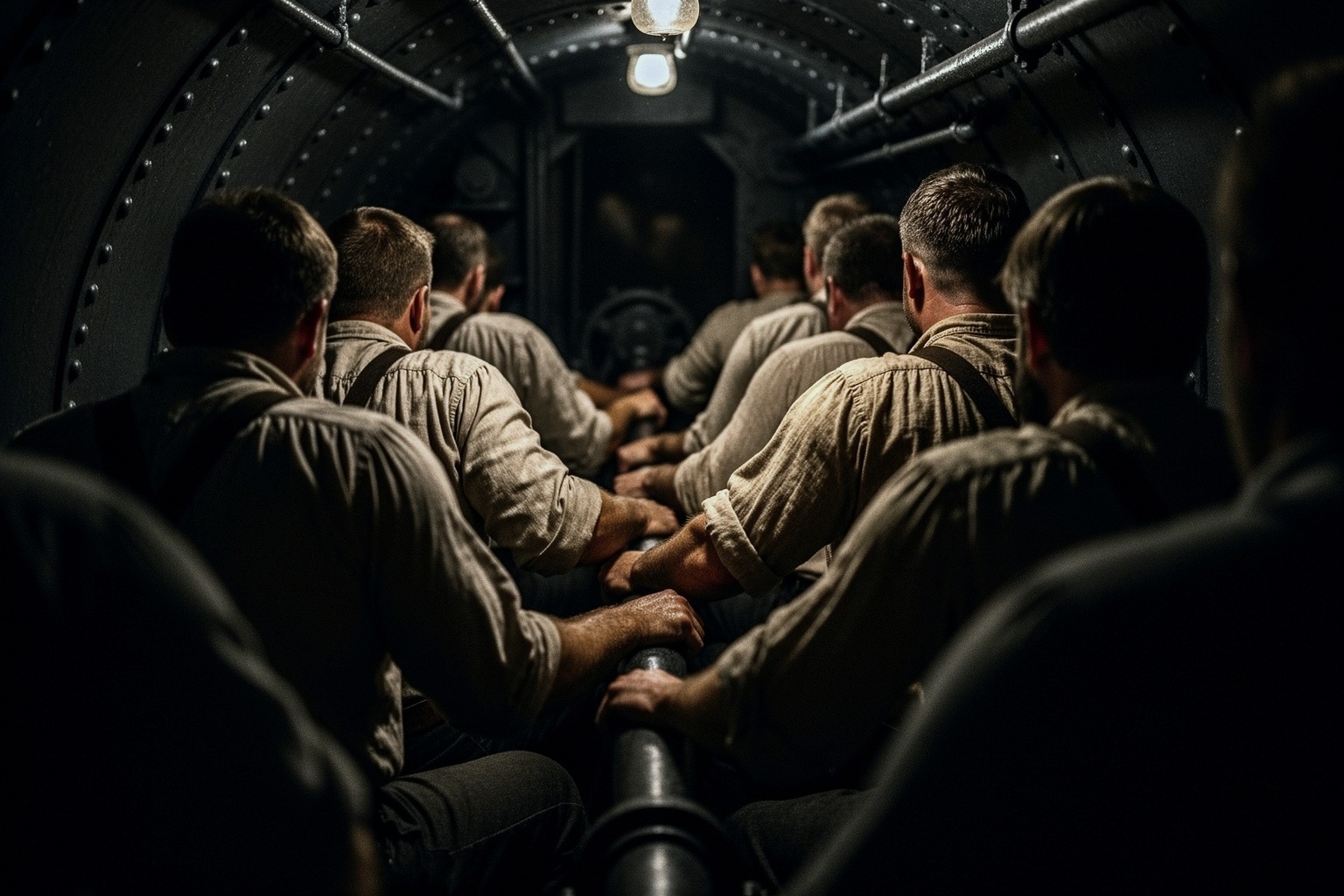
The submarine was an iron tube roughly forty feet long. Seven men sat shoulder to shoulder in the dark, turning a hand crank that drove the propeller. An eighth steered and worked the diving planes. There was no room to stand and almost no way out.
It had already sunk once that August, killing five crewmen. After the October accident, divers raised it again. The Confederacy found a third crew willing to climb inside.
In February 1864 the boat finally worked, ramming a torpedo into the USS Housatonic to become the first submarine to sink an enemy warship, and then it vanished on the way home.
That third crew stayed missing for 131 years. Divers found the hull off Charleston in 1995, and when it was raised in 2000, all eight men were still at their stations.
Checked against: US Naval History and Heritage Command records; archaeological reports from the submarine's recovery and conservation; Confederate naval correspondence; Civil War naval histories
On the night of October 15, 1946, Hermann Göring, the most senior Nazi convicted at Nuremberg, bit down on a cyanide capsule in his prison cell. He was due to hang within hours.
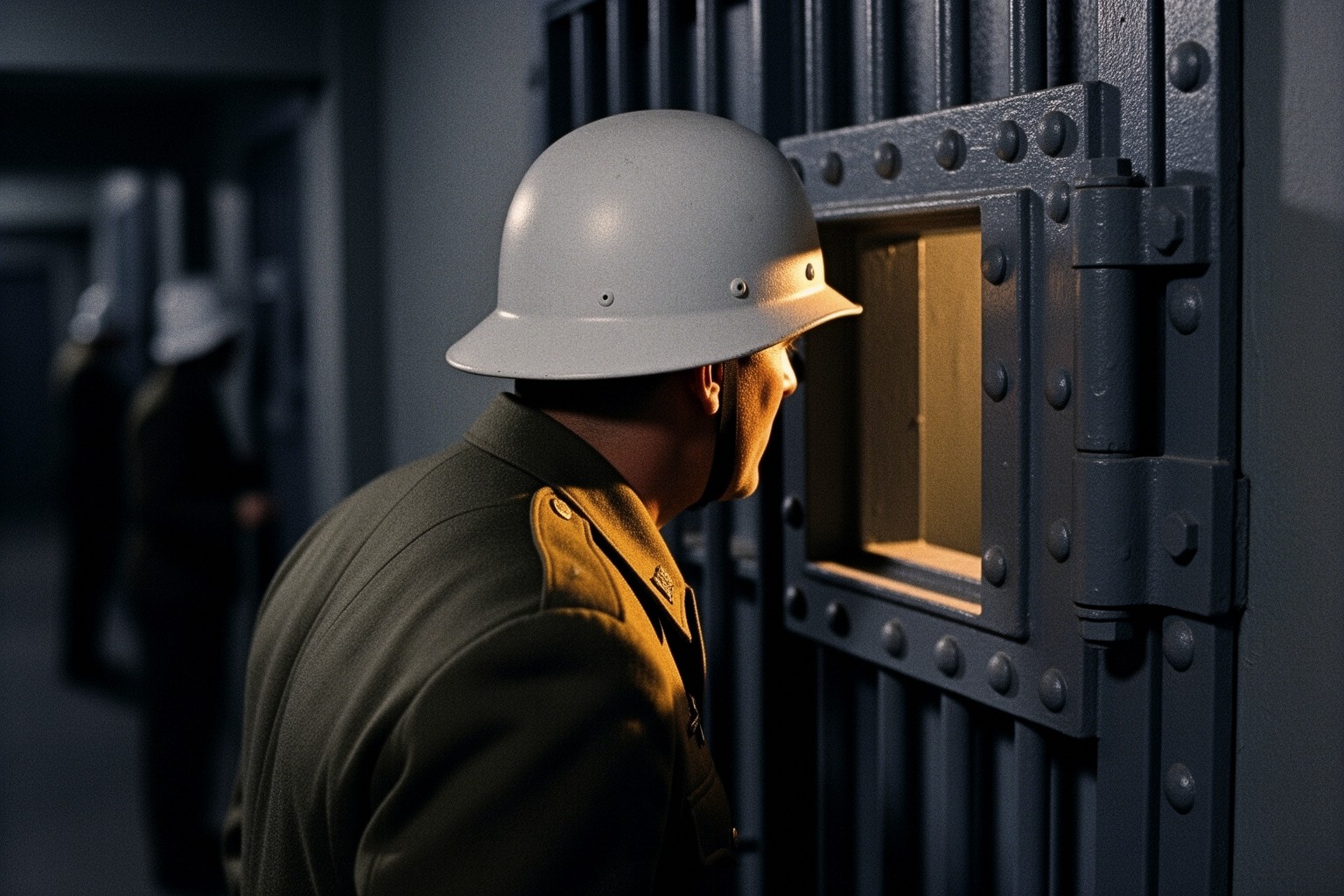
The tribunal had sentenced him on October 1. He asked to be shot instead, as a soldier. The Allied Control Council refused. The year before, another defendant, Robert Ley, had strangled himself in his cell. Since then, guards had watched every prisoner through a hatch in the door, around the clock. Cells were searched. Lights stayed on through the night.
Shortly before 11 pm, the guard at Göring's door saw him convulsing on his cot. A doctor was called and arrived too late. Among his belongings investigators found a small brass case that had held the capsule.
The US Army investigated, and never established where the poison came from or how it had survived months of searches under constant watch.
Ten men went to the gallows in the prison gymnasium the next morning. Göring's body was carried in and laid out beside theirs.
Checked against: International Military Tribunal records; US Army board of inquiry report on the death; contemporary wire-service and newspaper reporting from Nuremberg; standard histories of the Nuremberg trials
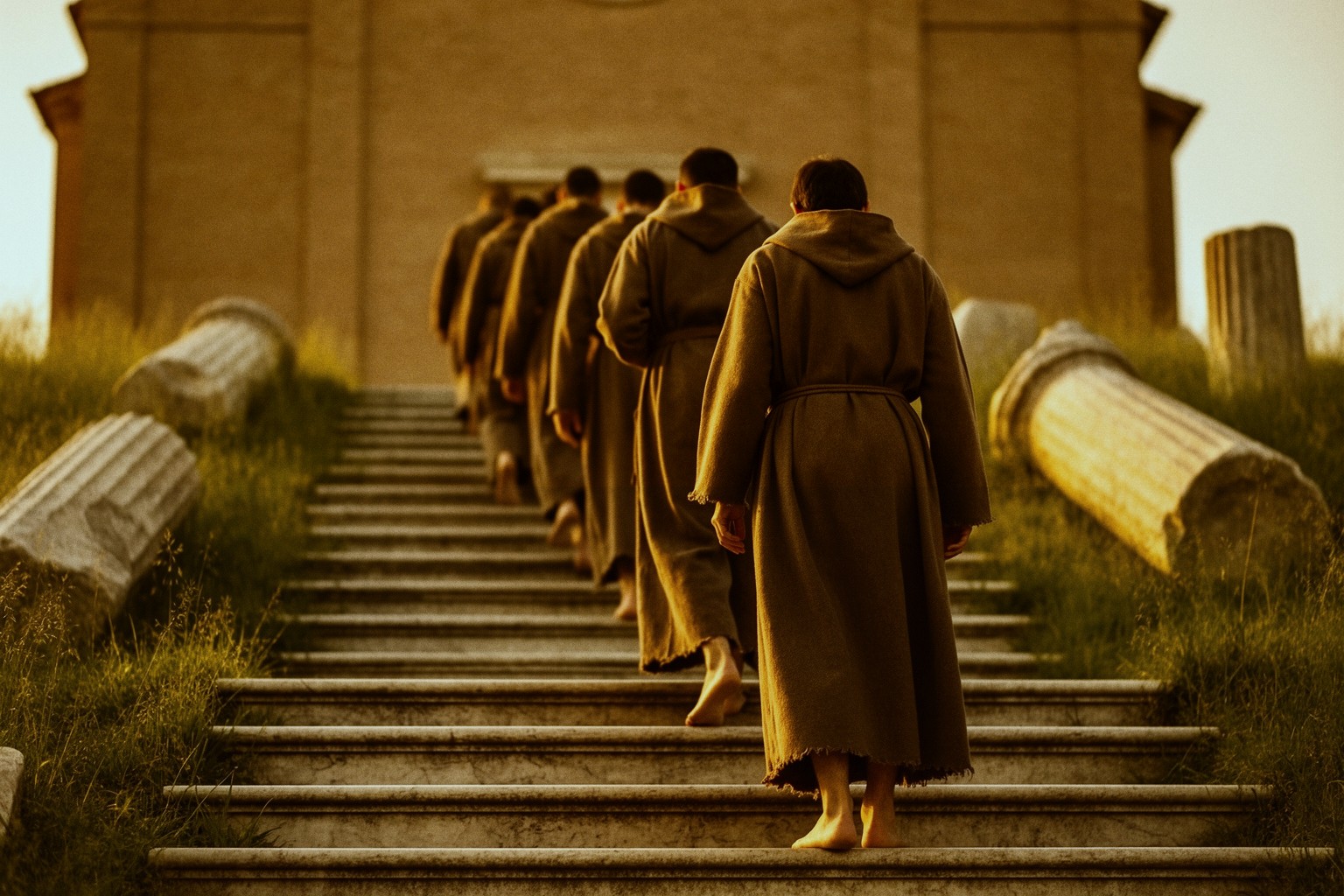
The friars sang vespers. The historian took notes.
Illustration generated by AI for The Day Vault.
On October 15, 1764, a 27-year-old Englishman named Edward Gibbon sat among the ruins on Rome's Capitoline Hill. By his own account, barefoot friars were singing vespers nearby, in a church standing where he believed the Temple of Jupiter had once stood.
The sound of Christian prayer rising from a pagan sanctuary gave him an idea. He would write the history of how the city fell. In his memoirs he named that evening, and that singing, as the moment the work began.
It took him more than twenty years. The first volume of The History of the Decline and Fall of the Roman Empire appeared in 1776, and the sixth and last in 1788. The opening volume sold quickly and was soon reprinted.
The friars may have inspired the book, but the book did not flatter them. Its fifteenth and sixteenth chapters treated the rise of Christianity as a human story and counted the new faith among the forces that weakened Rome.
Clergymen answered with pamphlets accusing him of bad faith and worse scholarship. In 1779 Gibbon published a long reply, defending his footnotes one by one.
Checked against: Gibbon's own Memoirs of My Life; first editions of the Decline and Fall and his 1779 Vindication; standard biographies of Gibbon; histories of eighteenth-century English letters
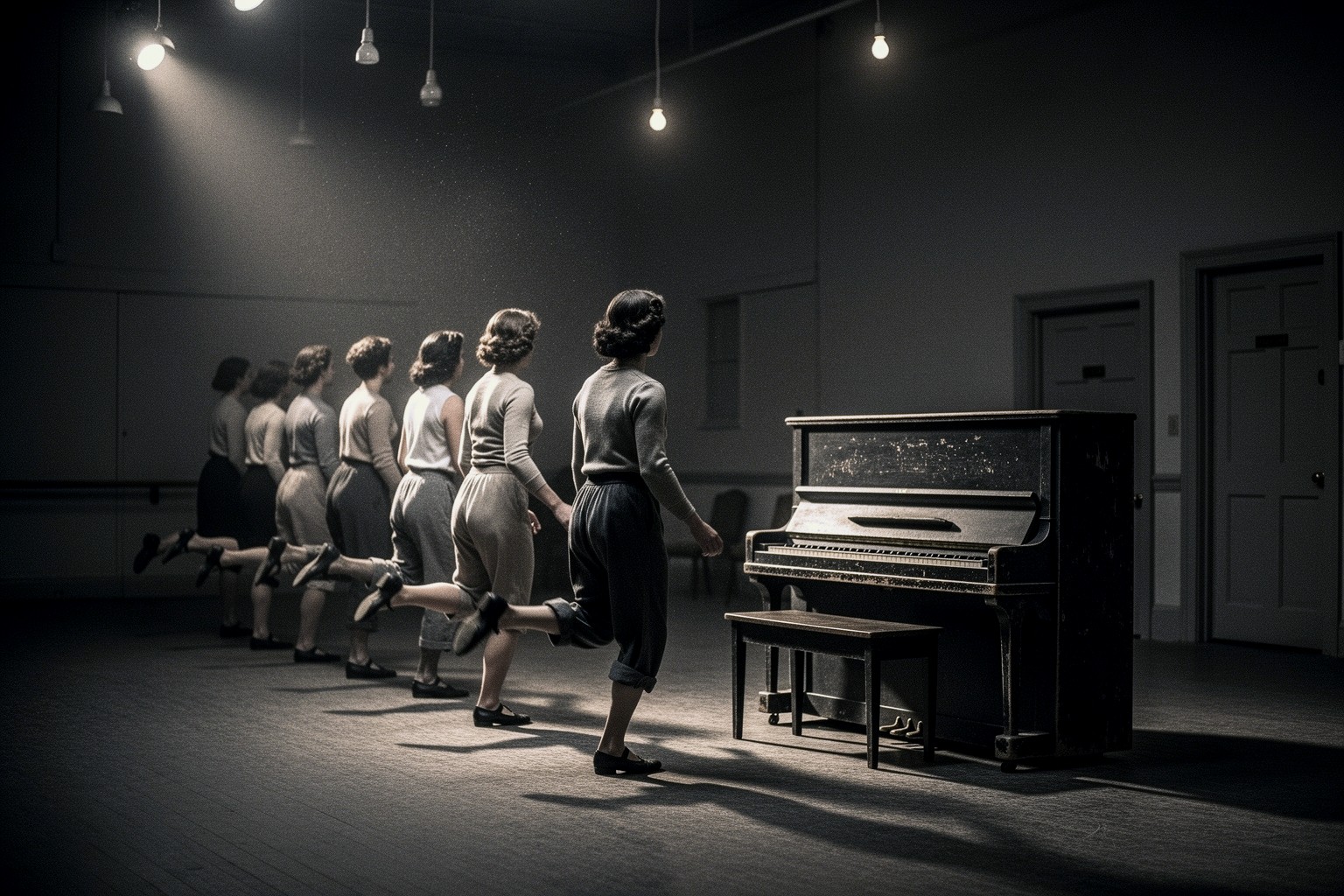
The horse fell in 1937. The songs stopped in 1958.
Illustration generated by AI for The Day Vault.
Cole Porter died in Santa Monica, California, on October 15, 1964, at 73. He had written "Anything Goes," "Night and Day" and "I've Got You Under My Skin," songs that sounded as if nothing in the world could go wrong.
In 1937, on a riding trip in Long Island, his horse fell and crushed both his legs. Doctors advised amputation. Porter refused. What followed was years of operations, constant pain and canes, and he never walked freely again.
He kept writing anyway. Through the 1940s he turned out show after show, some of them flops. Then in 1948 came "Kiss Me, Kate," his biggest Broadway success, which won the first Tony Award for Best Musical. The man who could barely stand had written his best score sitting down.
In 1958, after more than two decades of fighting for it, his right leg was amputated, and Porter never wrote another song.
He lived six more years, mostly out of public view. The piano stayed. The music did not.
Checked against: Major biographies of Cole Porter; contemporary newspaper obituaries from October 1964; Tony Awards historical records; Broadway production archives.
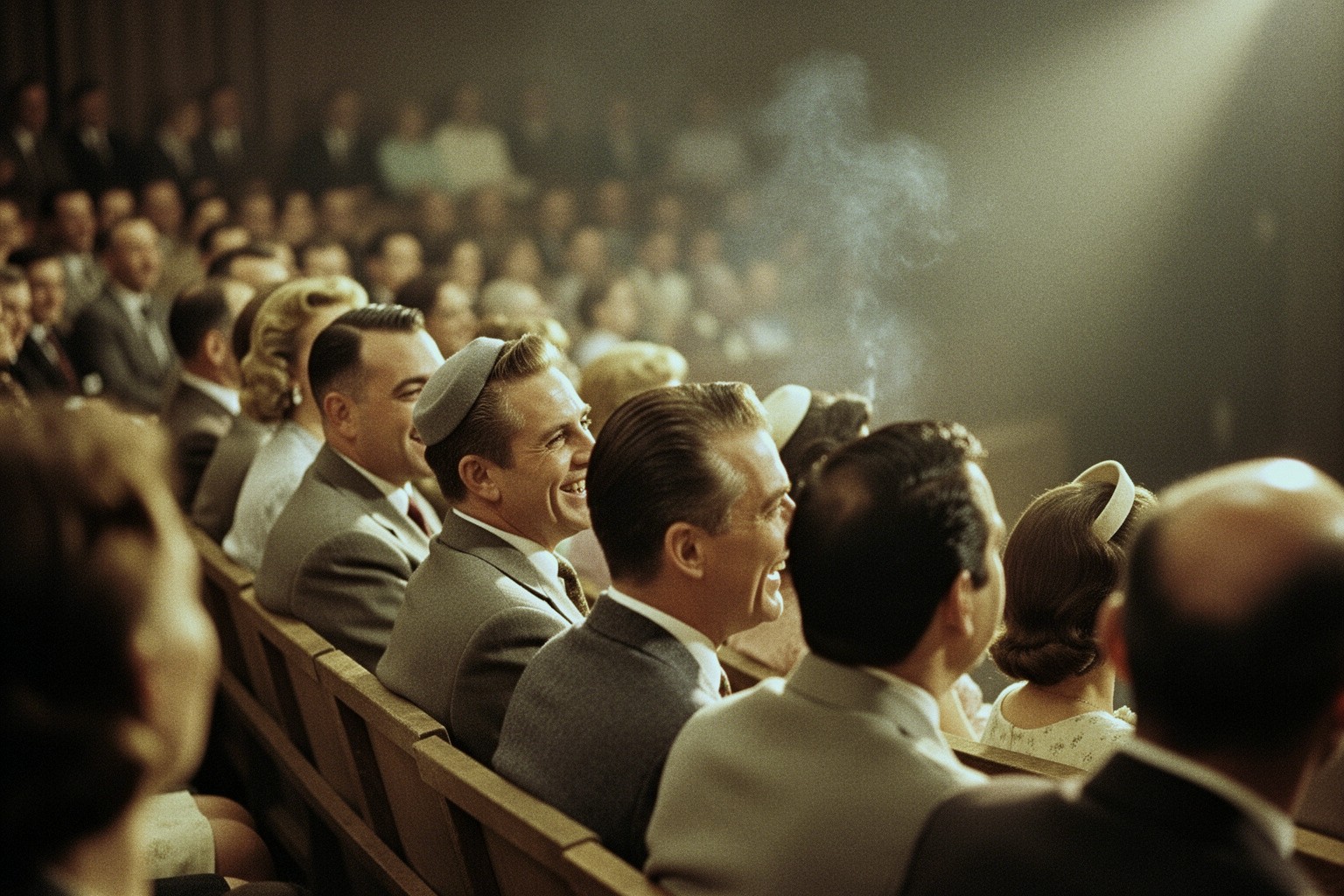
The network wanted it live. The couple wanted to stay home.
Illustration generated by AI for The Day Vault.
On October 15, 1951, CBS aired the first episode of I Love Lucy, a sitcom starring Lucille Ball and her real husband, Desi Arnaz. It ran on Monday nights, sponsored by a cigarette company.
Getting it on the air had been a fight. CBS doubted viewers would accept a Cuban bandleader as an American redhead's husband, so the couple took a vaudeville act on the road to prove that audiences liked them together.
Then came geography. In 1951 most network television went out live from New York, and the West Coast saw a fuzzy kinescope filmed off a monitor. Ball and Arnaz lived in Los Angeles, and she was pregnant. They would not move. So the show was shot on 35mm film, with three cameras rolling in front of a live studio audience, and the prints were shipped east.
Film cost more, and to cover it the couple accepted a lower salary in exchange for owning the episodes outright.
Live shows of the era survive as smudges, or not at all. Theirs could be shown again and sold again, and they were. The reruns became a business, and the couple's company, Desilu, grew large enough to buy the old RKO studio lot.
Checked against: Network broadcast histories, television industry trade press of the 1950s, published biographies of Ball and Arnaz, studio corporate histories
On October 15, 1988, Kirk Gibson limped off the Dodger Stadium bench to pinch-hit in the bottom of the ninth of World Series Game 1. The Los Angeles Dodgers trailed the Oakland Athletics 4-3, with two outs and a runner on first.
Gibson had a strained left hamstring and a swollen right knee. He had spent most of the game in the clubhouse, icing his legs and taking practice swings off a tee. On the mound was Dennis Eckersley, who had saved 45 games that season, more than any pitcher in the American League.
Gibson fouled off pitches and pulled up lame on a dribbler down the first-base line. The count ran full. Eckersley threw a backdoor slider, and Gibson, swinging mostly with his arms, lifted it into the right-field seats. He rounded the bases at a hobble, pumping his fist past second. Dodgers 5, Athletics 4.
It was the only time he came to the plate in the entire Series.
His legs kept him out of the next four games. The Dodgers, heavy underdogs, beat Oakland in five without him swinging a bat again.
Checked against: Major League Baseball official box scores and World Series records; contemporary newspaper game reports; NBC broadcast archive footage; published player and team histories.
It found places life might hide. So it had to burn.
Illustration generated by AI for The Day Vault.
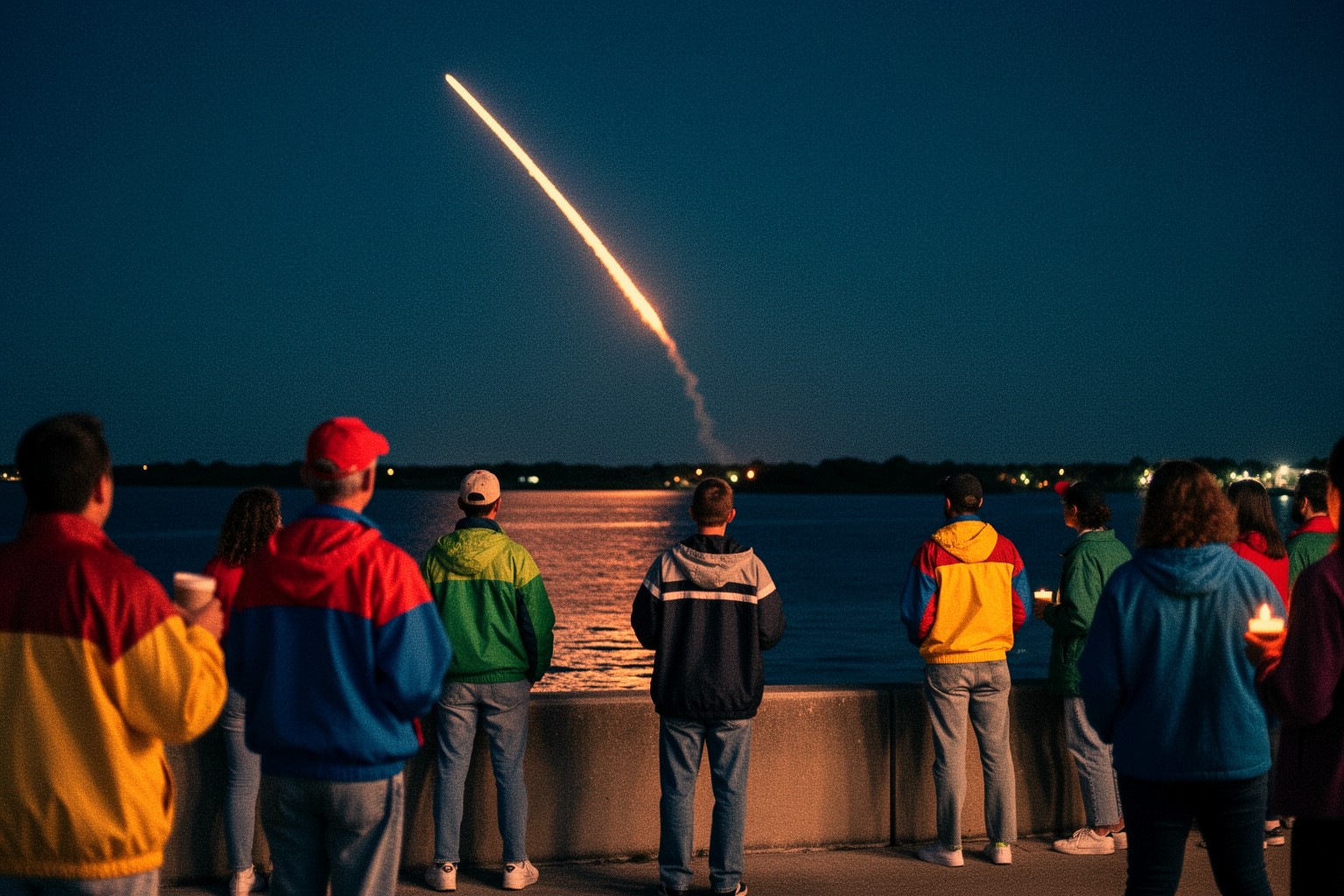
On October 15, 1997, a Titan IVB rocket lifted off from Cape Canaveral before dawn carrying Cassini, a probe the size of a small bus, bound for Saturn. Bolted to its side was Huygens, a European lander built to parachute onto Saturn's largest moon, Titan.
The launch drew protesters. Cassini's power came from three generators fuelled by plutonium, and critics feared an accident would scatter it over Florida, or over the whole planet during a planned flyby of Earth two years later. Neither happened. In 2004, after nearly seven years of travel, Cassini slipped into orbit around Saturn.
It worked there for thirteen years. Huygens landed on Titan in January 2005, the most distant landing ever made. Cassini flew through icy jets spraying from the small moon Enceladus, fed by a salty ocean beneath its crust.
Those discoveries decided its fate: a probe left to drift once its fuel ran low might one day crash into Enceladus or Titan and seed them with microbes from Earth.
So on September 15, 2017, controllers steered Cassini into Saturn's atmosphere on purpose. It sent back data until the last moment, then burned up over the planet it had spent twenty years reaching and circling.
Checked against: NASA and JPL mission archives; European Space Agency Huygens records; contemporary newspaper coverage of the 1997 launch and plutonium protests; peer-reviewed planetary science papers on Enceladus and Titan
A viewer asked about a hurricane. The forecaster said not to worry.
Illustration generated by AI for The Day Vault.
On October 15, 1987, BBC weatherman Michael Fish opened his lunchtime forecast with a story. A woman had rung in, he said, worried that a hurricane was on its way. He told viewers there wasn't one coming.
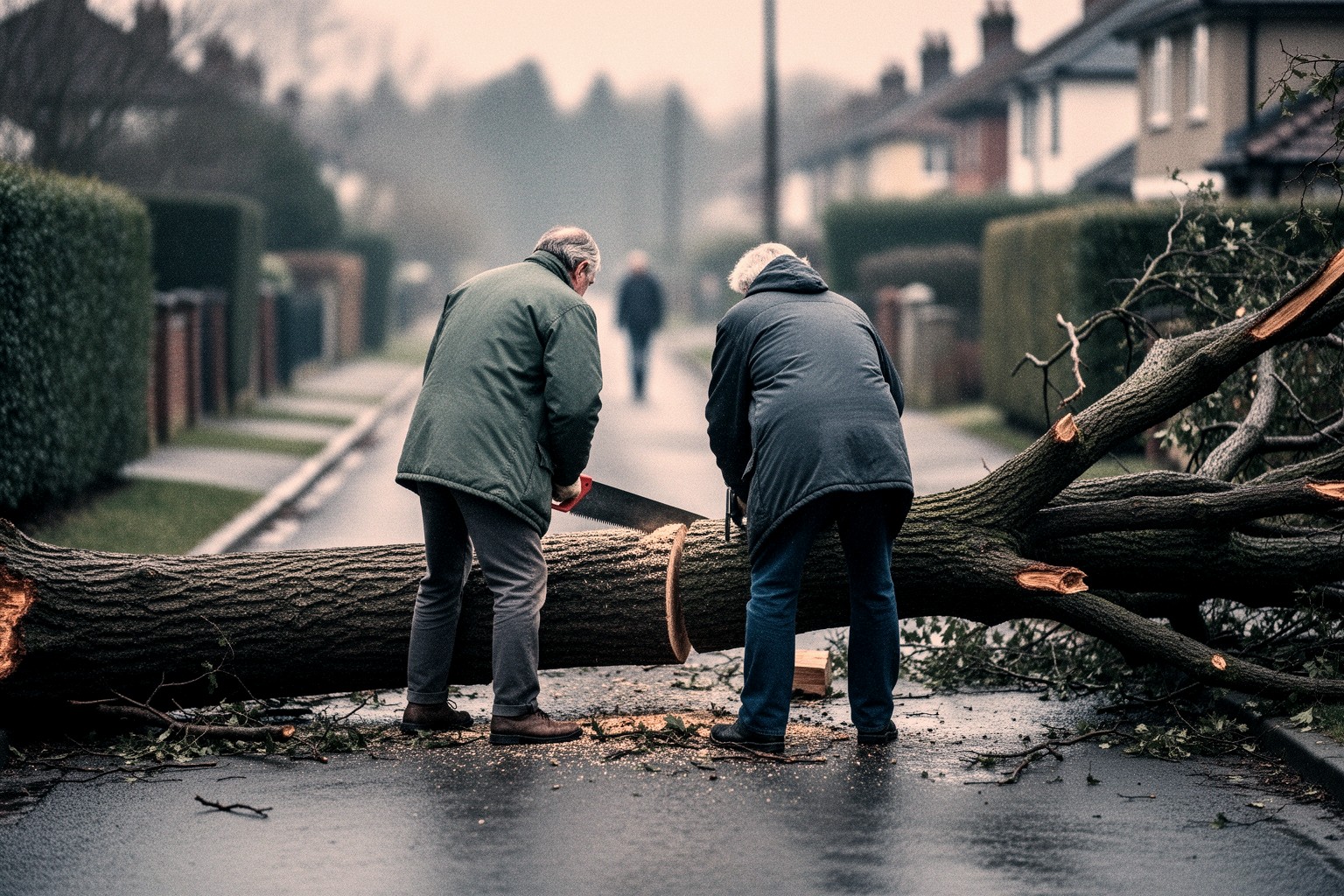
That night, the worst storm in southern England for nearly three centuries came ashore. Gusts topped 100 miles an hour along the coast. Around 15 million trees came down. Roads, railways and power lines were blocked by morning. Eighteen people died in England, and the Kent town of Sevenoaks lost six of the seven oak trees that gave it its name.
Fish became a national punchline almost overnight. For years the clip was replayed whenever a forecast went wrong, and his name became shorthand for official reassurance that turns out to be badly mistaken.
On the narrowest reading, he was right: the storm was not a true hurricane, and Fish later said the caller had been asking about weather over Florida.
It did not matter. The forecasting had failed, the Met Office reviewed its methods and computer models, and Britain got a national system for warning the public about severe weather.
Checked against: Met Office post-storm review and historical weather records; BBC broadcast archives; contemporary British newspaper coverage; later interviews with the forecaster