Alaska changed hands, and the calendar jumped twelve days
Illustration generated by AI for The Day Vault.
On October 18, 1867, the United States formally took possession of Alaska. Soldiers from both nations lined up in front of the governor's house at Sitka for the handover, which completed a purchase of about 586,000 square miles for $7.2 million in gold, roughly two cents an acre.
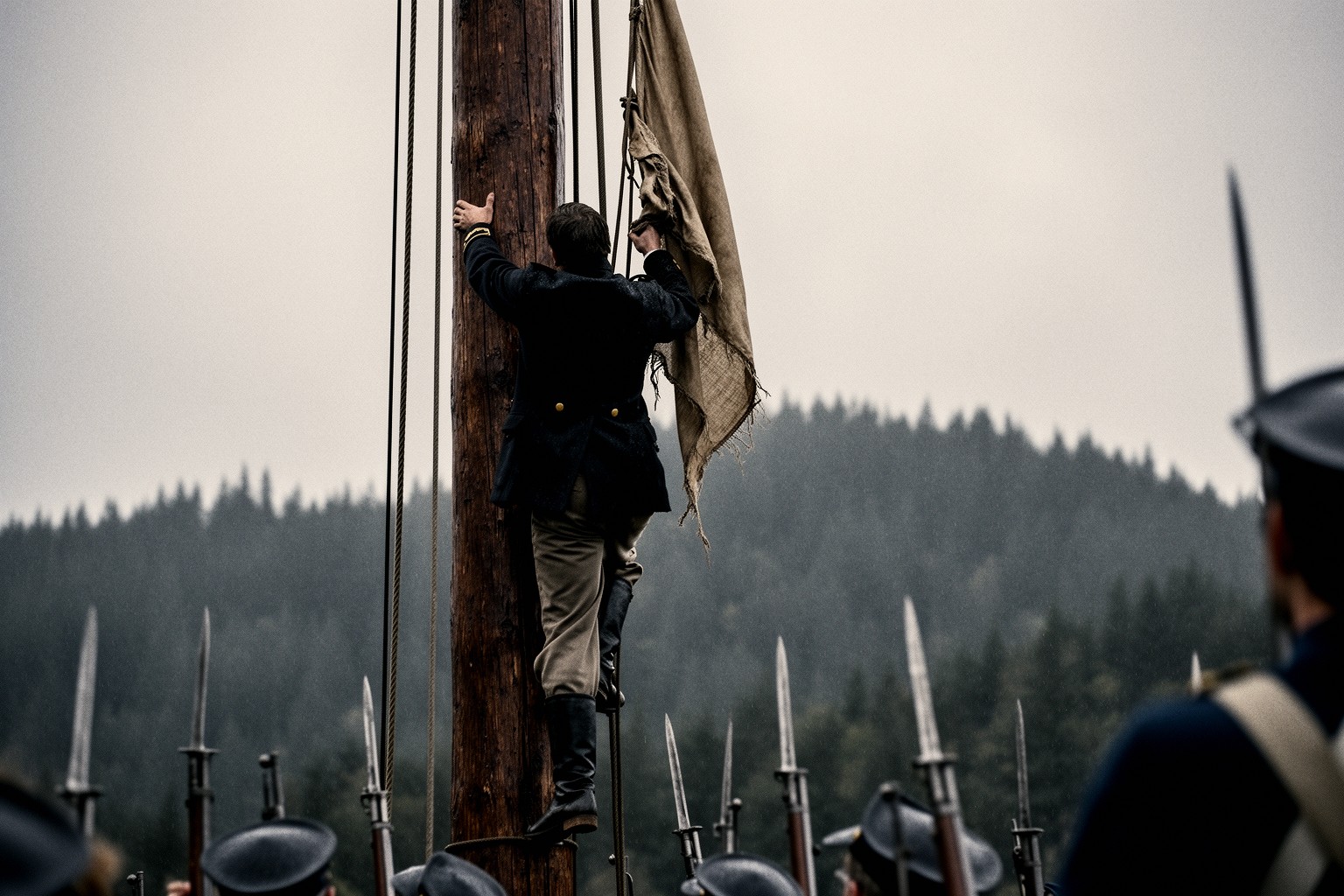
The treaty had been signed in March. What remained was ceremony: troops at attention, cannon salutes, and one flag coming down so another could go up. It did not go smoothly. The Russian flag snagged on the pole halfway down. A sailor had to climb up and cut it loose, and it dropped onto the bayonets of the soldiers waiting below.
Then the American flag rose, and Sitka belonged to a different country. The town's Russian residents were given the choice of staying or leaving. Many sailed home within months.
The strangest part of the transfer was the date itself. Russian Alaska ran on the Julian calendar and kept Asia's side of the date line, so the morning before the ceremony had been Friday, October 6. When the territory switched to American time, the next day was also a Friday, now numbered October 18.
Alaskans skipped twelve dates without losing a day of the week, and the state still marks October 18 as Alaska Day.
Checked against: The 1867 treaty text, U.S. Army and Navy reports of the Sitka ceremony, contemporary newspaper dispatches, Alaska state historical records, and academic histories of the Alaska Purchase.
Women became persons in law. The woman who asked never got the seat
Illustration generated by AI for The Day Vault.
On 18 October 1929, the Judicial Committee of the Privy Council in London ruled that women in Canada were persons under the law. The question was narrow but heavy. Did the word "persons" in the British North America Act of 1867 allow a woman to be appointed to the Senate?
Five Alberta women had brought the case. Emily Murphy, a magistrate in Edmonton, had been challenged in her own courtroom by a lawyer who argued she was not a person and so could not judge. In 1927 she enlisted Nellie McClung, Irene Parlby, Louise McKinney and Henrietta Muir Edwards to petition Ottawa for a ruling.
The Supreme Court of Canada said no in 1928. The women appealed to London, then the country's final court of appeal. The Lord Chancellor, Lord Sankey, called the exclusion of women from public office a relic of more barbarous days. He described the constitution as a living tree, able to grow.
The Senate door was open, but Murphy never walked through it.
In February 1930, Prime Minister Mackenzie King appointed Cairine Wilson, a Liberal organiser from Ottawa, as Canada's first woman senator. Murphy, a Conservative, was never appointed. She died in 1933.
Checked against: Judicial Committee of the Privy Council judgment records; Library and Archives Canada; Senate of Canada historical materials; Canadian constitutional law histories; biographies of the Alberta petitioners
He resigned because he thought he was dying. He wasn't.
Illustration generated by AI for The Day Vault.
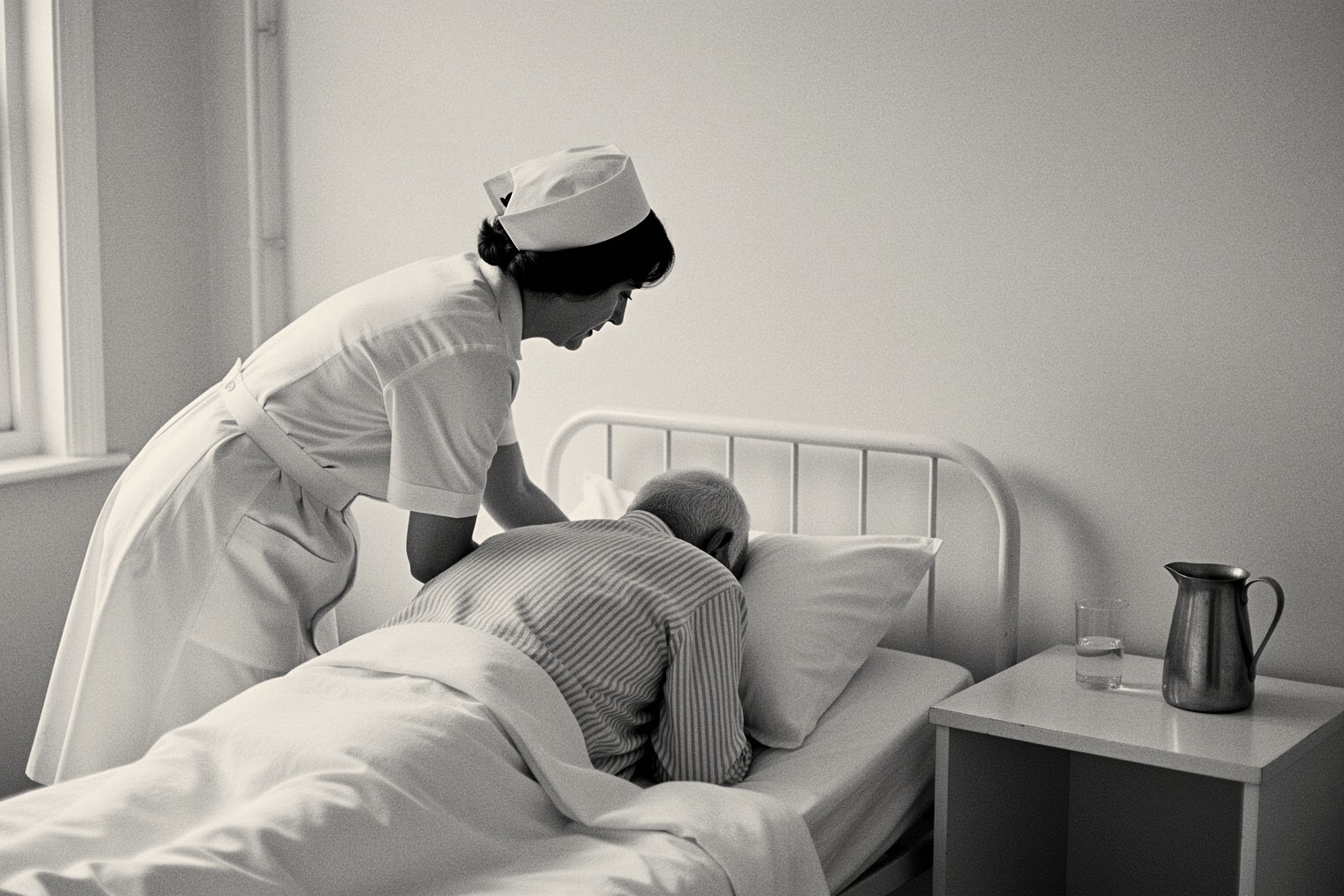
On October 18, 1963, Harold Macmillan resigned as Britain's prime minister from a bed in King Edward VII's Hospital in London. The Queen came to his bedside, and he advised her on a successor without getting up.
The illness had struck days earlier, on the eve of the Conservative Party conference in Blackpool. Macmillan needed an operation on his prostate. Fearing cancer, and doubting he could lead the party into an election, he decided to go. His decision was read out to the conference while he recovered in London.
There was no vote. Conservative leaders were expected to emerge through private soundings of senior party figures. Macmillan backed his foreign secretary, the Earl of Home. Home gave up his peerage, became Sir Alec Douglas-Home, and served as prime minister for nearly three weeks without a seat in either house until he won a by-election. Two senior ministers refused to serve under him.
The growth was benign. Macmillan lived another 23 years and died in 1986, aged 92.
Douglas-Home narrowly lost the 1964 general election. The row over how he had been chosen pushed the Conservatives to adopt a ballot of their MPs in 1965, and the leader was never again chosen by soundings.
Checked against: Hansard and UK Parliament records; official biographies of Macmillan and Douglas-Home; contemporary British newspaper archives; standard histories of the Conservative Party leadership.
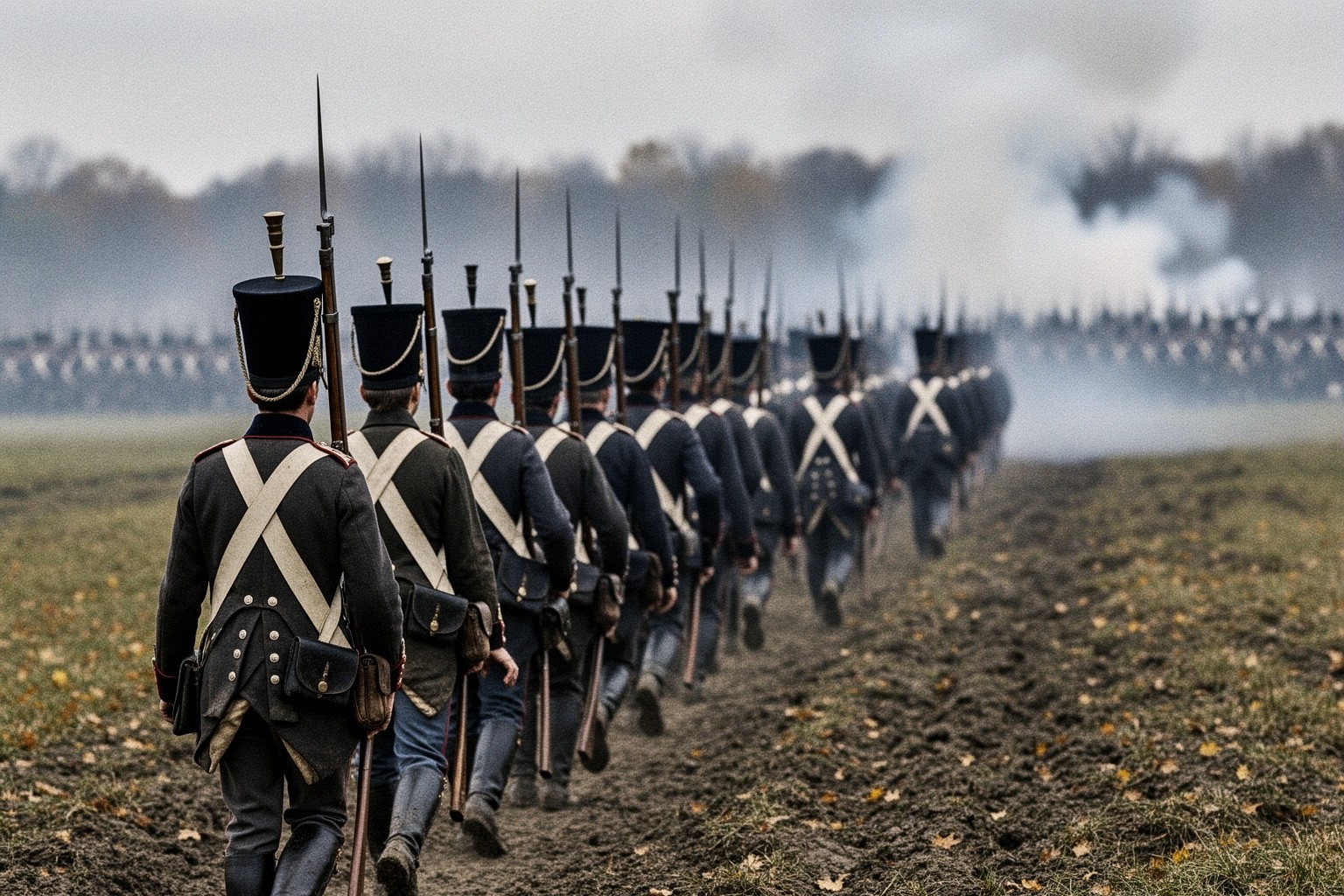
On October 18, 1813, the third day of the Battle of Leipzig, Saxon troops fighting for Napoleon left their positions, crossed the field, and joined the enemy. Some brought their cannon with them.
Saxony had been Napoleon's ally since 1806. He had raised its ruler, Frederick Augustus, from elector to king. At Leipzig the French faced Russia, Prussia, Austria and Sweden at once, in a battle later called the Battle of the Nations and remembered as the largest in Europe before the First World War.
The defection came east of the city, near the village of Paunsdorf, while the line was already under heavy pressure. Württemberg cavalry went over the same day. By nightfall Napoleon's position could not be held, and he ordered the retreat west across the river Elster.
Their king stayed loyal. Frederick Augustus remained inside Leipzig and did not leave when the French did.
The Allies took him prisoner when they entered the city. At the Congress of Vienna, the victors punished the ally who had not switched in time: Prussia received roughly two-fifths of his kingdom.
Checked against: Standard military histories of the 1813 German campaign, biographies of Napoleon, histories of the Kingdom of Saxony, and the territorial settlements of the Congress of Vienna
The rescue worked. By morning, the prisoners it was meant to free were dead.
Illustration generated by AI for The Day Vault.
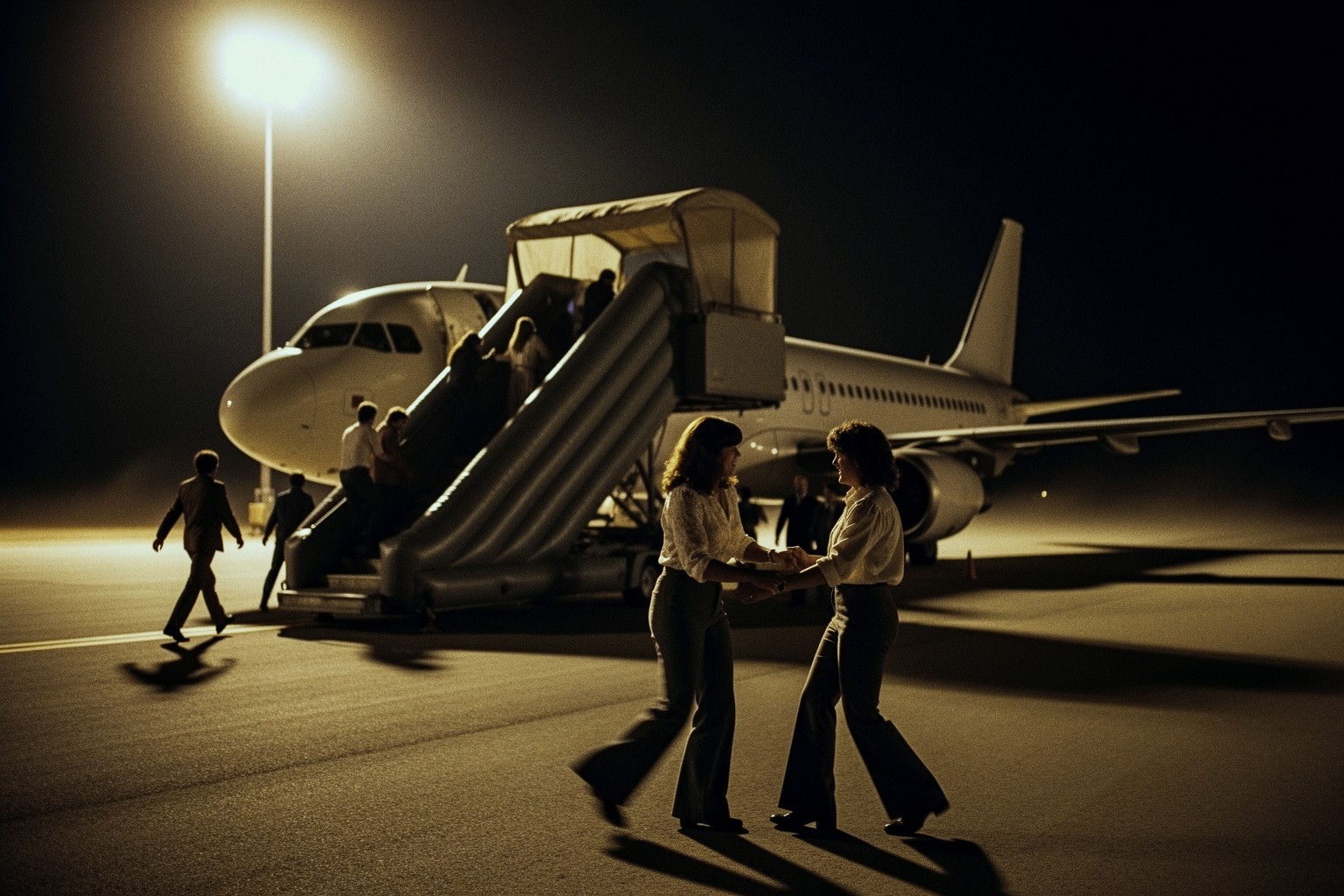
Shortly after midnight on 18 October 1977, West German commandos stormed a hijacked Lufthansa jet on the runway at Mogadishu, Somalia. Three of the four hijackers died. The hostages, held for five days, walked away alive.
The hijackers had demanded the release of jailed leaders of the Red Army Faction. Within hours of the news, guards at Stuttgart's Stammheim prison found Andreas Baader dead of a gunshot wound and Gudrun Ensslin hanged in her cell. Jan-Carl Raspe, also shot, died in hospital. Irmgard Möller was found with stab wounds to the chest. She lived.
Stammheim's seventh floor had been built for exactly these prisoners. Since September they had been under a total contact ban: no visitors, no lawyers, no newspapers. They were not supposed to have a radio, let alone a gun.
Official inquiries ruled it a coordinated suicide, with pistols smuggled in past the searches. Möller, the only survivor, has always insisted it was not suicide.
The next day, the Red Army Faction announced it had killed the industrialist Hanns Martin Schleyer, kidnapped six weeks earlier. Police found his body in the boot of a car in Mulhouse, France.
Checked against: Contemporary West German and international newspaper reports; Stuttgart prosecutors' findings and parliamentary inquiry records; published histories of the Red Army Faction and the German Autumn of 1977.
The pastors had to leave. Their congregations were forbidden to.
Illustration generated by AI for The Day Vault.
On October 18, 1685, Louis XIV signed the Edict of Fontainebleau. It revoked the Edict of Nantes, which for 87 years had given French Protestants, the Huguenots, the legal right to worship.
The new law's preamble argued that the old one was no longer needed, because most Protestants had already converted. Many had, under the dragonnades, a campaign that billeted cavalry in Protestant homes until families agreed to become Catholic.
The edict ordered Protestant churches demolished and Protestant children baptised Catholic. Ministers who refused to convert had fifteen days to leave the kingdom.
Their congregations were forbidden to follow. Men caught trying faced the galleys. Women faced prison and the loss of their property.
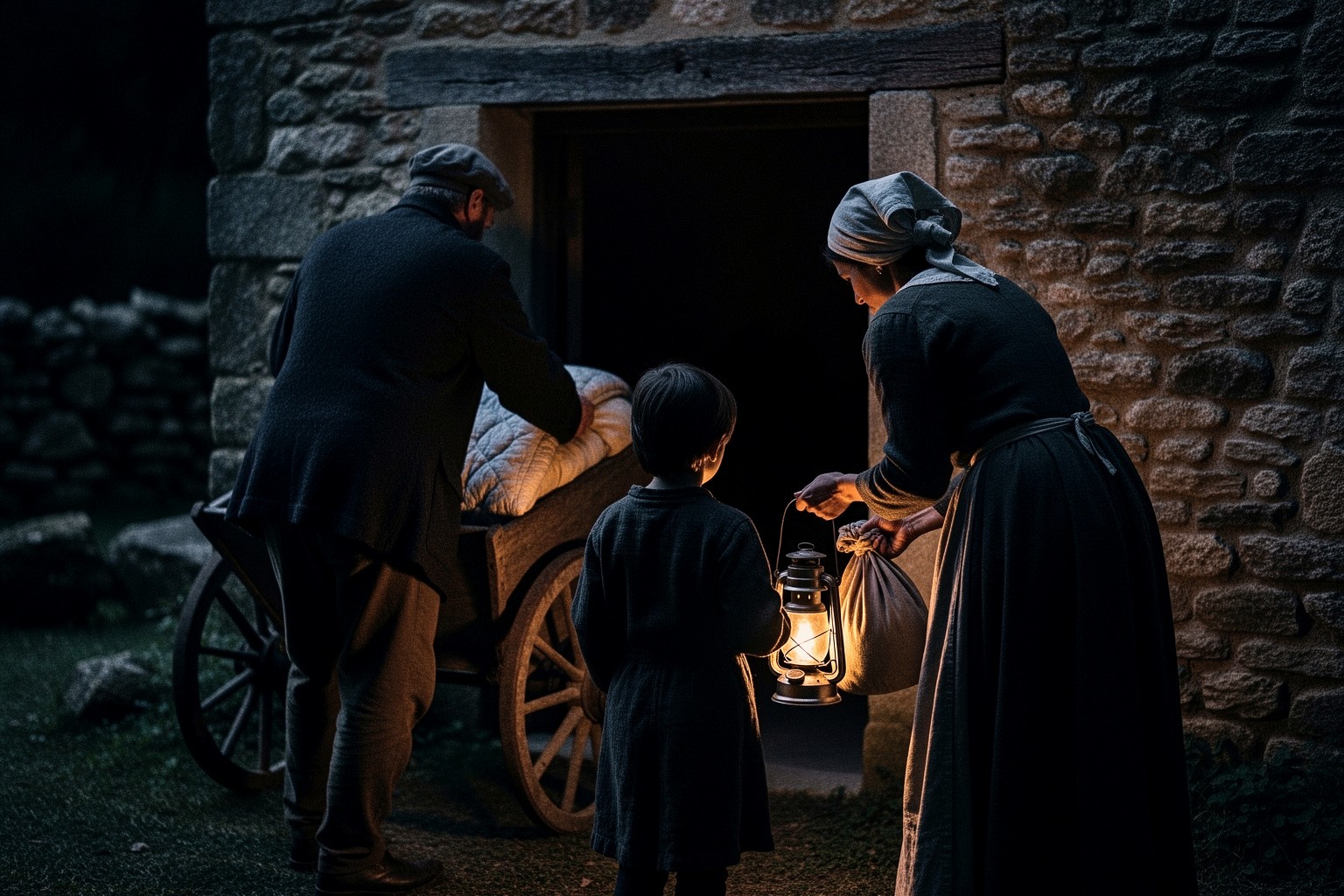
They went anyway, by the tens of thousands. Some crossed mountain passes on foot and others hid in the holds of ships. Silk weavers, watchmakers and merchants took their trades to the Dutch Republic, England, Switzerland and Brandenburg, whose ruler issued his own edict within weeks inviting them in.
Checked against: Published text of the Edict of Fontainebleau; standard histories of the Huguenots and of Louis XIV's reign; scholarly studies of the Huguenot diaspora and the Edict of Potsdam
He pleaded guilty to protect her. It followed him to America.
Illustration generated by AI for The Day Vault.
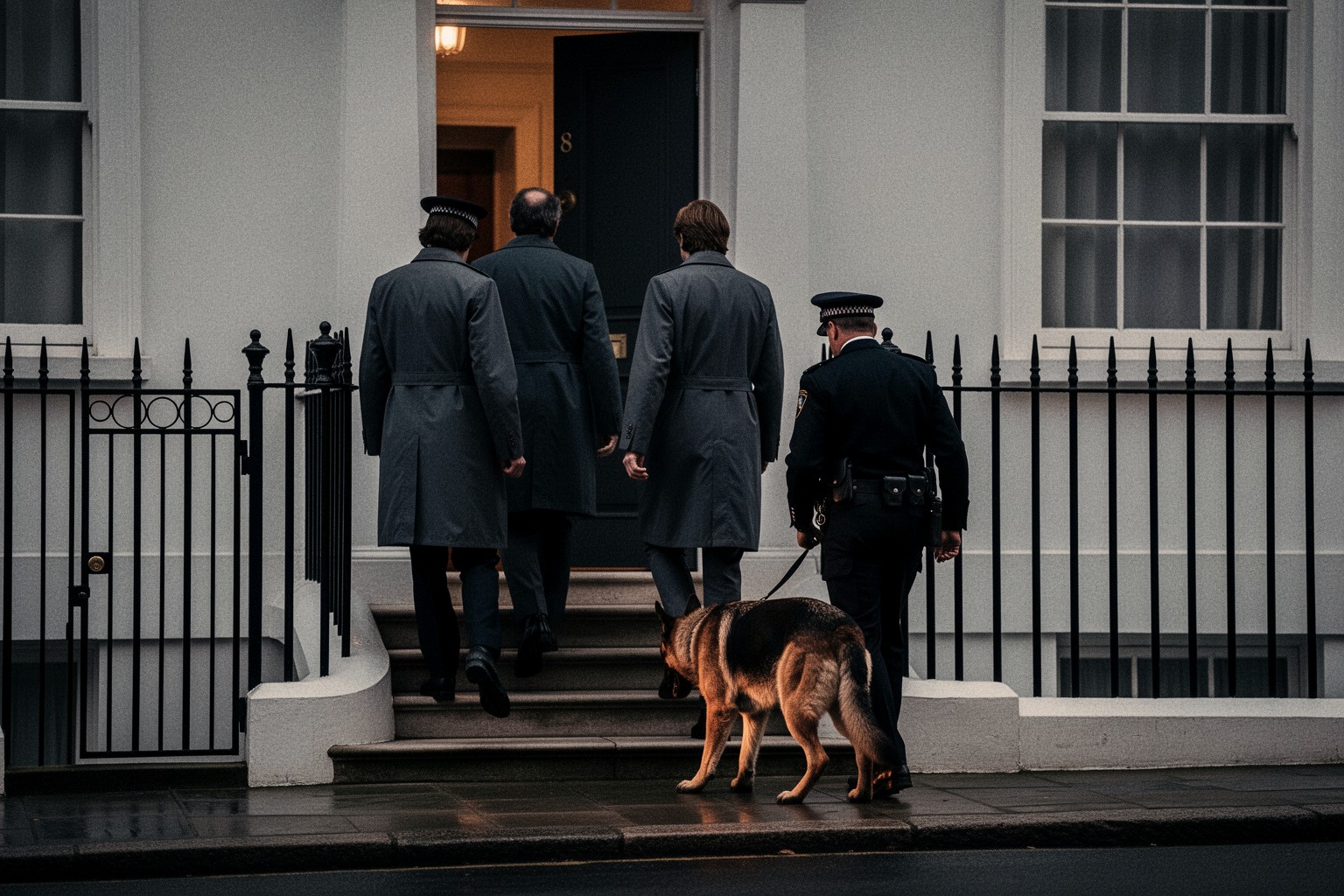
On October 18, 1968, police raided a flat at 34 Montagu Square in London, where John Lennon and Yoko Ono were staying. Ringo Starr held the lease. Officers arrived with a sniffer dog and found cannabis. The couple were arrested and charged.
Lennon later said he had been tipped off that a raid was coming and had cleaned the flat beforehand, and that the drugs had been planted. The officer who led the raid, Detective Sergeant Norman Pilcher, had a habit of arresting famous musicians. In an unrelated case, he was later jailed for conspiring to pervert the course of justice.
Ono was pregnant. To keep her out of the dock, Lennon pleaded guilty on November 28 and was fined £150 plus costs. In a London court it was a minor drugs conviction, settled in a morning.
In the United States, it was grounds for deportation.
After Lennon moved to New York, the government cited the 1968 conviction in its effort to expel him. He fought the case from 1972 until 1975 and received his green card in 1976.
Checked against: Contemporary British newspaper court reports; Beatles biographies; published US immigration case records and later court rulings on Lennon's deportation appeal; UK reporting on the 1973 trial of the arresting officer.
People queued to play it. Then it went back in the parts bin.
Illustration generated by AI for The Day Vault.
On October 18, 1958, Brookhaven National Laboratory on Long Island held its annual visitors' day. Most exhibits were photographs and equipment behind rope. One of them you could play.
Physicist William Higinbotham had wired an analog computer to a small oscilloscope. A glowing dot arced over a short vertical line that stood for a net. Each player held an aluminium box with a knob to set the angle and a button to hit. The ball bounced, and gravity pulled it down. He called it Tennis for Two.
Visitors lined up to play, many of them teenagers. Higinbotham had designed it in a few hours and built it in a few weeks with a technician, Robert Dvorak, using parts the lab already had. It returned the next year with a bigger display and a setting to play in the gravity of the Moon or Jupiter.
Higinbotham never patented it, and after the 1959 show the lab dismantled it and put the parts back into other work.
When home video games became an industry in the 1970s, the man who had drawn one of the first crowds to an electronic game held no claim to any of it. He spent those years campaigning against the nuclear weapons he had helped build.
Checked against: Brookhaven National Laboratory institutional histories; Higinbotham's own later recollections; histories of early video games; contemporary laboratory records
The jump went past the machine built to measure it
Illustration generated by AI for The Day Vault.
On October 18, 1968, in the Olympic long jump final in Mexico City, Bob Beamon sprinted down the runway on his first attempt and landed beyond the reach of the measuring equipment.
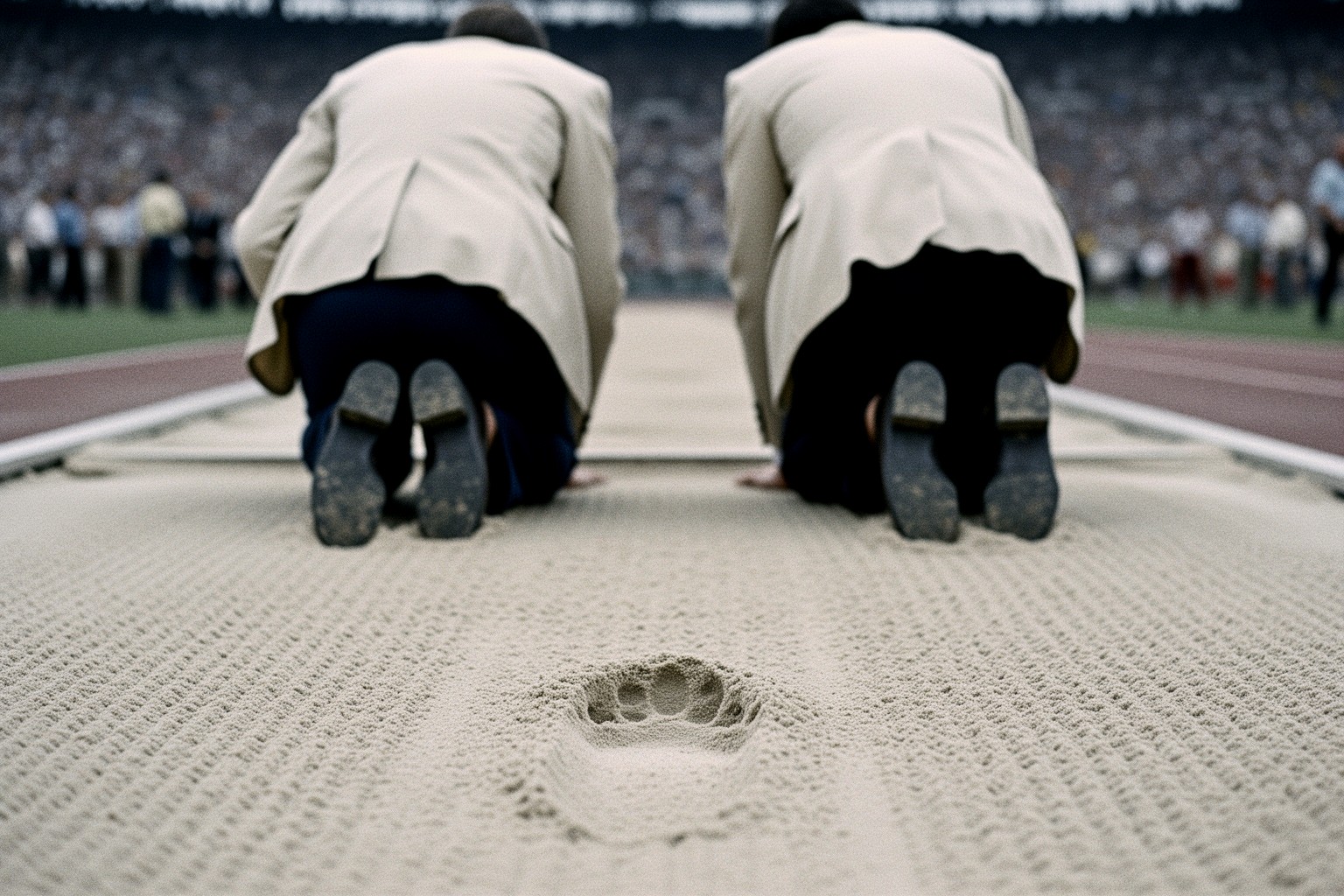
The stadium used an optical device that slid along a rail beside the pit. It had been built for the jumps everyone expected. Beamon's mark in the sand was past the end of the rail, so officials fetched a steel tape and measured by hand. The result was 8.90 metres. The world record that morning stood at 8.35. Records in the event usually moved by a few centimetres. He had added 55.
When the distance was announced, Beamon's legs gave way and he sank to the track. Mexico City sits about 2,240 metres above sea level, where thinner air offers less resistance to a sprinter's run-up. Rivals and reporters began arguing about the altitude almost at once.
The wind gauge read 2.0 metres per second, the highest tailwind allowed for a record to count.
A fraction more and the jump would have been void. Instead the mark stood for nearly 23 years, and it remains the Olympic record.
Checked against: Official reports of the 1968 Olympic Games; World Athletics record progression lists; contemporary newspaper and wire-service coverage of the Mexico City Games
The probe reported from Venus. It never reached the ground.
Illustration generated by AI for The Day Vault.
On October 18, 1967, the Soviet probe Venera 4 fell into the atmosphere of Venus and kept transmitting. No spacecraft had ever sent back measurements from inside another planet's air.
It had launched in June and spent four months crossing to Venus. On arrival a capsule separated, opened its parachute and began a slow descent. It radioed temperature, pressure and the make-up of the surrounding gas for roughly an hour and a half.
The gas was mostly carbon dioxide, far more than many astronomers had expected. Temperature and pressure climbed steadily as the capsule sank. Then the signal stopped, and Soviet announcements said the probe had reached the surface.
It hadn't. The American Mariner 5 flew past Venus the next day. When scientists compared its readings with Venera's, the numbers did not fit a capsule resting on solid ground.
Venera 4 had been crushed by the atmosphere while still miles above the surface, where pressure turned out to be around ninety times Earth's. The next probes were built tougher, and it took until Venera 7 in December 1970 for a Soviet lander to touch down and keep talking.
Checked against: Soviet and NASA mission histories of Venera 4 and Mariner 5; peer-reviewed planetary science literature on the Venus atmosphere; standard histories of Soviet space exploration
It fit in a shirt pocket. Its makers wanted to sell what was inside.
Illustration generated by AI for The Day Vault.
On October 18, 1954, a new radio was announced in the United States: the Regency TR-1, small enough to slip into a shirt pocket. It went on sale that November for $49.95, a steep price for a radio.
Every radio before it had run on vacuum tubes, glass bulbs that glowed, ran hot and needed bulky power supplies. The TR-1 used four transistors instead. It ran on a single battery and came in coloured plastic cases. For the first time, a radio could leave the living room and go wherever its owner went.
The set was built by a small Indianapolis firm, Industrial Development Engineering Associates. The transistors inside came from Texas Instruments in Dallas. Teenagers took them to the beach, to the bleachers and to bed.
Texas Instruments had no real interest in radios. It wanted to prove that transistors could be made cheaply and in quantity, so other manufacturers would buy them.
The demonstration worked better for others than for its sponsors. Within a few years, Japanese manufacturers were selling smaller, cheaper transistor radios by the million. The pocket radio became the first global electronics product, and the companies that started it were not the ones that sold it.
Checked against: Corporate histories of Texas Instruments, museum collection records for early transistor radios, histories of consumer electronics, 1954 trade and newspaper announcements