The British surrendered at Yorktown. Their general stayed in his quarters.
Illustration generated by AI for The Day Vault.
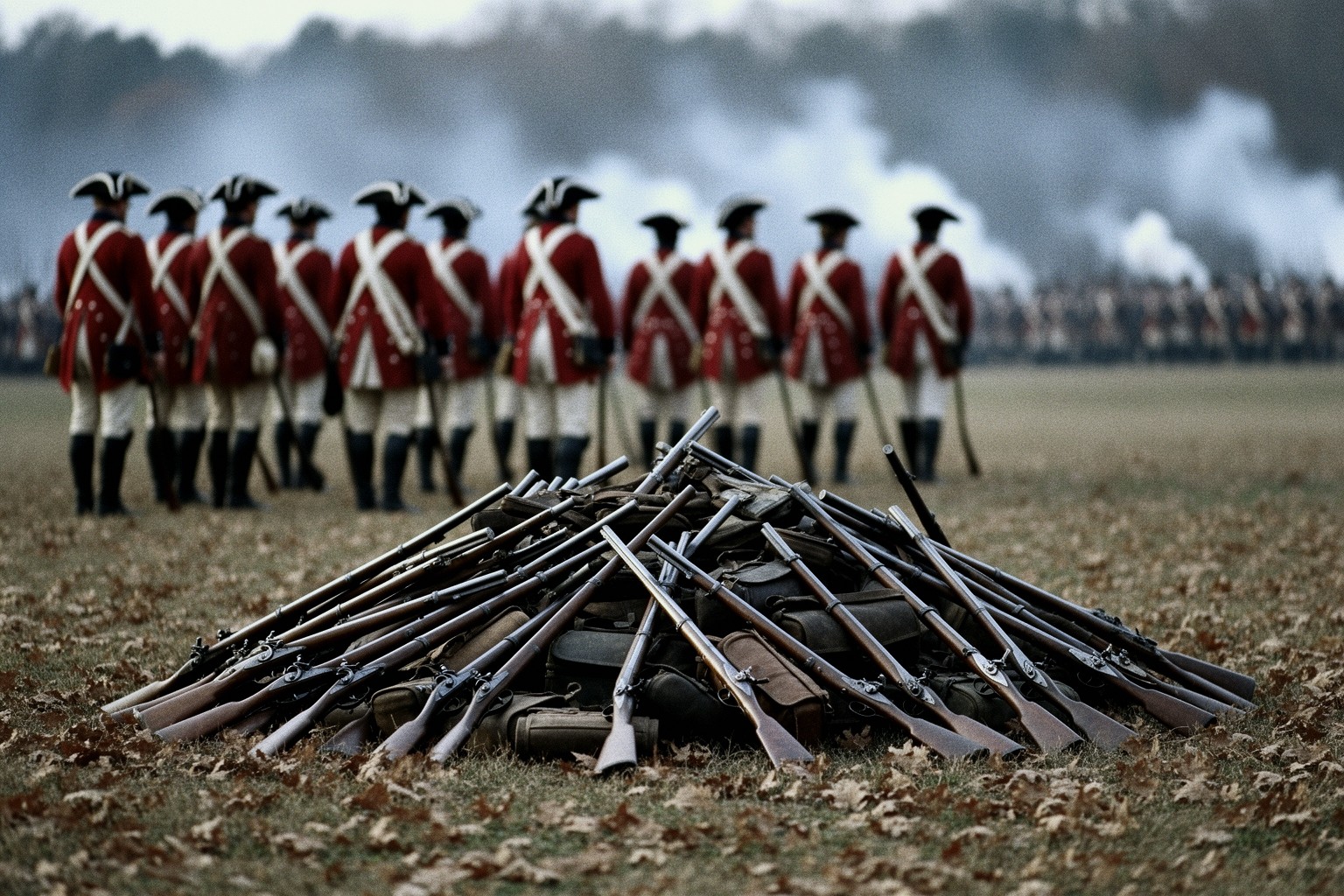
On October 19, 1781, more than 7,000 British and German soldiers marched out of Yorktown, Virginia, and laid down their muskets. The siege had lasted three weeks. A French fleet had already blocked the sea, so no relief was coming.
The surrendering troops walked between two lines, Americans on one side and French on the other. Their regimental colours stayed cased. Lord Cornwallis, their commander, did not appear. He said he was ill and sent his deputy, General Charles O'Hara, to hand over his sword.
O'Hara rode up and offered it to the French commander, the Comte de Rochambeau. Rochambeau declined and pointed him across the road to George Washington. Washington would not take a sword from a deputy either. He pointed O'Hara to his own second-in-command, General Benjamin Lincoln.
Lincoln was the American general the British had forced to surrender at Charleston the year before, denied the customary honours of war, exactly as the British were now being denied them.
The fighting did not stop that afternoon, and the peace treaty was two years away. But when the news reached London that November, Parliament lost its appetite for the war, and by March the government that had waged it was gone.
Checked against: Continental Army and British army correspondence; the articles of capitulation; Washington's papers; standard military histories of the Yorktown campaign; National Park Service histories of Colonial National Historical Park
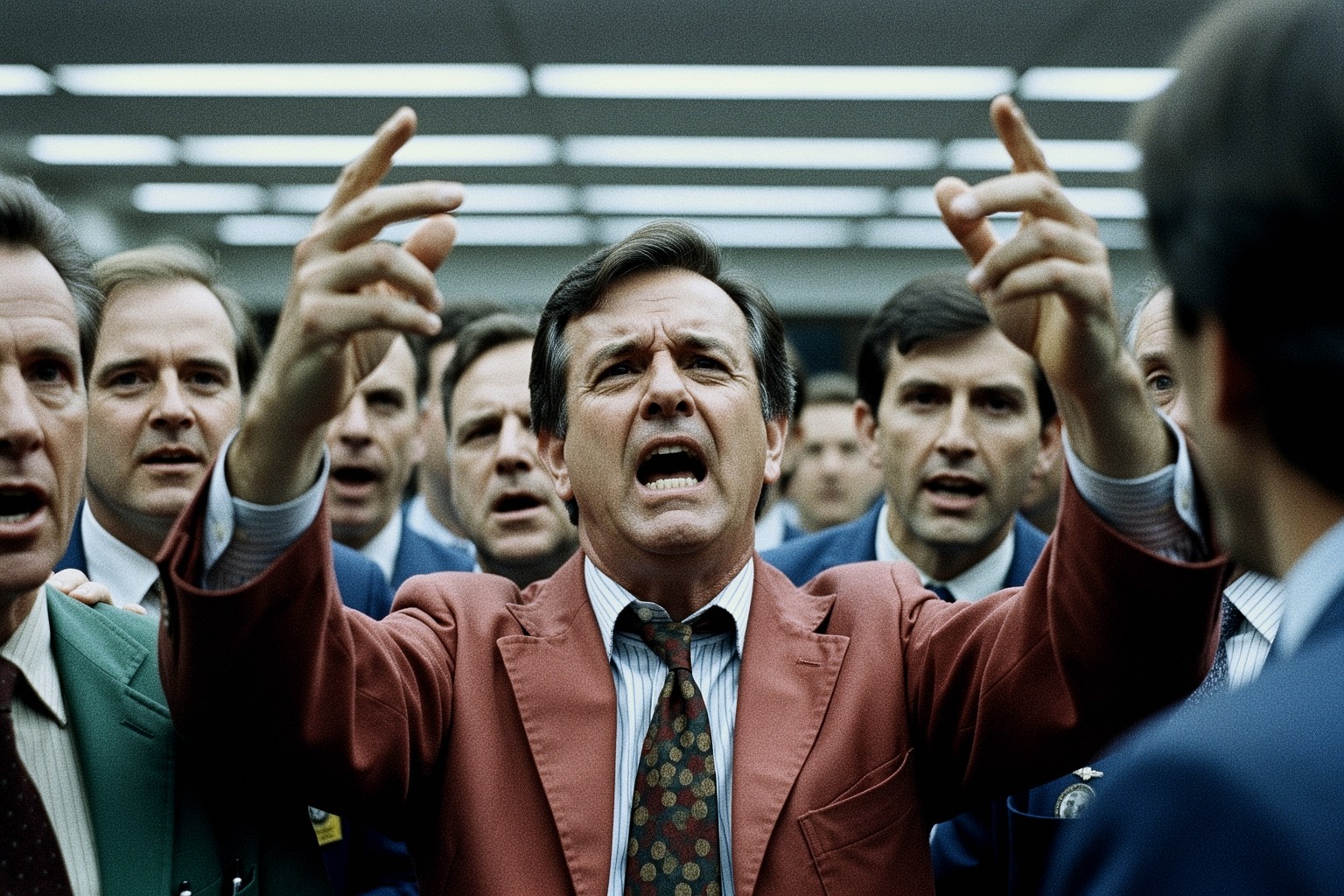
On October 19, 1987, the Dow Jones Industrial Average fell 508 points, or 22.6 percent. It remains the largest one-day percentage drop in the index's history. The day became known as Black Monday.
The selling did not start in New York. It rolled west with the sun, from Hong Kong through London and into Wall Street. Order volume swamped the exchange, and posted prices fell behind actual trades. Computer-driven strategies known as portfolio insurance sold automatically as prices dropped, which pushed prices lower still.
By evening the comparisons to 1929 had arrived. The next morning the Federal Reserve, led by Alan Greenspan two months into the job, said it stood ready to supply liquidity to the financial system. Banks kept lending. The exchanges stayed open.
Then the depression everyone had predicted failed to turn up.
The Dow finished 1987 higher than it had started. The lasting change was in the plumbing: exchanges later adopted circuit breakers that halt trading when prices fall too far, too fast.
Checked against: Securities and Exchange Commission and Presidential Task Force (Brady Commission) reports on the October 1987 market break; Federal Reserve historical records; contemporary financial press archives; economic histories of the 1987 crash
He was arrested at a lunch counter. A traffic ticket kept him locked up.
Illustration generated by AI for The Day Vault.
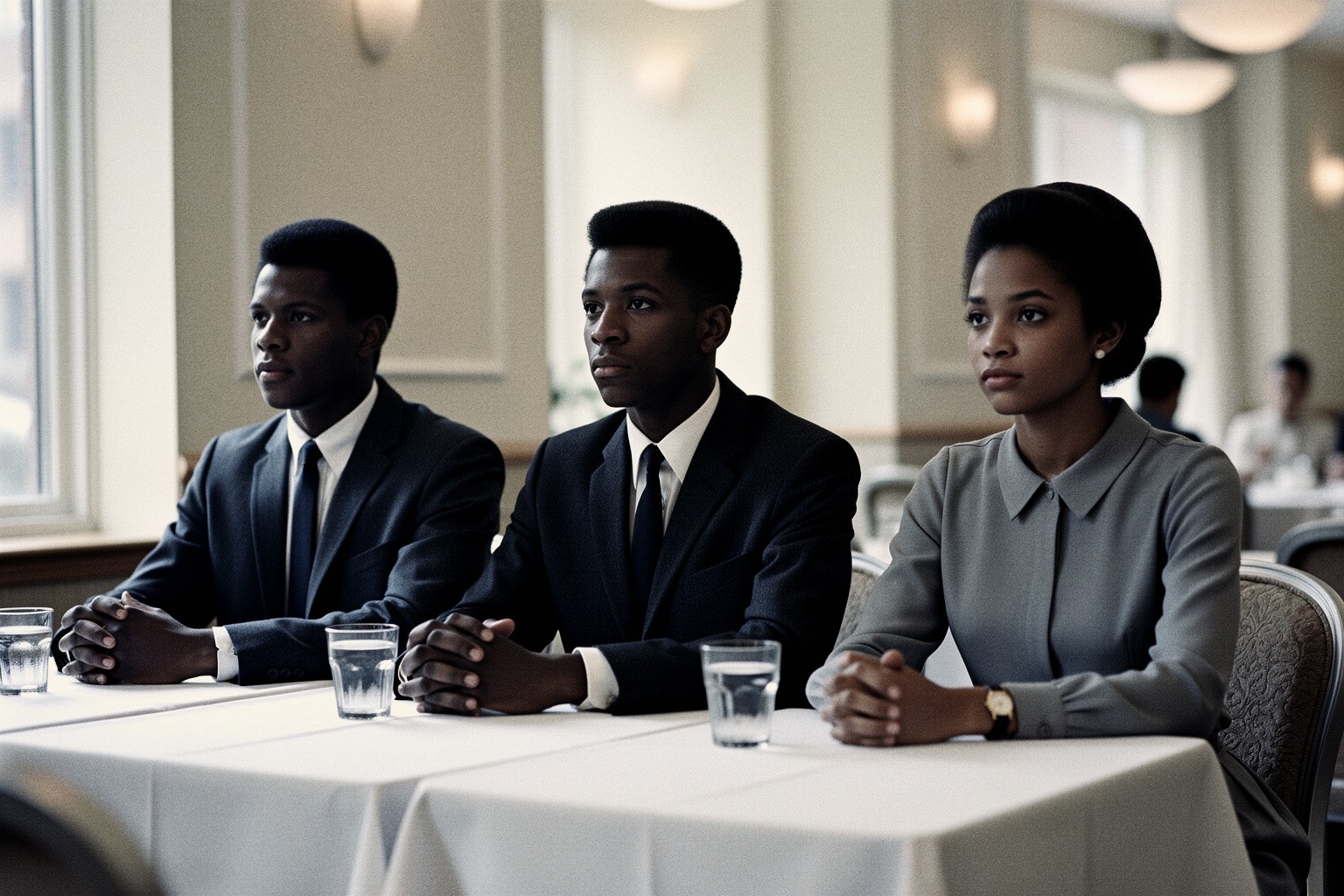
On October 19, 1960, Martin Luther King Jr. was arrested in the Magnolia Room, the whites-only restaurant inside Rich's department store in Atlanta. He had joined students from the city's Black colleges who sat down and asked to be served.
They were charged with trespassing. King refused bail. Within days Atlanta's mayor brokered a truce, and the trespass charges were dropped.
The presidential election was less than three weeks away. Both campaigns had kept quiet on civil rights, wary of losing white Southern votes.
King stayed in jail anyway. Months earlier he had been stopped in DeKalb County driving on an Alabama license and put on probation. A county judge ruled the sit-in violated it and sentenced him to four months of hard labor.
He was moved before dawn to the state prison at Reidsville. John F. Kennedy phoned Coretta Scott King to offer sympathy. Robert Kennedy phoned the judge. King was out on bond the next day. His father, who had been backing Nixon, switched to Kennedy, and the campaign carried the story into Black churches before an election decided by under two-tenths of a percentage point.
Checked against: Contemporary Atlanta and national newspaper reports; Kennedy campaign staff memoirs and oral histories; King biographies; presidential election records
On October 19, 1864, about twenty Confederate soldiers robbed three banks in St. Albans, Vermont, fifteen miles south of the Canadian border. It was the northernmost land action of the Civil War.
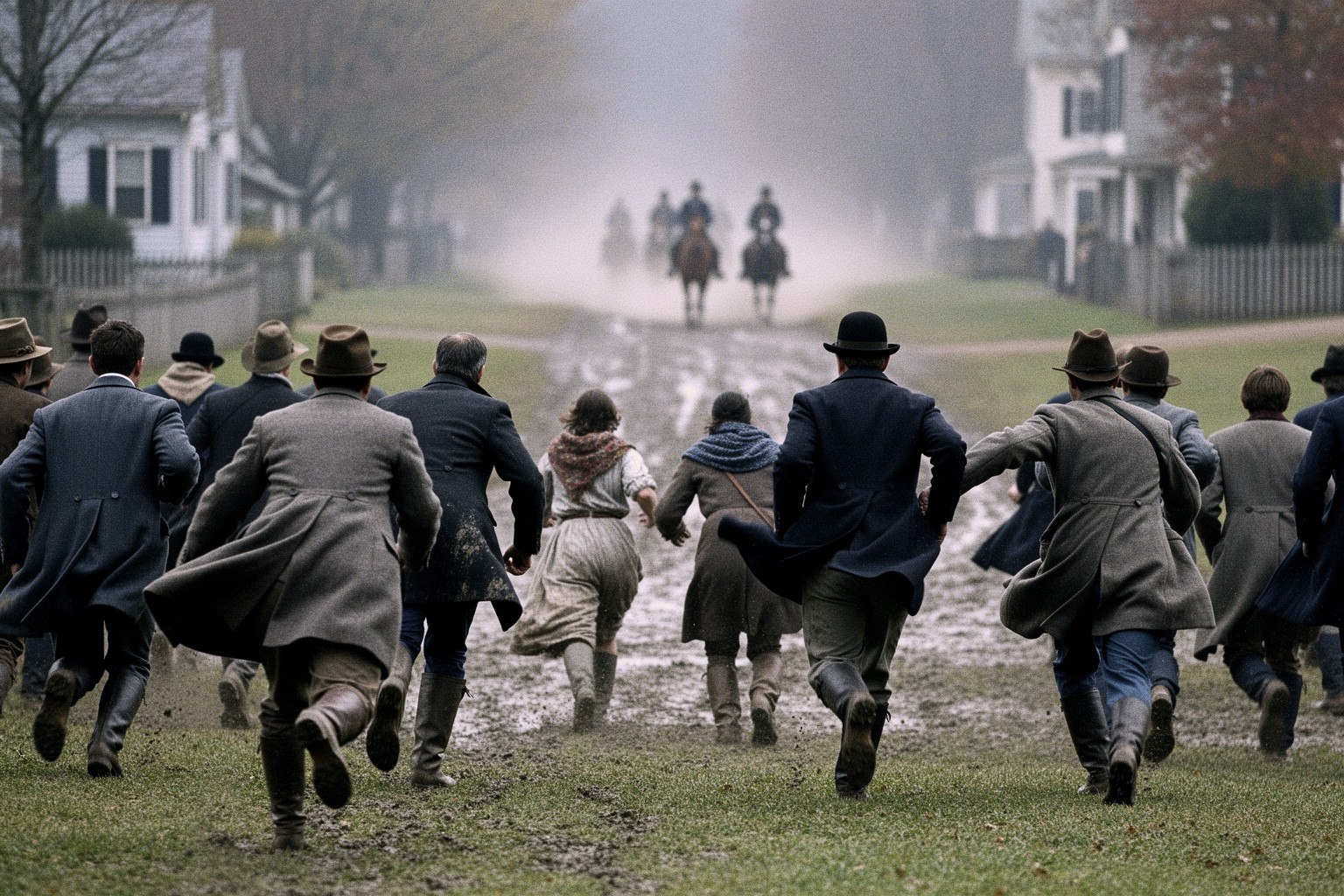
They had drifted into town over several days in pairs and threes, posing as travellers up from Canada. That afternoon they drew revolvers at the same hour, emptied the vaults of more than $200,000, and made some bank clerks swear allegiance to the Confederacy. They seized horses, shot a townsman who later died, and threw bottles of incendiary liquid at buildings. The fires mostly failed to catch.
Then they galloped north. Within hours they were across the border, and Canadian authorities soon arrested most of them. To Vermonters it looked settled: thieves and a killer, in custody, money recovered.
In December a Montreal judge ruled he had no jurisdiction and set them free.
Washington was furious. General John Dix ordered Union troops to chase raiders into Canada if necessary. President Lincoln revoked the order, unwilling to risk a war with Britain over a bank job.
Checked against: Civil War histories of Confederate operations from Canada; Vermont historical society records; contemporary Vermont and Montreal newspapers; Union Army official records
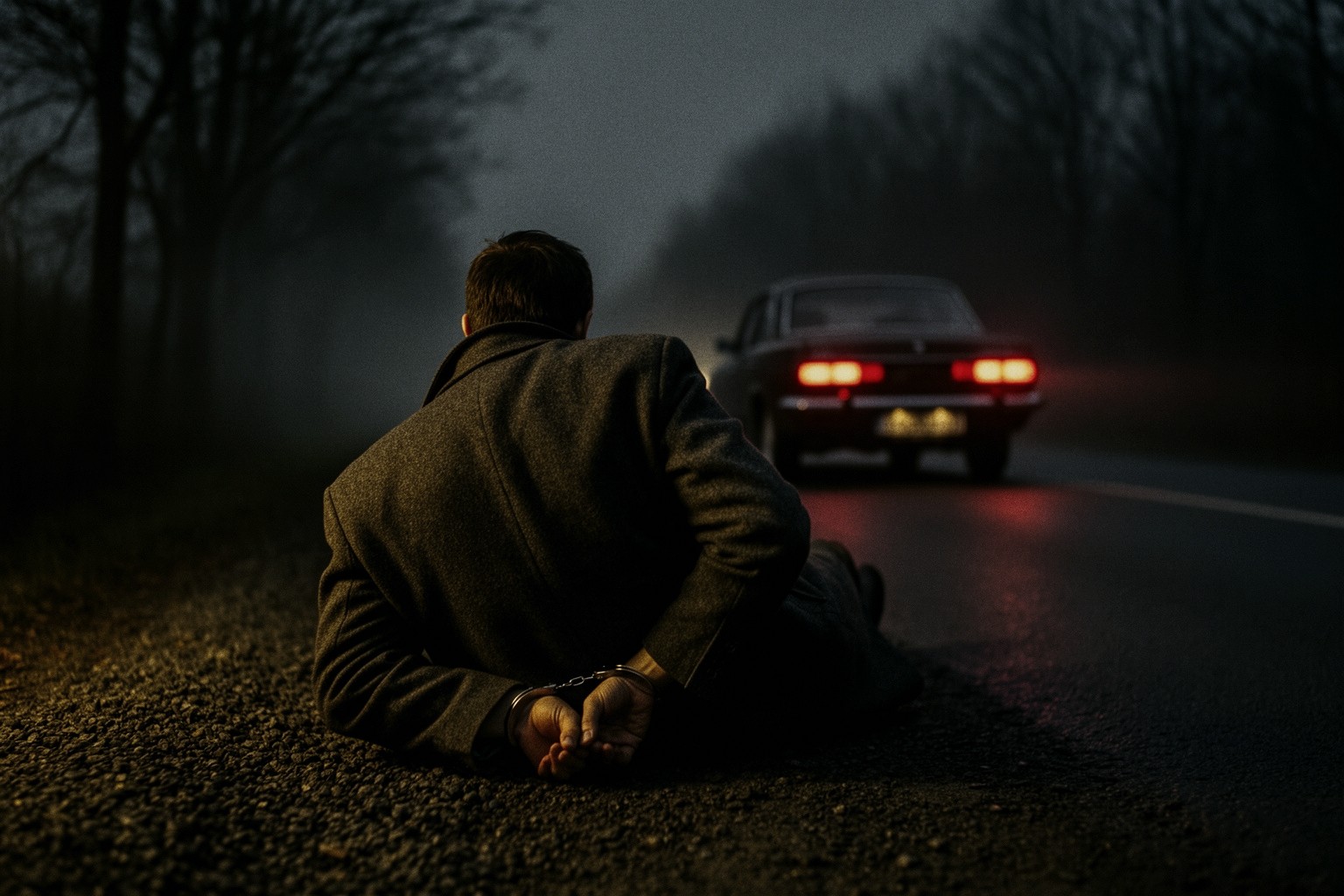
On October 19, 1984, three officers of Poland's secret police flagged down a car on a dark road near Toruń. They wore traffic-police uniforms. In the car sat Jerzy Popiełuszko, a Warsaw priest whose monthly masses for Solidarity drew crowds the regime could not ban.
The officers dragged him into their own car, beat him and locked him in the boot. His driver, Waldemar Chrostowski, was handcuffed and pushed into the front seat of the same car. He had seen everything, and the men had no intention of letting him tell it.
The plan depended on silence. A priest who simply vanished could be blamed on anyone, or on no one.
Somewhere outside Toruń, with the car moving fast, Chrostowski threw open the door and jumped.
He survived, found help, and soon the country knew a priest had been seized by men dressed as police. Popiełuszko's body was pulled from a Vistula reservoir eleven days later. Because the abduction had a witness, the state could not bury it. In 1985 a court in Toruń convicted four security officers, including a colonel. Poland had never before seen its secret police tried in public.
Checked against: Contemporary wire reports and newspaper coverage; transcripts and reporting from the 1985 Toruń trial; biographies of Popiełuszko; histories of Solidarity and the Polish People's Republic; records of Poland's Institute of National Remembrance
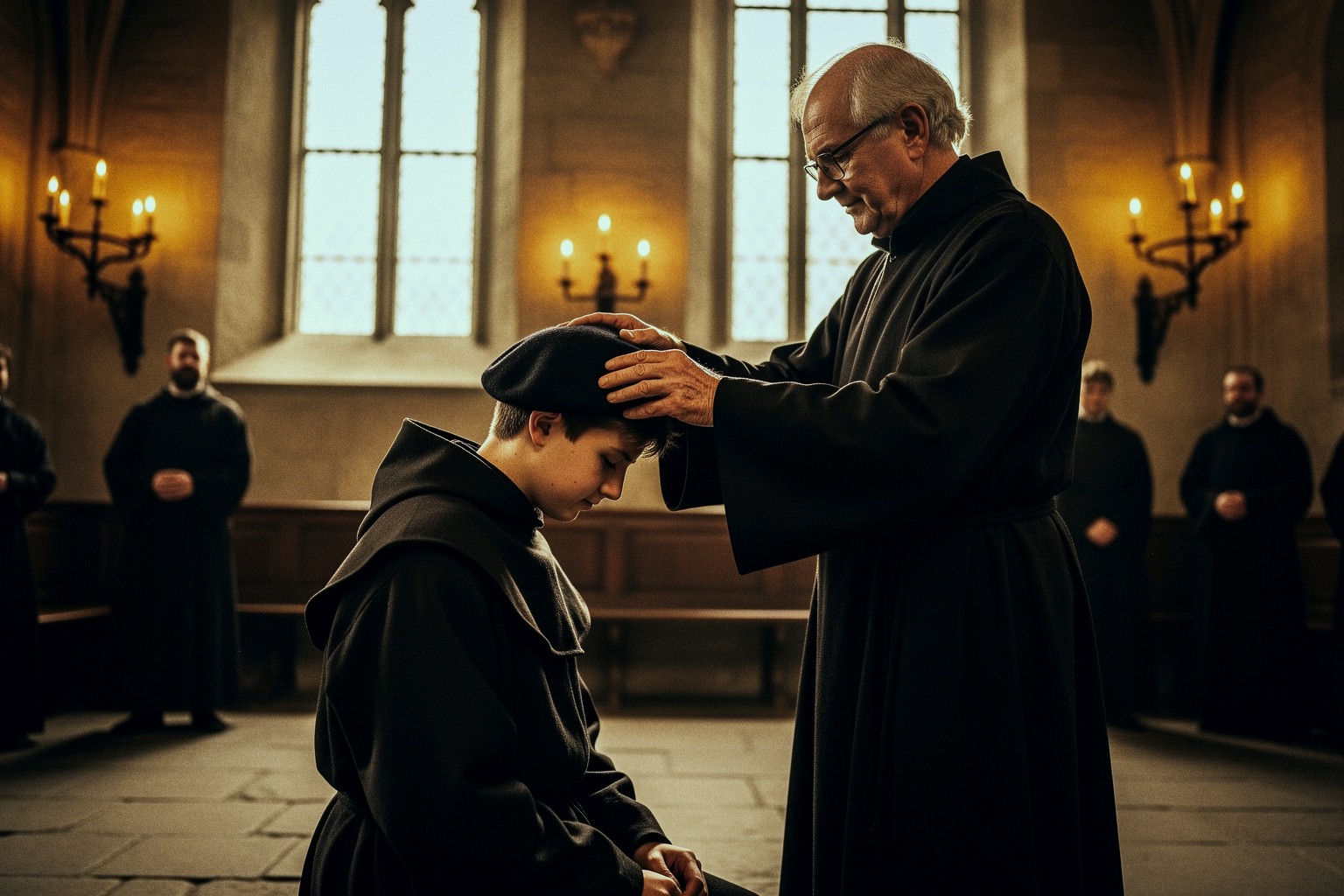
On October 19, 1512, a 28-year-old Augustinian friar named Martin Luther became a doctor of theology at the University of Wittenberg, a school in Saxony barely ten years old.
He had not wanted the degree. His superior, Johann von Staupitz, pressed it on him, and Frederick the Wise, Elector of Saxony, paid the fee. Luther received the insignia of his new rank and took over the chair Staupitz had held: lecturer on the Bible.
The ceremony included an oath. Luther swore to teach Scripture faithfully, and for the next few years he did exactly that. He worked through the Psalms, then Paul's letter to the Romans, line by line, in front of students who came to hear him.
That oath, sworn to strengthen the Church's teaching, became the warrant he used to defy it.
When critics asked who had given a friar the right to challenge popes and councils, Luther pointed to his doctorate. He had been commissioned, publicly and for life, to teach what the Bible said. He insisted he was only keeping his promise.
Checked against: Standard scholarly biographies of Luther; histories of the University of Wittenberg; Luther's own collected writings and table talk; reference works on the German Reformation
Wagner finished his opera. Then he spent thirty years fixing it.
Illustration generated by AI for The Day Vault.
On October 19, 1845, Richard Wagner's Tannhäuser opened at the Court Opera in Dresden, where Wagner was Kapellmeister. He was 32, and he conducted it himself.
The story follows a medieval minstrel caught between the goddess Venus and a devout woman named Elisabeth, with a singing contest at the Wartburg castle at its centre. The first audiences were respectful but puzzled, especially by the ending. Wagner went back to the score within two years and rewrote the final scene.
The opera spread across German stages anyway. In 1861 the Paris Opéra staged it at the request of Napoleon III, and Wagner rebuilt the opening Venusberg scene as a long, lush ballet.
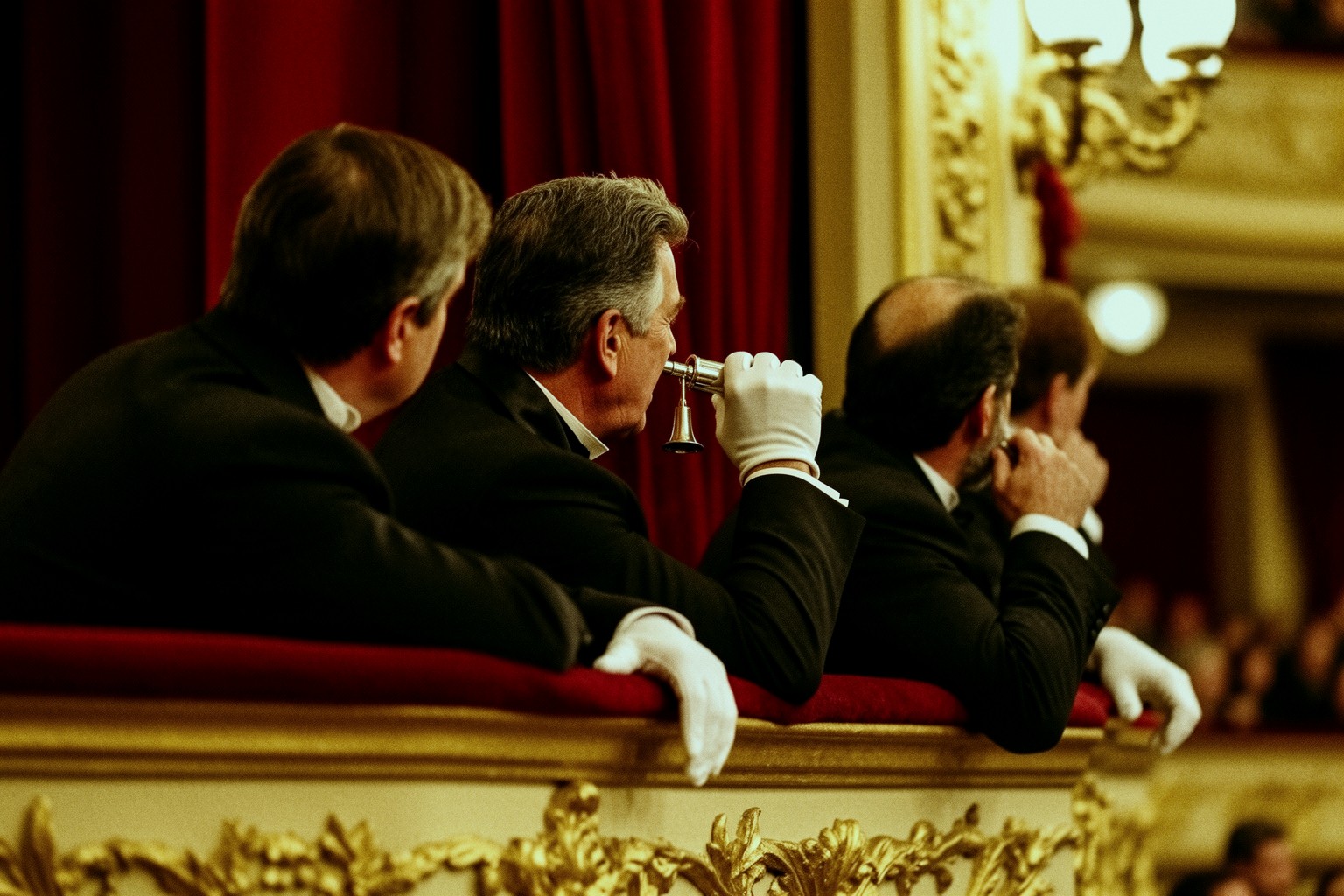
Paris had a rule he ignored: the ballet went in the second act, when members of the Jockey Club arrived from dinner to watch the dancers.
They brought hunting whistles and drowned out three performances. Wagner withdrew the opera, and was still revising it in Vienna in 1875.
Checked against: Wagner biographies and opera reference works such as Grove Music Online; histories of the Paris Opéra; contemporary press accounts of the 1861 Paris performances.
He wrote it for a dime. His publisher cut it for schools.
Illustration generated by AI for The Day Vault.
On October 19, 1953, Ballantine Books published Fahrenheit 451, Ray Bradbury's novel about a fireman whose job is burning books.
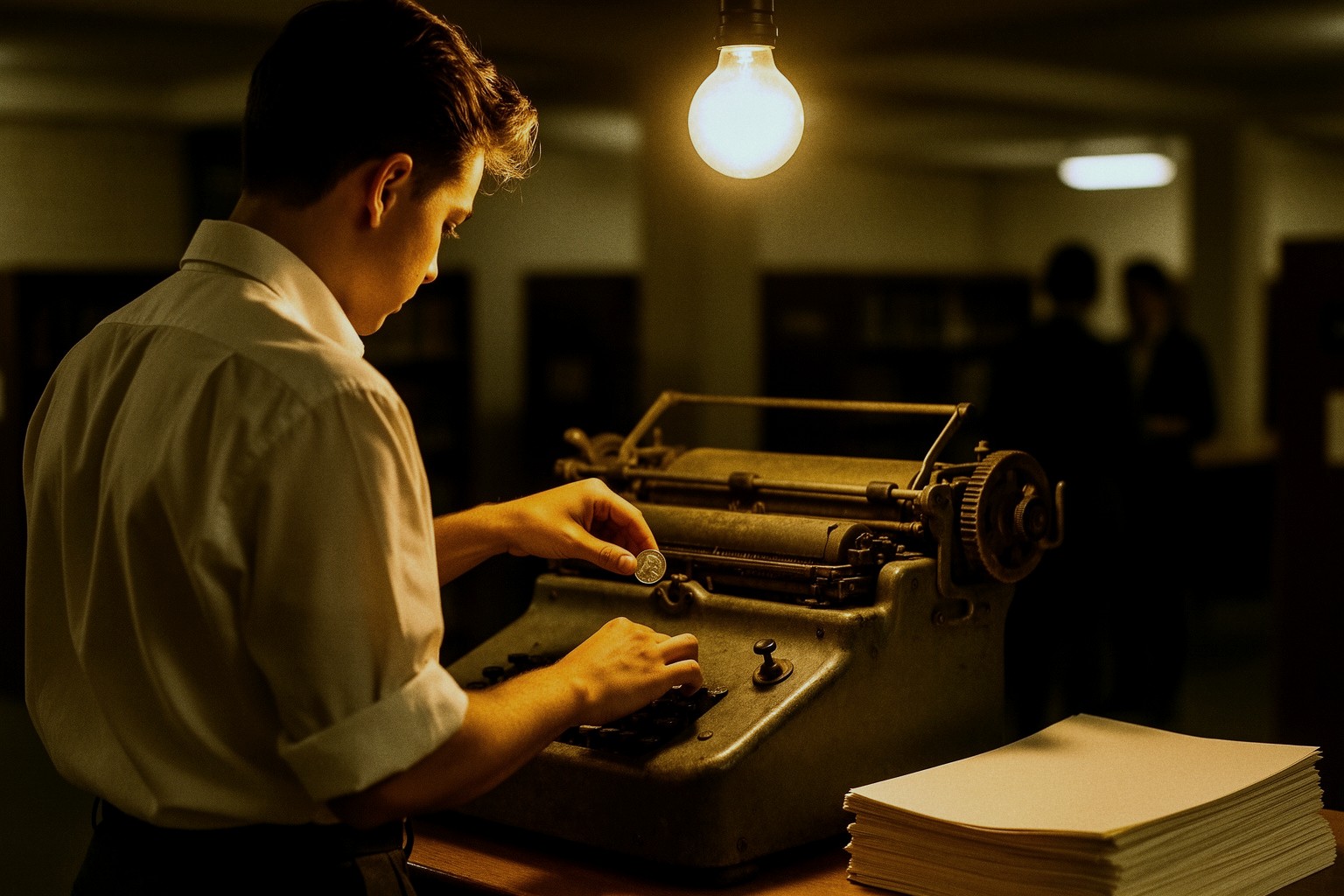
Bradbury had no office. His house was loud with small children, so he went down to the basement of the library at UCLA, where typewriters rented for ten cents per half hour. He fed in dimes and wrote a short version, called The Fireman, in about nine days. The whole draft cost him $9.80.
He later expanded it into the novel. A library basement, a book about libraries burning, a writer paying by the half hour to keep his sentences coming. The story stuck. Schools began assigning it as a warning about what happens when someone else decides what you may read.
In 1967 Ballantine put out a special edition for high schools, and someone at the company quietly edited it, stripping out swear words and altering passages in a novel about the destruction of books.
Bradbury did not notice for years. When readers pointed it out, the publisher restored the original text in 1979, and he added an afterword aimed at anyone who trims a book to make it safer.
Checked against: Author interviews and the author's 1979 afterword to the novel; publisher histories; literary biographies; academic studies of school censorship
On October 19, 1981, the Los Angeles Dodgers beat the Montreal Expos 2-1 in the deciding fifth game of the National League Championship Series. The winning run came on a two-out home run in the ninth inning by Dodgers outfielder Rick Monday, and it sent Los Angeles to the World Series.
The game was meant for Sunday. Rain pushed it to Monday afternoon at Olympic Stadium, where fans sat in winter coats through a cold, grey day. It was the first postseason series the Expos had ever reached, in a season split in two by a players' strike.
Fernando Valenzuela started for Los Angeles and pitched into the ninth. Ray Burris matched him for Montreal across eight innings. The score sat at 1-1 when Monday came to the plate.
The pitch he hit came from Steve Rogers, the Expos' ace starter, brought in to relieve on two days' rest after starting Game 3.
Montreal still calls it Blue Monday. The Expos never reached the postseason again, and in 2005 the franchise moved to Washington.
Checked against: Major League Baseball box scores and postseason records; contemporary wire reports and newspaper coverage from Montreal and Los Angeles; baseball reference histories of the 1981 season
The cure came from a basement. The prize went upstairs.
Illustration generated by AI for The Day Vault.
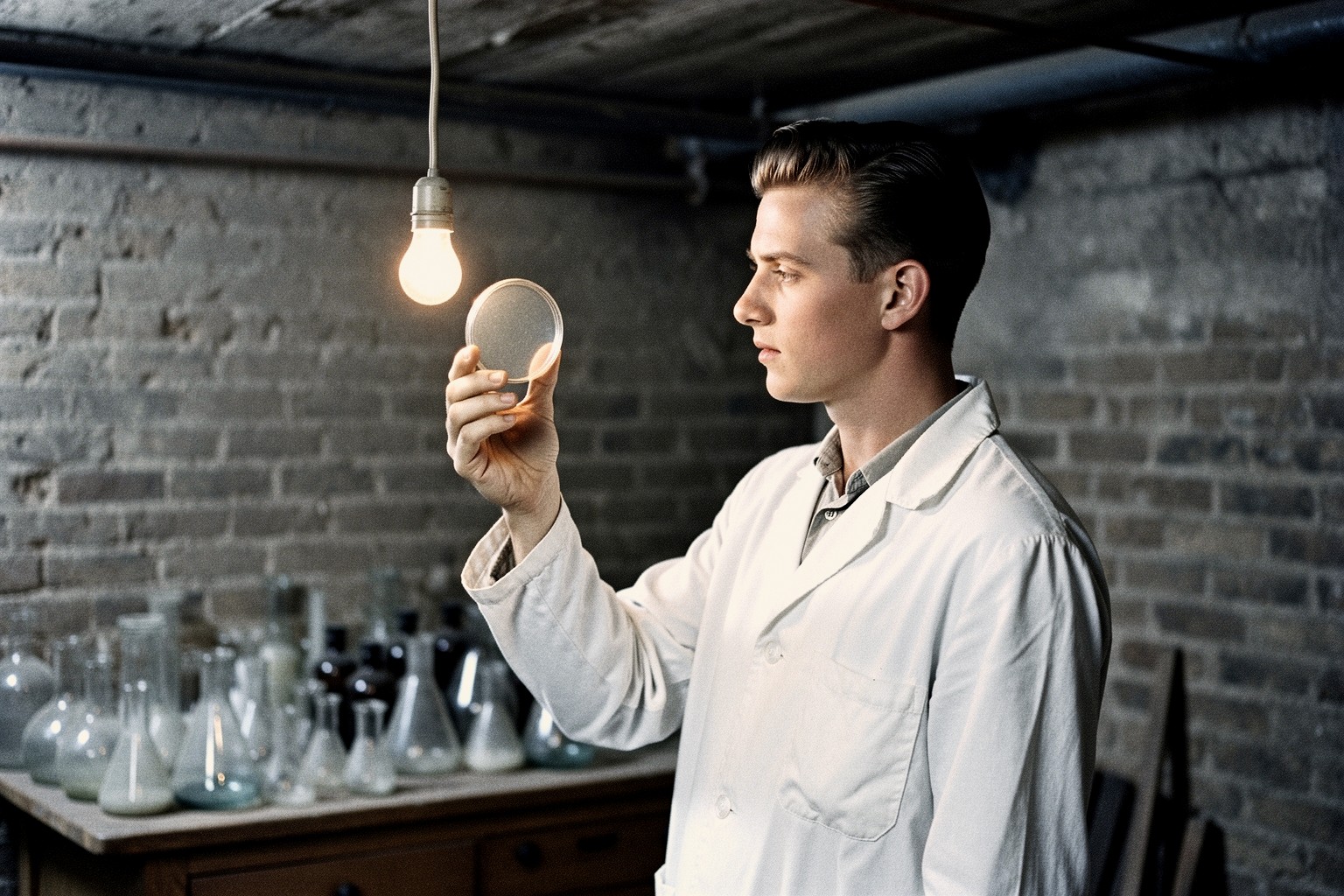
On October 19, 1943, a 23-year-old Rutgers graduate student named Albert Schatz isolated a new antibiotic from soil bacteria. He called it streptomycin.
Penicillin was already saving wounded soldiers, but it did nothing against tuberculosis, then among the deadliest diseases on earth. Schatz had been set to find something that would. He worked in a basement laboratory, pitting soil microbes against virulent strains of the TB bacterium. One of his winning cultures came from a swab of a chicken's throat.
Within a few years, clinical trials showed streptomycin could cure patients who once would have been sent to a sanatorium to rest and wait. The patent named Schatz and his supervisor, Selman Waksman, as co-inventors. Schatz signed his rights over to the university, believing nobody would profit personally.
Waksman, it emerged, had been collecting a substantial private share of the royalties, and was increasingly telling the story of the discovery as his own.
Schatz sued in 1950 and won a settlement that legally recognised him as co-discoverer. Two years later, the Nobel Prize in Physiology or Medicine went to Waksman alone. Schatz spent his career at smaller institutions. Rutgers finally gave him a medal in 1994.
Checked against: Rutgers University archives and published histories of streptomycin; Schatz's own published accounts; Nobel Foundation records for 1952; contemporary press coverage of the 1950 lawsuit; histories of tuberculosis treatment
The wedding was real. The papal permission was not.
Illustration generated by AI for The Day Vault.
On October 19, 1469, Isabella of Castile, 18, married Ferdinand of Aragon, 17, in a private house in Valladolid. Her half-brother, King Henry IV of Castile, had not approved the match. He had other husbands in mind for her.
Ferdinand crossed hostile Castilian territory to reach her. He travelled with a handful of companions, disguised as one of their servants. At inns along the way he played the part, tending the mules and serving his own men at table.
The bride and groom were second cousins, close enough that the Church required a papal dispensation before they could marry. At the ceremony, Archbishop Carrillo of Toledo produced one, and it was read aloud to the assembled guests.
The dispensation was a forgery.
The two people who would unite Spain began their marriage without the Pope's permission. Henry used the irregular wedding against his sister. When he named his daughter Juana as heir in 1470, he cited Isabella's defiance. A genuine dispensation followed only in December 1471, issued by Pope Sixtus IV. The next year a papal legate carried it to Castile: Cardinal Rodrigo Borgia, the future Pope Alexander VI. The marriage that produced the Catholic Monarchs was made lawful after the fact, by a Borgia.
Checked against: Chronicles of the reigns of Henry IV and the Catholic Monarchs; scholarly biographies of Isabella I; papal registers of Sixtus IV; academic histories of fifteenth-century Castile