On October 22, 1938, in a rented room in Astoria, Queens, a patent attorney named Chester Carlson made the first xerographic copy. The text was a date and a place: "10.-22.-38 ASTORIA."
Carlson spent his working days copying patent drawings and specifications by hand. His arthritis made it miserable. He wanted a way to copy a page with light and static electricity instead of wet chemicals and photographic paper.
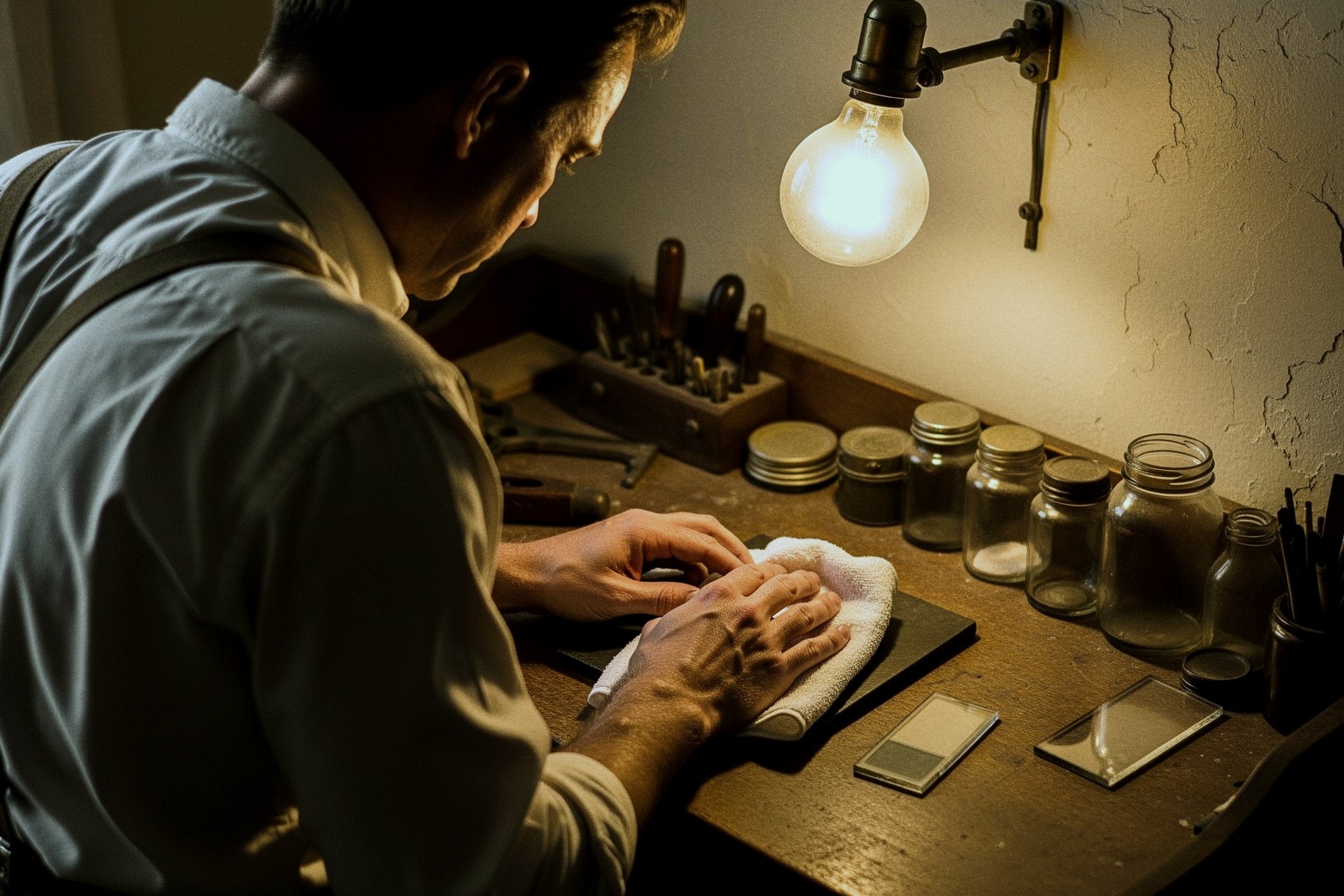
The method was crude. His assistant, the physicist Otto Kornei, coated a zinc plate with sulfur and rubbed it with a cotton handkerchief to charge it. Carlson inked the words onto a glass microscope slide, which was laid on the plate under a bright lamp. Powder dusted over the plate clung where the letters had blocked the light. Pressed onto wax paper and warmed, the image stuck.
Then he tried to sell it, and more than twenty companies, IBM, General Electric, Kodak and RCA among them, turned him down.
In 1944 the nonprofit Battelle Memorial Institute agreed to develop the process, and in 1947 a small Rochester paper company called Haloid bought the rights. Its first easy-to-use office copier, the Xerox 914, shipped in 1959, twenty-one years after the slide in Astoria. Haloid later renamed itself after the machine.
Checked against: Biographies of Chester Carlson; Xerox corporate histories; Carlson's 1942 U.S. patent for electrophotography; histories of the Battelle Memorial Institute; museum collections holding the original 1938 copy
They queued for their money, and the money ran out first
Illustration generated by AI for The Day Vault.
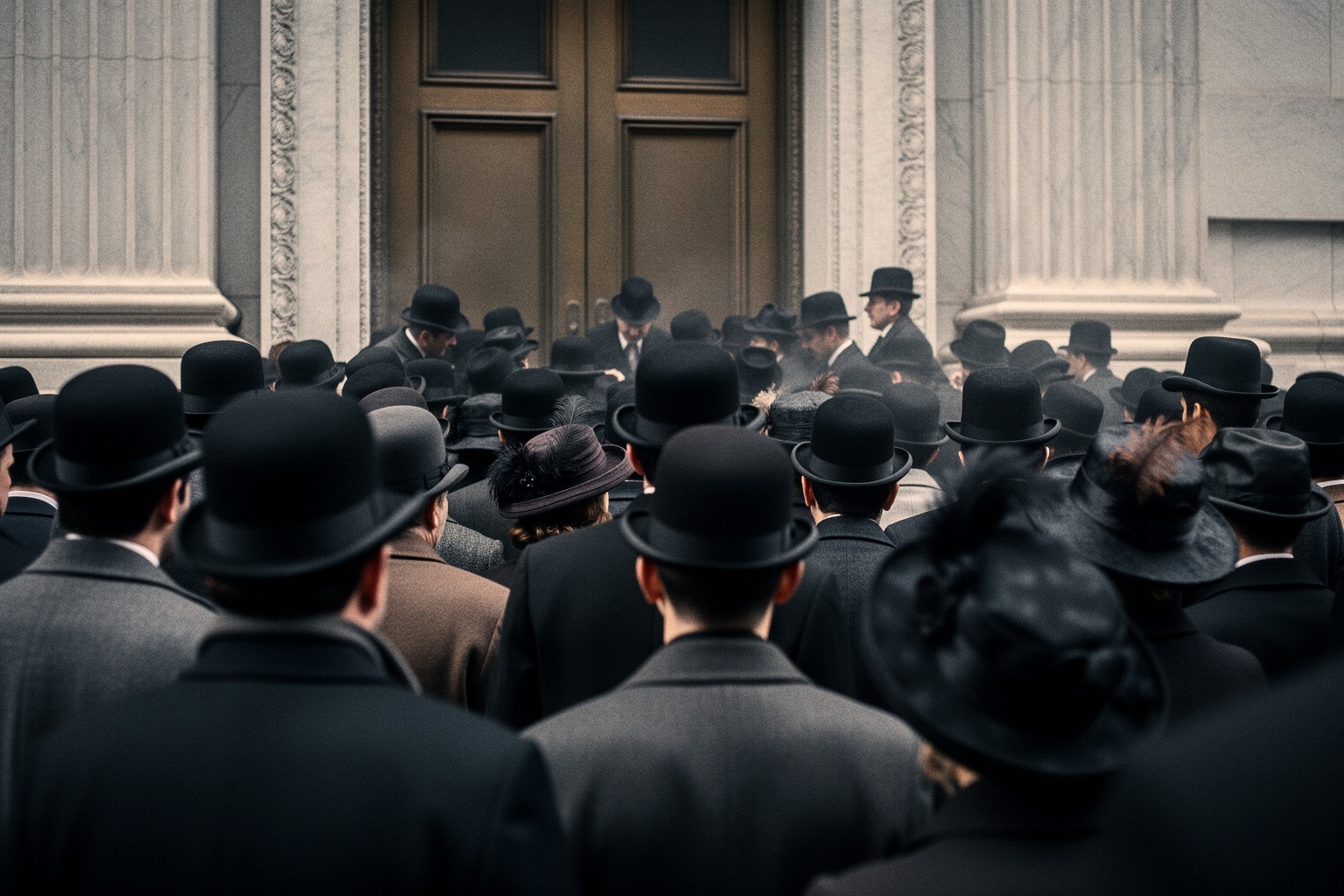
On October 22, 1907, depositors lined up outside the Knickerbocker Trust Company on Fifth Avenue in New York and asked for their money. The trust, one of the largest in the city, paid them. Clerks counted out about $8 million in under three hours.
The trouble had started a week earlier, when a scheme to corner the stock of a copper company collapsed. The Knickerbocker's president, Charles Barney, had ties to the men behind it. Then a major bank announced it would stop clearing the trust's checks. By morning the line stretched down the pavement.
Trusts were lightly regulated and kept thin cash reserves compared with banks. The United States had no central bank to lend in a crisis. When a trust ran dry, there was nobody official to call.
The one man who could have stopped it, J. P. Morgan, had the Knickerbocker's books examined overnight and decided not to save it.
Shortly after noon the doors closed on the people still waiting. Runs spread to other trusts, and Morgan spent the next weeks arranging private rescues from his library. Six years later, Congress created the Federal Reserve to do the job one banker had done from his armchair.
Checked against: Contemporary New York newspaper reporting; Federal Reserve historical publications; academic histories of the Panic of 1907.
He called it a quarantine, because a blockade is war
Illustration generated by AI for The Day Vault.
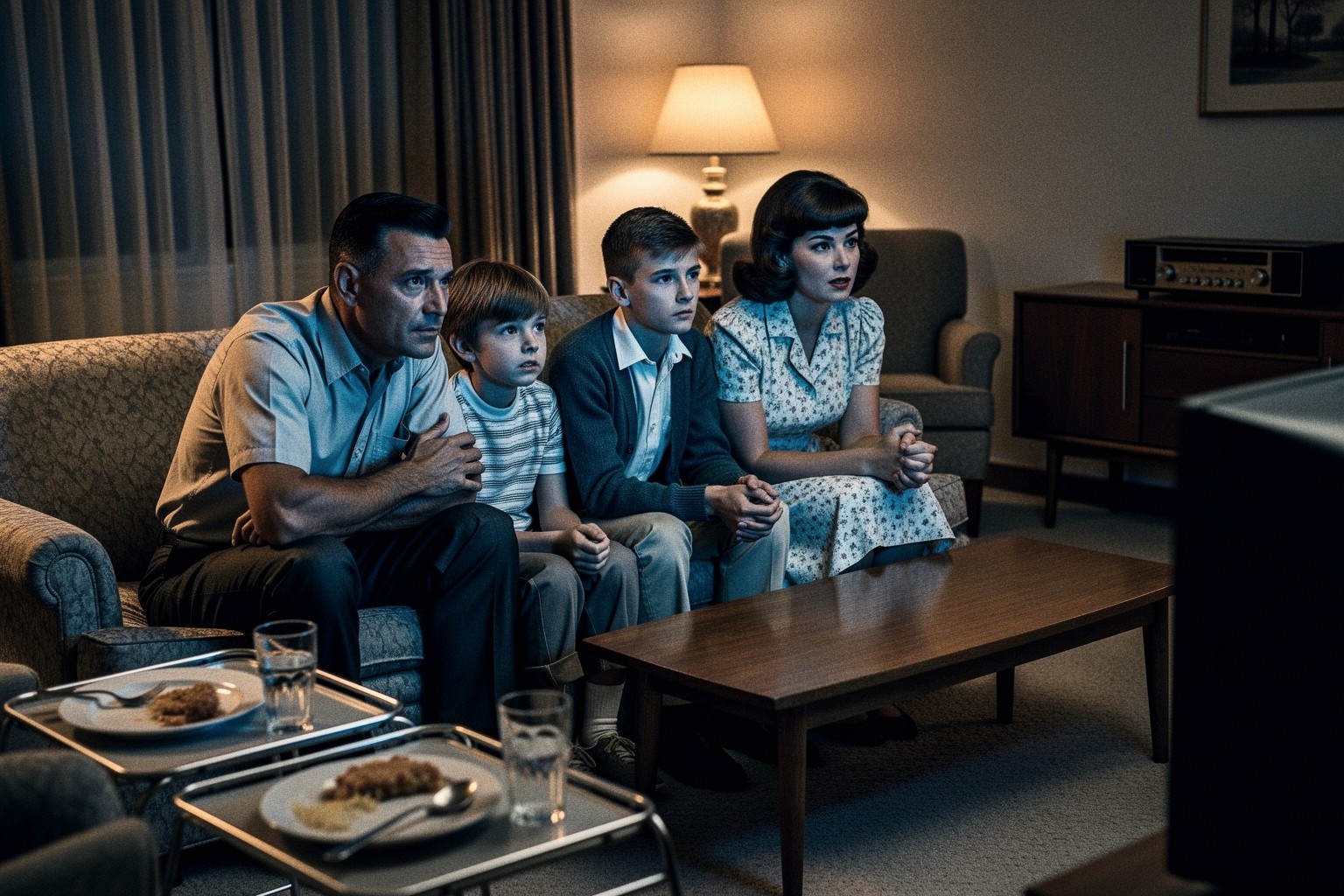
On October 22, 1962, at 7 p.m. Eastern time, President John F. Kennedy went on national television from the Oval Office. He told Americans that the Soviet Union was building missile sites in Cuba, ninety miles from Florida.
The evidence came from U-2 spy planes. Photographs taken in mid-October showed launch sites for missiles that could reach much of the eastern United States. For a week, Kennedy and his advisers had argued in secret over air strikes, an invasion, or doing nothing at all.
He announced a different answer. The U.S. Navy would stop and inspect ships bound for Cuba and turn back any carrying offensive weapons. He demanded the missiles be withdrawn, and warned that any launch from Cuba would bring a full retaliatory response against the Soviet Union.
He never once called it a blockade. Under international law a blockade is an act of war, so the White House chose a softer, medical word: quarantine.
The line at sea took effect two days later. Soviet ships heading toward it slowed and turned around, and on October 28 Moscow agreed to dismantle the missiles. The word had left both sides room to stop short of shooting.
Checked against: Presidential library archives and the official transcript of the televised address; State Department documentary histories of U.S. foreign relations; declassified meeting records; standard scholarly histories of the Cuban Missile Crisis.
The fleet was sure of its position. The sea disagreed.
Illustration generated by AI for The Day Vault.
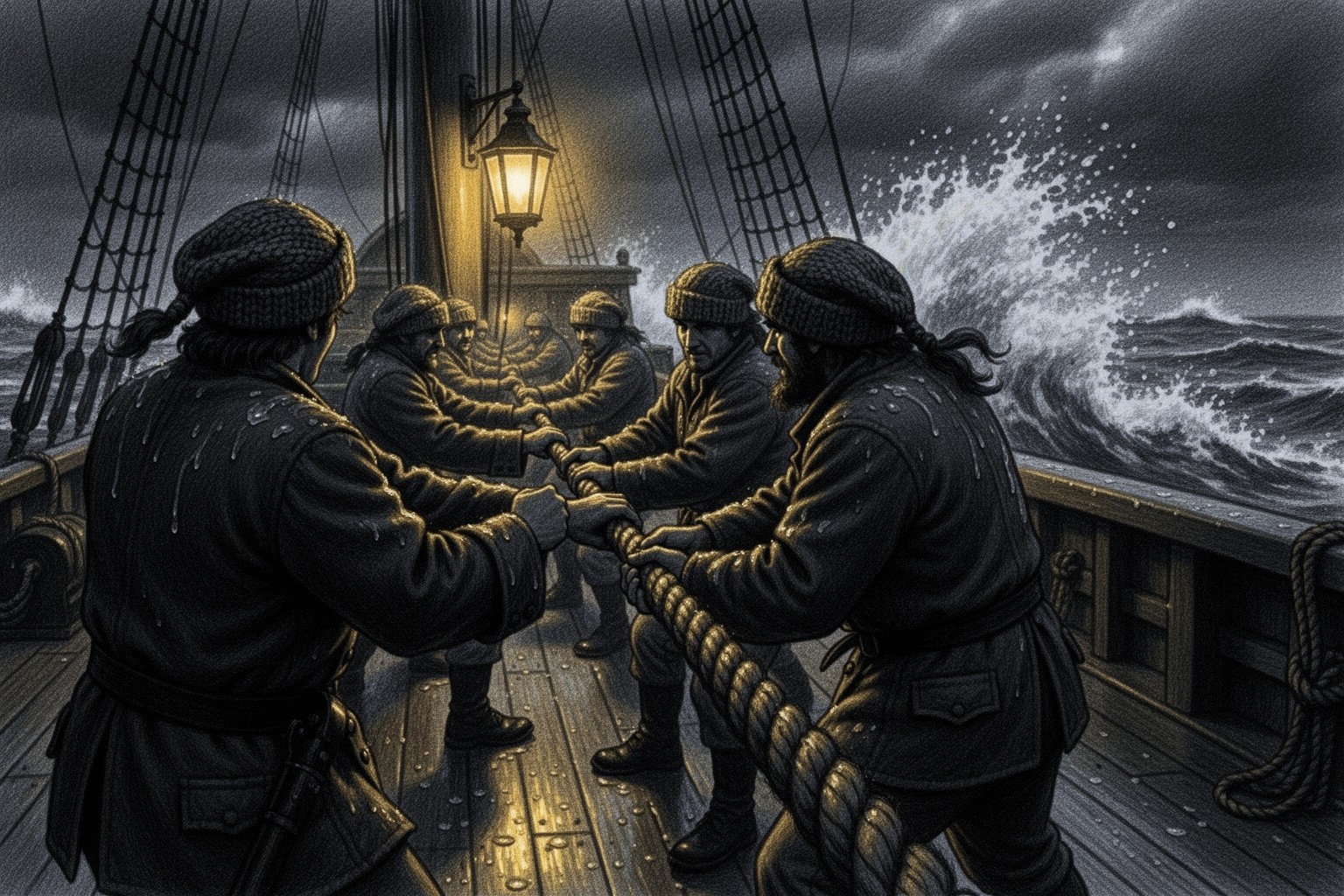
On 22 October 1707, by the calendar Britain then used, a Royal Navy fleet sailing home from the failed siege of Toulon ran onto the rocks of the Isles of Scilly, off the south-west tip of England. Four warships went down. Well over a thousand sailors drowned in a single night.
The flagship, HMS Association, struck the Outer Gilstone ledge and sank within minutes. Admiral Sir Cloudesley Shovell, one of the most celebrated commanders of his day, was among the dead. His body later washed ashore on St Mary's.
The fleet had spent days in thick, stormy weather. That evening its sailing masters compared their reckonings, agreed on a position, and believed they were in open water, safely clear of land.
They were not careless. Any competent navigator could find latitude from the sun, but nobody had a reliable way to measure longitude, how far east or west a ship had travelled.
Seven years later, Parliament passed the Longitude Act, offering up to £20,000 for a practical method. Much of that money eventually went to a Yorkshire carpenter who built clocks that kept time at sea.
Checked against: Admiralty records and ship muster rolls; contemporary accounts of the Scilly naval disaster; naval histories of the War of the Spanish Succession; the text of the Longitude Act of 1714; histories of the Board of Longitude and maritime timekeeping
On October 22, 1934, FBI agents and local police shot Charles Arthur Floyd in a farm field near East Liverpool, Ohio. The newspapers called him Pretty Boy. The Bureau had called him Public Enemy Number One since John Dillinger died that July.
Floyd had been loose in the Ohio countryside for two days, after a gunfight with local police near Wellsville. That afternoon he walked up to a farmhouse and asked for food. The woman of the house fed him in her kitchen. Not long after, cars full of lawmen arrived. Floyd ran across the open ground toward the trees and did not reach them.
The manhunt rested on one crime. In June 1933, four lawmen and their prisoner died in a burst of gunfire outside Union Station in Kansas City. The Bureau named Floyd as one of the gunmen, and his face went up in post offices across the country.
Floyd denied the Kansas City killings until he died, and historians still argue over whether he was there at all.
His partner, Adam Richetti, captured in Ohio days before the shooting in the field, was convicted for the massacre and executed in Missouri in 1938.
Checked against: FBI historical case files, contemporary newspaper coverage, published biographies of Floyd, Missouri court records
On October 22, 1844, tens of thousands of Americans waited for Jesus Christ to return and end the world. The date grew out of the work of William Miller, a Baptist farmer and preacher from upstate New York, who had spent years with the prophecies in the Book of Daniel and concluded the Second Coming was close.
Miller first pointed loosely to 1843 or 1844. At a camp meeting in New Hampshire that August, another preacher, Samuel Snow, fixed the exact day: October 22. Believers settled debts, closed shops and left crops standing in the fields. When the day came, many gathered in homes and meeting halls to wait.
Midnight passed. Nothing happened. In western New York, a farmer named Hiram Edson later recalled that he and his companions wept until dawn. Newspapers mocked them, and the night became known as the Great Disappointment.
But the next morning, crossing a cornfield, Edson decided the date had been right and the event misread: Christ had entered the inner room of a heavenly sanctuary rather than returning to earth.
That idea held a remnant together. In 1863 they organised as the Seventh-day Adventist Church, which now counts its members in the millions.
Checked against: Hiram Edson's manuscript recollections held in Adventist archives; contemporary 1844 newspaper coverage; Millerite periodicals; academic histories of Millerism and early Adventism
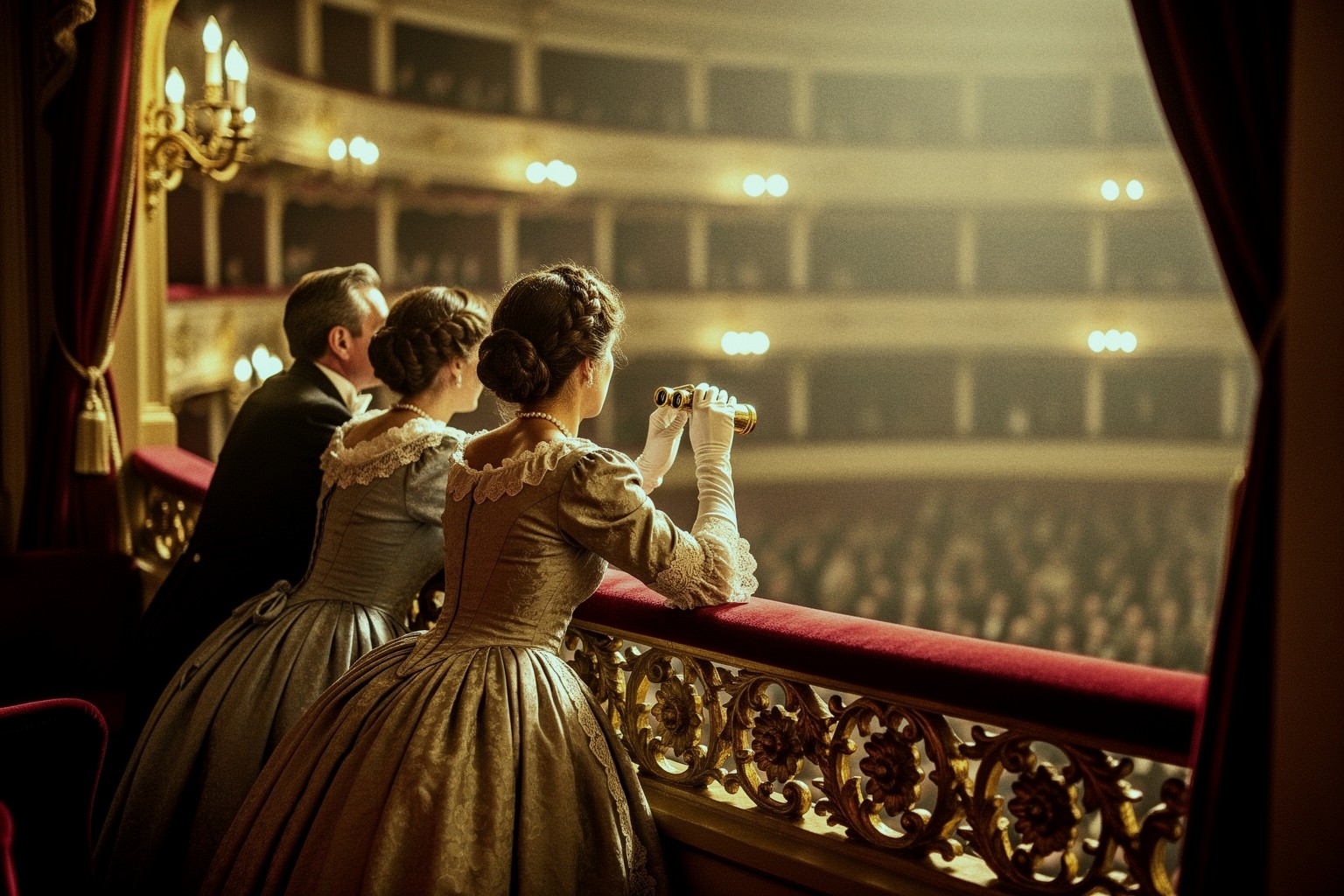
On October 22, 1883, the Metropolitan Opera House opened at Broadway and 39th Street in New York. The first performance was Gounod's Faust, sung in Italian.
The building existed because of a seating problem. New York's established opera house, the Academy of Music on 14th Street, had a limited number of private boxes, and the old families who held them were not giving them up. Newer fortunes, among them the Vanderbilts and the Morgans, had money but no box. In 1880 they formed a company and commissioned their own house, with tiers of boxes stacked around the auditorium.
Opening night was as much about who sat where as about what was sung. The owners filled their boxes in evening dress, and the press reported on the audience in detail. The building drew its share of complaints: critics mocked the plain yellow-brick exterior, and some seats in the upper reaches had poor sightlines to the stage.
The display of wealth did not make the opera pay: the first season lost so much money that the manager walked away, and the owners turned to cheaper German seasons, with works sung in German.
The rival held on only briefly. In 1886 the Academy of Music gave up opera, and the house built by the families it had shut out became the city's opera.
Checked against: Metropolitan Opera archives and published company histories; New York newspaper reviews from October 1883; histories of the New York Academy of Music and of Gilded Age New York society.
On October 22, 1883, the Metropolitan Opera opened its doors on Broadway at 39th Street. The first performance was Gounod's Faust, sung in Italian, which is how New York society preferred its opera at the time.
The building existed because of a seating problem. New York's established opera house, the Academy of Music on 14th Street, had a limited number of private boxes, and the old families who held them were not letting go. The city's newer fortunes, the Vanderbilts among them, made their money in railroads and finance. They could buy almost anything, but they could not buy a box on 14th Street. So they pooled their money and built a house of their own, designed around tiers of private boxes where they could be seen.
Opening night was as much about the audience as the stage. The boxes glittered with jewellery and new money, and the ring of them would later be nicknamed the Diamond Horseshoe. Critics noticed that many of the cheaper seats had poor views of the stage. The first season lost heavily.
The snub backfired on the people who delivered it: within a few years the Academy of Music gave up staging opera altogether.
The families once kept out of the boxes now owned the city's opera, and the old guard had to ask them for seats.
Checked against: Metropolitan Opera archives and published company histories; New York newspaper coverage from October 1883; histories of Gilded Age New York society and the Academy of Music.
At 12:34 a.m. on October 22, 1975, Carlton Fisk hit a high fly down the left-field line at Fenway Park and waved his arms at it to stay fair. It struck the foul pole. Boston had won Game 6 of the World Series 7-6 in the twelfth inning and forced a seventh game against the Cincinnati Reds.
Rain had already delayed the Series three days, so nobody waited long. Game 7 started that same evening, in the same park. Boston scored three runs in the third inning off Don Gullett and still led 3-0 going into the sixth.
Then Tony Pérez hit a two-run homer off a slow, looping pitch from Bill Lee. Pete Rose singled in the tying run in the seventh. In the ninth, with Ken Griffey on third, Joe Morgan blooped a soft single into shallow center field, and Griffey scored.
The swing that would be replayed for decades and the defeat that made it beside the point both happened on the same calendar day.
Carl Yastrzemski flied out to end it. Cincinnati had its first championship since 1940. Boston's wait, dating to 1918, ran another 29 years.
Checked against: Official box scores and play-by-play records, contemporary newspaper game reports, team and league historical records, broadcast archives
The first parachute worked, and that was the problem
Illustration generated by AI for The Day Vault.
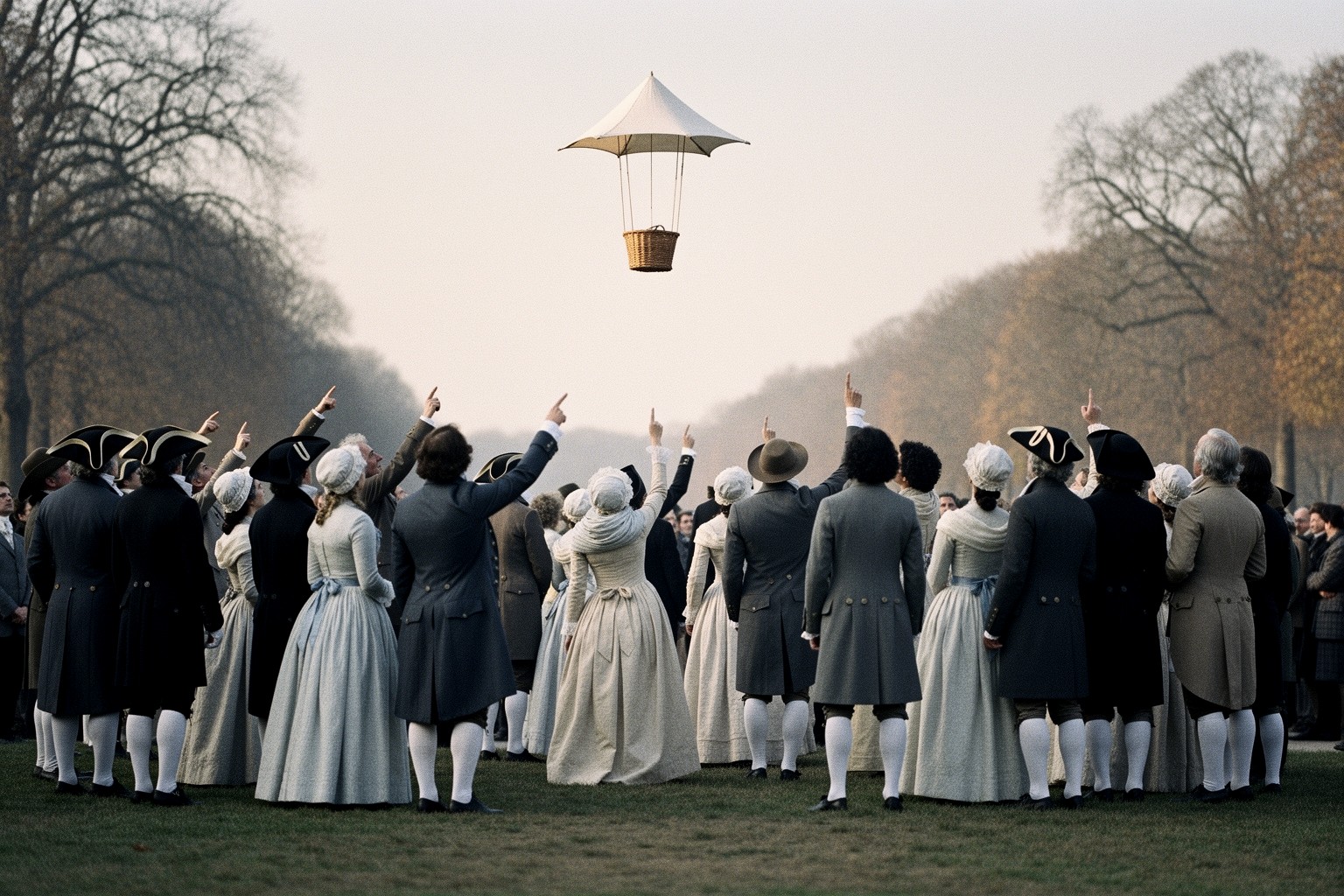
On 22 October 1797, André-Jacques Garnerin rose over the Parc Monceau in Paris beneath a hydrogen balloon. He was not riding in its gondola. He sat in a small basket hung below a folded canopy of white canvas.
At about 3,000 feet he cut the cord. The balloon shot upward and away. The canopy opened, and Garnerin became the first person known to drop from a great height under a frameless parachute. He had no harness and no backup, only a basket on a set of lines.
The crowd below watched the canvas fill and slow him. For a few seconds the whole idea looked settled: cloth could catch air, and air could carry a man safely down.
Then the basket began to swing, wider and wider, as trapped air spilled out one edge of the canopy and then the other, pitching him from side to side all the way down.
He landed shaken but unhurt. Afterwards, the astronomer Jérôme Lalande suggested cutting a small hole in the crown so the air could escape steadily through the top instead of tipping the canopy. The vent steadied later parachutes, and many canopies still carry a hole at the top.
Checked against: Histories of ballooning and aviation; biographies of Garnerin; contemporary French press accounts; histories of the parachute.
On October 22, 1964, the Swedish Academy awarded the Nobel Prize in Literature to Jean-Paul Sartre. Within hours, he turned it down.
The refusal was not a sudden gesture. A week earlier, Sartre had heard he was a likely choice and wrote to the Academy asking to be left off. The Academy chose him anyway. Reporters gathered in Paris. His public explanation was that a writer should refuse to let himself be turned into an institution. He had applied the same rule before, declining the Legion of Honour after the war.
He did not travel to Stockholm. He did not accept the medal, the diploma or the prize money. As far as Sartre was concerned, the matter was closed.
The Academy saw it differently. Its position was that the prize is awarded, not offered, and that a laureate's refusal does not undo the decision.
So Sartre stands in the official record as the 1964 laureate in literature, between the names before and after him. He is filed as a winner of the honour he spent his life refusing, with no medal and no money, and no way to take his name back.
Checked against: Nobel Foundation and Swedish Academy records; French and Swedish newspaper reports from October 1964; published biographies of Sartre