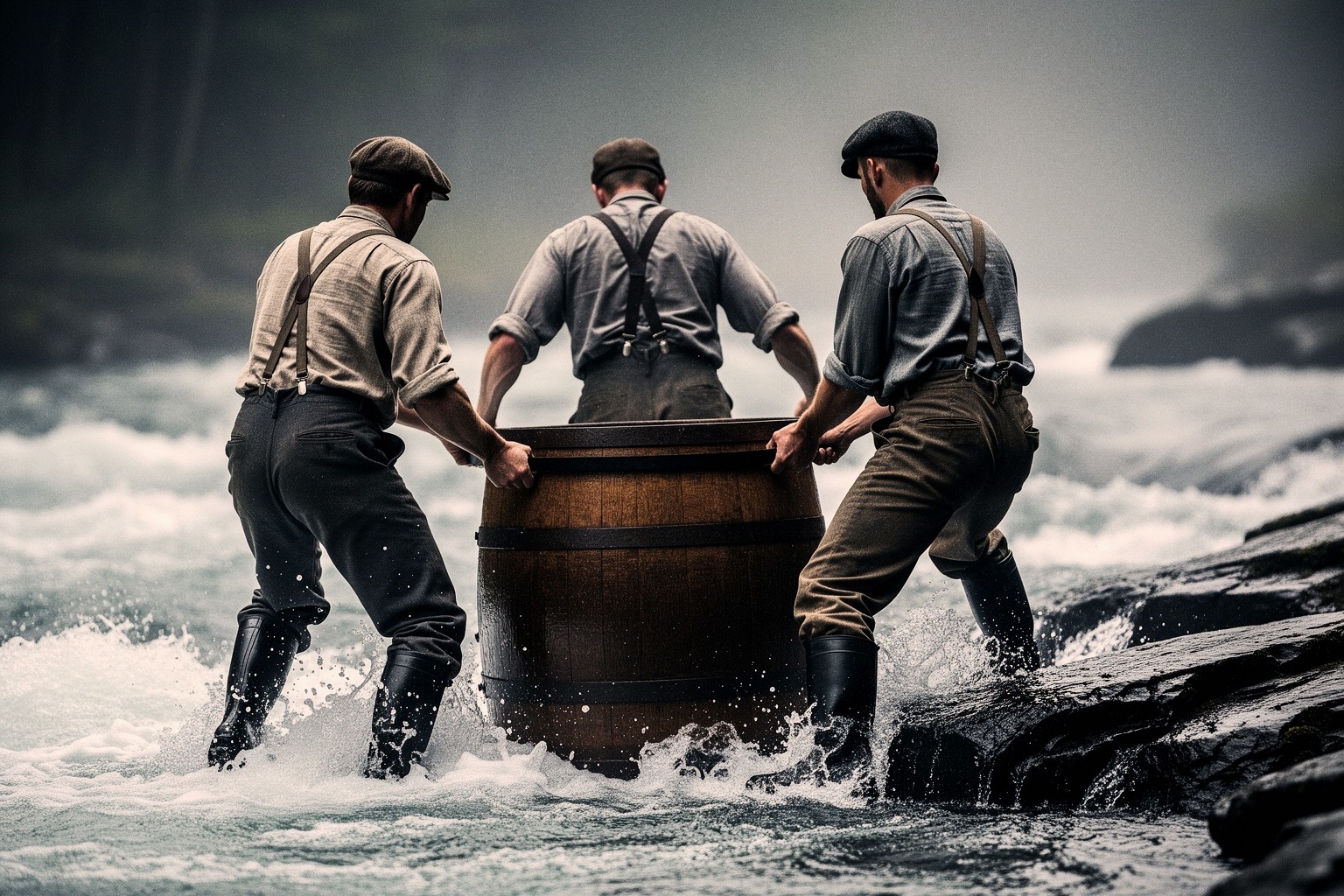
On October 24, 1901, Annie Edson Taylor climbed into a wooden barrel above Niagara Falls and was pushed out into the current. It was her 63rd birthday. She told reporters she was in her forties.
Taylor was a widowed schoolteacher with no savings and no pension. Her plan was simple: survive the drop, then tour the country telling people how. The barrel was oak, bound with iron and padded with cushions, with a weight in the bottom to keep her upright.
A boat towed her into the river on the Canadian side and cut her loose. The current carried her over the Horseshoe Falls, and men downstream fished the barrel out of the water. When they opened it, she climbed out dazed, bleeding from a cut on her head, and alive. She was the first person to go over the falls in a barrel and survive.
Then her manager vanished, and he took the barrel with him.
Taylor spent much of what she had earned on private detectives trying to get it back. She ended up selling souvenir photographs of herself to tourists near the falls, and died poor in 1921.
Checked against: Contemporary newspaper reports from Buffalo and Niagara Falls; Niagara Falls local history archives; biographies and histories of Niagara daredevils
Thirty years of war ended. Two kingdoms kept going.
Illustration generated by AI for The Day Vault.
On 24 October 1648, envoys signed treaties at Münster and Osnabrück that ended the Thirty Years' War. It had begun in 1618 with a Protestant revolt in Bohemia. Fought mostly on German soil, it drew in the Holy Roman Emperor, Sweden, France, Denmark and dozens of German princes.
Making peace took two towns. Catholic powers negotiated in Münster, Protestant Sweden in Osnabrück, about 50 kilometres away. Couriers rode the road between them for years. The congress had opened in the mid-1640s, and delegates fought over titles, seating and who entered a room first before they fought over land.
The settlement gave Sweden and France new territory and let German princes make their own alliances. It extended legal protection to Calvinists alongside Lutherans and Catholics, and confirmed that Switzerland stood outside the Empire. Across a ruined countryside, the armies began to go home.
But two of the largest Catholic powers at the talks, France and Spain, never made peace with each other.
They fought on for eleven more years, until the Treaty of the Pyrenees in 1659 handed France a strip of Spanish land along the mountains and a Spanish princess as a bride for its young king.
Checked against: Scholarly histories of the Thirty Years' War; published texts of the treaties of Münster and Osnabrück; academic studies of the Westphalian peace congress and the Treaty of the Pyrenees.
On October 24, 1975, about 90 percent of Iceland's women stopped working. They walked out of offices, fish plants, shops and schools. At home they refused to cook, clean or mind the children.
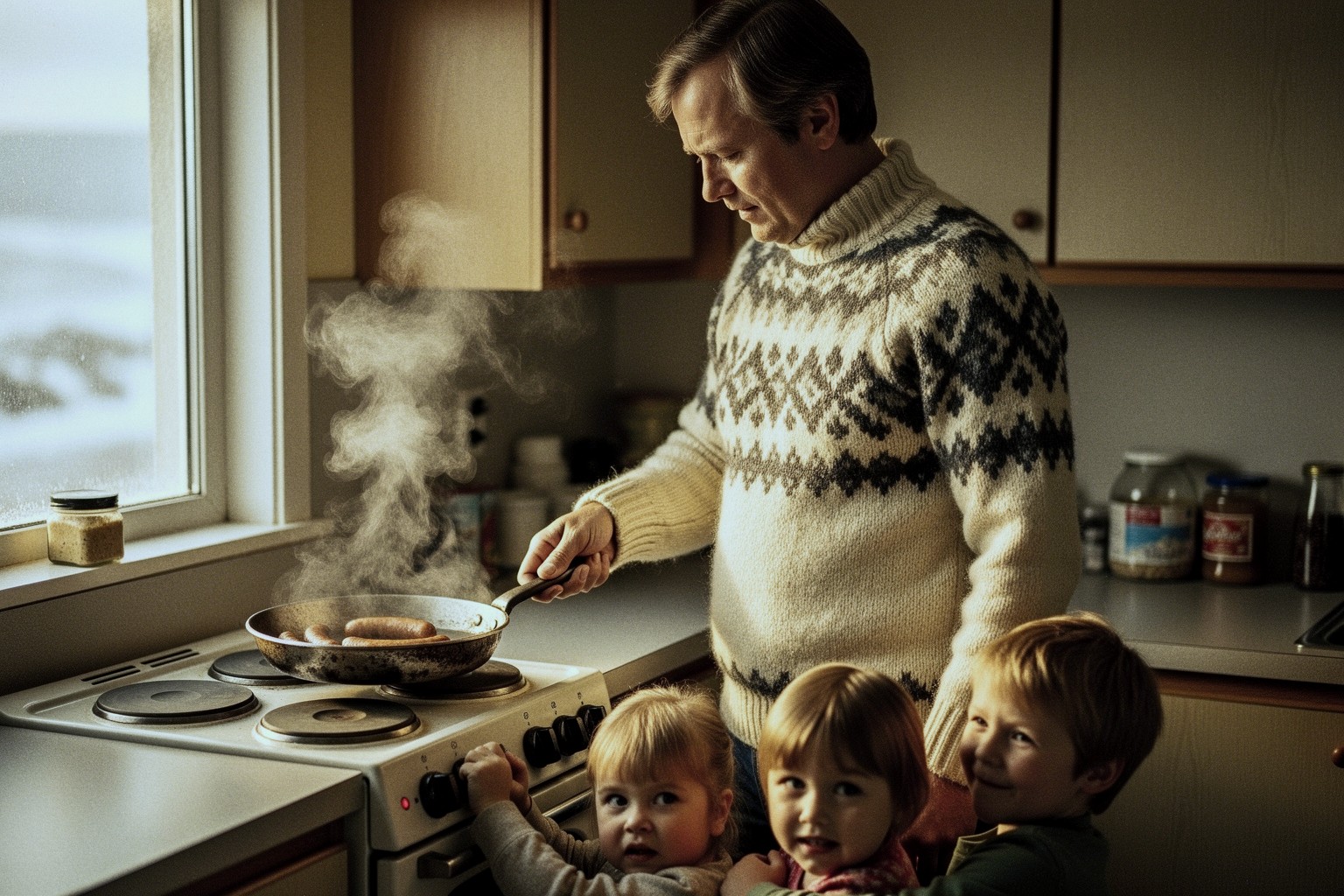
Around 25,000 of them gathered in central Reykjavík, in a country of roughly 220,000 people. Banks, factories and schools shut or limped along. Fathers brought children to work. Shops sold out of sausages, the easiest meal for men who rarely cooked.
The organisers chose their words with care. They called it a day off, not a strike, so employers could not fire anyone for taking part, and so women wary of radical politics would feel able to join. The gentler label pulled in farm wives and pensioners alongside activists.
It lasted one day, and it changed no law by itself.
The next year Iceland's parliament passed an act guaranteeing equal status for women and men. In 1980 the country elected Vigdís Finnbogadóttir, a divorced single mother, as president. She was the first woman in the world chosen as head of state by a national popular vote.
Checked against: Icelandic national history archives, contemporary Nordic and international press reports, Women's History Archives of Iceland, academic histories of the Nordic women's movement
The army ran to a river. A year later it attacked from there.
Illustration generated by AI for The Day Vault.
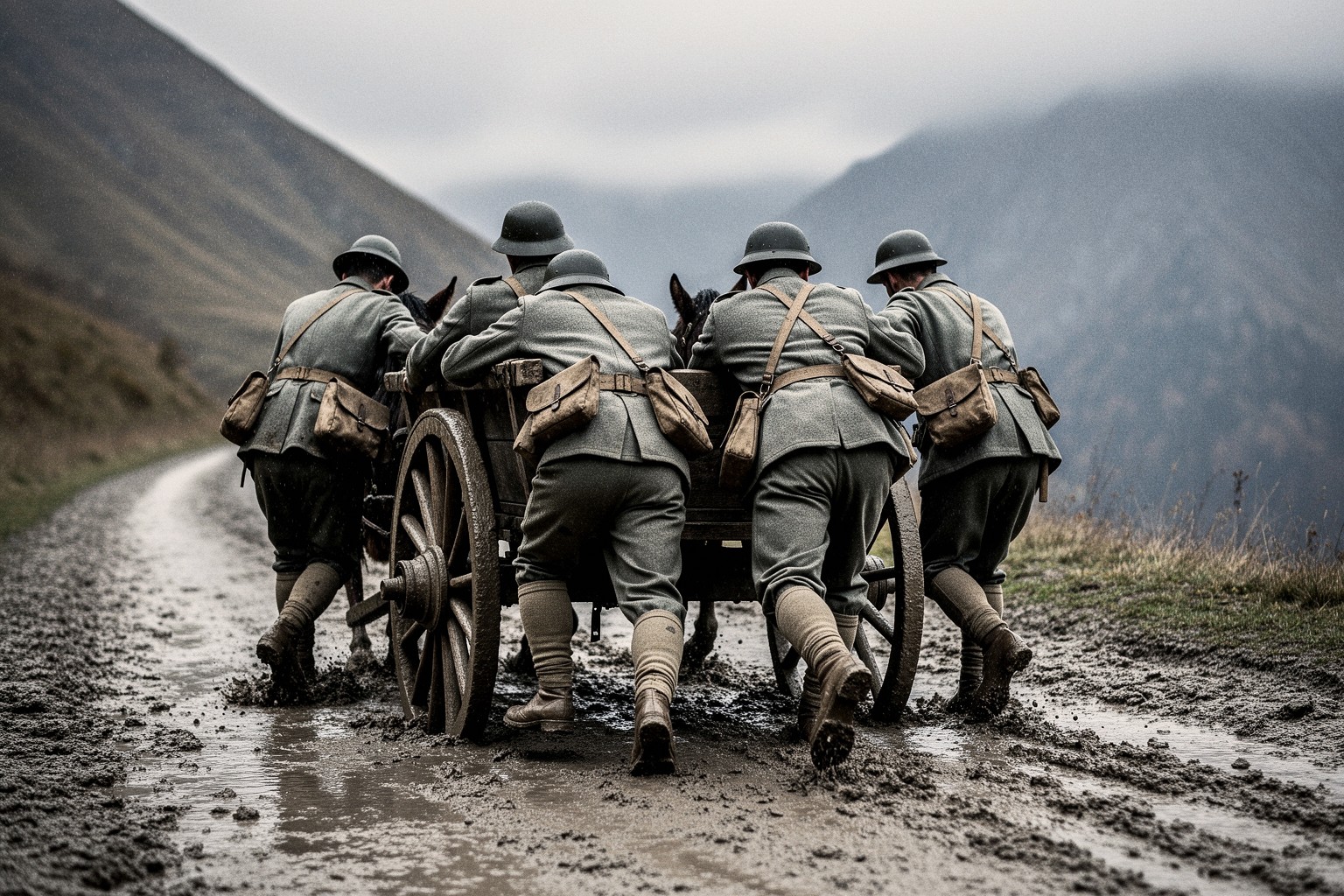
On October 24, 1917, German and Austro-Hungarian troops broke through the Italian line near the town of Caporetto, in the mountains of what is now Slovenia. The attack opened before dawn with gas shells fired into the valley of the Isonzo.
Small assault groups then pushed along the valley floors instead of storming the heights. They got behind Italian positions before the defenders understood what was happening. A young German lieutenant named Erwin Rommel took Monte Matajur with a few companies of mountain troops.
Within weeks the Italian army had fallen back more than a hundred kilometres to the Piave river. More than a quarter of a million men were taken prisoner, and many more walked away from their units. The commander, Luigi Cadorna, publicly blamed his own soldiers for cowardice. He was replaced in November.
The Piave line held. On October 24, 1918, a year to the day later, Italy attacked from the same river it had been chased to.
That offensive, named for the town of Vittorio Veneto, broke the Austro-Hungarian army. Austria-Hungary signed an armistice on November 3, and the guns on the Italian front stopped the next day.
Checked against: Official Italian and Austrian general staff histories of the 1917-18 campaigns; standard academic histories of the Italian front in the First World War; published memoirs of officers who fought at Caporetto
Chicago's deadliest man was undone by his tax returns
Illustration generated by AI for The Day Vault.
On October 24, 1931, a federal judge in Chicago sentenced Al Capone to eleven years in prison. He was also fined $50,000 and ordered to pay court costs.
The charge was income tax evasion. Treasury agents had spent years rebuilding his income from bank deposits, seized ledgers and the spending of a man who claimed no fixed earnings. He had filed no returns for the years in question, and the government said he owed tax on hundreds of thousands of dollars.
On the first morning of the trial, Judge James Wilkerson swapped Capone's jury for one from another courtroom. The original panel was believed to have been tampered with. The new jurors deliberated for about nine hours and found him guilty on five counts.
The most notorious gangster in America, tied to years of bootlegging wars and bodies in the street, was never convicted of a single killing.
He went to the federal penitentiary in Atlanta, then to Alcatraz, and was released in 1939 with his mind failing from untreated syphilis. He never ran Chicago again.
Checked against: Federal court records of the 1931 trial; Treasury and IRS historical accounts; contemporary Chicago newspaper coverage; standard biographies of the defendant
A king came to bless a cathedral that would never be finished
Illustration generated by AI for The Day Vault.
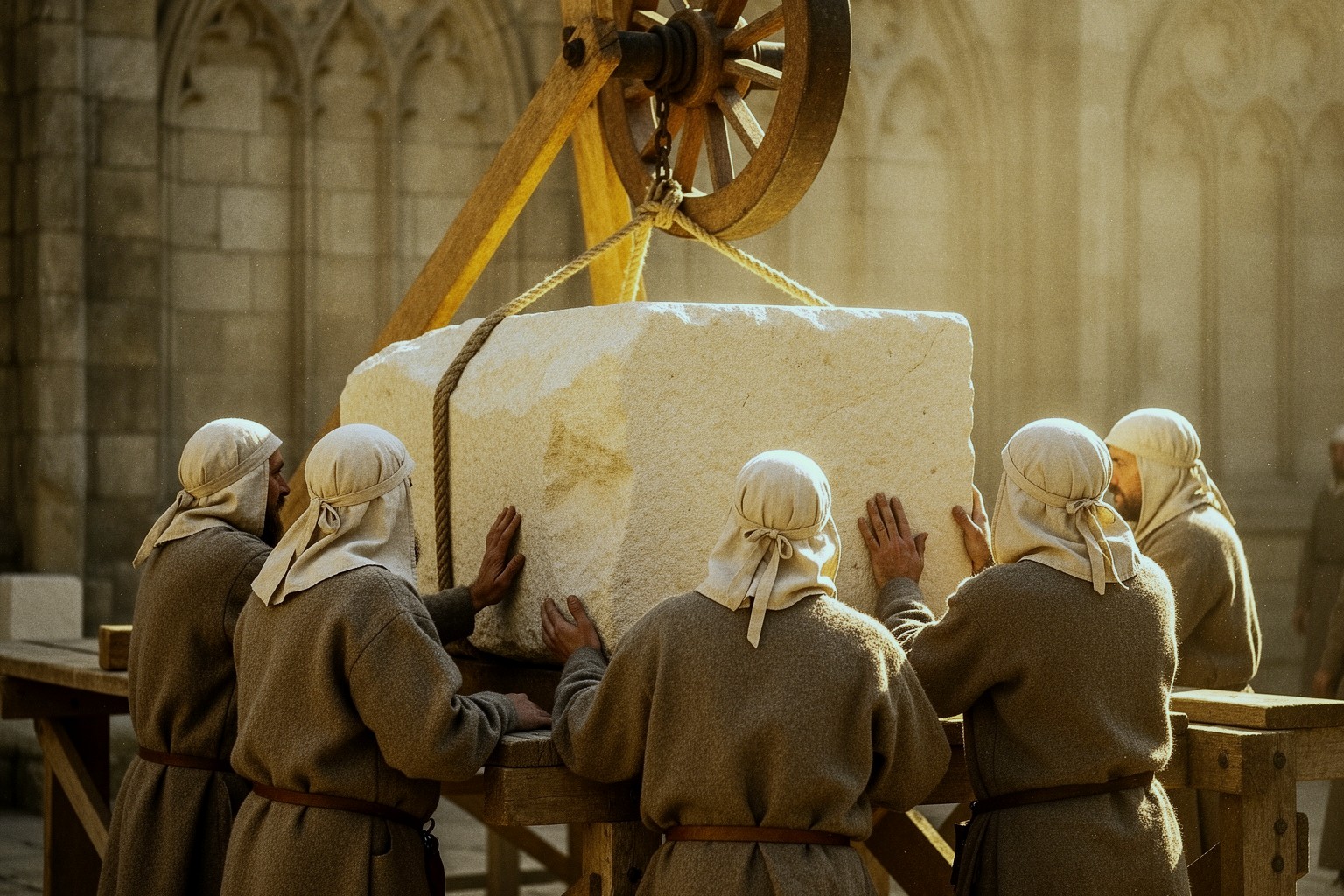
On October 24, 1260, the cathedral of Notre-Dame de Chartres was formally consecrated. King Louis IX of France came to watch bishops bless the building that still stands on its hill above the Eure valley.
It existed because of a fire. In June 1194, flames gutted the old church and much of the town. The cathedral's treasured relic, a tunic said to have been worn by the Virgin Mary, was feared lost. Days later it emerged from the crypt, where clergy had sheltered with it. Chartres took that as a sign that Mary wanted a new and grander church.
The town built one fast. Masons kept the surviving western front and raised a new nave, choir and transepts behind it. The main structure went up in roughly a quarter of a century. Donors paid for windows, and much of that stained glass is still in place, more of its original medieval glass than almost any cathedral in Europe.
The building Louis IX saw blessed was not finished, and it never would be.
Its towers stayed uneven. In 1506 lightning destroyed the wooden spire on the north tower, and a stone spire in the ornate late-Gothic style replaced it by 1513. The west front still carries two mismatched spires, built three and a half centuries apart.
Checked against: Cathedral histories of Chartres; French royal chronicles of Louis IX's reign; the medieval Miracles of the Virgin of Chartres; UNESCO World Heritage documentation; architectural surveys of Gothic cathedrals
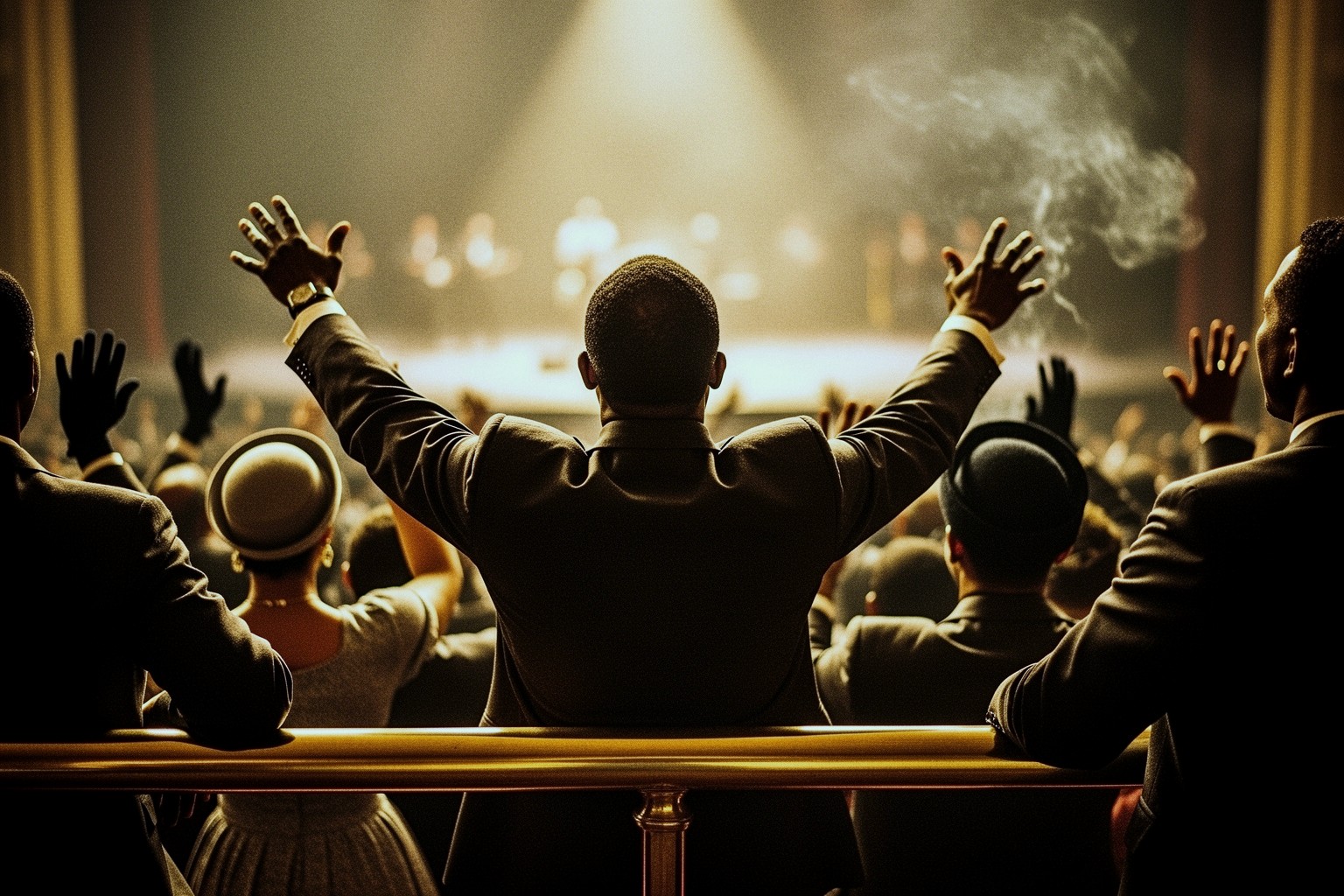
On October 24, 1962, James Brown and the Famous Flames played the Apollo Theater in Harlem while engineers taped the show. The finished record runs just over half an hour of hits, ballads and a long, slow "Lost Someone" that the crowd answers scream for scream.
It was the week the Cuban Missile Crisis peaked. Radios outside were full of blockade bulletins. Inside, the audience shouted at the stage so hard that on the tape they sound almost as loud as the horns.
Live albums were a gamble in rhythm and blues. Singles sold. Concert records, which repeated songs fans already owned, mostly did not.
Brown's label boss, Syd Nathan of King Records, refused to pay for the recording, so Brown paid for it himself.
Released in 1963, Live at the Apollo climbed to No. 2 on Billboard's album chart and stayed on the chart for more than a year. Nathan's label had the hit it had refused to fund.
Checked against: Billboard chart archives; biographies of James Brown; liner notes from the album's reissues; histories of King Records and the Apollo Theater
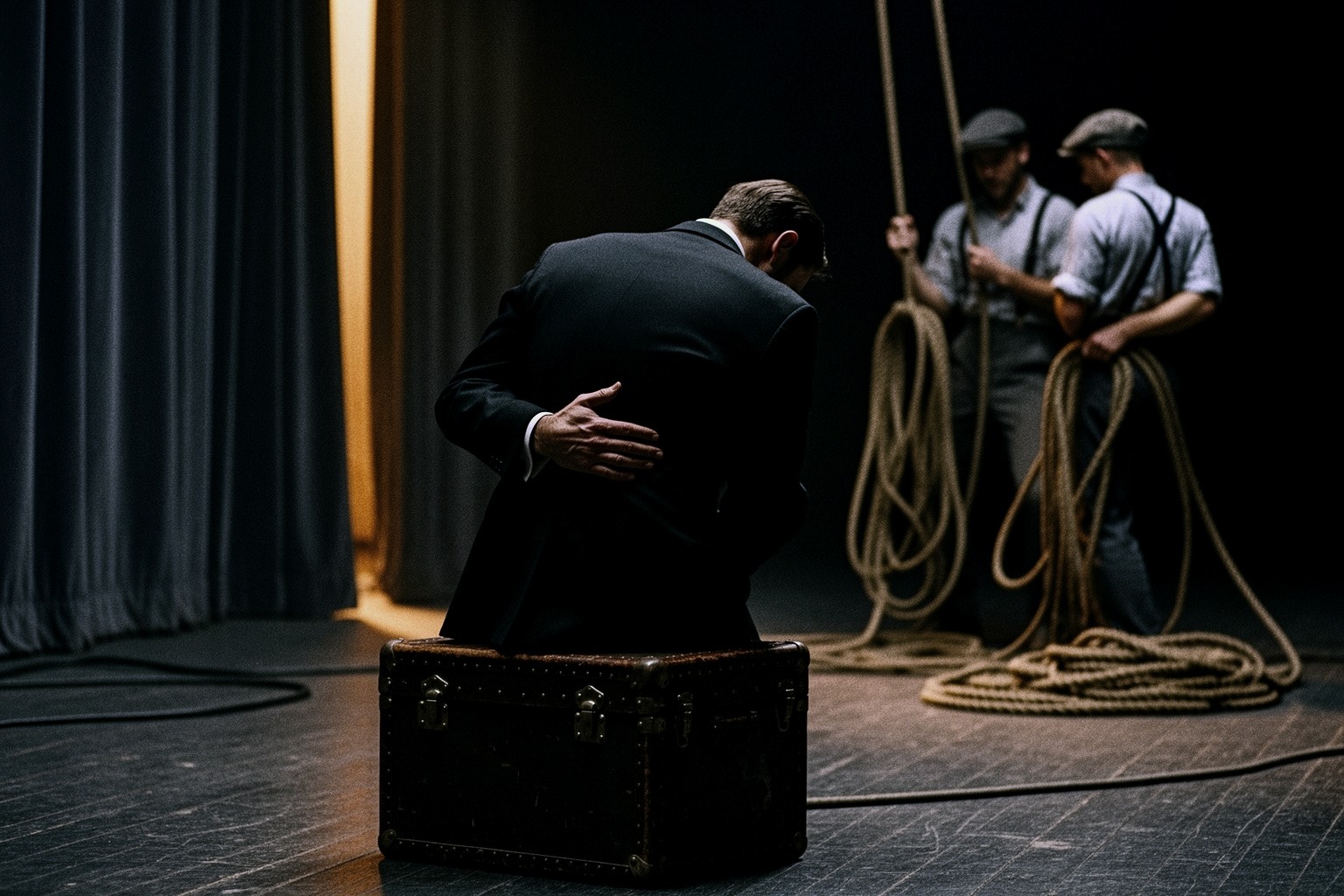
On October 24, 1926, Harry Houdini walked onstage at the Garrick Theatre in Detroit with a high fever and a pain in his stomach he had been ignoring for two days. He performed the full show anyway.
The trouble had started in Montreal. A student visiting his dressing room asked whether it was true he could take any punch to the stomach, then struck him several times before he had braced himself. Houdini kept touring. He was already working through a broken ankle from an earlier show in Albany.
After the Detroit performance he finally let a doctor examine him. At Grace Hospital, surgeons found that his appendix had burst. Peritonitis had set in, and in 1926 there were no antibiotics to stop it.
The punches took the blame in every retelling, but doctors have never agreed they caused anything. A blow to the stomach is not a recognised cause of appendicitis, and he may simply have been ill already.
He died on Halloween. For the next ten years his widow, Bess, held a séance every October 31, waiting for a coded message the two had agreed he would send if he could. After the 1936 attempt she stopped waiting.
Checked against: Contemporary newspaper reports from Detroit and Montreal, published Houdini biographies, hospital and death records, accounts of the annual Halloween séances
The first World Series won outside America ended on a bunt
Illustration generated by AI for The Day Vault.
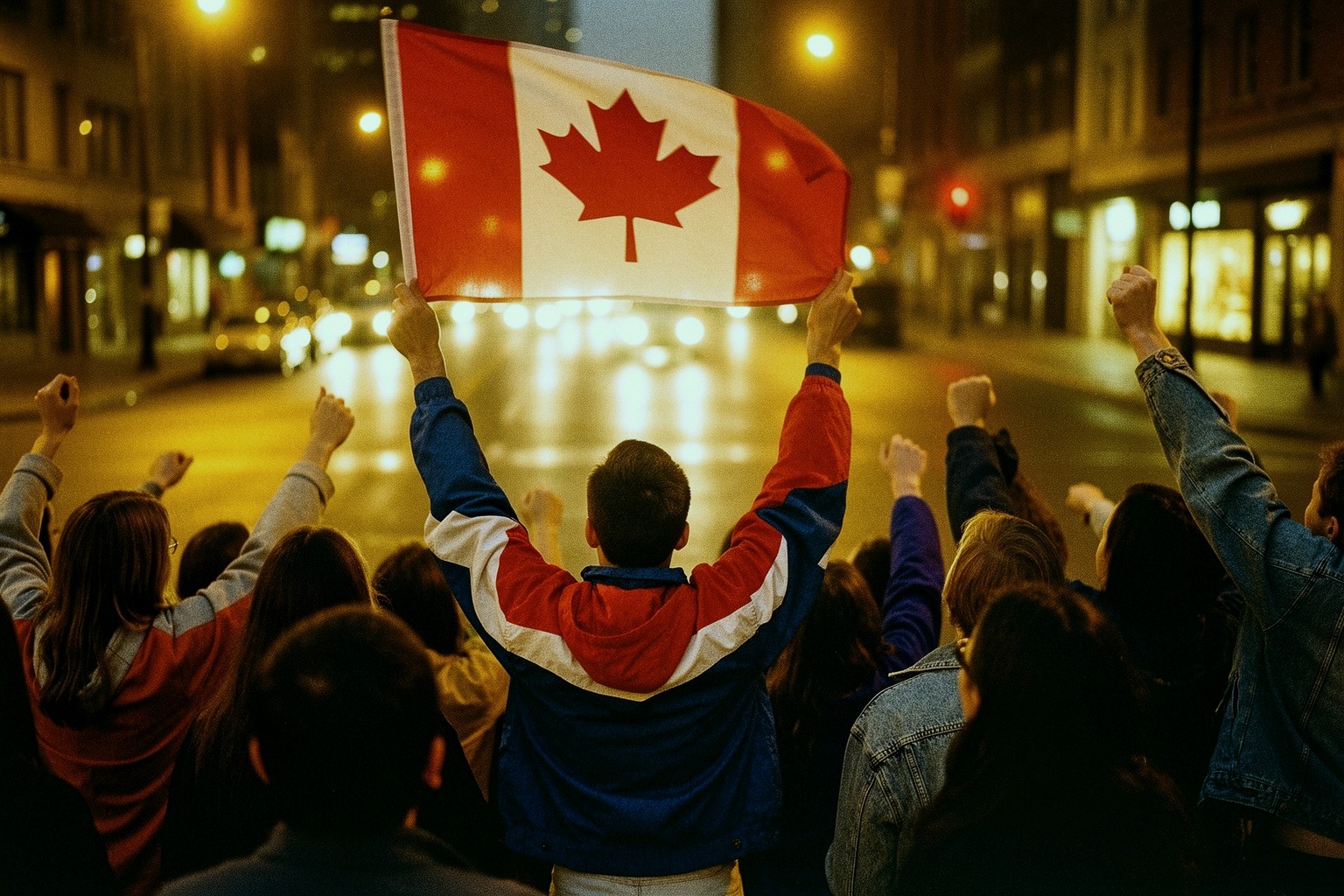
On October 24, 1992, the Toronto Blue Jays beat the Atlanta Braves 4-3 in eleven innings to win the World Series. It was the first time the championship had gone to a team based outside the United States.
They nearly didn't get it that night. Toronto led 2-1 in the bottom of the ninth, one out from the title, when Otis Nixon lined a two-out single that tied the game. The crowd in Atlanta, which had spent the evening doing the tomahawk chop, found its voice again.
In the top of the eleventh, Dave Winfield, at 41 one of the oldest players on the field, pulled a two-run double down the left-field line off Charlie Leibrandt. Atlanta scratched back one run in the bottom half and put the tying runner on third with two outs.
Then the batter who had tied the game in the ninth came up to save it again. Nixon, one of the fastest men in the league, tried a bunt; pitcher Mike Timlin fielded it and threw to Joe Carter at first, and the series was over.
Toronto celebrated a title it had watched on television from a thousand miles away. The Blue Jays won again in 1993, and no Canadian club has won the World Series since.
Checked against: Major League Baseball official box scores and postseason records; contemporary newspaper game reports from Toronto and Atlanta dailies; broadcast archives of the 1992 World Series
The camera smashed in the desert. The film did not.
Illustration generated by AI for The Day Vault.
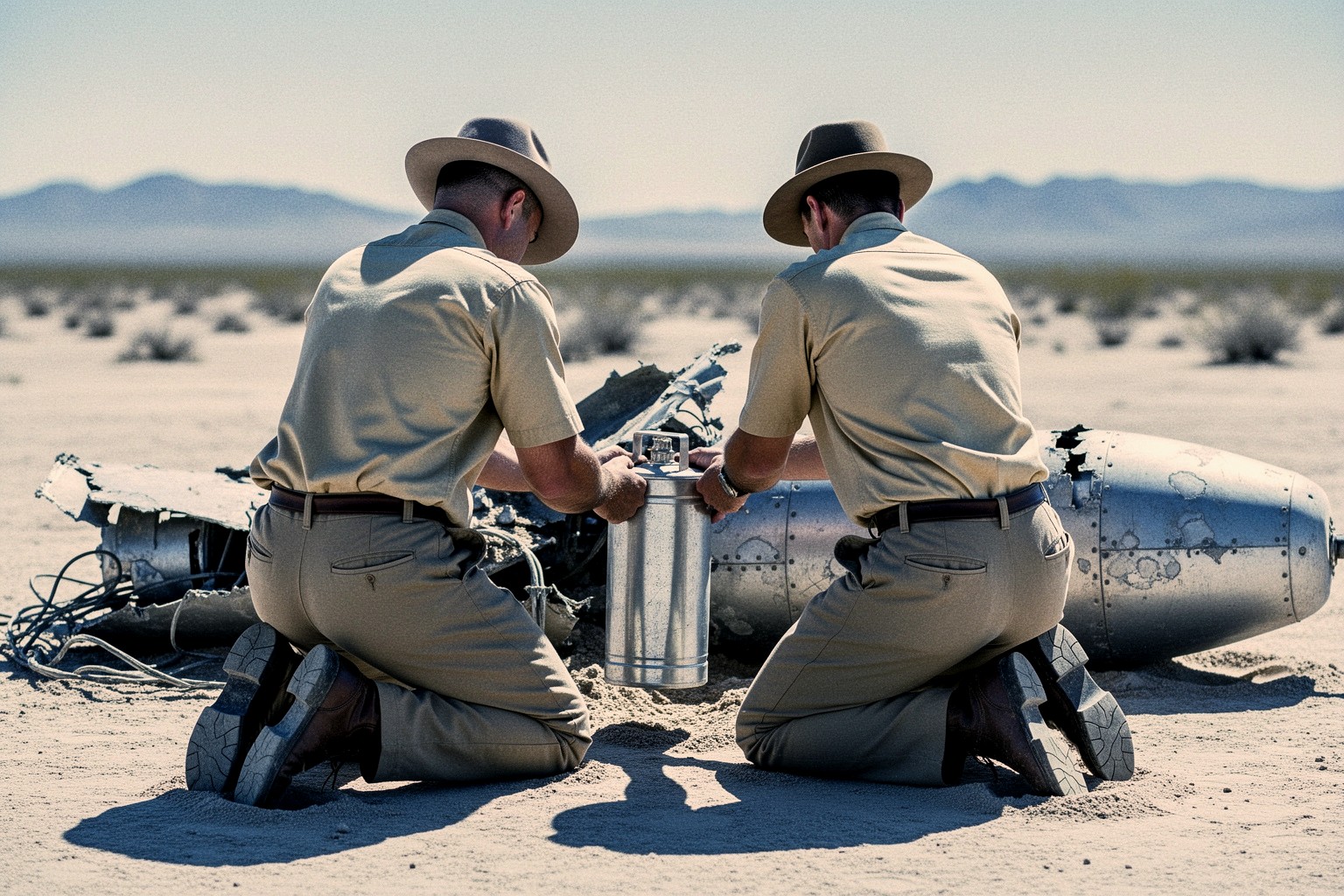
On October 24, 1946, a rocket launched from White Sands, New Mexico, carried a 35mm movie camera about 65 miles up and took the first photographs of Earth from space.
The camera clicked one frame every second and a half as the rocket climbed and fell. The pictures were grainy, black and white and tilted. They showed cloud, desert and the curve of the planet against black sky. Nobody had seen that view before.
The rocket had no parachute. It slammed into the sand and the camera was wrecked. The engineers had planned for this. They sealed the film inside a steel cassette, and when the recovery crew drove out and dug through the debris, the cassette was intact. Back at base the film was developed and the frames came up clear.
The rocket was a V-2, a captured German weapon built to drop explosives on London.
Its warhead bay, emptied of explosives, held the camera, and the first look home came from a machine designed for something else entirely.
Checked against: NASA and White Sands Missile Range histories; Johns Hopkins Applied Physics Laboratory archives; contemporary press reports; histories of the US V-2 programme
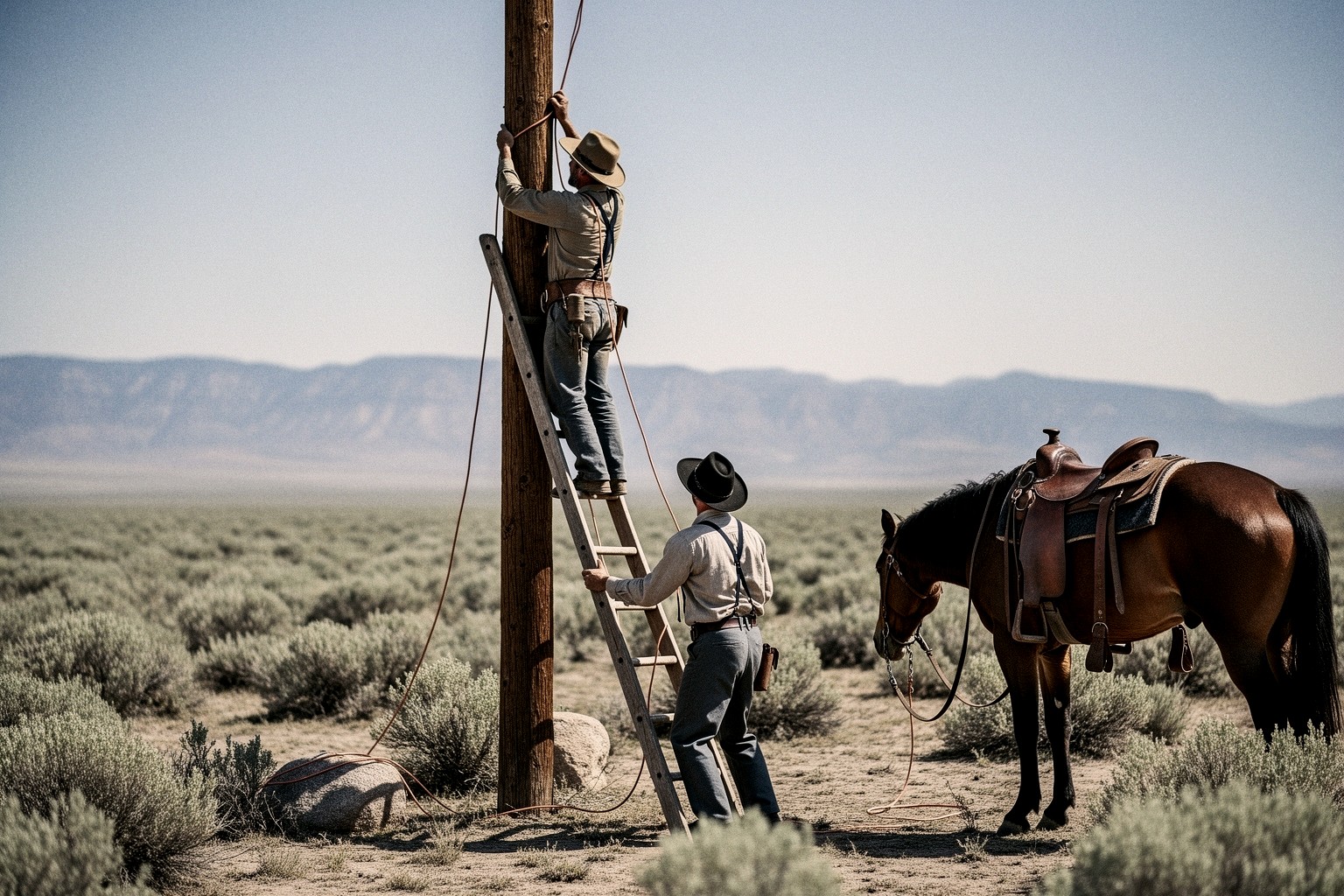
On October 24, 1861, two telegraph lines met in Salt Lake City. One had been strung east from California, the other west from Nebraska. For the first time, a message could cross the continent in minutes instead of days.
The day before, that job belonged to the Pony Express. Since April 1860, its riders had carried mail between St. Joseph, Missouri, and Sacramento, California, swapping horses at stations across the plains, the Rockies and the Great Basin. A letter took about ten days. It was the fastest route the country had.
The first transcontinental telegram went to President Lincoln from California's chief justice, at a moment when the Union badly wanted the Pacific coast to feel close. Two days later, the Pony Express announced it was finished.
The wire did not kill a thriving business. The Pony Express had lost money from its first ride, and its owners were already sinking under debt.
The last riders finished their runs in November, and the firm behind them collapsed soon after. A mail service that lasted barely a year and a half became one of the most retold stories of the American West.
Checked against: Histories of the Pony Express and the transcontinental telegraph; National Park Service materials on the Pony Express National Historic Trail; Western Union company histories; Smithsonian National Postal Museum collections