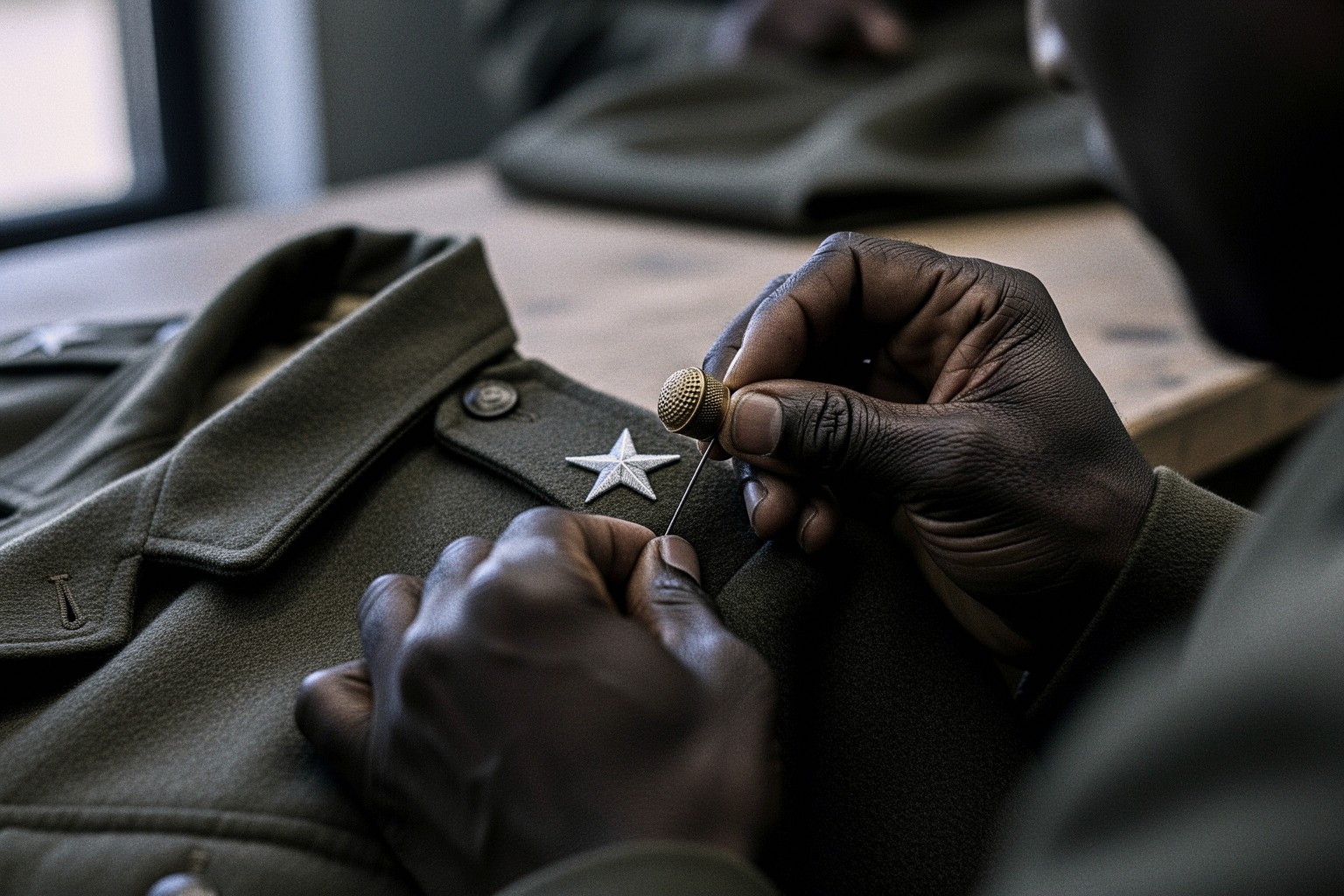
One star on the shoulder, eleven days before an election
Illustration generated by AI for The Day Vault.
On October 25, 1940, the War Department promoted Benjamin O. Davis Sr. to brigadier general. He was the first Black general in the history of the U.S. Army.
He had earned it slowly. He volunteered for the Spanish-American War, then enlisted as a private in the regular Army and won a commission from the ranks in 1901. For four decades the Army kept him at the edges: military attaché in Liberia, instructor at Tuskegee and Wilberforce. These were postings that kept a Black officer from commanding white troops.
The timing was not subtle. The promotion came eleven days before Franklin Roosevelt asked voters for a third term, and Black voters were a constituency both parties wanted.
And the new general's command was the 4th Cavalry Brigade, a unit of Black soldiers in an Army that still sorted its men by race.
Davis spent the war inspecting that separation and reporting on what it cost. He retired in July 1948. That same month, President Truman ordered the armed forces desegregated.
Checked against: U.S. Army Center of Military History biographies; 1940 newspaper archives; War Department records; National Archives holdings on Executive Order 9981
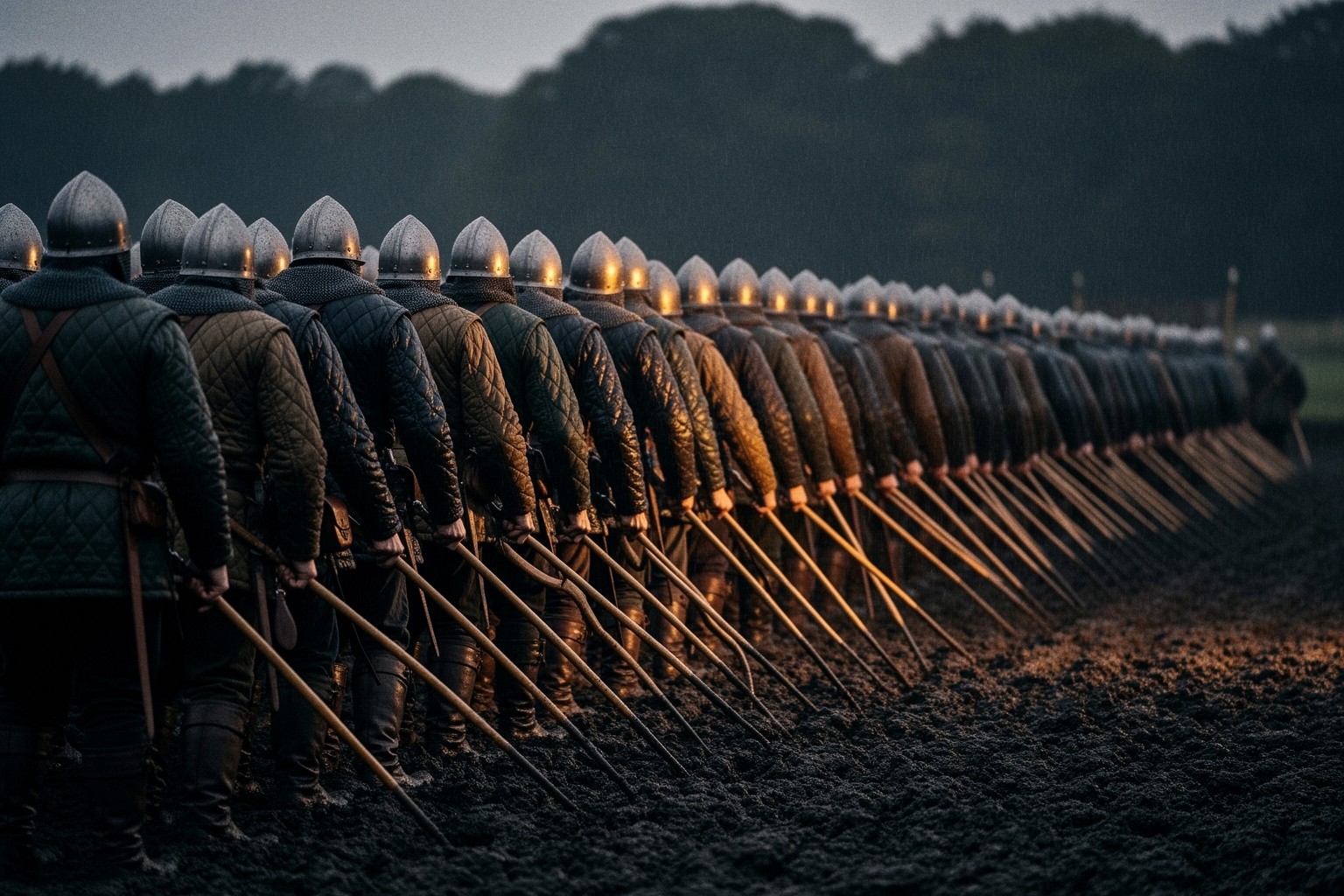
The mud won the battle. The crown came two months too late.
Illustration generated by AI for The Day Vault.
On October 25, 1415, the feast of Saints Crispin and Crispinian, an English army met a much larger French force near the village of Agincourt in northern France. The English were in poor shape. Weeks of siege at Harfleur and dysentery had thinned them, and they were trying to march to Calais and ship home.
The French blocked the road. Between two woods lay a freshly ploughed field, soaked by a night of rain. French men-at-arms advanced on foot in heavy armour, sinking into the mud and crowding together as the woods narrowed the ground. English archers shot into the crush from behind sharpened stakes, then ran in with axes, mallets and daggers against men too packed to swing a sword.
By afternoon a large share of the French nobility lay dead or taken. Charles, Duke of Orléans, was captured and spent the next twenty-five years as a prisoner in England.
Five years later the Treaty of Troyes named Henry V heir to the French throne. He died in August 1422, two months before the mad French king whose crown he was waiting for.
The double crown went to his baby son. By 1453 England had lost almost everything in France except Calais.
Checked against: Contemporary chronicles including the Gesta Henrici Quinti; modern academic histories of the Hundred Years War; the text of the Treaty of Troyes (1420)
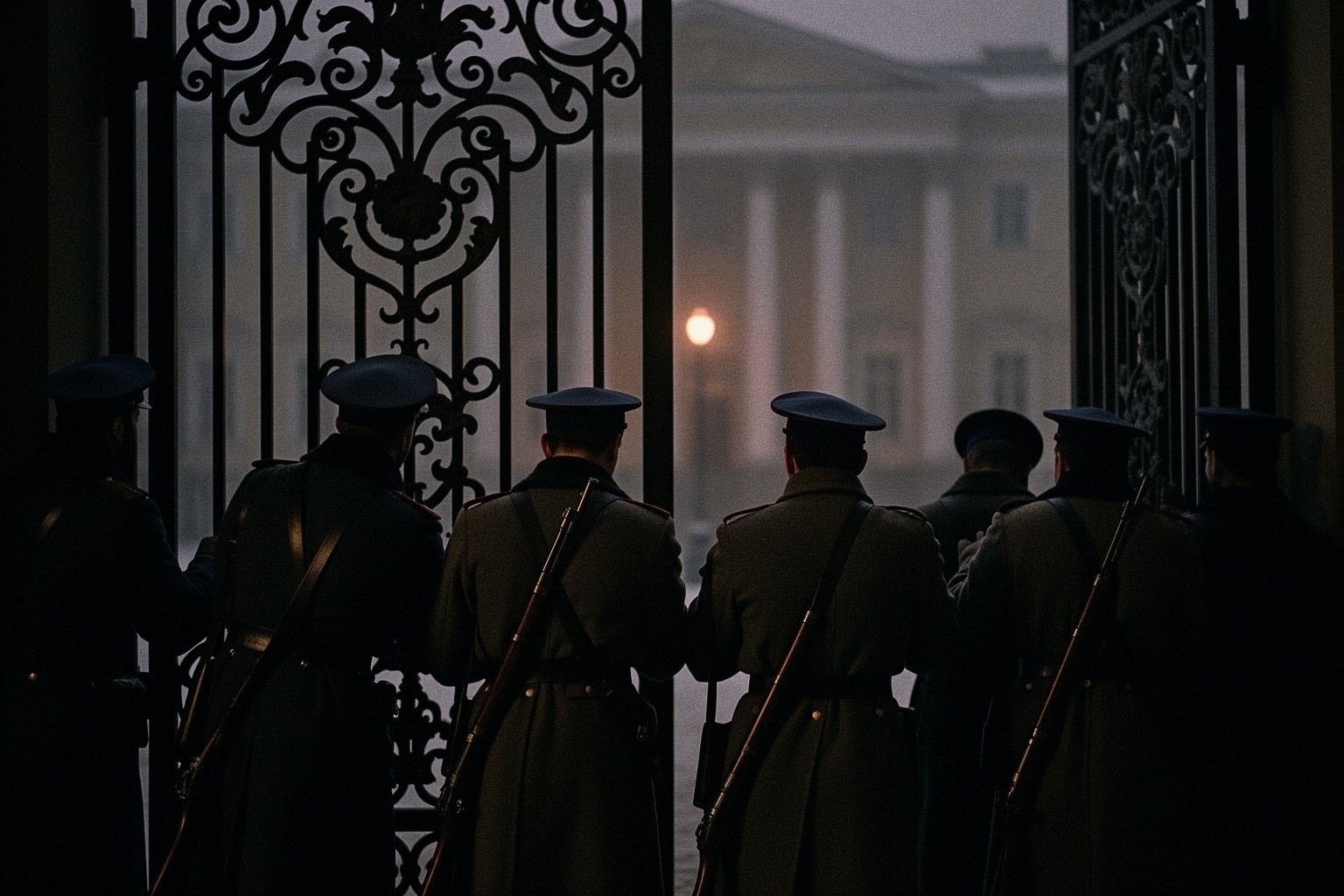
The palace fell quietly. The storming came three years later.
Illustration generated by AI for The Day Vault.
On the night of October 25, 1917, by the calendar Russia then used, Bolshevik forces took the Winter Palace in Petrograd. Inside sat the ministers of the Provisional Government, the men who had run Russia since the tsar abdicated in March.
Their protection had been thinning all day. Military cadets, Cossacks and a women's battalion made up the garrison, and many drifted away before dark. The prime minister, Alexander Kerensky, had already left the city by car to look for loyal troops. The cruiser Aurora fired a blank round from the Neva as a signal.
Red Guards, soldiers and sailors got in through side entrances and wandered the corridors in small groups. In the early hours of the 26th they found the ministers and arrested them. Casualties were few. Across much of the city, trams ran and theatres stayed open.
The storming most people picture, crowds charging the gates under searchlights, happened three years later, as a staged public spectacle on the palace square with thousands of performers.
Its images, and those of a 1927 film that restaged the night yet again, became the pictures of record, still reproduced as if someone had photographed the real thing.
Checked against: Eyewitness memoirs and contemporary press reports from Petrograd; standard academic histories of the Russian Revolution; theatre-history records of the 1920 mass spectacle; film-history scholarship on Soviet silent cinema.
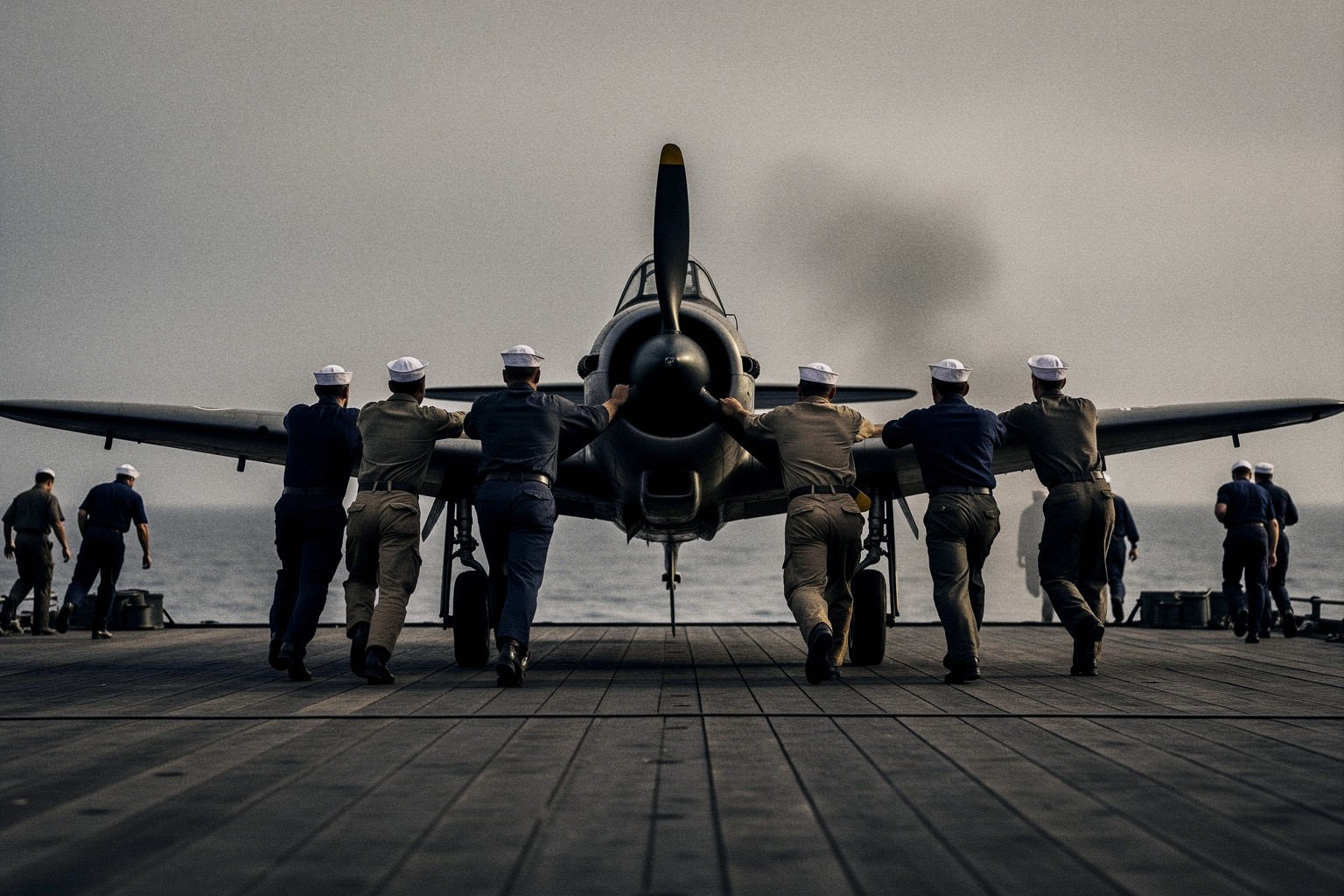
The small ships charged. The big ones turned around.
Illustration generated by AI for The Day Vault.
On October 25, 1944, a Japanese fleet built around four battleships came out of the morning haze off Samar, in the Philippines. Almost nothing stood between it and the American landings at Leyte Gulf.
What did stand there was a group of thirteen small ships called Taffy 3: six escort carriers, three destroyers and four destroyer escorts. The carriers were thin-skinned and slow, and their crews joked that CVE stood for Combustible, Vulnerable, Expendable. The main American battle fleet had gone north, chasing a decoy.
So the small ships attacked. Destroyers steamed straight at battleships to get within torpedo range. Pilots with no bombs or ammunition left kept diving on the Japanese ships anyway, just to force them to swerve. The destroyers Johnston and Hoel, the destroyer escort Samuel B. Roberts and the carrier Gambier Bay all went down.
Then, with the troop transports nearly within reach, Admiral Takeo Kurita broke off the attack and led his fleet away.
He believed he was facing a much larger force. The landings at Leyte went on, and the Japanese navy never again fought a fleet action on that scale.
Checked against: US Navy official histories and action reports; naval history reference works on the Battle of Leyte Gulf; academic histories of the Pacific War
He came in for a shave. The gunmen came in behind him.
Illustration generated by AI for The Day Vault.
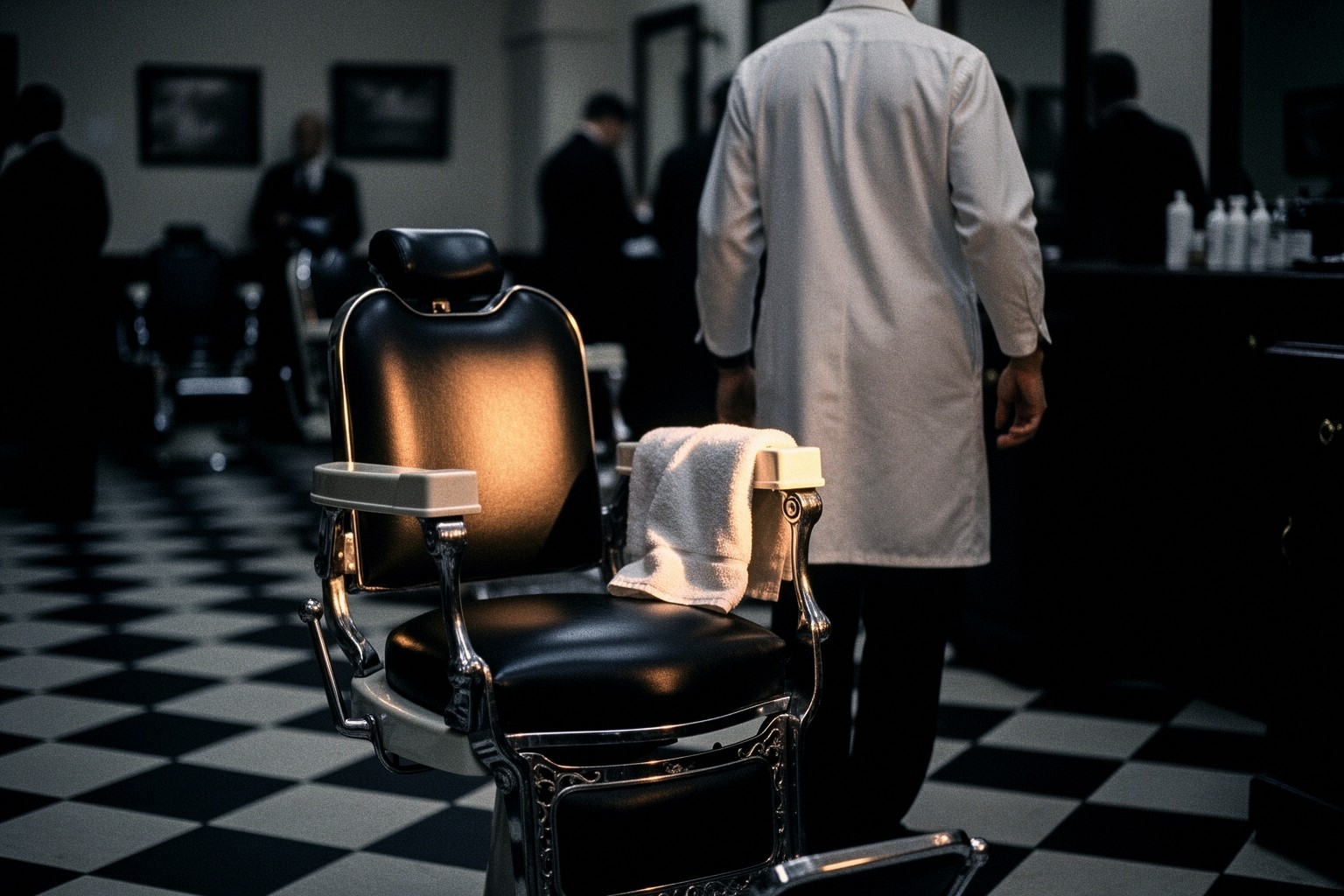
On the morning of October 25, 1957, Albert Anastasia settled into a chair in the barbershop of the Park Sheraton Hotel in Manhattan for a haircut and shave.
Two men walked in with their faces partly covered and opened fire. Anastasia, boss of the crime family later known as the Gambinos, lurched up and collapsed on the floor. The gunmen walked back out into Seventh Avenue. Nobody stopped them.
Newspapers had long called him the Lord High Executioner for his reputed role in Murder, Inc., the 1930s gang that killed on contract. Detectives questioned barbers, customers and rivals. No one was ever charged.
The killing was meant to settle a power struggle quietly. It did the opposite.
Three weeks later, the bosses met at a country house in Apalachin, New York, to sort out what came next. A state trooper noticed the line of expensive cars with out-of-state plates. Dozens of men fled into the woods, and the FBI, which had long played down the Mafia, could no longer pretend it did not exist.
Checked against: New York newspaper archives from October 1957; NYPD and FBI historical records; US Senate testimony on organised crime; standard histories of the American Mafia
Forty saints in one morning, and a hand held out to Canterbury
Illustration generated by AI for The Day Vault.
On 25 October 1970, Pope Paul VI canonised the Forty Martyrs of England and Wales in St Peter's Basilica in Rome. They were Catholic priests, monks and lay people executed between 1535 and 1679, across the reigns of Henry VIII to Charles II.
Their deaths were public and brutal. Cuthbert Mayne, a seminary priest, was executed at Launceston in 1577. Edmund Campion, a Jesuit, was hanged, drawn and quartered at Tyburn in 1581. Margaret Clitherow, a butcher's wife in York, was pressed to death under a heavy weight in 1586 for sheltering priests.
For English and Welsh Catholics, the ceremony ended a campaign for recognition that had run for generations. Pilgrims from both countries filled the basilica. The names read out that morning belonged to people their ancestors had hidden, buried and remembered quietly.
Yet the Pope did not use the moment to indict the state that killed them. Part of his homily reached instead toward the Church of England, looking ahead to a day when the two churches might be reunited.
In Rome that morning, forty deaths at English hands became an argument for talking to the English church.
Checked against: Vatican records of the 1970 canonisation and the papal homily; Catholic diocesan and martyrology histories of England and Wales; academic histories of the English Reformation and recusancy; contemporary British and Italian press reports.
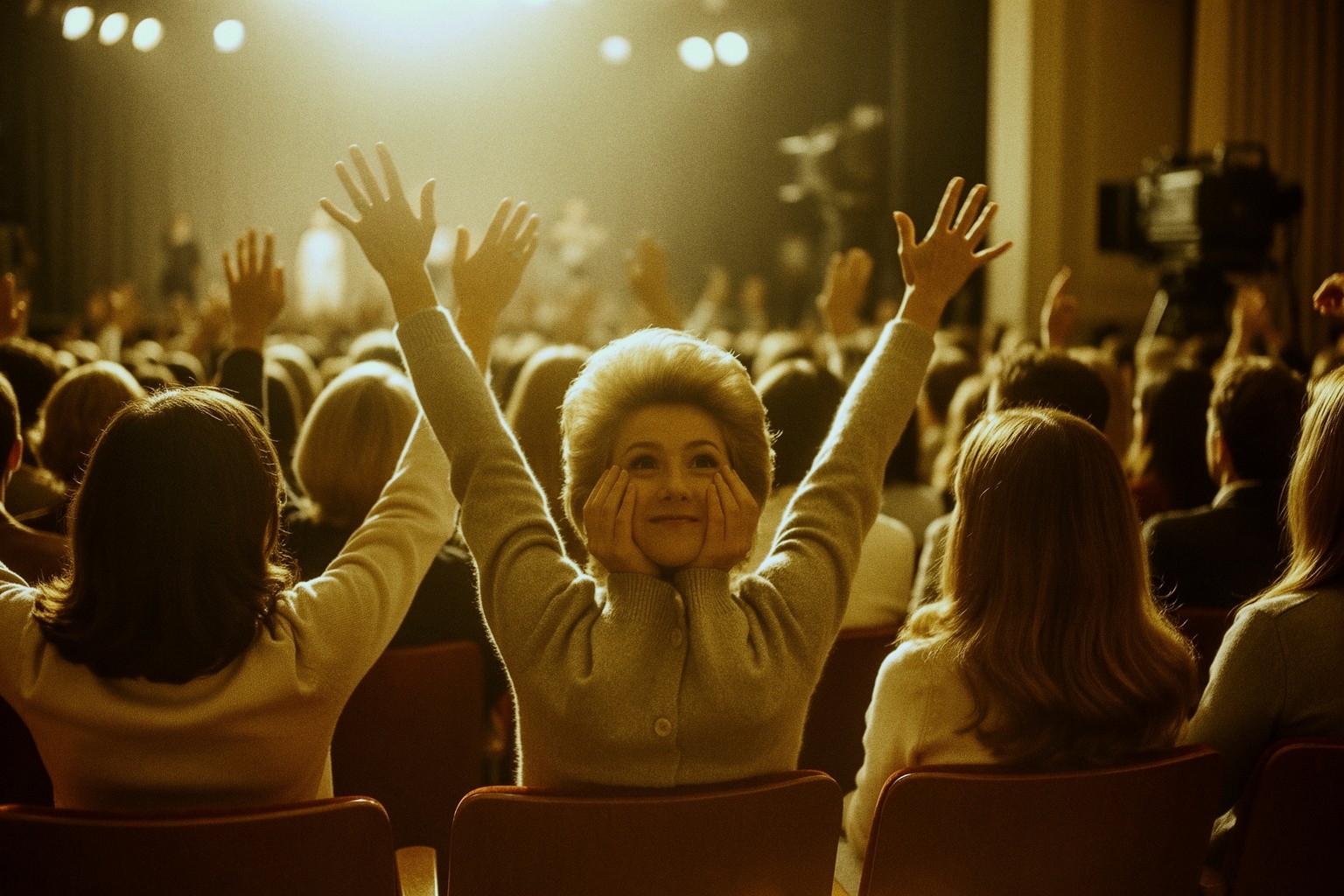
On October 25, 1964, the Rolling Stones made their first appearance on The Ed Sullivan Show, the Sunday-night variety programme that most of America watched from the living-room sofa.
The band had been in the United States only a few months and were still the scruffier, louder alternative to the Beatles, who had played the same stage that February. The studio audience in New York was packed with teenagers who had come for the five young Englishmen and nothing else.
They screamed through the whole set. Studio staff struggled to keep the crowd in its seats. Sullivan, a stiff former newspaper columnist who prized order on his stage, was unhappy, and he told the press he would not have the group back.
Ratings mattered more than order, and the Stones returned the following May, and again and again through the decade.
By January 1967 the host had stopped trying to keep them off his stage and settled for editing them: before their performance of "Let's Spend the Night Together," the show insisted they change the chorus, and Mick Jagger sang "let's spend some time together" on live television, rolling his eyes at the camera as he did it.
Checked against: Contemporary newspaper coverage of the broadcast; television history reference works; biographies of the band and of the host; archival episode listings for the programme.
He ran sixty-six yards. Every one of them the wrong way.
Illustration generated by AI for The Day Vault.
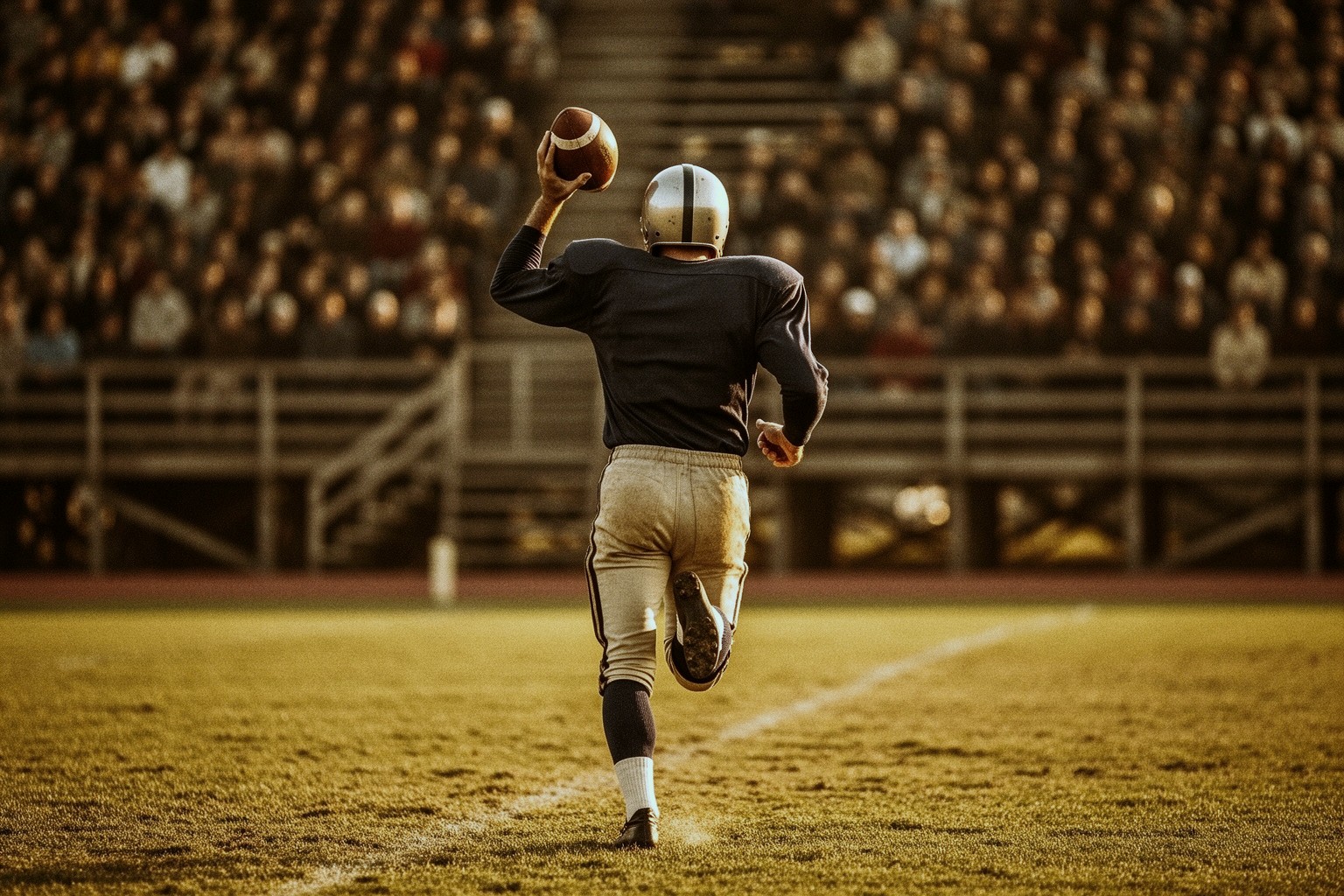
On October 25, 1964, Minnesota Vikings defensive end Jim Marshall picked up a loose ball at Kezar Stadium in San Francisco and ran with it. Nobody on the 49ers chased him.
A San Francisco receiver had fumbled after a catch. Marshall scooped up the ball, got turned around in the scramble, and sprinted 66 yards toward his own end zone. His teammates on the sideline were yelling. He kept going.
Across the goal line, he flung the ball away in celebration. It sailed out of bounds, and that made the play a safety: two points for San Francisco. A 49ers lineman, Bruce Bosley, jogged over and patted him on the back.
Minnesota won anyway, 27-22, and the defence's best play of the day had also been Marshall's: earlier in the same quarter he hit the quarterback, forced a fumble, and Carl Eller carried it back for a touchdown.
Marshall played 20 seasons of professional football. The blooper reels only ever needed that one afternoon.
Checked against: NFL official game records and play-by-play, contemporary newspaper reports from San Francisco and Minneapolis, NFL Films archive footage, Pro Football Hall of Fame and team histories
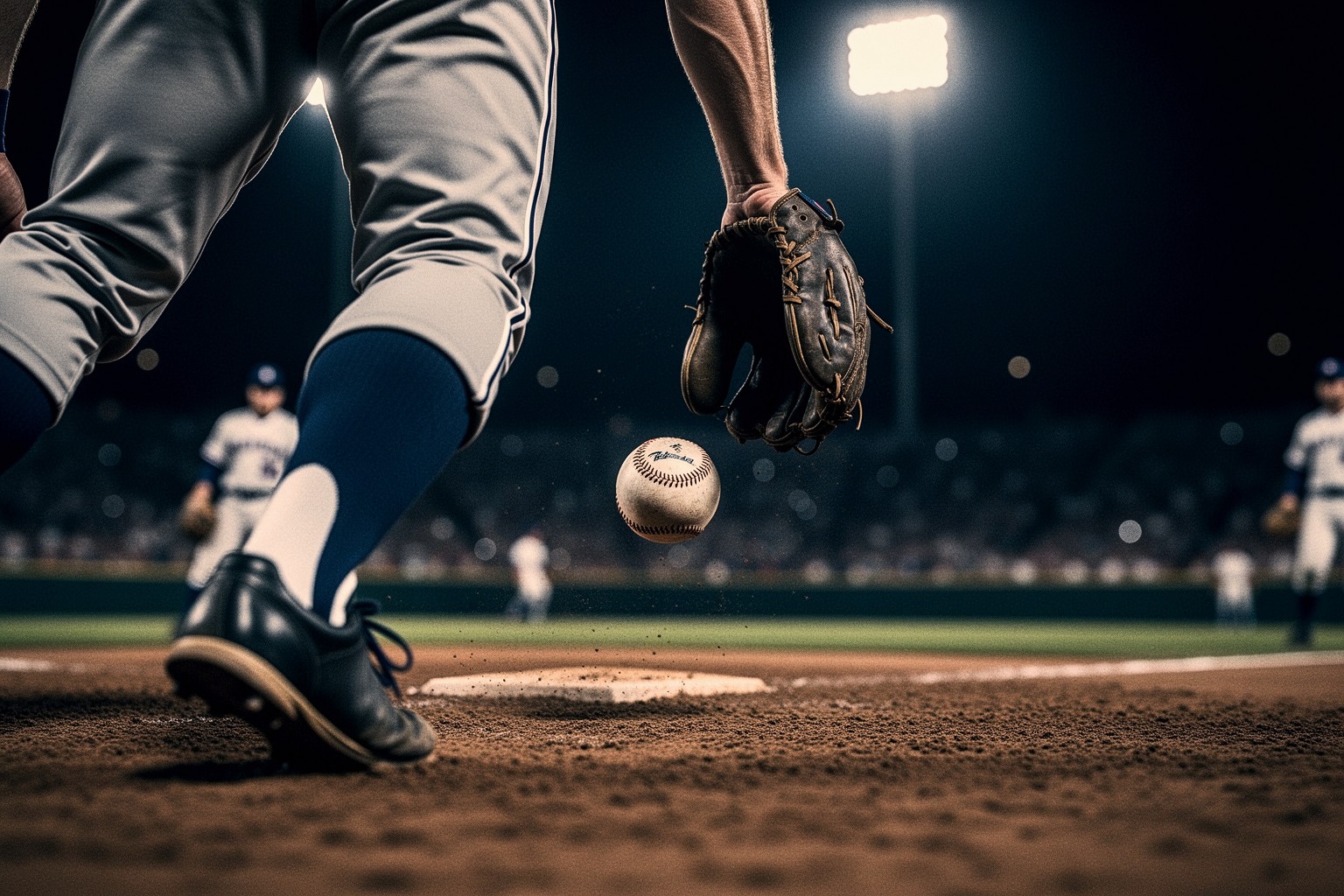
On October 25, 1986, the Boston Red Sox led the New York Mets 5-3 in the tenth inning of Game 6 of the World Series. Two outs, nobody on base. Boston had not won a championship since 1918. One more out would end that wait.
Gary Carter singled. Kevin Mitchell singled. Ray Knight fell behind no balls and two strikes, one strike from the final out, and singled too. Carter scored. The lead was 5-4.
Boston brought in Bob Stanley to face Mookie Wilson. A pitch got past catcher Rich Gedman, and Mitchell ran home from third. 5-5. Wilson then hit a slow bouncer toward first base. It rolled between Bill Buckner's legs and into right field. Knight came around from second, and Shea Stadium came apart.
Buckner became the picture of that night, but the lead was already gone before the ball reached him. A clean play would only have sent the game to the eleventh.
The error did not end the Series, either. Rain pushed Game 7 back a day. Boston led it 3-0 in the sixth inning, then lost 8-5, and Buckner spent years carrying a defeat that three singles and a wild pitch had built.
Checked against: Official Major League Baseball box scores and play-by-play records; contemporary newspaper game reports; television broadcast footage of Game 6; standard baseball reference histories of the 1986 World Series
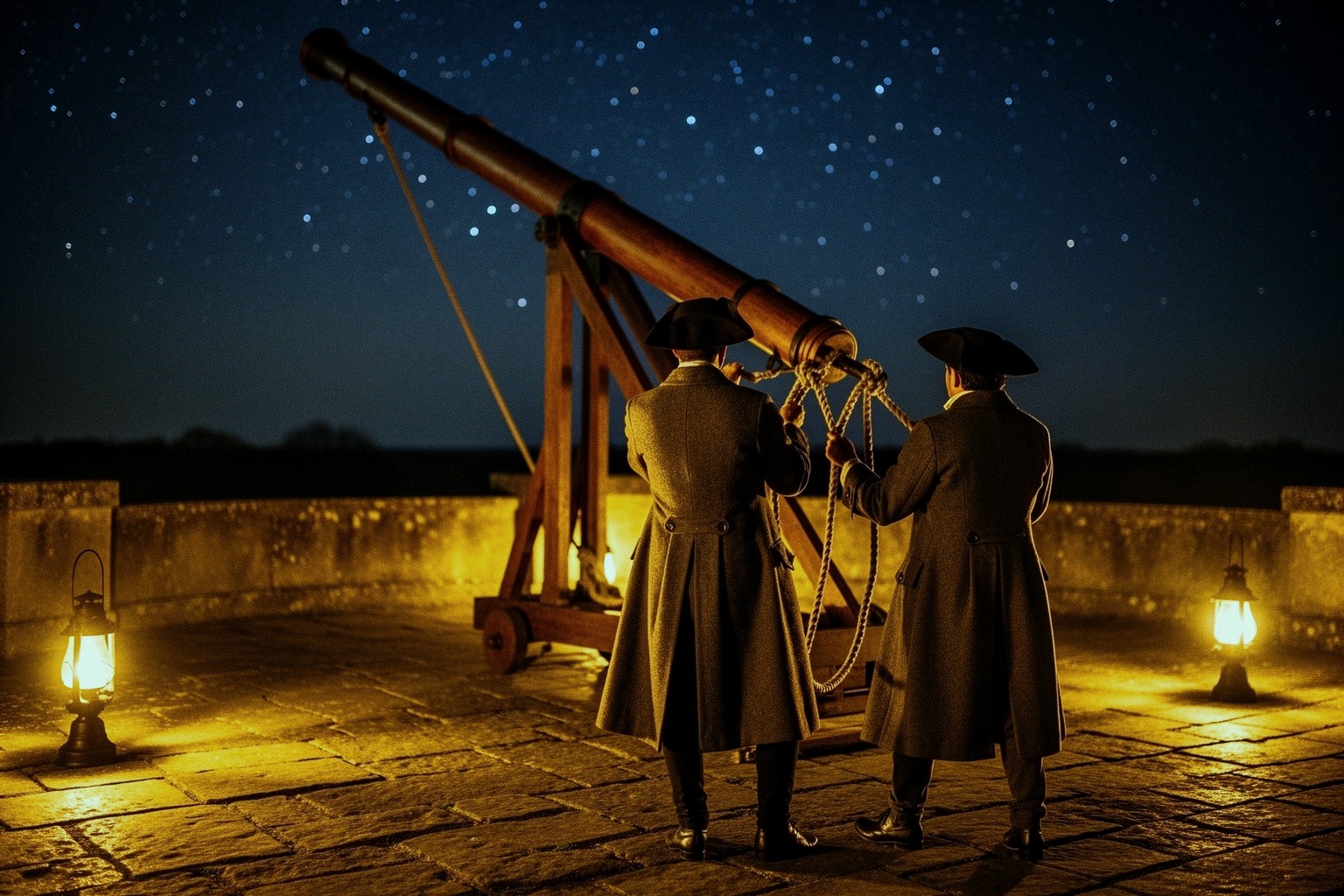
On October 25, 1671, Giovanni Domenico Cassini spotted a faint point of light beside Saturn from the new Paris Observatory. It was a moon, only the second ever found around the planet. Today we call it Iapetus.
Cassini was an Italian astronomer recruited to Paris by the French Academy of Sciences. His instruments were long, awkward refractors with tubes so lengthy they had to be propped and steadied by hand. Finding anything that dim beside a planet that bright took patience and very good eyes.
He kept watching. A moon should circle its planet and show itself on both sides, west and east, bright each time. Iapetus took about eleven weeks to go around once, so Cassini waited for it to swing back into view.
It never did. Whenever Iapetus crossed to Saturn's eastern side it disappeared, and for decades no telescope could find it there.
Cassini guessed the reason: one half of the moon must be dark and the other bright, so it only shone when the pale face was turned toward Earth. Spacecraft confirmed it three centuries later. One hemisphere is coal-black and the other is icy white. The dark region is now named Cassini Regio.
Checked against: Histories of astronomy, Cassini's published observations in the records of the French Academy of Sciences, NASA and JPL planetary mission summaries for Voyager and Cassini.
The order said the guns. It never said which ones.
Illustration generated by AI for The Day Vault.
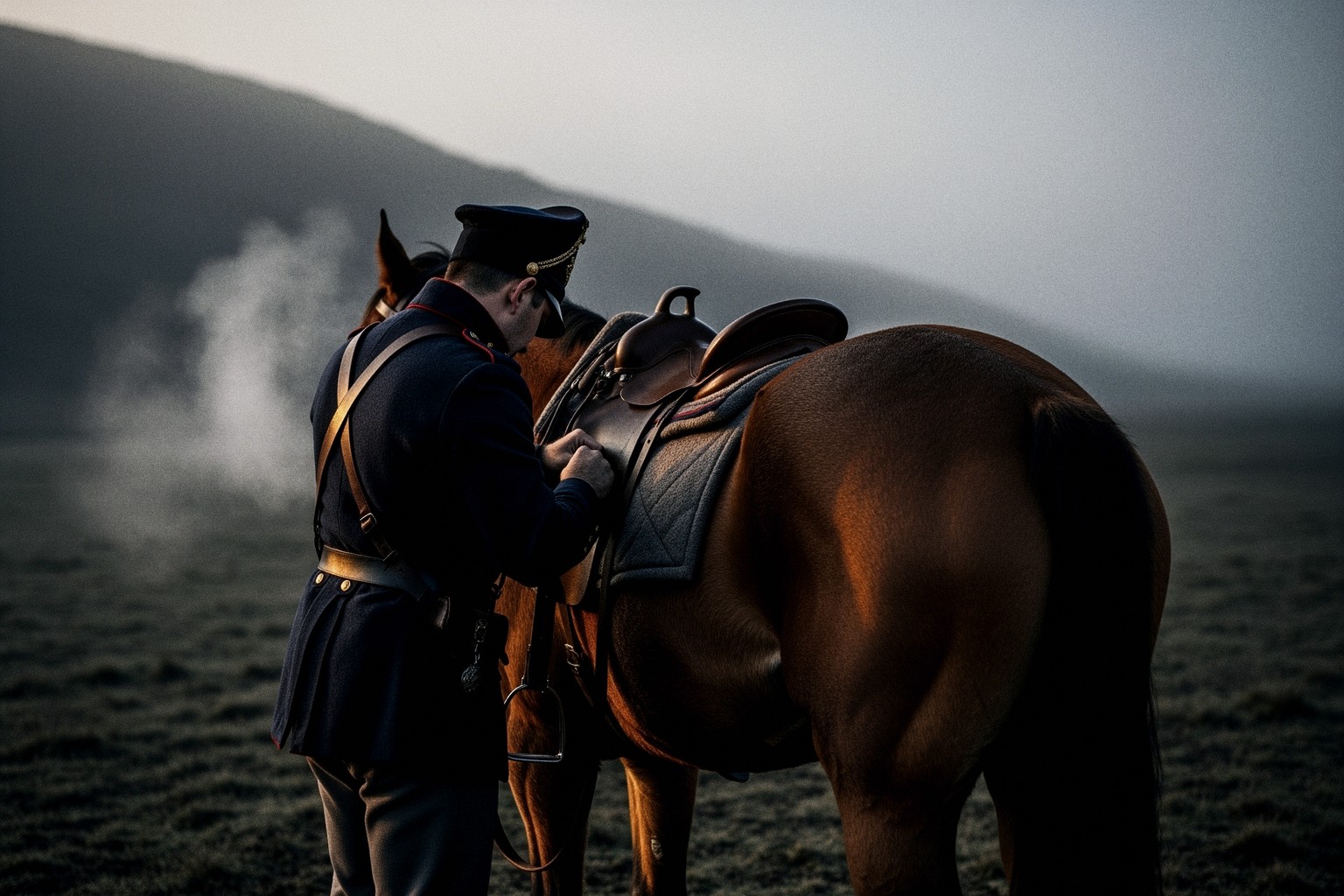
On October 25, 1854, near Balaclava in the Crimea, the British Light Brigade rode straight down a valley lined on three sides with Russian artillery. It was the wrong valley.
Lord Raglan, the British commander, was watching from the heights. He wanted cavalry to stop the Russians hauling away British guns taken from redoubts on a ridge. From up there the target looked obvious. Down on the valley floor, his cavalry commander, the Earl of Lucan, could see none of it.
The written order was carried down by Captain Louis Nolan, an impatient young cavalry officer. Lucan asked which guns. Nolan flung out an arm toward the far end of the valley, where the Russian battery stood. Lucan passed the order to Lord Cardigan, his brother-in-law, a man he could not stand. Neither asked again. Cardigan led the brigade forward.
Nolan was the one man who could have said what that gesture meant, and a Russian shell killed him in the opening moments of the charge, riding across the front of the brigade.
Raglan blamed Lucan. Lucan blamed Nolan, and defended himself in the House of Lords. The argument ran on through letters, pamphlets and memoirs for decades, with the only witness who knew already dead in the valley.
Checked against: Contemporary dispatches and war correspondents' reports, Hansard records of Lucan's speech in the House of Lords, officers' letters and memoirs, regimental histories, standard military histories of the Crimean War.