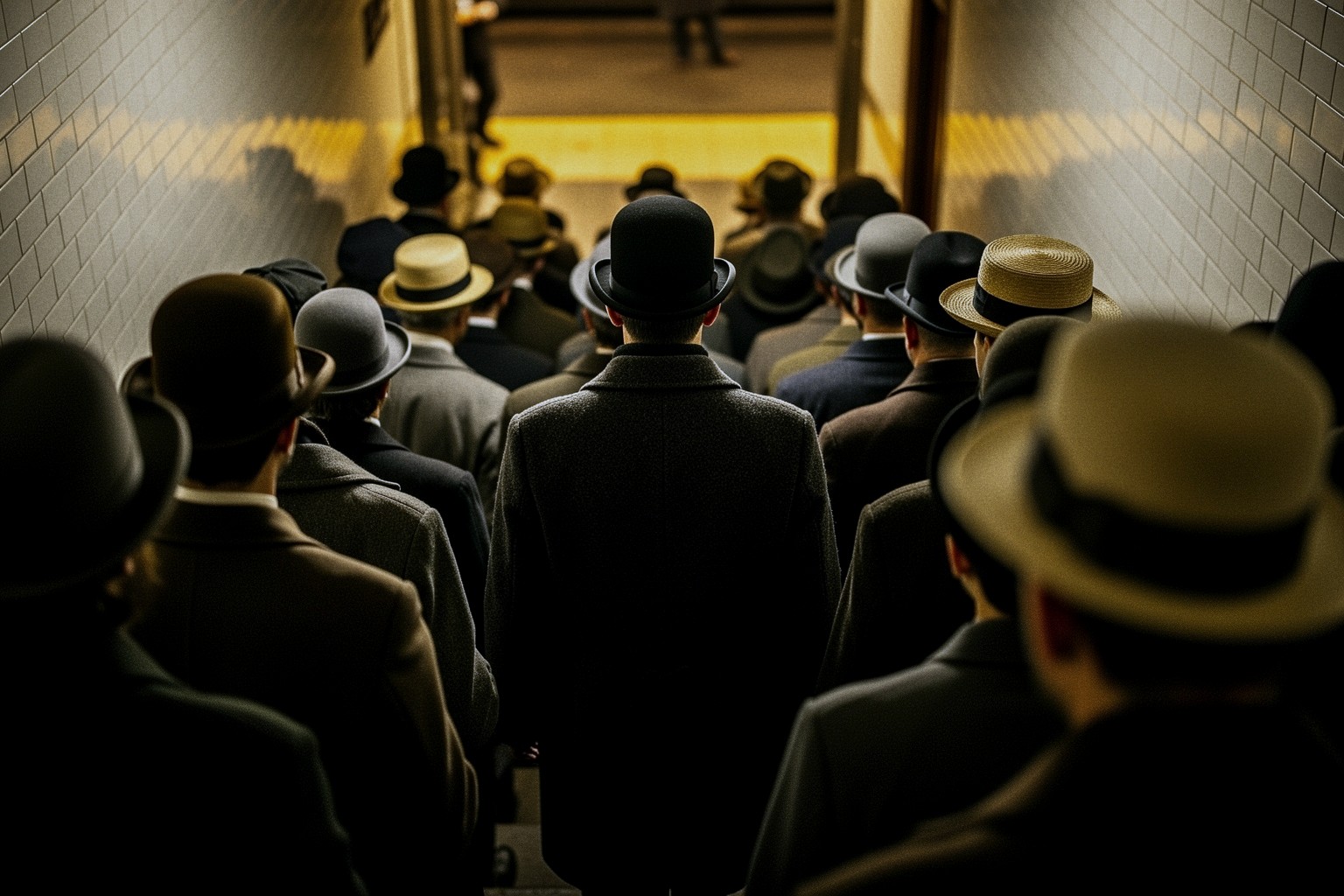
On October 27, 1904, New York opened its first subway line. Trains ran underground from City Hall, up the East Side, across 42nd Street and up the West Side to 145th Street and Broadway.
The afternoon belonged to officials. After speeches at City Hall, Mayor George McClellan was handed a ceremonial controller and invited to start the first train. The plan was simple. He would set it moving, then step aside for a professional motorman.
Below the street, the job looked easy enough. The trains were electric, the track was new, and the stations were lined with clean tile. Above, crowds waited for evening, when the gates would open to anyone with a nickel.
McClellan did not step aside. He kept his hand on the controller and drove the train himself, all the way to 103rd Street, with the motorman standing beside him.
So the first trip on the New York subway was piloted by a politician who had come to make a speech. That night the public poured down the stairs, and the nickel ride, run by working motormen from then on, became the way the city got to work.
Checked against: Contemporary New York newspaper accounts of the opening; histories of the Interborough Rapid Transit Company; New York Transit Museum and MTA historical materials
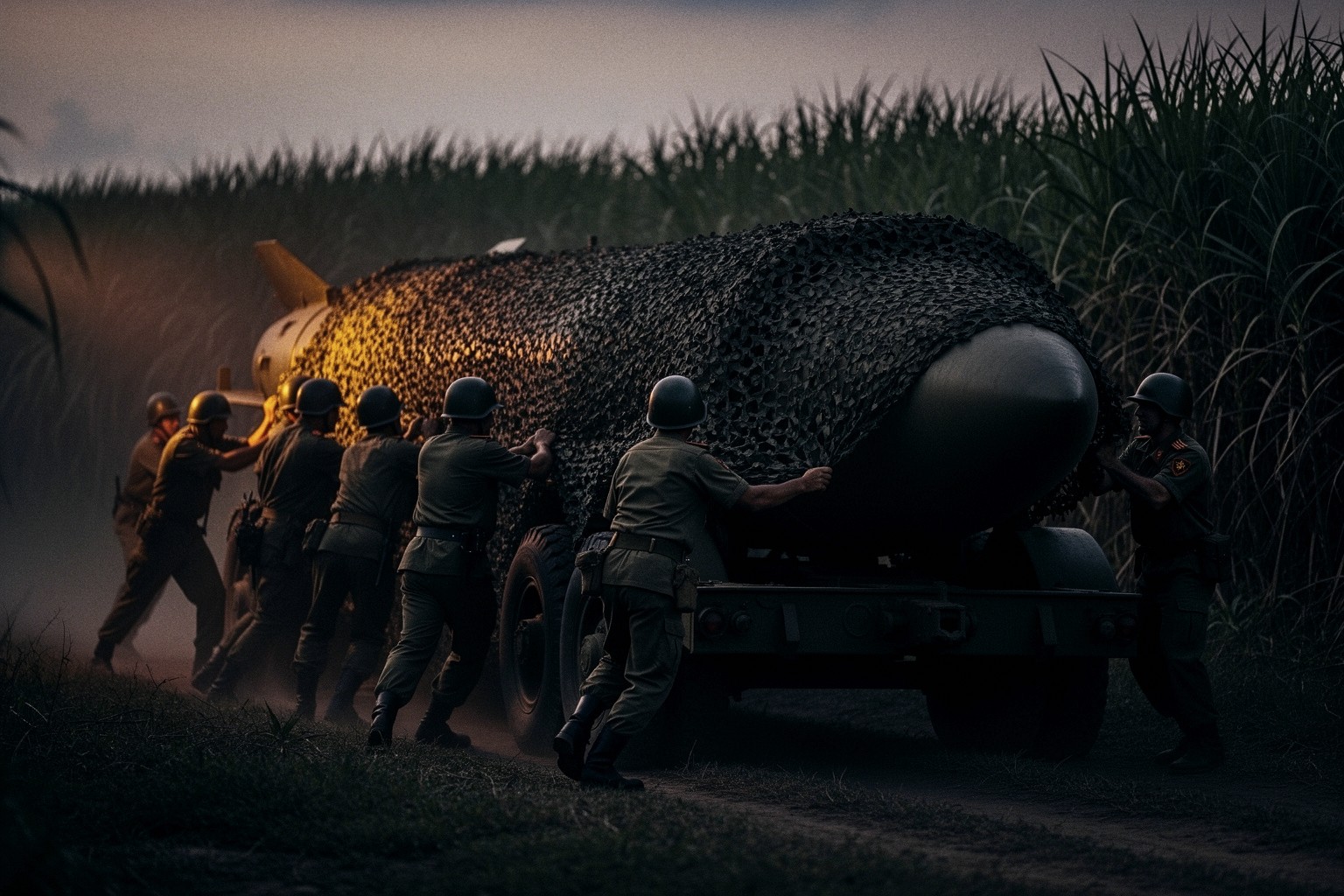
On October 27, 1962, a Soviet surface-to-air missile brought down an American U-2 spy plane over eastern Cuba. Its pilot, Major Rudolf Anderson Jr., was killed. He was the only person to die from enemy fire during the Cuban Missile Crisis.
The timing could hardly have been worse. For eleven days Washington had been studying photographs of Soviet missile sites on the island. Kennedy's advisers had already discussed what to do if a U-2 went down: strike back at the air-defence site that fired. That Saturday, men in the room were talking about air raids and an invasion within days.
Kennedy held off. He gave Khrushchev one more night, and that evening sent his brother Robert to meet the Soviet ambassador in private with an offer and a deadline.
Khrushchev had not ordered the shot either. Soviet officers in Cuba, unable to reach their commander, gave the order to fire on their own authority.
Both leaders had spent the crisis assuming the other side was acting on orders from the top. Now both had reason to doubt that anyone fully controlled the weapons. The next morning, Radio Moscow announced that the missiles would be dismantled and shipped home.
Checked against: Declassified ExComm meeting transcripts and recordings, US Air Force records of the U-2 loss, memoirs and testimony of Soviet officers who served in Cuba, standard scholarly histories of the Cuban Missile Crisis
The essays were written for New York. New York wasn't listening.
Illustration generated by AI for The Day Vault.
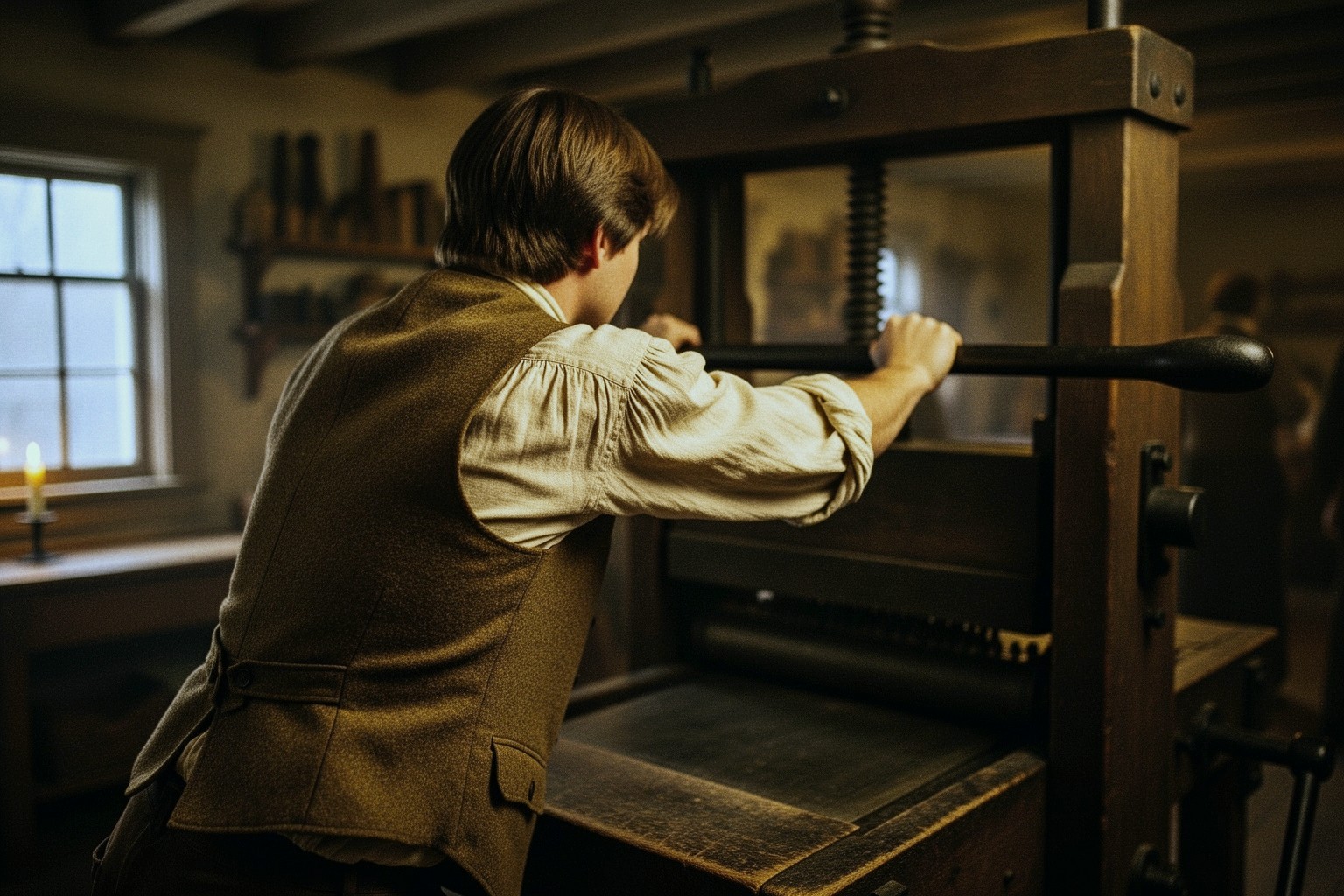
On October 27, 1787, the Independent Journal, a New York newspaper, printed a long letter signed "Publius." It urged the state's readers to back the new federal Constitution, which still needed nine states to ratify it.
Publius was three men. Alexander Hamilton wrote the first essay and recruited James Madison and John Jay. Over the following months they produced 85 essays, often several a week, printed and reprinted across the city's papers. Collected as The Federalist, they became a standard guide to the framers' intentions that judges still cite.
Their target was narrow: New York, a large and commercially vital state whose governor, George Clinton, opposed the plan. When New Yorkers elected delegates to the ratifying convention in spring 1788, the Constitution's opponents won a clear majority.
But the deciding votes were cast elsewhere. On June 21, New Hampshire became the ninth state to ratify, enough to put the Constitution into effect, and Virginia followed four days later.
New York was no longer deciding whether the union would exist, only whether it would be inside it. On July 26, 1788, its delegates ratified by 30 votes to 27.
Checked against: Surviving issues of the Independent Journal; The Documentary History of the Ratification of the Constitution; scholarly editions of The Federalist; New York ratifying convention records.
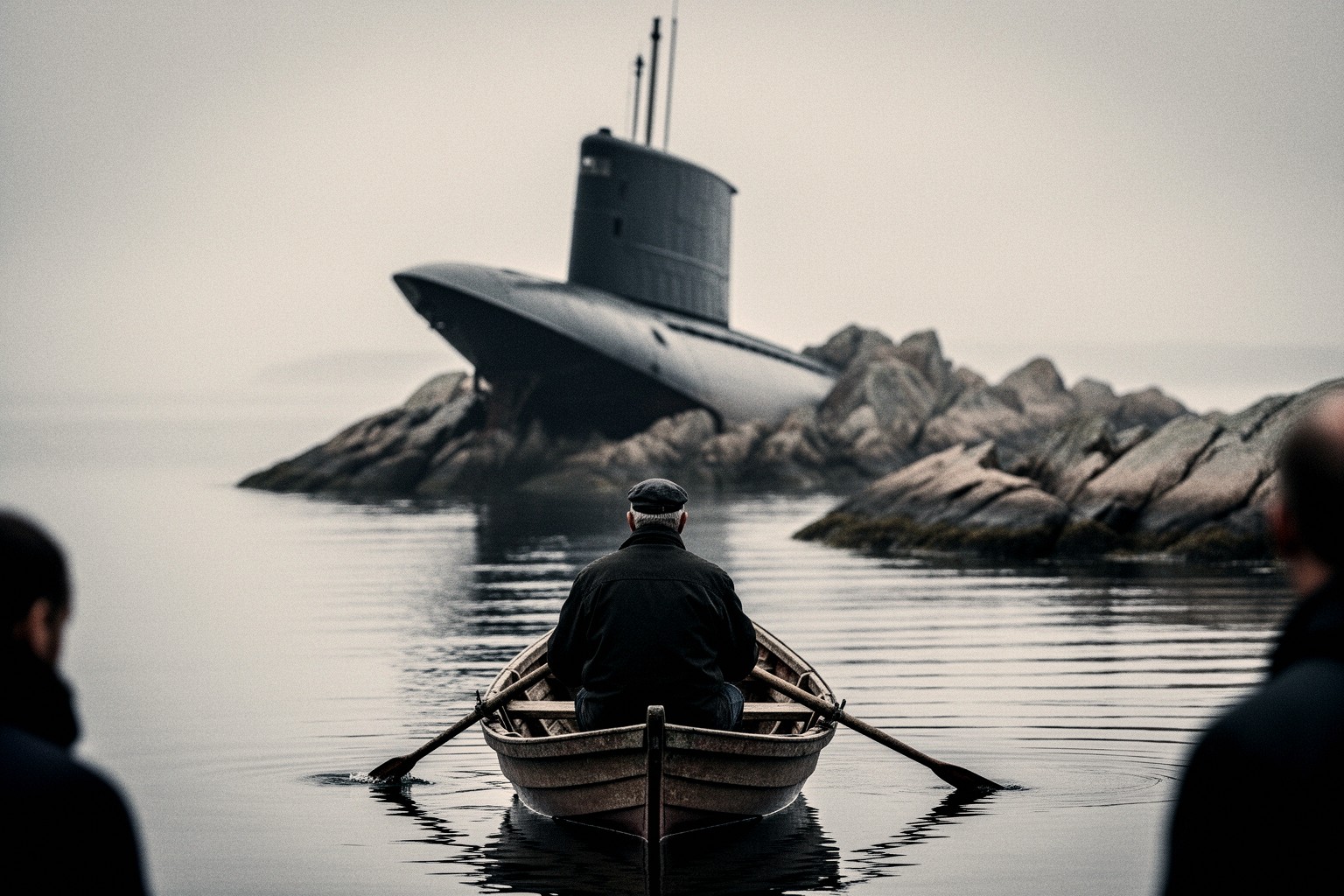
On October 27, 1981, a Soviet submarine ran aground on rocks in southern Sweden. The diesel-powered boat, designated U 137 in the West, came to rest in Gåsefjärden, a restricted military zone a few miles from Karlskrona, the country's main naval base.
Its captain said his navigation equipment had failed and he believed he was off the coast of Poland. Sweden did not believe him. It refused to let Soviet ships tow the boat away, and the captain was questioned aboard a Swedish vessel.
Swedish experts took readings outside the hull and found signs of uranium. The government concluded the submarine was probably carrying nuclear weapons. Moscow never confirmed it.
Sweden's navy did not discover the boat stuck on its doorstep. A local fisherman did, the next morning, after it had spent the night trying to reverse off the rocks.
The submarine was towed back to sea on November 6. Sweden spent much of the next decade hunting suspected foreign submarines in its own archipelago.
Checked against: Swedish government and naval records; contemporary Swedish and international press reports; Cold War naval histories
On October 27, 1871, officers in New York arrested William M. Tweed, the Tammany Hall boss who had treated the city treasury like a private account. Bail was set at $1 million, a figure meant to keep him in a cell.
The case began in ledgers. That summer, the New York Times printed figures copied from the city comptroller's books. They showed contractors billing fortunes for ordinary work, and the new county courthouse swallowing millions. For months, Thomas Nast had drawn Tweed in Harper's Weekly as a bloated thief with a diamond in his shirt.
Tweed answered with money and friends. Among the men who signed for his bail was Jay Gould, the railroad speculator. Tweed went home to wait for trial.
The arrest barely slowed him. His first trial, in 1873, ended with a hung jury.
A second jury convicted him later that year. In 1875 he slipped away from custody and fled by ship to Spain, where he was identified and sent back. He died in a Manhattan jail in 1878, unable to pay the civil judgment against him.
Checked against: Contemporary New York newspaper archives, biographies of William M. Tweed, histories of Tammany Hall and New York City government, court records of the Tweed Ring prosecutions
On October 27, 1659, the Massachusetts Bay Colony hanged two Quakers on Boston Common. William Robinson and Marmaduke Stephenson had been banished and had come back anyway. Under a 1658 colony law, a banished Quaker who returned could be put to death.
A third prisoner walked to the gallows with them. Mary Dyer, a Quaker from Rhode Island, stood and watched both men die. Then her arms and legs were bound, her face was covered, and the noose was placed around her neck.
That was when the order to stop came. Her son William had petitioned the magistrates for her life, and they had agreed to spare her if she left the colony within forty-eight hours. They let her climb the ladder and feel the rope anyway. The ceremony was meant to frighten her out of Massachusetts for good.
Dyer refused to treat the reprieve as mercy, and wrote to the court that she would not accept her life while the law against Quakers still stood.
She was escorted out of the colony. The following May she walked back into Boston, and on June 1, 1660, the magistrates hanged her on the same common.
Checked against: Massachusetts Bay Colony General Court records; contemporary Quaker accounts of the New England persecutions; academic histories of early Quakerism in colonial America
Niccolò Paganini was born in Genoa on October 27, 1782. By his forties he was the most famous violinist in Europe, filling halls in Vienna, Paris and London.
He was thin, pale and dressed in black. He played faster than anyone had heard, and could carry a whole piece on a single string. Stories spread that no human hand could manage it alone, and that he had bargained with the devil for the skill.
Paganini did little to stop the talk. It was good for business. He charged prices high enough to cause public complaint in London, and audiences paid them anyway. The rumour became part of the act, and the act made him rich.
The rumour outlived the music. When Paganini died in Nice in 1840 without receiving the last rites, the bishop refused him burial in consecrated ground.
His body stayed above ground for years, moved between temporary resting places while his son petitioned the Church. He was not laid in consecrated ground in Parma until 1876, thirty-six years after his death.
Checked against: Standard biographies of Paganini, music history reference works, and published histories of his burial and reinterment in Parma
On October 27, 1954, ABC aired the first episode of a weekly hour called Disneyland. Walt Disney hosted it himself, introducing cartoons, nature films and adventure stories drawn from his studio's vaults and soundstages.
The title referred to a place that did not exist. In orange groves in Anaheim, California, crews had only begun clearing ground for a theme park Disney had struggled for years to finance. Banks were wary. Even his brother Roy was cautious. NBC and CBS had both turned down his proposal for a series.
ABC, a distant third among the networks, said yes. The show was organised the way the park would be, with episodes assigned to Frontierland, Adventureland, Tomorrowland or Fantasyland. Some evenings were simply progress reports from the building site.
The deal was never really about the television. In exchange for the series, ABC put up money and loan guarantees and took roughly a third of the park itself.
Every Wednesday night, American families watched an advertisement for a place they could not yet visit, and kept tuning in. When the gates opened in July 1955, much of the audience had already followed the construction for months. The network nobody else wanted owned a large piece of what they came to see.
Checked against: Disney corporate histories and biographies of Walt Disney, television network histories, contemporary trade press such as broadcasting and entertainment weeklies, archived episode guides
On October 27, 1991, Jack Morris pitched all ten innings of Game 7 of the World Series for the Minnesota Twins and allowed no runs. The Twins beat the Atlanta Braves 1-0 in the Metrodome. Many still rank it among the finest pitching performances in a deciding game.
Both teams had finished last in their divisions the year before. Neither was supposed to be there. Atlanta's John Smoltz matched Morris inning for inning until the eighth, and the game stayed scoreless into the tenth. Morris stayed on the mound after nine. He would not come out.
In the bottom of the tenth, Dan Gladden doubled and was bunted to third. Pinch-hitter Gene Larkin lofted a single over a drawn-in outfield, and Gladden jumped on home plate. Morris had grown up in St. Paul. He had signed with his hometown team that winter, and the crowd treated him as one of their own.
That December, Morris signed with the Toronto Blue Jays.
The following October he was in the World Series again, with Toronto, and the Blue Jays won it.
Checked against: Major League Baseball box scores and official records; contemporary newspaper coverage from Minneapolis and Atlanta; Baseball Hall of Fame archives; published histories of the 1991 World Series
America's biggest rocket flew with a tank full of water
Illustration generated by AI for The Day Vault.
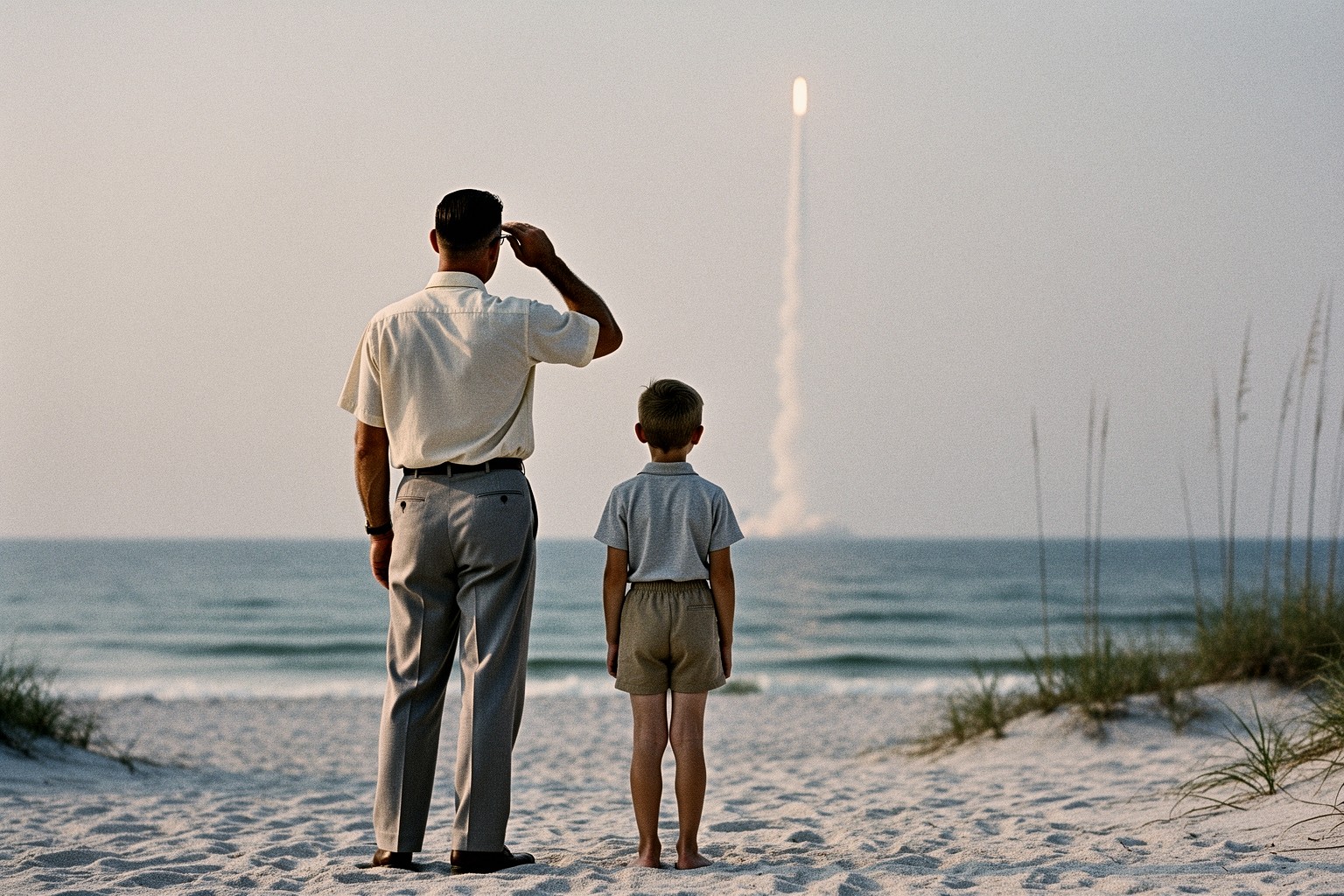
On October 27, 1961, a Saturn I rocket lifted off from Cape Canaveral. It was the largest rocket the United States had ever flown, and it was the first flight of the family that would later carry astronauts to the Moon.
Its first stage was an unlikely design. Wernher von Braun's team at NASA's Marshall Space Flight Center had bundled eight engines together under a cluster of propellant tanks. Skeptics doubted that eight engines could fire in step without shaking the rocket apart. Some engineers called the project "Cluster's Last Stand."
The flight was short and suborbital. The rocket climbed, held together, and fell into the Atlantic. Every engine burned as planned, and the cluster did not tear itself apart.
The two upper stages that rode on top were dummies, hollow shells filled with water so the rocket would weigh what a real one would.
That water-loaded test began a clean run. All ten Saturn I flights succeeded, and the eight-engine cluster that skeptics had mocked became the foundation for the rockets that followed.
Checked against: NASA Marshall Space Flight Center histories; NASA History Office chronologies of the Saturn program; contemporary newspaper coverage of the launch; histories of the Apollo launch vehicles
On October 27, 1914, the British battleship HMS Audacious struck a German mine off the north coast of Ireland. She was barely a year old, one of the newest dreadnoughts in the fleet, and she was taking on water fast.
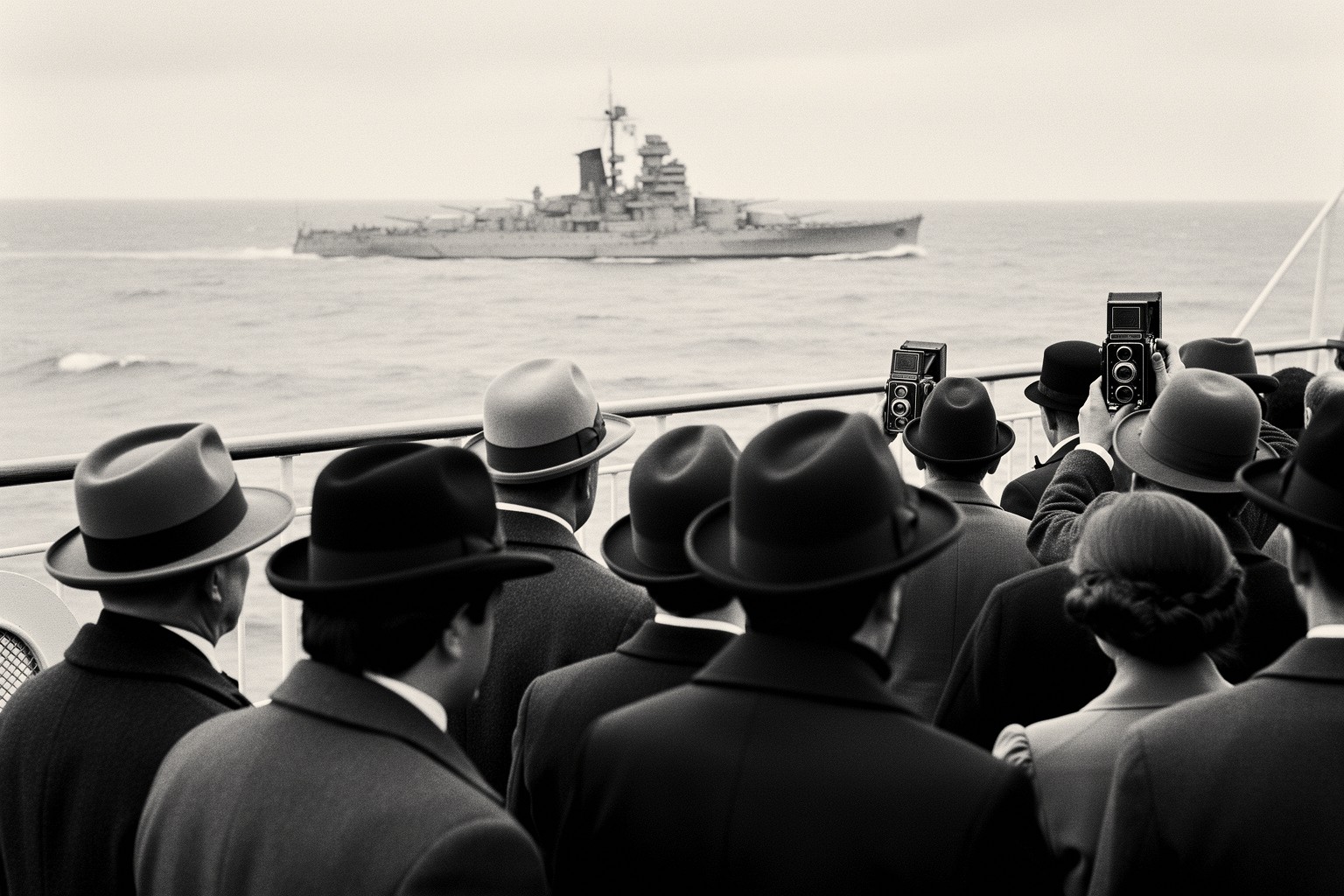
The White Star liner Olympic, sister ship of the Titanic, was passing on her way from New York. Her crew helped take men off the warship and tried to tow her toward shore. The line parted. That evening Audacious rolled over and blew up.
The Admiralty decided the loss would stay secret. Olympic was held at anchor in Lough Swilly, her passengers kept aboard, and Audacious went on appearing in the published lists of the fleet as if nothing had happened.
Olympic was carrying Americans, citizens of a neutral country, and some of them had stood at the rail with cameras.
Within weeks their photographs were circulating in the United States, and Germany could learn of its success the same way anyone else did. Britain kept up the pretence regardless. The official announcement came in November 1918, after the armistice.
Checked against: Admiralty and Royal Navy records; standard naval histories of the First World War; contemporary American newspaper reports; White Star Line histories of the Olympic