The first message on the internet was two letters long
Illustration generated by AI for The Day Vault.
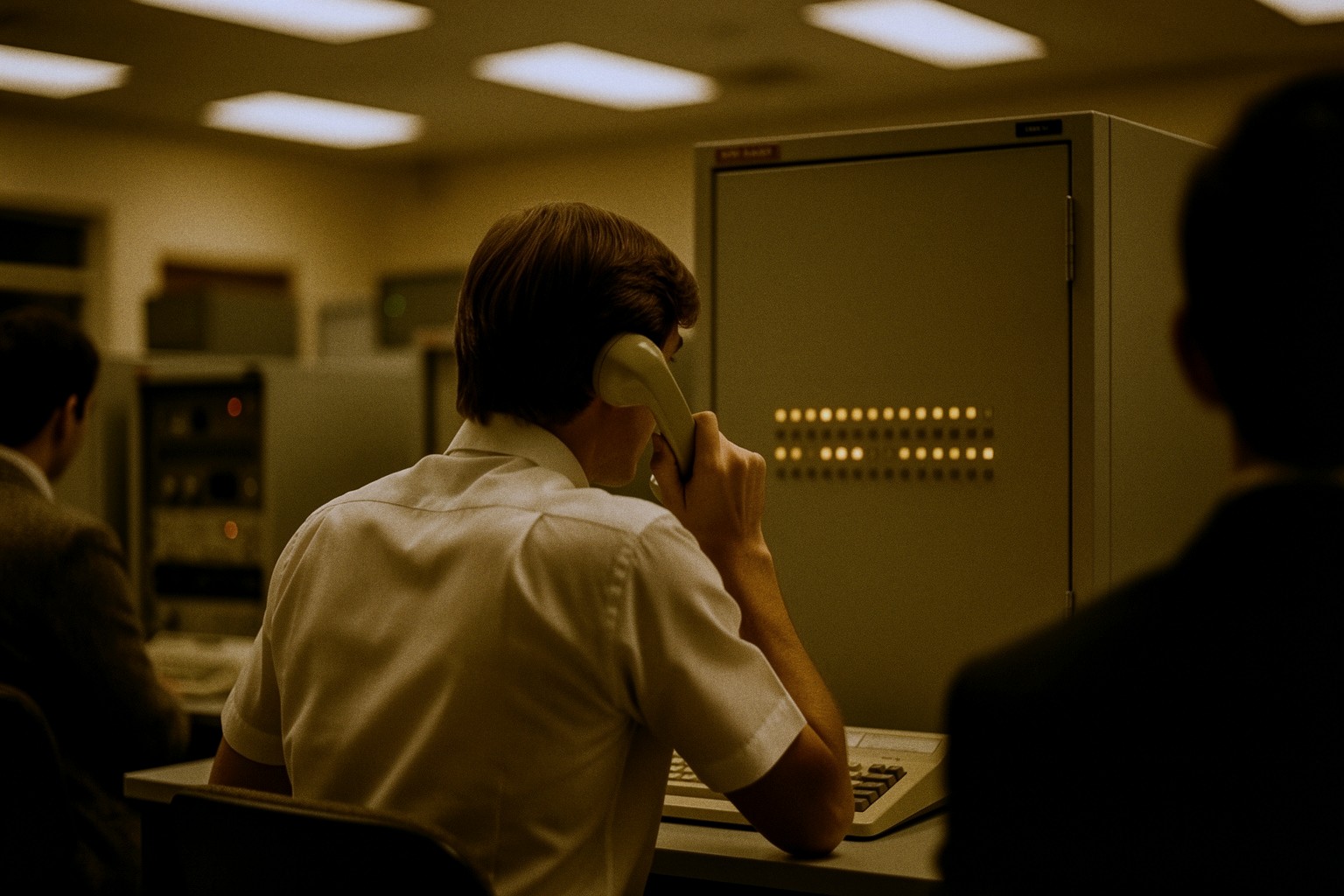
On October 29, 1969, a UCLA student programmer named Charley Kline sat at a terminal in a Los Angeles lab and tried to log in to a computer at the Stanford Research Institute, roughly 350 miles north in Menlo Park.
The link was ARPANET, a Pentagon-funded experiment in letting distant computers share work. Each end had a refrigerator-sized machine called an Interface Message Processor, installed weeks apart that autumn. UCLA's was the first. SRI's was the second. Two nodes made a network.
The plan was simple. Kline would type LOGIN one letter at a time while Bill Duvall, a programmer at SRI, watched for each character and confirmed it over an ordinary telephone. Kline typed L. It arrived. He typed O. It arrived.
Then he typed G, and the SRI system crashed.
The first message ever carried by the network that grew into the internet was two letters: L, O. The bug was fixed, and about an hour later Kline logged in properly. By December, ARPANET had four nodes. Its first word was still lo.
Checked against: UCLA and SRI institutional histories; the IMP log entry from that night; oral histories of the ARPANET engineers; standard histories of the internet's origins
A republic was born. An Ottoman still held office.
Illustration generated by AI for The Day Vault.
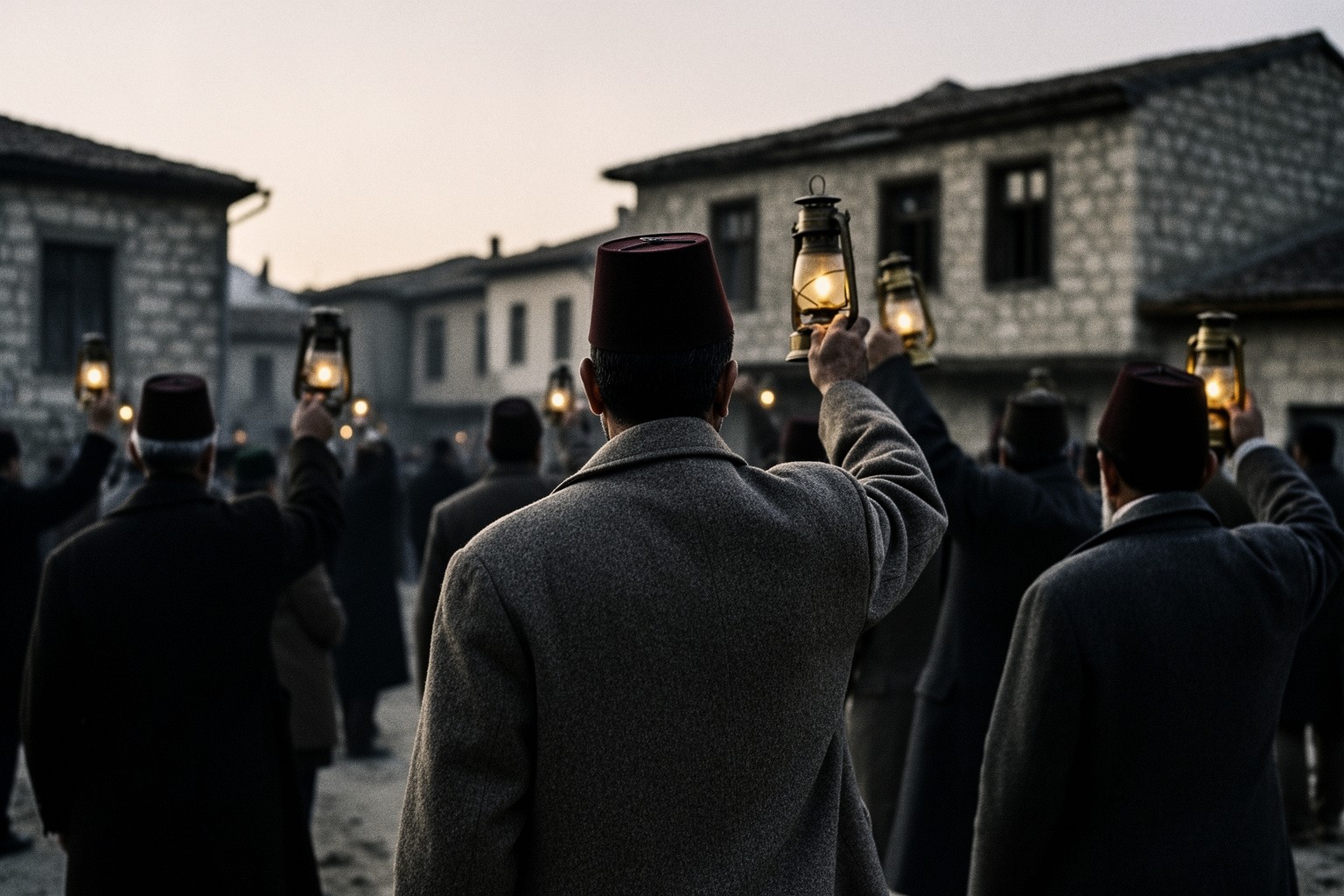
On 29 October 1923, the Grand National Assembly in Ankara voted to declare Turkey a republic. That same evening it elected Mustafa Kemal as the country's first president.
The vote finished work begun a year earlier. In November 1922 the assembly had abolished the Ottoman sultanate, and the last sultan, Mehmed VI, left Constantinople aboard a British warship. Then, just over two weeks before the republic was declared, the assembly made Ankara the capital. It was a modest Anatolian town, and the choice turned away from the city the Ottomans had ruled from for nearly five centuries.
By the end of October 1923, the new state had a parliament, a president and a capital of its own choosing. The dynasty that had governed the region since the fourteenth century had lost both its throne and its city.
But one member of the Ottoman family still held office. After the sultan fled, the same assembly had elected his cousin, Abdulmejid II, as caliph, the religious leadership the dynasty had claimed for centuries.
He kept the title for barely five months. On 3 March 1924 the assembly abolished the caliphate and ordered the Ottoman family out of the country. Before dawn the next morning, Abdulmejid was put on a train bound for Switzerland.
Checked against: Grand National Assembly records; academic histories of the late Ottoman Empire and early Turkish Republic; contemporary international press reports
The ceasefire demand was written before the war began
Illustration generated by AI for The Day Vault.
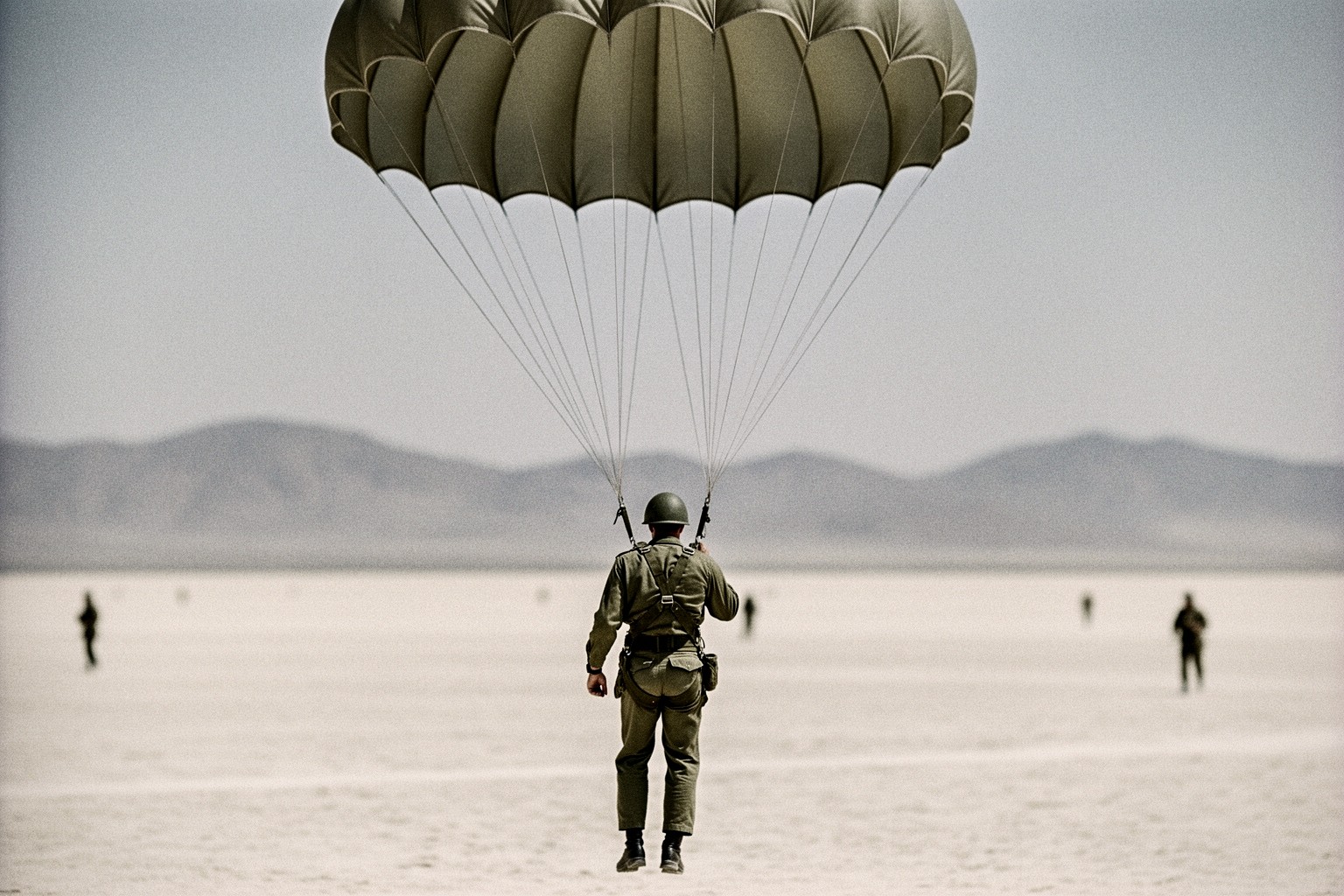
On 29 October 1956, Israeli paratroopers dropped into the Sinai desert near the Mitla Pass, deep inside Egypt and within striking distance of the Suez Canal.
Three months earlier, Egypt's President Nasser had nationalised the Suez Canal Company, which was largely owned by British and French shareholders. London and Paris wanted the canal back and Nasser gone. They needed a reason to send troops.
The next day, Britain and France presented themselves as peacemakers. Their ultimatum told Israel and Egypt to pull back ten miles from the canal and let Anglo-French forces occupy the zone between them. Egypt refused, and British and French bombers struck Egyptian airfields from 31 October.
The peacemakers had scripted the war. A week before the drop, British, French and Israeli officials met secretly at Sèvres, outside Paris, and agreed the sequence: Israel would invade, the ultimatum would follow, and the occupation would come next.
Washington had not been told. President Eisenhower's administration put financial pressure on Britain and refused to support the pound. A ceasefire came on 6 November, and United Nations troops replaced the invaders. Anthony Eden, who denied any foreknowledge of the invasion in the House of Commons, resigned as prime minister in January 1957.
Checked against: Declassified British Cabinet and Foreign Office papers; the Sèvres Protocol as later published; Hansard records of Commons debates; standard diplomatic histories of the 1956 Suez Crisis
The admirals wanted one last battle. The stokers said no.
Illustration generated by AI for The Day Vault.
On the night of October 29, 1918, sailors of the German High Seas Fleet, anchored off Wilhelmshaven, refused to take their ships to sea. The war was plainly lost and Berlin was already seeking an armistice. The naval command had planned a final sortie against the British Grand Fleet anyway. The civilian government was not told.
The crews guessed what the order meant. Many believed it was a suicide run to save the navy's honour, with no hope of changing the war's outcome. On the battleships Thüringen and Helgoland, men stopped working. Stokers would not raise steam. Without stokers, a coal-fired battleship goes nowhere.
The admirals cancelled the operation. They arrested hundreds of sailors and sent one squadron back to its home port at Kiel, expecting the trouble to cool.
Kiel was the worst place they could have sent them.
On November 3, sailors there marched to free their arrested comrades. Within days, workers' and soldiers' councils had spread across Germany. On November 9, the Kaiser's abdication was announced. The fleet that was meant to die fighting outlasted the emperor it served.
Checked against: Naval histories of the First World War, histories of the German Revolution of 1918-19, German naval command records, academic studies of the Kiel mutiny
On October 29, 1965, Mehdi Ben Barka arrived on Boulevard Saint-Germain in Paris for a lunch meeting at the Brasserie Lipp. The exiled Moroccan opposition leader had come to discuss a documentary film about decolonisation.
He was a busy man. Ben Barka was organising the Tricontinental Conference, a gathering of liberation movements from Africa, Asia and Latin America due to open in Havana that January. The government of King Hassan II had already sentenced him to death in absentia.
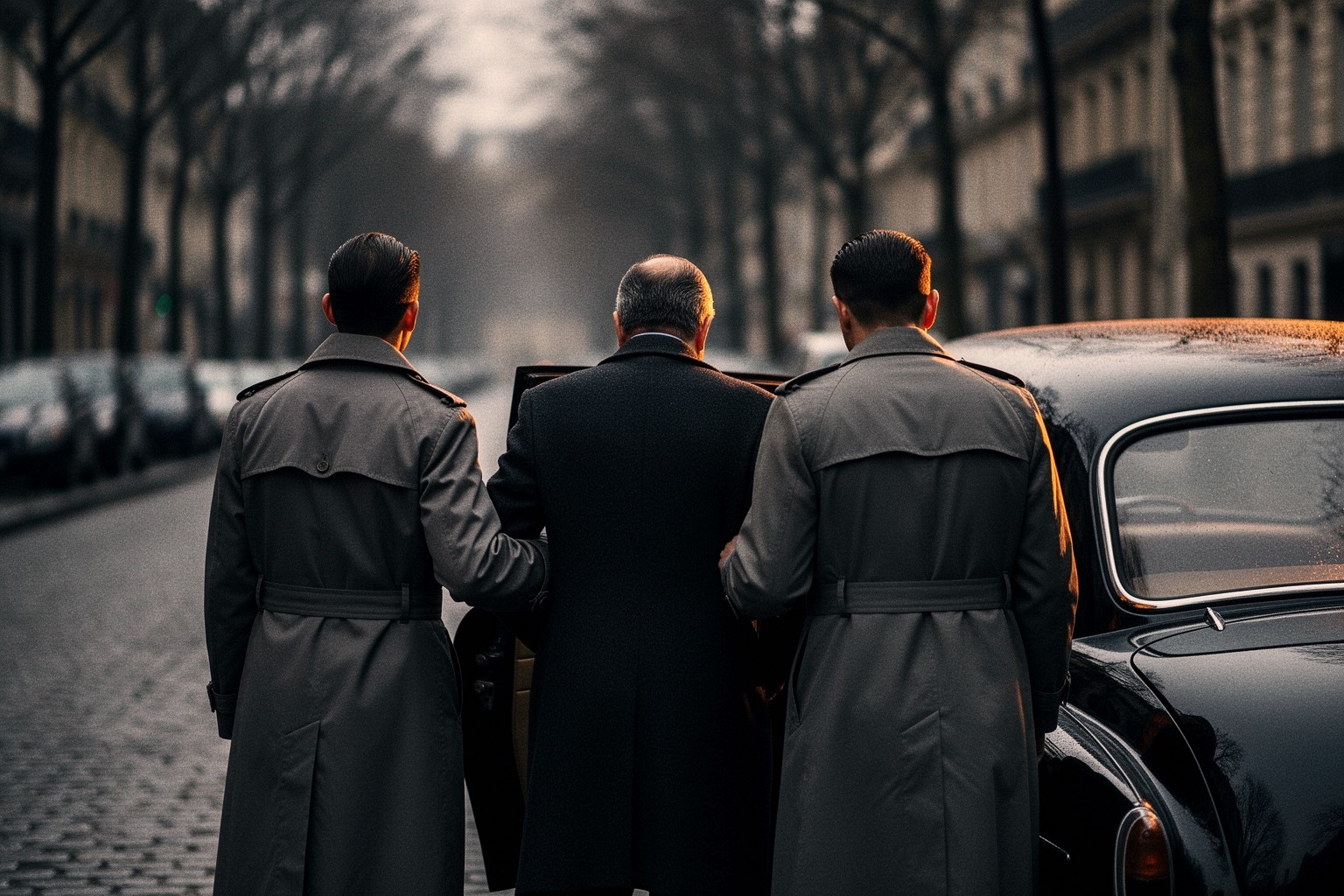
Outside the restaurant, two men showed police badges and asked him to come with them. He got into their car. It drove south out of the city to a villa in Fontenay-le-Vicomte.
The badges were not forged. The two men were serving French police officers, and a man working for France's foreign intelligence service had helped set up the meeting.
Ben Barka was never seen again. A 1967 Paris trial sentenced Morocco's interior minister, General Mohamed Oufkir, to life imprisonment in absentia. No body has ever been found, and the French judicial investigation is still open.
Checked against: French court records from the 1966-67 Ben Barka trials; contemporary French and international newspaper reporting; biographies of Ben Barka and histories of post-colonial Morocco and French intelligence.
Two faiths gave the same conqueror to their own god
Illustration generated by AI for The Day Vault.
On October 29, 539 BC, Cyrus of Persia rode into Babylon. His army had taken the city seventeen days earlier, largely without a fight. A Babylonian chronicle, pressed into clay, records that green branches were spread on the road before him.
Babylon's last king, Nabonidus, had alienated the city's priests. He spent years at a desert oasis in Arabia, and in his absence the New Year festival of Marduk, Babylon's chief god, went uncelebrated. Cyrus arrived as the man who would set things right, sending captured statues of gods back to their home temples.
Among Babylon's foreign residents were Judeans, deported from Jerusalem decades before. Their scriptures remember Cyrus as the king who let them go home and rebuild their temple. A passage in the Book of Isaiah calls him the Lord's anointed, a title the Hebrew Bible gives to no other foreign king.
Cyrus's own account says nothing about the Judeans or their God. On a clay cylinder laid in Babylon's foundations, his scribes credit Marduk, who searched the world for a righteous ruler and called Cyrus by name.
One conqueror was hailed as chosen by two different gods. The cylinder was dug up in 1879 and taken to London. Nearly a century later, it was being promoted as the world's first charter of human rights.
Checked against: Translations of the Nabonidus Chronicle and the Cyrus Cylinder; British Museum catalogue records; Assyriological scholarship on the fall of Babylon; biblical commentaries on Isaiah and Ezra
On 29 October 1787, Mozart's Don Giovanni had its first performance at the Nostitz Theatre in Prague. Mozart directed it himself from the keyboard.
Prague had earned the premiere. The city had embraced The Marriage of Figaro the year before, when Vienna had been lukewarm. The impresario Pasquale Bondini commissioned a new opera, and Lorenzo Da Ponte again wrote the words.
The opera was meant to be ready two weeks earlier, for a royal bride passing through the city. It wasn't. The visitors got Figaro instead. When Don Giovanni finally opened, the Prague audience cheered it, and Mozart wrote home about its success.
The opera most people hear today is not the one Prague cheered.
When Vienna staged it in May 1788, Mozart reworked it for different singers. He replaced the tenor's aria with a new one and added a big scene for Donna Elvira. Modern productions usually keep music from both cities side by side, a hybrid that neither audience ever heard.
Checked against: Mozart's family correspondence; Prague and Vienna theatre records; the Neue Mozart-Ausgabe critical edition; standard Mozart biographies and opera reference works
The world's biggest sapphire left through a bathroom window
Illustration generated by AI for The Day Vault.
On the night of October 29, 1964, three men broke into the American Museum of Natural History in New York and walked out with the Star of India, a blue sapphire of about 563 carats and roughly the size of a golf ball.
Getting in was not hard. A fourth-floor window had been left open for air. The alarm on the gem's display case had a dead battery. The men also took the DeLong Star Ruby and a pocketful of other famous stones, then left the way they came.
Their leader was Jack Murphy, a Florida surfer and former concert violinist the papers called Murph the Surf. He and his partners were no masters of discretion. Police had all three in custody within days.
Then the museum admitted the Star of India had never been insured.
It had to come back or it was gone for good. In January 1965 investigators found it in a locker at a Miami bus station, and it went back on display under far tighter security.
Checked against: Contemporary New York newspaper coverage; American Museum of Natural History records and published histories; court records of the 1965 trial; later biographical accounts of Jack Murphy
The Olympic champion's first opponent had a day job as a police chief
Illustration generated by AI for The Day Vault.
On October 29, 1960, an 18-year-old from Louisville named Cassius Clay fought for money for the first time. The venue was Freedom Hall in his hometown. The bout was scheduled for six rounds.
Two months earlier, Clay had won the Olympic light heavyweight gold medal in Rome. He came home to a parade's worth of attention and a contract with a syndicate of Louisville businessmen. They wanted a careful start: a local crowd, a short fight, an experienced opponent who would not hurt their investment.
The man across the ring was Tunney Hunsaker, a heavyweight from West Virginia with years of professional bouts behind him. Clay was faster, younger and taller, and the crowd had come to see the Olympian, not the visitor.
Hunsaker boxed on the side. His full-time job was police chief of Fayetteville, West Virginia, and for six rounds the gold medallist hit him without putting him away.
The fight went to the judges. Clay won a unanimous decision, and the man who would become Muhammad Ali began his professional record not with a knockout but on the scorecards against a small-town lawman.
Checked against: Contemporary Louisville newspaper reports; boxing record databases; standard biographies of Muhammad Ali; Olympic records for the 1960 Rome Games.
On October 29, 1998, the space shuttle Discovery lifted off from Florida with a 77-year-old payload specialist aboard. John Glenn, a sitting United States senator, became the oldest person ever to fly in space.
He had been there before. In February 1962, Glenn was the first American to orbit the Earth, circling it three times in a cramped Mercury capsule before splashing down in the Atlantic. Thirty-six years later he returned as one of seven crew members, on a mission that lasted about nine days.
Glenn had lobbied NASA for years to fly again. His argument was medical. Spaceflight weakens bone and muscle and disturbs sleep, and so does old age. Studying an elderly man in orbit, he said, might show how the two processes were linked. He wore sensors overnight, gave blood samples and logged his sleep.
The science was the thin part. With a single subject in his seventies and nobody his age to compare him with, researchers could say little that applied to anyone but John Glenn.
NASA never flew another septuagenarian. The next people to go up at his age or older bought seats on short suborbital hops in 2021.
Checked against: NASA mission archives and press kits for STS-95; contemporary newspaper and wire coverage of the launch; published biographies of John Glenn.
On October 29, 1945, Gimbels department store in New York put the ballpoint pen on sale. For most Americans, it was the first chance to buy one. The store had advertised in the newspapers, and shoppers were waiting when the doors opened.
The pen came from Milton Reynolds, a Chicago businessman who had seen Hungarian-designed ballpoints in Buenos Aires that summer. He rushed his own version into production, engineered it around the inventor's patent, and promised a pen that would write under water and go years without a refill.
Shoppers paid $12.50 each, serious money in 1945. Gimbels sold thousands on the first day, and other stores across the country scrambled for stock of their own.
Then people started writing with them. The ink skipped, smeared and leaked into jacket pockets, and the returns came back almost as fast as the sales had gone out.
Competitors piled into the market with cheaper copies, the price fell to a fraction of that opening-day figure, and by 1951 Reynolds had left the pen business. The ballpoint stayed. The man who sold it first did not.
Checked against: Contemporary New York newspaper reports of the Gimbels launch; histories of writing instruments; patent records and business histories of the Reynolds International Pen Company