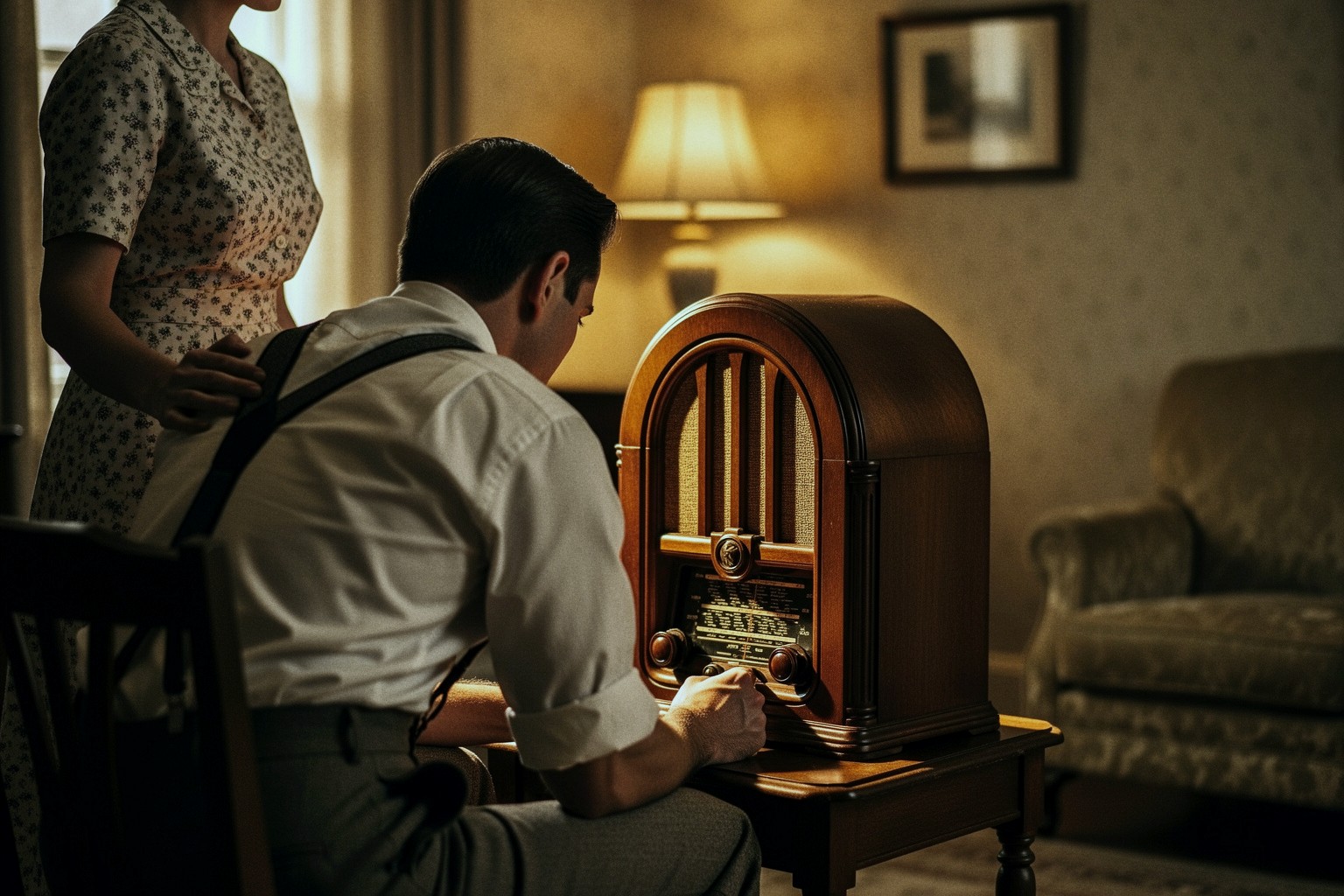
On October 30, 1938, CBS aired an hour-long radio adaptation of H.G. Wells's "The War of the Worlds." Orson Welles and his Mercury Theatre told it as a run of breaking news bulletins: explosions on Mars, a metal cylinder in a farm field at Grover's Mill, New Jersey, heat rays, poison gas, a reporter cut off mid-sentence.
The broadcast was introduced as drama at the start and identified as fiction again before the end. Still, some listeners called police stations and newspaper offices. A few went out into the street to look at the sky.
By morning the story was on front pages across the country. The New York Times reported radio listeners in panic, taking the war drama as fact. Other papers described terrified crowds, jammed roads and families fleeing their homes.
Most of America was not listening. The program ran against NBC's far more popular Chase and Sanborn Hour, a ratings survey found only a sliver of households tuned to CBS, and the stampede stories rested on scattered anecdotes. Newspapers also had a motive: radio was taking their advertisers, and a tale about the new medium's dangers was hard to resist.
The FCC took no action, and Welles soon landed a sponsor. The panic stuck anyway, retold for decades as proof that a broadcast could stampede a nation.
Checked against: Newspaper archives from October 31, 1938; the surviving CBS broadcast recording and script; FCC records; academic histories of radio and of media-effects research
The biggest bomb ever built was never meant to be used
Illustration generated by AI for The Day Vault.
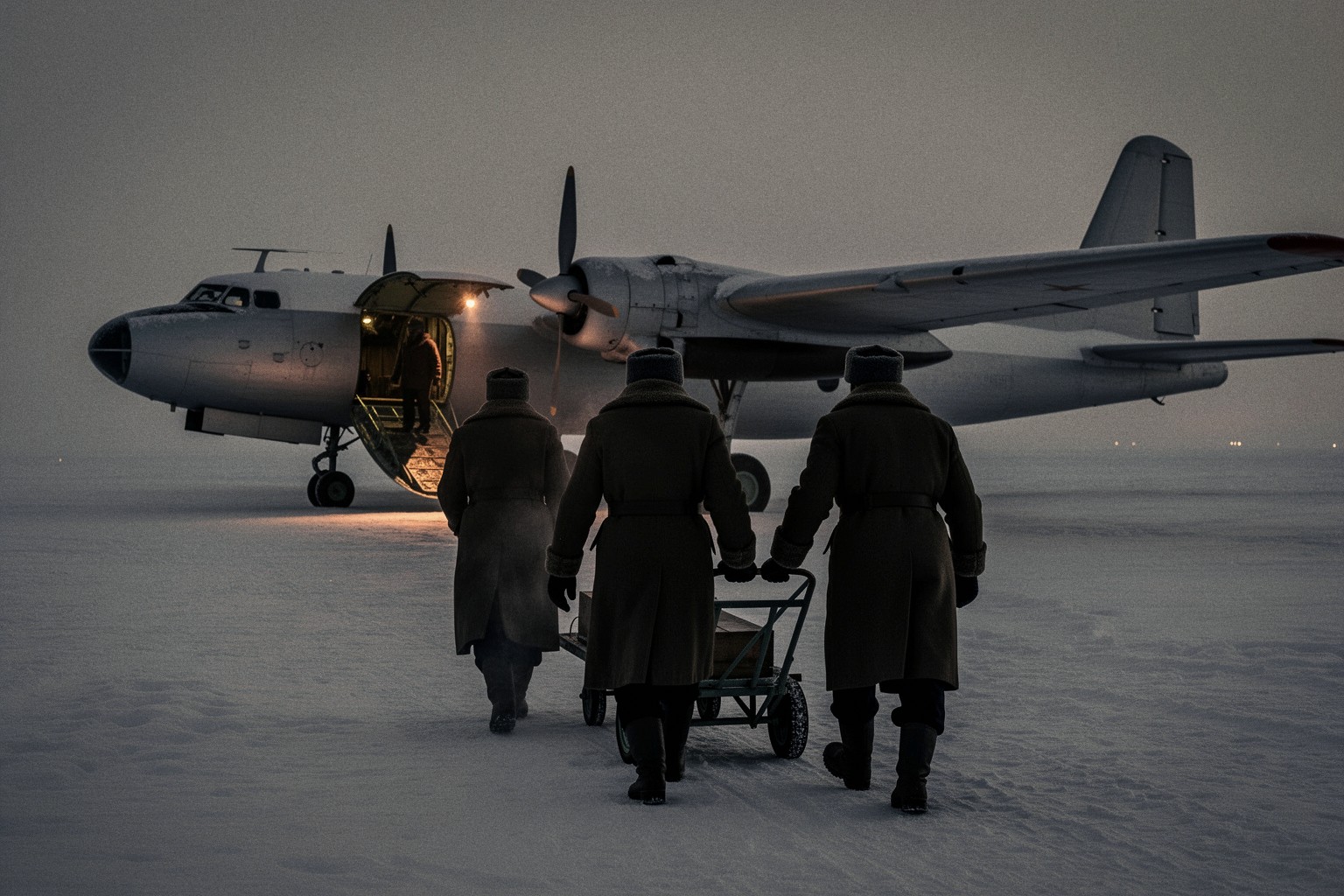
On 30 October 1961, a Soviet bomber dropped the largest explosive device ever detonated over Novaya Zemlya, an archipelago in the Arctic Ocean. It released about 50 megatons of energy, more than 3,000 times the bomb that destroyed Hiroshima.
The aircraft had been painted white to reflect the flash. A huge parachute slowed the bomb's fall so the crew had time to fly clear. They did, barely. The shock wave caught the plane and knocked it sharply downward before the pilot regained control. Windows broke in settlements hundreds of kilometres away.
It could have been worse. The designers had planned 100 megatons and cut the yield in half, partly to limit radioactive fallout and partly to give the crew a chance of coming home. Moscow wanted the world to see the flash, and it did.
As a weapon, it was nearly useless. It weighed around 27 tonnes and was about eight metres long. Its bomber had to have its bomb-bay doors removed to carry it, and that aircraft could never have reached an American city.
No second one was built. Less than two years later, the Soviet Union signed a treaty banning nuclear tests in the atmosphere.
Checked against: Histories of the Soviet nuclear programme, declassified Russian archival accounts, nuclear test databases, and Cold War arms-control histories
Quebec voted to stay in Canada, by barely more than a rounding error
Illustration generated by AI for The Day Vault.
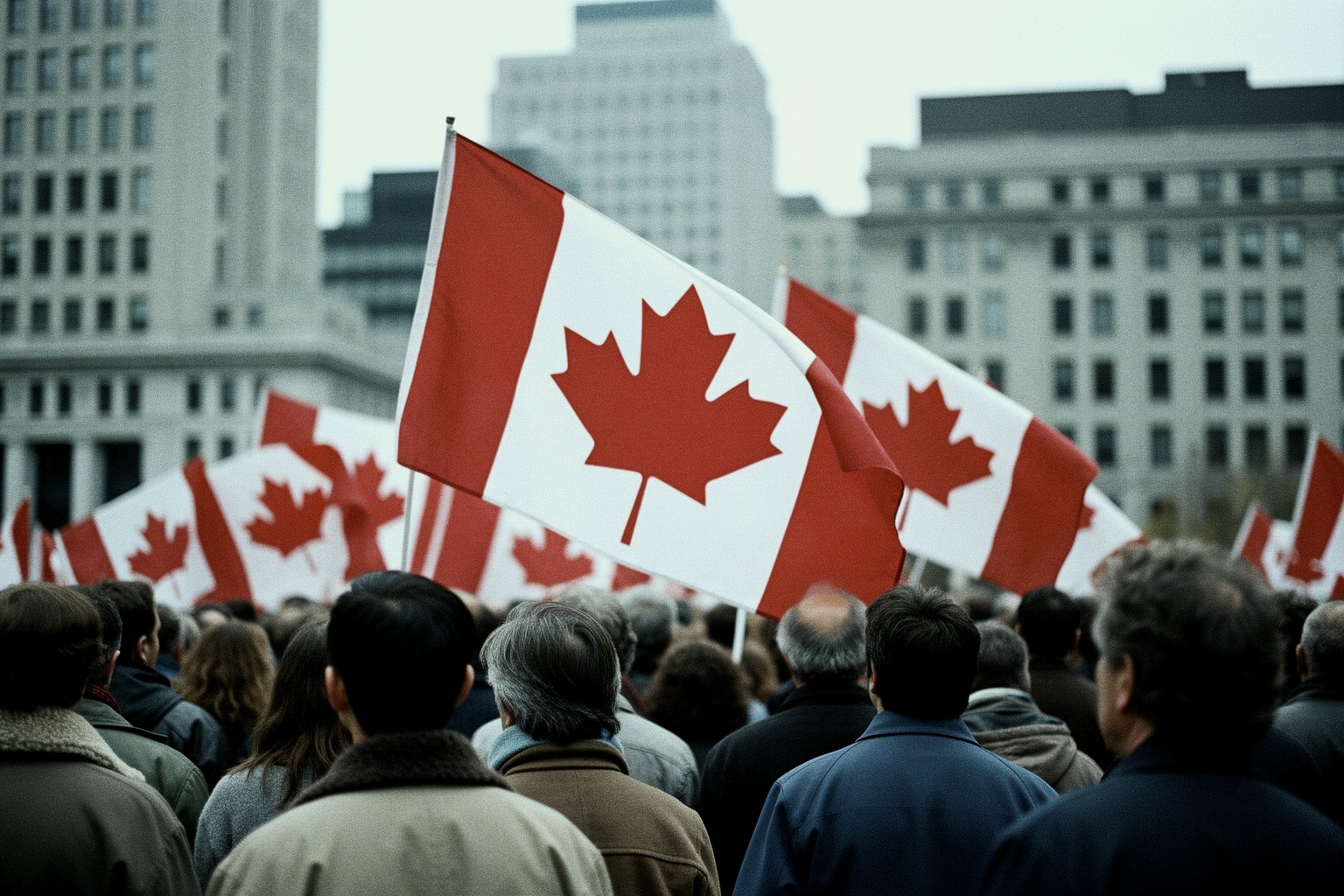
On October 30, 1995, Quebec voters were asked whether the province should become sovereign after offering Canada a new economic and political partnership. The No side won with 50.58 percent. Yes took 49.42.
Turnout passed 93 percent, among the highest ever recorded in a Canadian vote. Weeks earlier, No had looked comfortable. Then Lucien Bouchard, leader of the Bloc Québécois, became the campaign's public face, and the polls closed fast. Three days before the vote, tens of thousands of people from across the country filled downtown Montreal to ask Quebec to stay.
On election night, Premier Jacques Parizeau blamed the defeat on money and the ethnic vote. The remark was condemned, including by members of his own movement, and he announced his resignation the next day.
A federalist win that narrow settled nothing. It showed how close the country had come to splitting.
Ottawa asked the Supreme Court whether a province could leave on its own. In 1998 the court said not unilaterally, but that a clear majority on a clear question would oblige the rest of Canada to negotiate. Parliament wrote that into the Clarity Act in 2000.
Checked against: Directeur général des élections du Québec official results; Supreme Court of Canada reference judgment (1998); Canadian newspaper archives; parliamentary records of the Clarity Act
The straits a navy couldn't force were opened with a signature
Illustration generated by AI for The Day Vault.
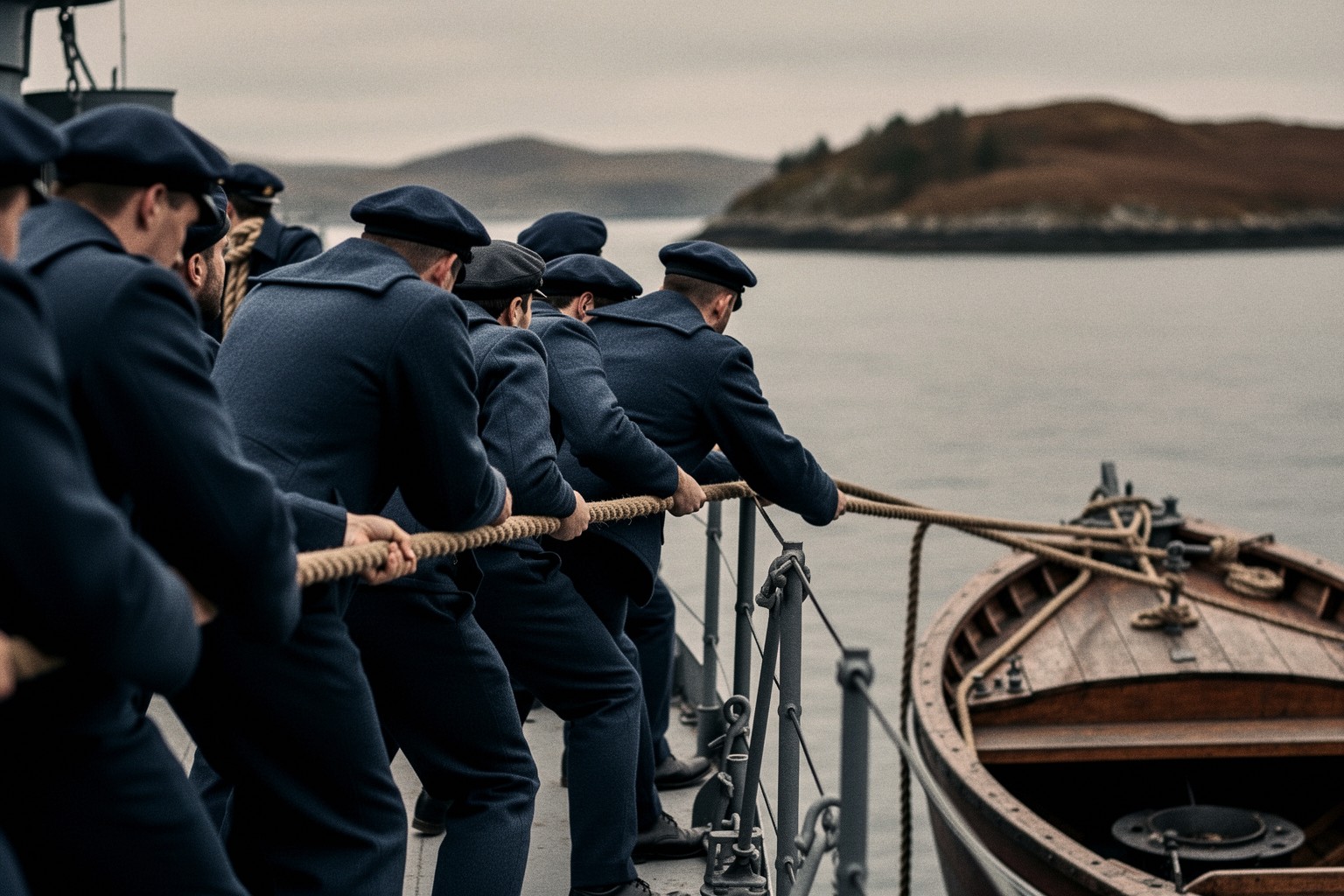
On 30 October 1918, the Ottoman Empire signed itself out of the First World War. The armistice was agreed aboard HMS Agamemnon, a British battleship anchored in Mudros harbour on the Greek island of Lemnos. Fighting was to stop at noon the next day.
The location carried a sting. Three and a half years earlier, Agamemnon had been one of the warships sent to shell the forts of the Dardanelles, and Mudros had been the staging base for the Gallipoli landings. That campaign cost both sides enormous casualties and never opened the straits.
Now the Ottoman delegation, led by the naval minister Rauf Bey, gave them up on paper. The terms opened the Dardanelles and the Bosporus to Allied ships, handed over the forts guarding them and ordered the army demobilised. On 13 November, an Allied fleet anchored off Constantinople.
The document that ended one war started the next: a clause letting the Allies occupy any strategic point they judged threatened was read broadly, and the occupations that followed turned defeat into resistance across Anatolia.
Within a year, former Ottoman officers were raising a national army in the interior. Their war ran until 1922, and the Allies ended up renegotiating the whole peace at Lausanne in 1923.
Checked against: Published text of the Armistice of Mudros; British Admiralty records; standard histories of the First World War in the Middle East and of the Turkish War of Independence
Two bangs in the tunnels, and a city full of suspects
Illustration generated by AI for The Day Vault.
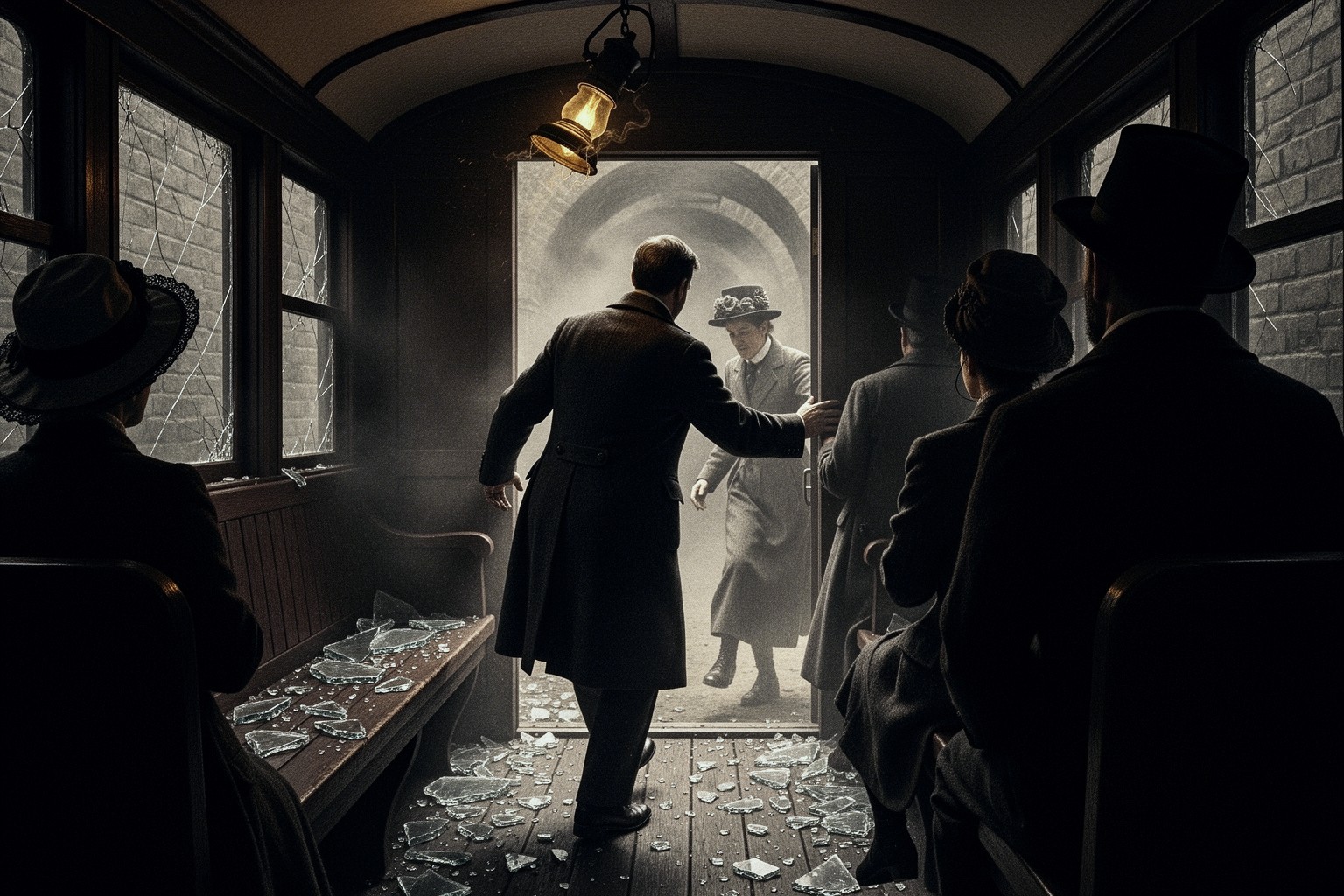
On the evening of 30 October 1883, two bombs went off on London's underground railways within minutes of each other. One exploded in the tunnel near Praed Street station on the Metropolitan line. The other went off on the District line between Charing Cross and Westminster.
The Praed Street blast did the damage. It shattered the windows and gas lamps of a passing train's third-class carriages and left passengers cut and burned in a smoke-filled tunnel. Investigators concluded the devices had most likely been dropped from moving trains, not planted on the track.
The attacks belonged to the Fenian dynamite campaign, a series of bombings in British cities by Irish republicans, many organised and funded from the United States. The targets were chosen to frighten. A crowded train in a sealed tunnel, packed with ordinary commuters, was about as frightening as Victorian London got.
But the crowding the bombers counted on also hid them: anyone on any train that evening could have been the one at the window, and there were thousands of them.
Police began watching stations and passengers in earnest. The campaign carried on regardless, and in January 1885 the dynamite reached the Tower of London and the Palace of Westminster.
Checked against: Contemporary London newspaper reports; Metropolitan Police and Home Office records; histories of the Fenian dynamite campaign; histories of the London Underground
On October 30, 1961, the Soviet Communist Party's 22nd Congress voted to remove Joseph Stalin's embalmed body from the mausoleum on Red Square.
Since his death in 1953 he had lain beside Lenin under glass, and visitors filed past both men in silence. The arrangement worked like a shrine in a state that officially had no use for shrines. Lenin's body had become something close to a relic, and Stalin had been placed next to it as an equal. Nikita Khrushchev had denounced Stalin's crimes in a secret speech in 1956. Five years later, the Congress made the break public and physical.
The motion still needed a voice that delegates could not easily dismiss. It came from Dora Lazurkina, an Old Bolshevik who had joined the party before the revolution and then spent years in Stalin's prisons and camps. She told the hall she had consulted Lenin.
She meant it literally: Lenin had come to her in a dream, she said, and told her he did not like lying beside the man who had done the party so much harm. The delegates of an officially atheist party applauded, and then they voted.
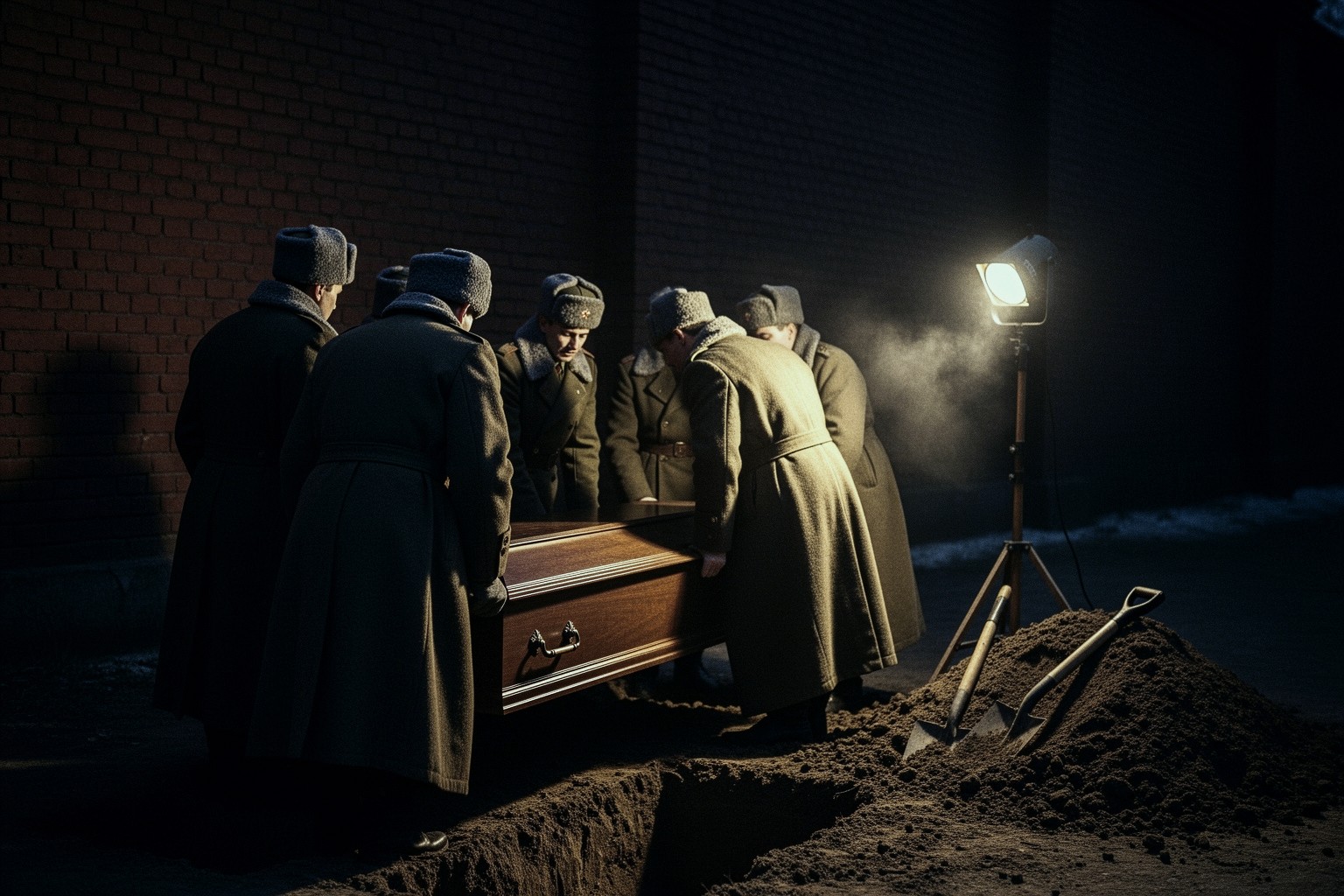
The next night, soldiers carried Stalin out of the tomb and buried him a few yards away, in the ground by the Kremlin wall. Lenin stayed under glass, alone.
Checked against: Published proceedings of the 22nd Congress of the CPSU; Soviet press reports from October and November 1961; academic histories of the Khrushchev era; biographies of Stalin and Khrushchev.
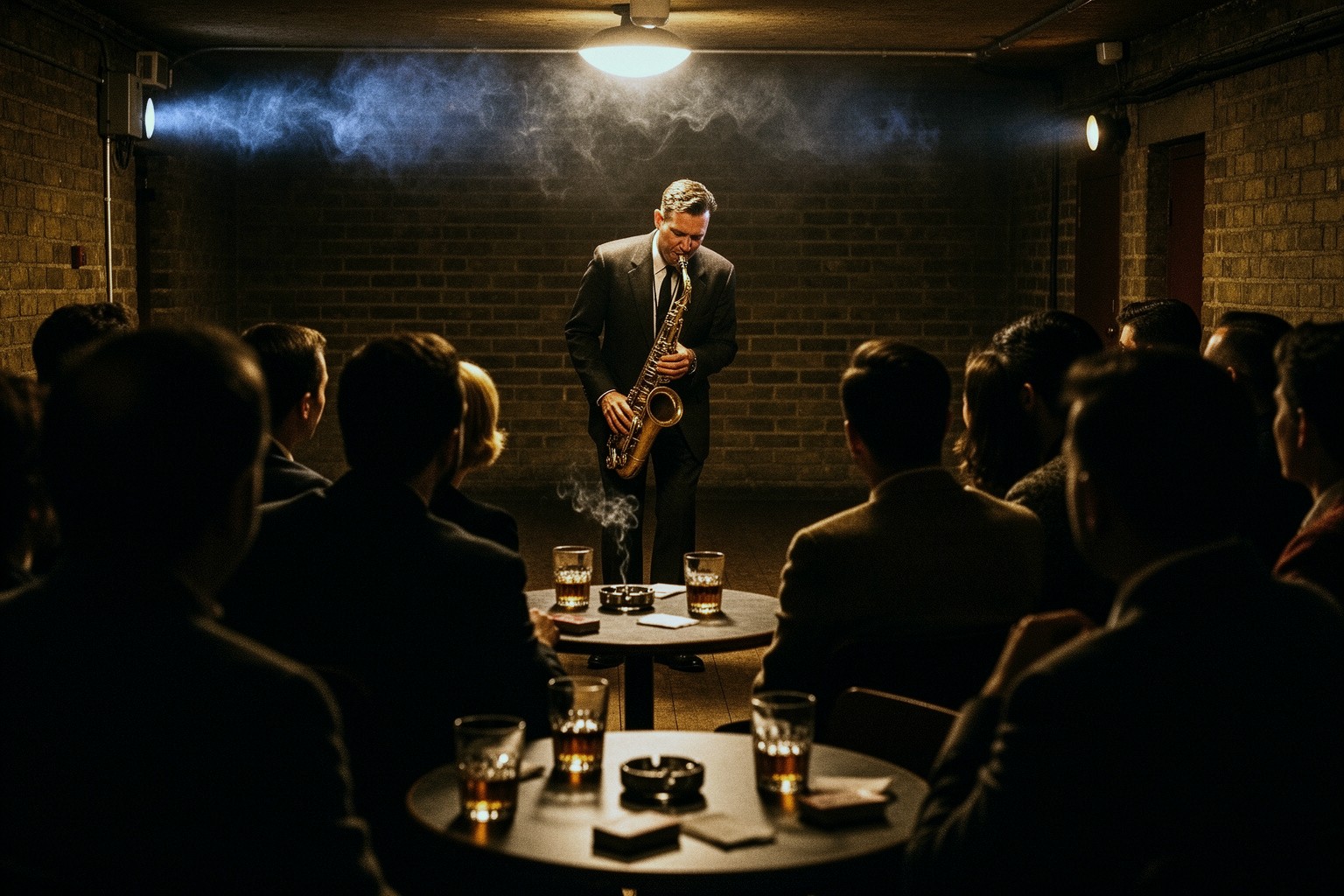
On 30 October 1959, two saxophonists, Ronnie Scott and Pete King, opened a jazz club in a basement at 39 Gerrard Street, in London's Soho.
Scott had worked on transatlantic liners in the late 1940s and used his shore leave to hear bebop in New York clubs, at its source. He wanted a room in London where that music could be played properly, run by musicians rather than by owners who treated jazz as background noise for the bar.
The basement was cramped, smoky and open late. British modernists filled the bandstand, and the people at the tables had come to listen, not to talk over the solos.
The catch was the players Scott most wanted to book. Since the mid-1930s, a standoff between the British and American musicians' unions had kept American jazzmen almost entirely off British stages.
Scott and King spent the next two years pressing for a one-for-one exchange, with a British musician sent to America for every American brought in. In 1961 the tenor saxophonist Zoot Sims came down the basement stairs to play, and the club Scott had imagined could finally open its doors to the people it was built for.
Checked against: Club histories and memoirs by its founders, British jazz press archives, histories of the Musicians' Union and its dispute with the American Federation of Musicians, obituaries in national newspapers
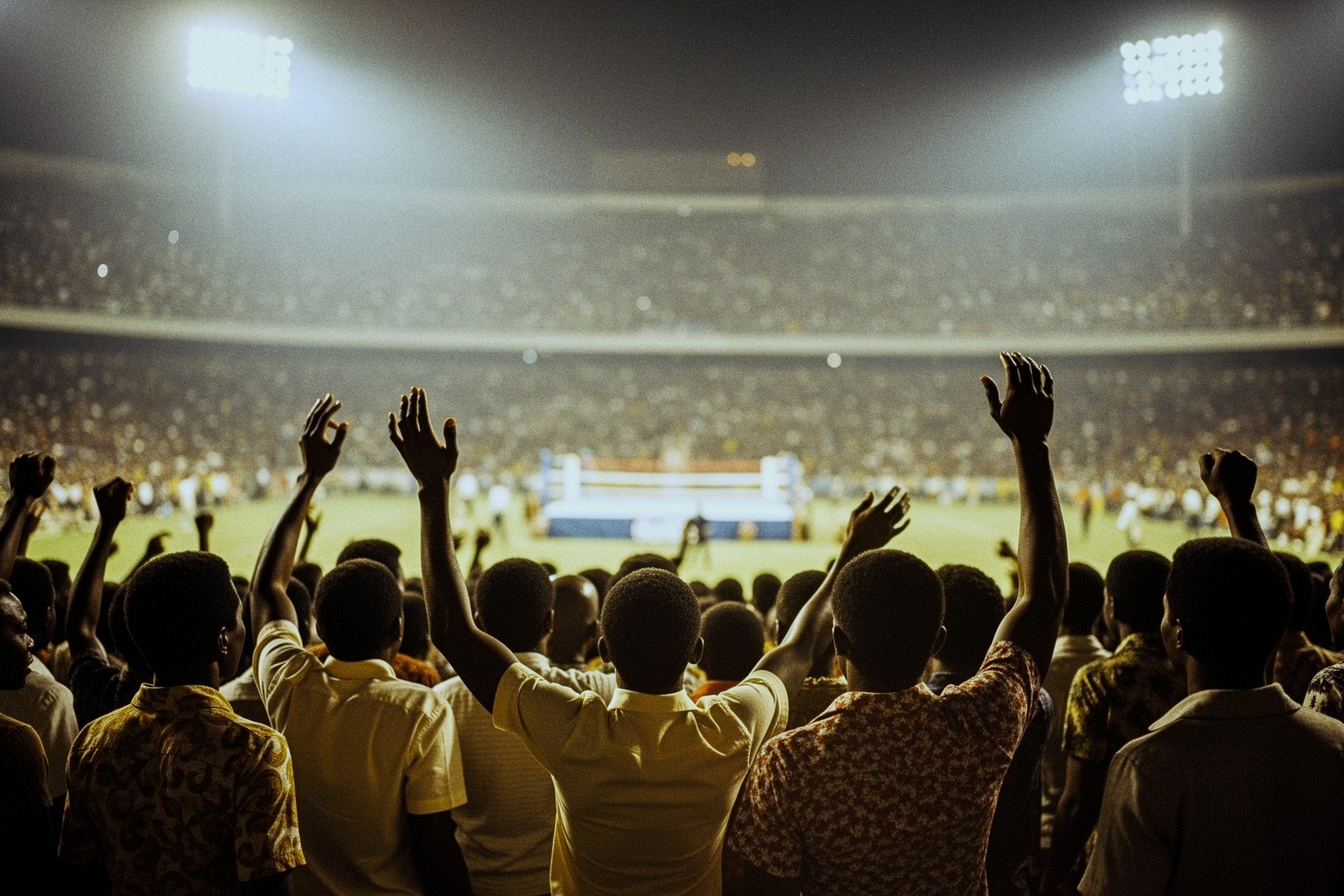
On October 30, 1974, Muhammad Ali fought George Foreman for the world heavyweight title in Kinshasa, Zaire. The bell rang at around 4 a.m. local time so the fight could reach American theatres showing it on closed-circuit TV in the evening.
Each man had been guaranteed $5 million, money put up through the government of Zaire's president, Mobutu Sese Seko. The bout had already slipped once. Foreman cut his eye in sparring in September, and the date moved back five weeks.
Foreman was 25 and unbeaten. He had flattened Joe Frazier and Ken Norton, the two men who had beaten Ali, both inside two rounds. Ali was 32 and the underdog. The crowd in the Stade du 20 Mai chanted for him anyway: "Ali, bomaye." Ali, kill him.
Then Ali spent round after round doing what looked like losing: leaning back on the ropes, gloves up, letting the hardest puncher in boxing pound his arms and ribs.
By the eighth round, Foreman's punches had slowed to shoves. Ali came off the ropes, landed a fast combination, and Foreman went down. He was counted out with seconds left in the round. Ali later named the tactic rope-a-dope.
Checked against: Contemporary wire-service and newspaper fight reports; boxing record databases; published biographies of both fighters; the documentary record of the bout's promotion and broadcast.
He won the title. His teammate scored more points.
Illustration generated by AI for The Day Vault.
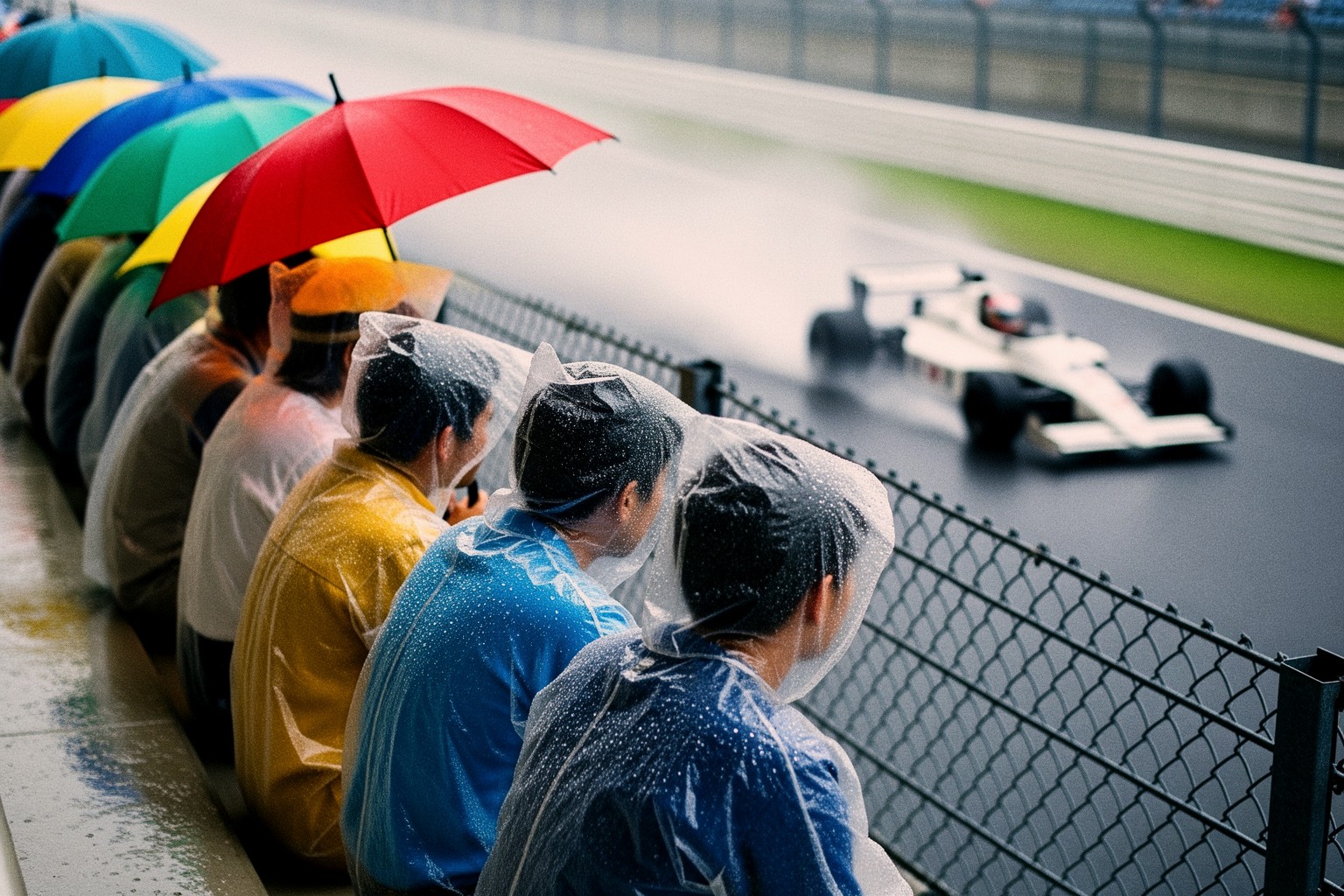
On October 30, 1988, Ayrton Senna won the Japanese Grand Prix at Suzuka and, with it, his first Formula One world championship. He started from pole position, needing a win to settle the season.
Then his car bogged down as the lights changed. By the end of the first lap he was buried in the midfield, and his McLaren teammate, Alain Prost, was out in front. Senna cut back through the field one car at a time. A light rain started to fall. He caught Prost and took the lead on lap 28, then held it to the flag.
It capped one of the most lopsided seasons the sport has ever seen. McLaren won 15 of the 16 races. Senna won eight of them, Prost seven, and almost every race came down to which of the two finished first.
Across the whole year, though, Prost scored more points than Senna, 105 to 94. Only each driver's best 11 results counted toward the title, and Prost had piled up second places he wasn't allowed to keep.
After the dropped scores, the table read Senna 90, Prost 87. In 1991, Formula One scrapped the rule and began counting every race.
Checked against: FIA official championship results and standings for 1988; contemporary motorsport press race reports; standard Formula One reference histories and season annuals
The shuttle was American. Mission control was in Bavaria.
Illustration generated by AI for The Day Vault.
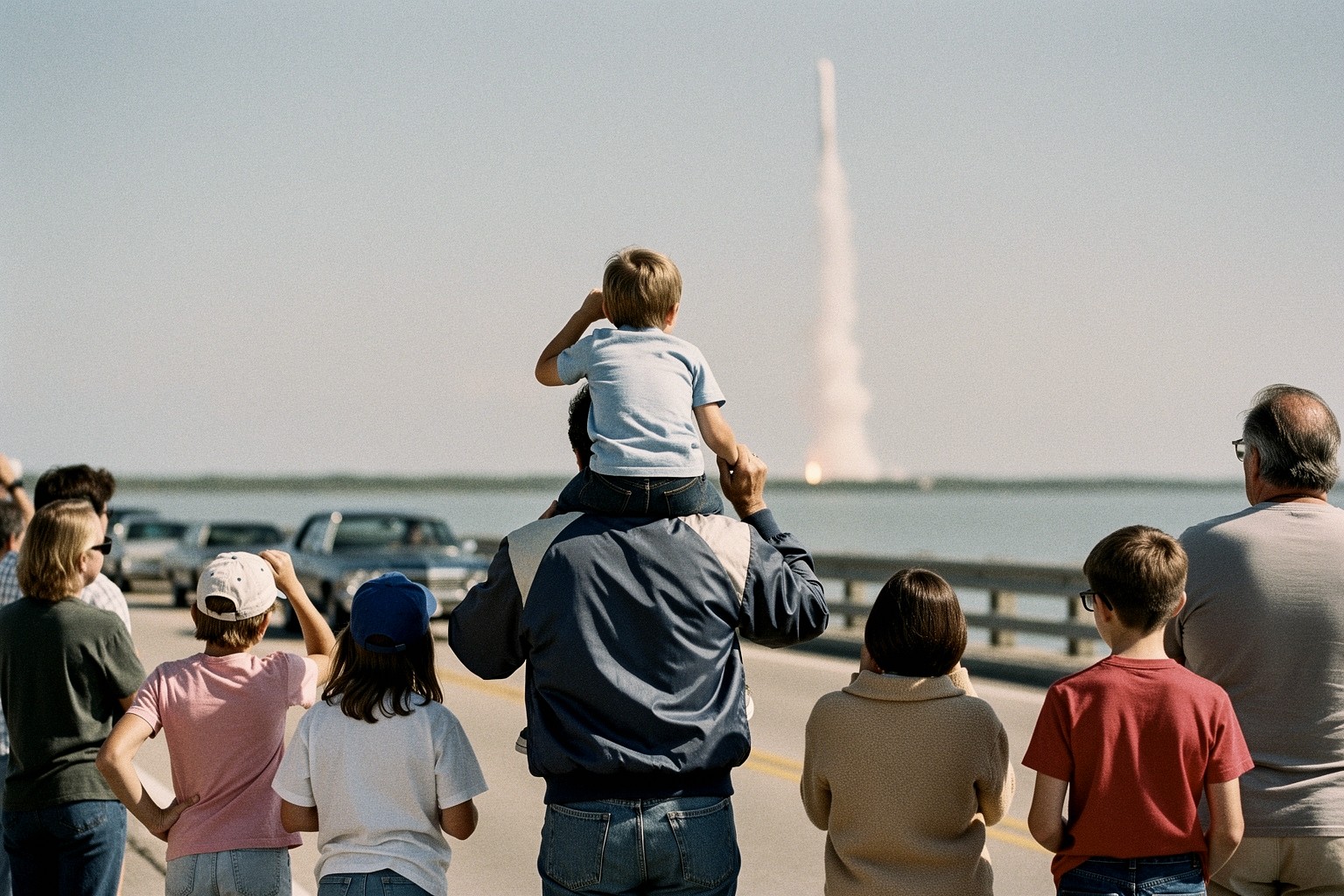
On October 30, 1985, the space shuttle Challenger lifted off from Kennedy Space Center with eight people aboard. No spacecraft had ever launched with more. Three of the crew were Europeans: two West Germans and a Dutchman.
West Germany had paid for the flight. Its cargo was Spacelab D1, a pressurised laboratory bolted into the payload bay. Once the crew reached orbit, the science was run not from Houston but from the German space operations centre at Oberpfaffenhofen, near Munich. It was the first time a Spacelab mission had been directed from outside the United States.
For a week the crew worked in shifts around the clock, melting metals, growing crystals and testing how the inner ear copes without gravity. One experiment was a sled on a rail that shuttled a strapped-in astronaut back and forth to probe the balance organs. Challenger glided down at Edwards Air Force Base in California on November 6.
It was Challenger's last successful flight.
Less than three months later it broke apart 73 seconds after launch, killing all seven aboard, and the shuttle fleet stayed grounded for nearly three years. The follow-up German laboratory, D2, did not reach orbit until 1993.
Checked against: NASA mission archives and press kits; German Aerospace Center (DLR) and European Space Agency mission histories; the Rogers Commission report; contemporary newspaper coverage
The first ballpoint pen was built for leather, not letters
Illustration generated by AI for The Day Vault.
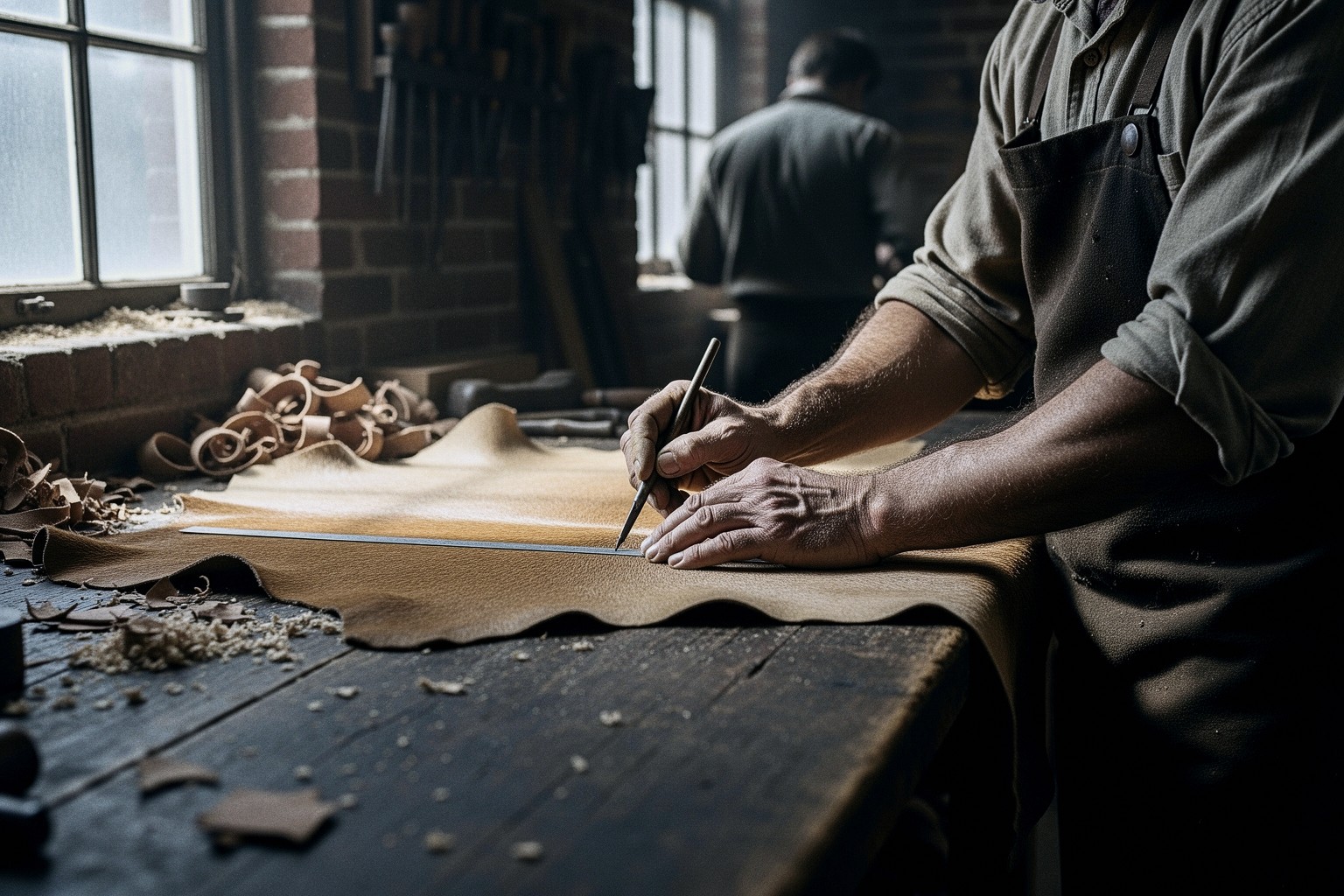
On October 30, 1888, John J. Loud of Weymouth, Massachusetts, received a US patent for a new kind of pen. Instead of a nib, it had a small ball at the tip, held in a socket, that rolled ink onto a surface as it moved.
Loud worked with leather, and he had a practical problem. The pens of his day had pointed metal nibs that snagged and tore when dragged across a hide. He wanted something that would leave a clear mark on rough material without catching. His patent said so plainly: the pen was meant for rough surfaces like wood and coarse wrapping paper.
The ball solved the snagging. It rolled where a nib would have dug in. On paper, at least, Loud had the basic mechanism that millions of people now carry in a pocket, chew at meetings and lose down the back of the sofa.
But on ordinary writing paper, the pen was close to useless. Its line was too coarse and its ink too unruly for anyone to write a letter with it.
Loud never made money from it, and the patent eventually lapsed. The rolling ball sat unused for roughly half a century, until a Hungarian journalist, László Bíró, took up the same idea in the 1930s and paired it with a thicker, quick-drying ink.
Checked against: US Patent Office records for Loud's 1888 ballpoint patent; histories of writing instruments; biographies and patent histories covering László Bíró