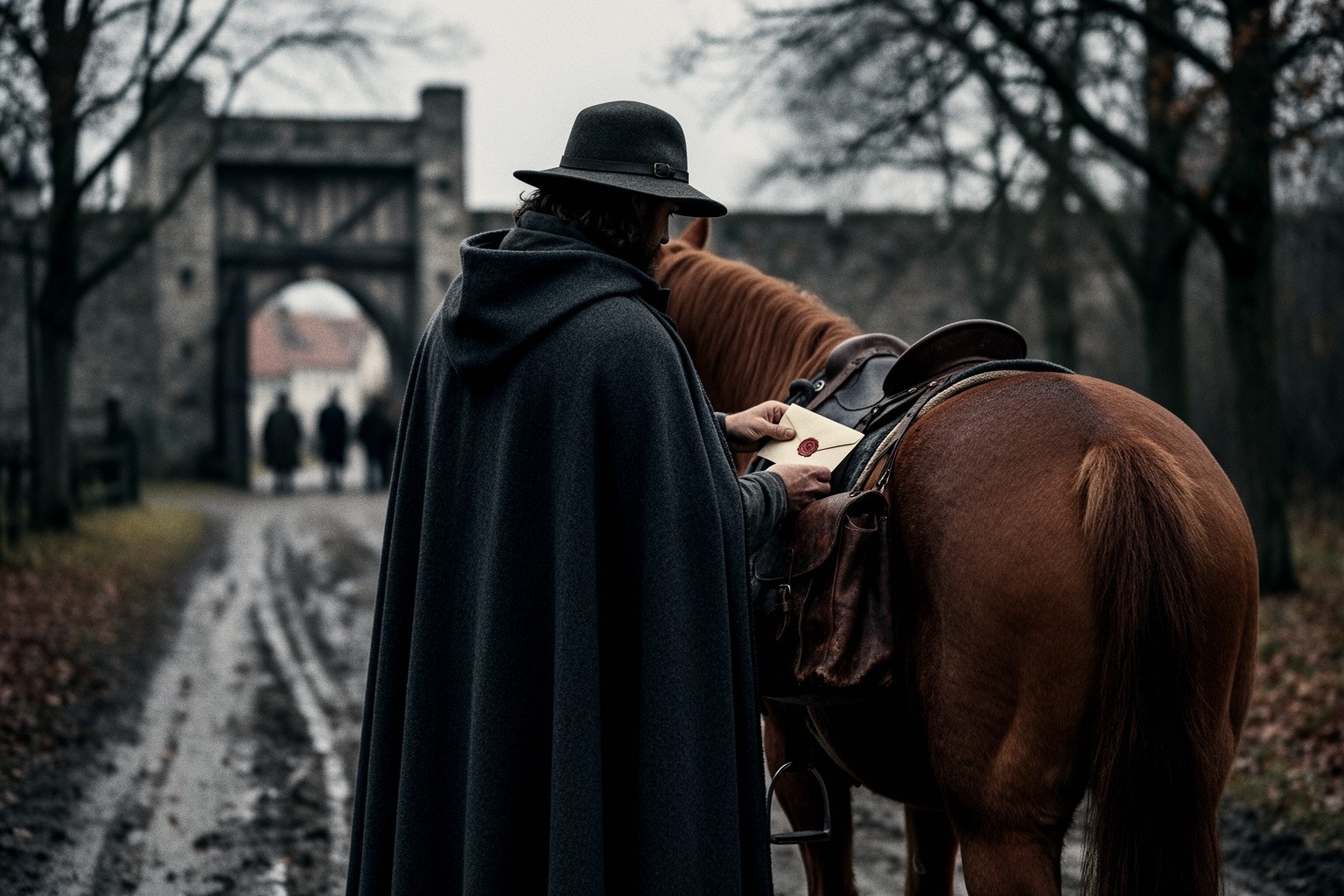
On October 31, 1517, a theology professor in Wittenberg named Martin Luther sat down and wrote a letter. It went to Albrecht, Archbishop of Mainz, the churchman whose authority stood behind the indulgence sales spreading through nearby towns.
Indulgences promised buyers relief from punishment for sin. Albrecht had borrowed heavily to secure his high office, and a share of the takings was meant to pay down the debt. Luther enclosed ninety-five theses in Latin, written as points for academic debate, and asked the archbishop to rein the preachers in.
Most retellings show him with a hammer, nailing those theses to the castle church door. That scene first appears in an account by Philip Melanchthon, written after Luther's death in 1546. Melanchthon did not arrive in Wittenberg until the following year, and Luther never described doing it himself. Historians still argue over whether it happened.
The one thing we can be sure Luther did that day was send a letter.
Albrecht forwarded it toward Rome. Meanwhile printers in Leipzig, Nuremberg and Basel had the theses in print before the year was out, and an argument meant for one archbishop was soon being read across the German-speaking lands.
Checked against: Luther's surviving correspondence; Melanchthon's 1546 preface to Luther's collected works; scholarly biographies of Luther; histories of early printing and the Reformation.
A state rushed into the Union for an election it didn't need to win
Illustration generated by AI for The Day Vault.
On October 31, 1864, Nevada became the 36th state. The Civil War was still being fought, and the presidential election was eight days away.
Statehood usually took years and a population large enough to justify a seat in Congress. Nevada had neither the time nor the people. It had silver mines, a scattering of boomtowns and a Republican Congress that wanted more friendly votes in the Senate, the House and the Electoral College. Lincoln's allies saw a new state as insurance for the election and for the push to abolish slavery by constitutional amendment.
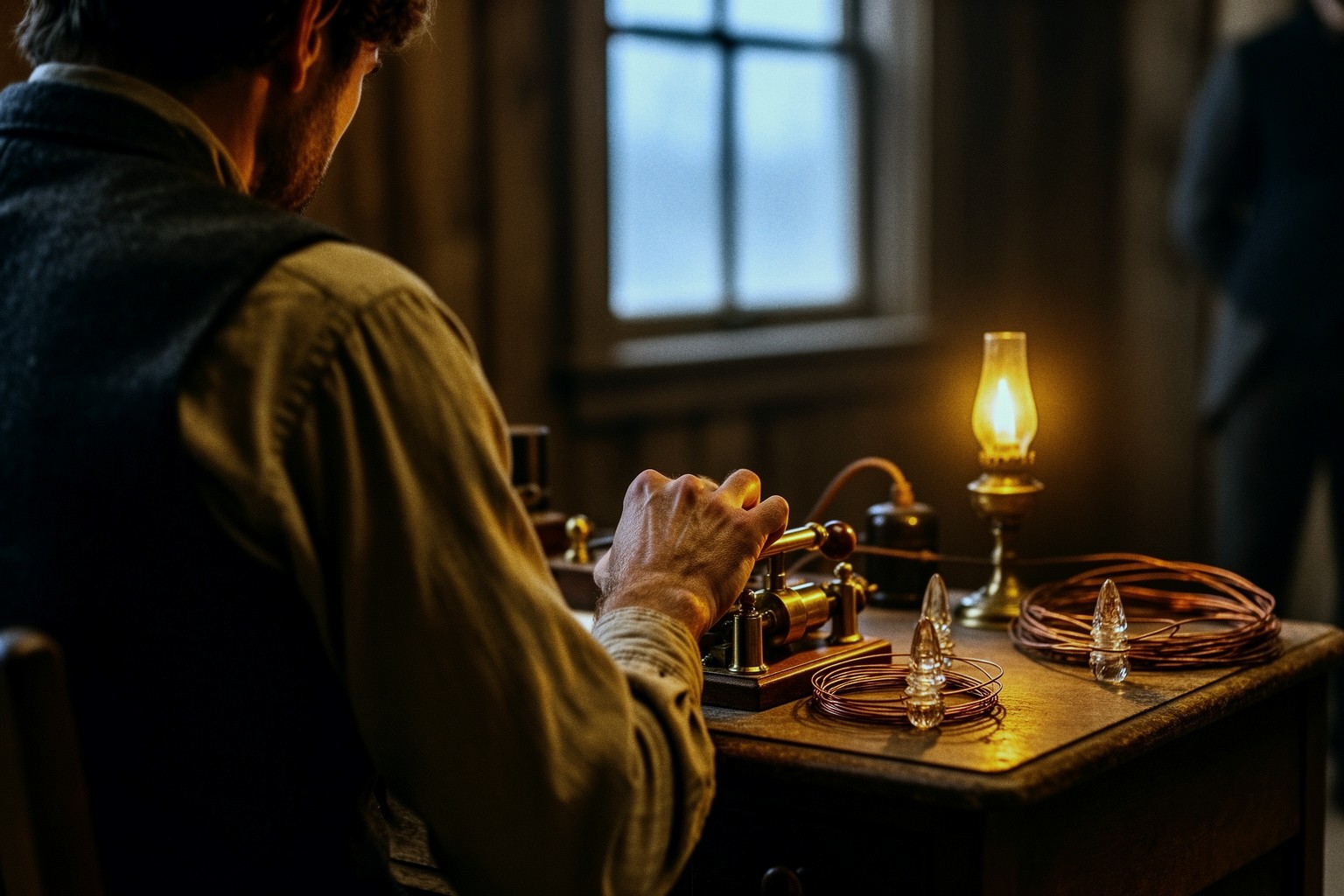
So the territory moved fast. Delegates drafted a constitution, voters approved it, and the full text went to Washington by telegraph because the mail was too slow. The transmission ran to thousands of words and cost more than $4,000, among the most expensive telegrams sent up to that time. The proclamation came through just ahead of the vote.
Then Lincoln won 212 electoral votes to 21, a margin that made Nevada's contribution irrelevant. The new state cast only two of its three electoral votes, because one elector was stuck in the snow and never voted.
The rush outlived the reason for it. A thinly settled mining frontier kept two full Senate seats, and Nevada still puts the words of its hurried birth on its flag: Battle Born.
Checked against: Congressional records and the 1864 presidential proclamation of admission; Nevada state archives; standard histories of the 1864 election and the Thirteenth Amendment
On October 31, 1941, a German U-boat torpedoed the USS Reuben James west of Iceland. She was an old four-funnel destroyer escorting a convoy bound for Britain. She became the first U.S. Navy warship sunk in the Second World War.
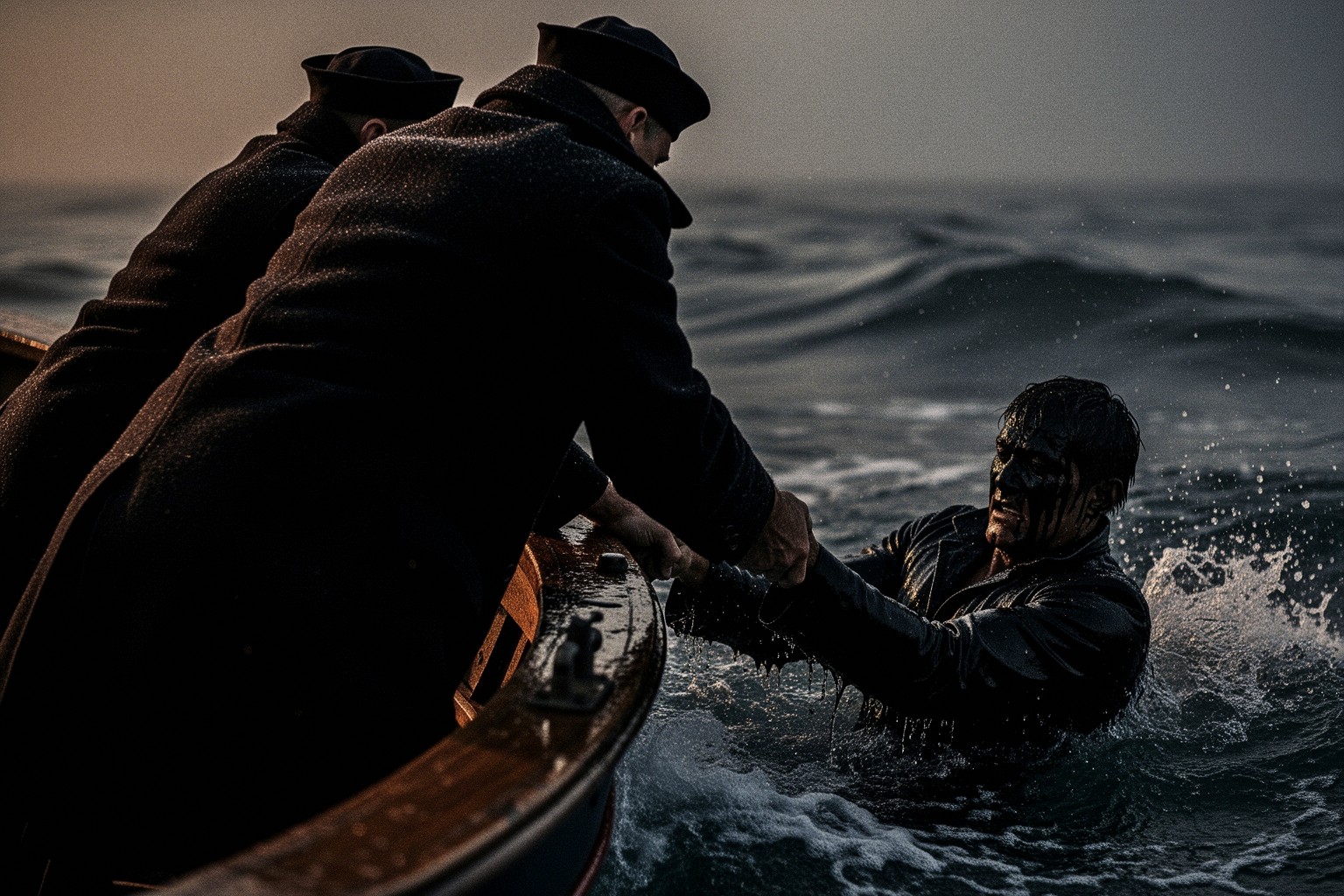
The torpedo struck near her forward magazine. The blast tore away the bow, and the rest of the ship went down within minutes. As she sank, her own depth charges exploded among the men in the water. Of roughly 144 aboard, 44 were pulled alive from the cold, oil-slicked sea.
On paper, the United States was neutral. In practice, its destroyers had been guarding British convoys across much of the Atlantic for weeks, and in September Roosevelt had ordered them to fire on German submarines on sight. Woody Guthrie wrote a song asking the names of the men who died.
The country mourned, argued, and still did not go to war.
Congress responded in November by loosening the Neutrality Act, letting American merchant ships carry guns into combat zones. It took Pearl Harbor, five weeks after the sinking, to settle the rest.
Checked against: U.S. Navy Naval History and Heritage Command ship histories; Dictionary of American Naval Fighting Ships; standard histories of the Battle of the Atlantic; congressional records on the 1941 Neutrality Act revisions
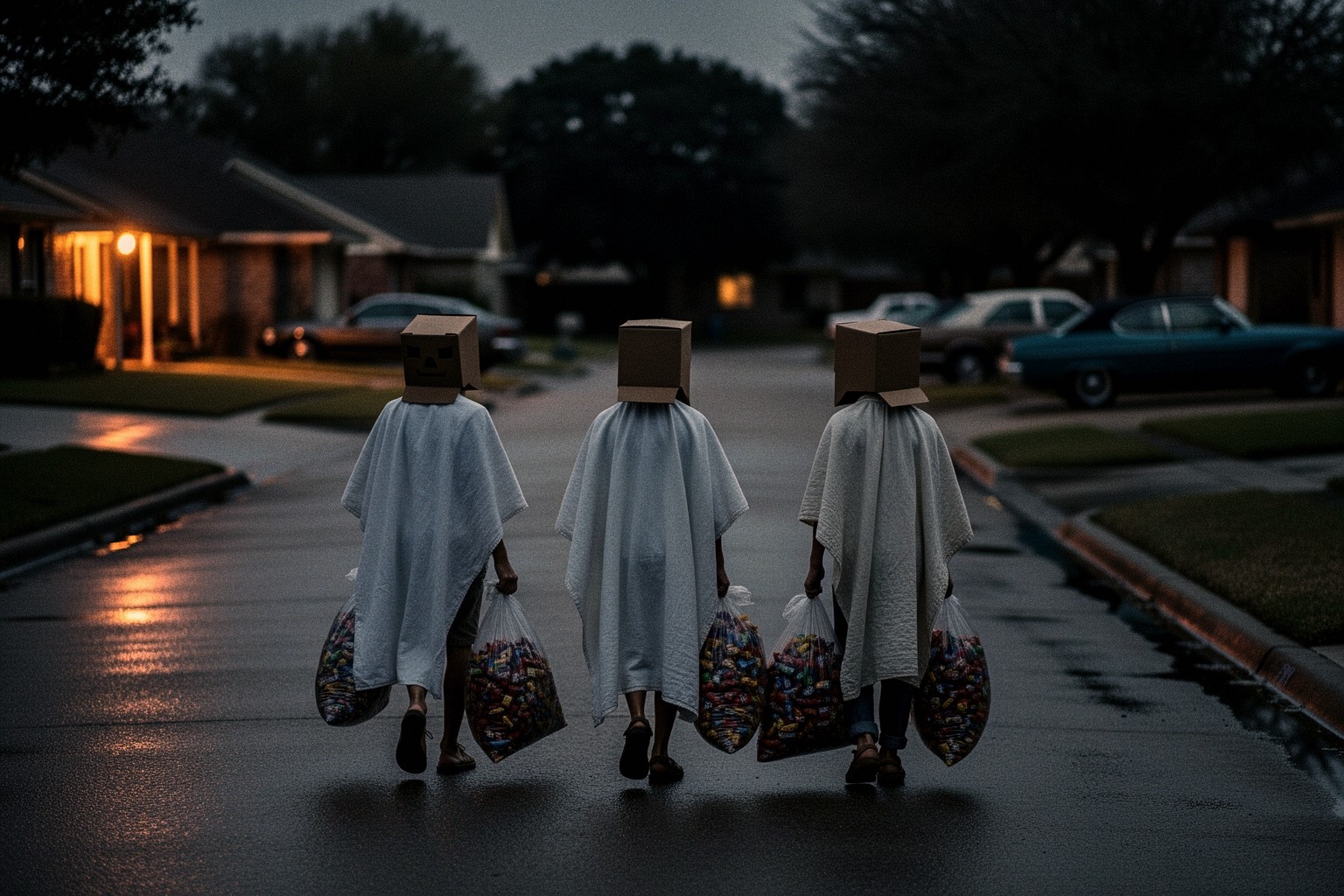
On October 31, 1974, eight-year-old Timothy O'Bryan died hours after trick-or-treating in Deer Park, Texas, a suburb of Houston. Before bed he had eaten from a giant Pixy Stix straw. It was laced with potassium cyanide.
Four other children had been handed the same kind of straw that night, including Timothy's sister. None of them ate theirs. One boy was found asleep in bed, still clutching his, unopened.
The case became every parent's nightmare: a poisoner hidden among the porch lights, slipping death into a child's bag. Police set out to find the house that had handed out the straws.
There was no such house. The man who gave out the straws was Timothy's father, Ronald Clark O'Bryan, who was deep in debt and had recently taken out life insurance on his children.
The neighbour he tried to blame had spent the evening at work, in front of witnesses. O'Bryan was convicted of murder and executed in 1984. The poisoning stranger he invented stayed behind in American folklore, and the case most often cited as proof of that stranger is the one where the poisoner was the victim's own father.
Checked against: Texas court and appellate records; contemporary Houston newspaper coverage; Texas Department of Criminal Justice execution records; criminology research on Halloween candy-tampering legends
The Earth moved. The Vatican caught up 359 years later.
Illustration generated by AI for The Day Vault.
On October 31, 1992, Pope John Paul II addressed the Pontifical Academy of Sciences in Rome and accepted the findings of a commission he had set up to re-examine the case of Galileo Galilei.
In 1633 the Roman Inquisition had found Galileo vehemently suspect of heresy for teaching that the Earth moves around the Sun. He was made to kneel and abjure his views, his book was banned, and he lived out his remaining years under house arrest outside Florence. He died there in 1642.
Newspapers around the world ran versions of the same headline: the Church admits Galileo was right. The pope described the affair as a "tragic mutual incomprehension" and said the theologians of the day had failed to separate scripture from their own reading of it.
By then the Church had not banned a book for saying the Earth moves since 1835, when Galileo's Dialogue quietly disappeared from the Index of Forbidden Books.
The 1992 address lifted no ban and freed no one. It closed a file on a prohibition that had lapsed 157 years earlier.
Checked against: The published text of the papal address of 31 October 1992; contemporary international newspaper coverage; histories of the Galileo affair by historians of science; records of the Index of Forbidden Books.
On 31 October 1975, Queen released "Bohemian Rhapsody" as a single in Britain. It ran close to six minutes. It had no chorus. It moved from a piano ballad to mock opera to hard rock, then back down to a quiet piano coda.
Singles in 1975 were built for radio, and radio liked three minutes. The band's record company doubted any station would give airtime to something twice that length, and there was pressure to cut it down. The band would not cut it.
Before release, Freddie Mercury passed a copy to Kenny Everett, a friend and a disc jockey at London's Capital Radio. Everett played it on air, then played it again, and kept playing it. Listeners rang the station asking where they could buy it. They couldn't, yet.
The song judged too long for radio was sold to the public by radio.
By the end of November it was number one in Britain, and it stayed there for nine weeks, through Christmas and into the new year. Sixteen years later, after Mercury's death in 1991, it went back to number one.
Checked against: UK singles chart archives; music press of 1975 such as weekly British music papers; published histories and biographies of the band; broadcasting histories of London commercial radio
He spent years exposing séances. Now he gets one every Halloween.
Illustration generated by AI for The Day Vault.
Harry Houdini died in a Detroit hospital on October 31, 1926. He was 52. A ruptured appendix had turned into peritonitis, and the escape artist who had walked out of straitjackets, milk cans and locked jail cells could not walk out of this.
His last crusade was against the people who claimed to speak for the dead. He attended séances in disguise, reproduced mediums' tricks on stage and, that same year, testified before Congress in support of a bill to ban fortune-telling for money in Washington, DC.
He and his wife, Bess, had agreed on a coded message. If he could reach her from beyond, she would recognize it. For ten years she held a séance on the anniversary of his death. The last official one, in 1936, took place on the roof of a Hollywood hotel and went out live on radio. Nothing came through, and she ended the vigil.
The man who spent his final years proving the dead do not talk became the reason people sit in the dark every Halloween, waiting for one to start.
Magicians and fans still hold a Houdini séance each October 31. He has not answered yet.
Checked against: Contemporary newspaper reports of his death; biographies of Houdini; records of the 1926 House hearings on fortune-telling in the District of Columbia; reporting on the 1936 radio séance
The first Black player in the NBA was decided by a schedule
Illustration generated by AI for The Day Vault.
On October 31, 1950, Earl Lloyd took the floor for the Washington Capitols against the Rochester Royals in Rochester, New York. He became the first Black player to appear in an NBA game.
He was not the only Black player to reach the league that year. Three arrived in 1950. Chuck Cooper of the Boston Celtics was the first to be drafted. Nat Clifton of the New York Knicks was the first to sign a contract. Lloyd, a forward from West Virginia State College, had been picked in the ninth round.
All three had spent years in college ball and in barnstorming games that the big-city leagues ignored. All three were now on NBA rosters for the same autumn. Any one of them could have been first.
What settled it was the fixture list: Washington's season simply started a day before Boston's.
Cooper played the next night. Lloyd lasted seven games before the Army drafted him, and the Capitols folded that January. The man the record books call first spent most of his debut season wearing a different uniform.
Checked against: NBA historical records and game logs; Naismith Basketball Hall of Fame materials; contemporary 1950 newspaper box scores; published histories of the early NBA
The first plane at the South Pole stayed 49 minutes
Illustration generated by AI for The Day Vault.
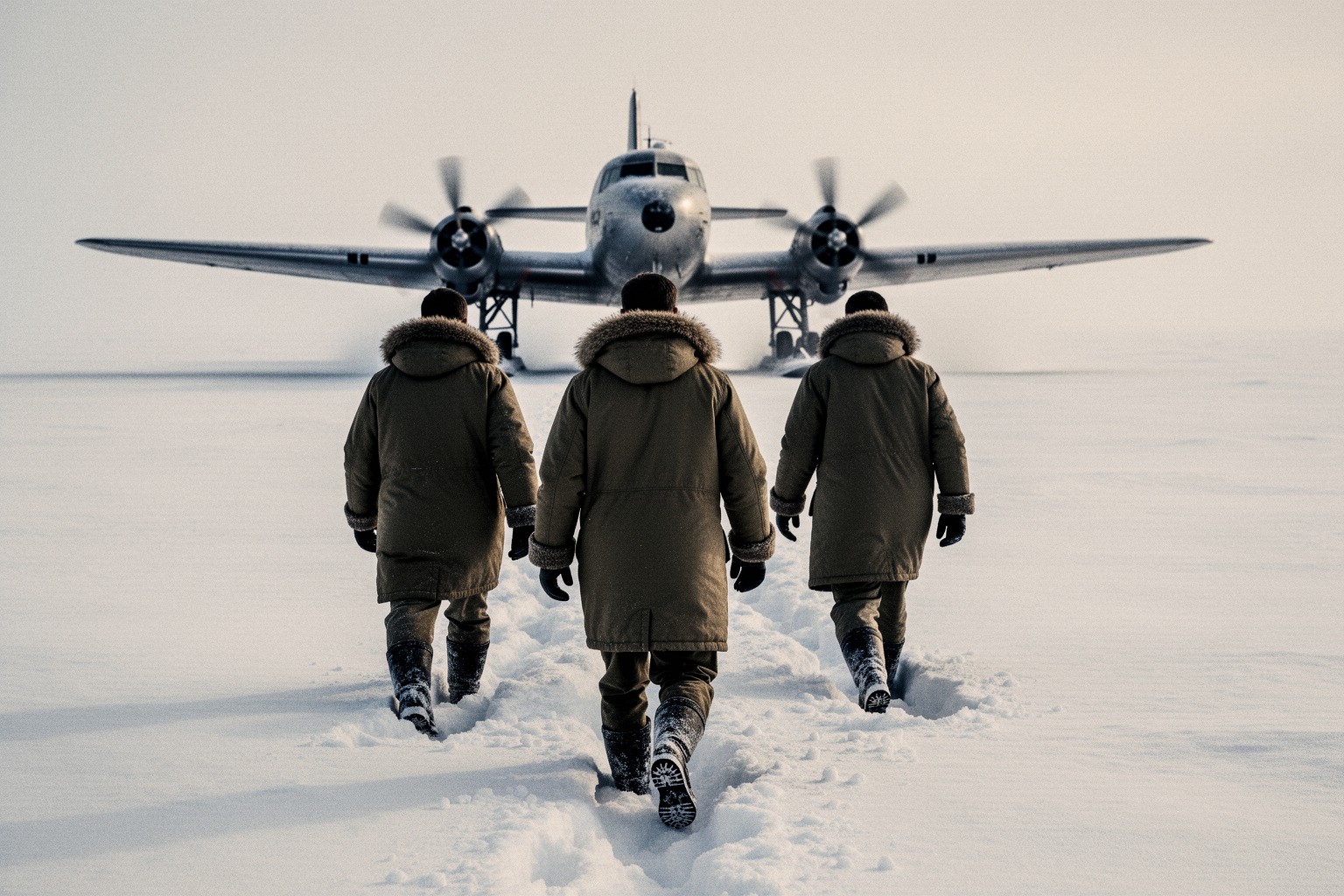
On October 31, 1956, a US Navy transport plane fitted with skis landed at the geographic South Pole. It was the first aircraft ever to touch down there.
Seven men were aboard. Rear Admiral George Dufek climbed out first. He was the first American to stand at the pole, and his crew were the first people there since Robert Falcon Scott's party in January 1912. Scott had walked. Dufek's crew had flown in from the coast.
The air was about minus 58 degrees Fahrenheit. The men planted an American flag, took photographs and set out a radar reflector to mark the spot. The pilot kept the engines running the whole time. He feared that if they stopped, they would never start again.
Leaving was harder than arriving. The skis had frozen into the snow, and the plane broke free only after the crew fired rocket bottles strapped to its sides.
But it had landed, and that was the point. Within weeks, Navy construction crews were flying in to build a base on the same ice. The station they finished in early 1957 has been staffed every day since.
Checked against: US Navy Operation Deep Freeze histories, US Antarctic Program records, contemporary newspaper wire reports, polar exploration histories
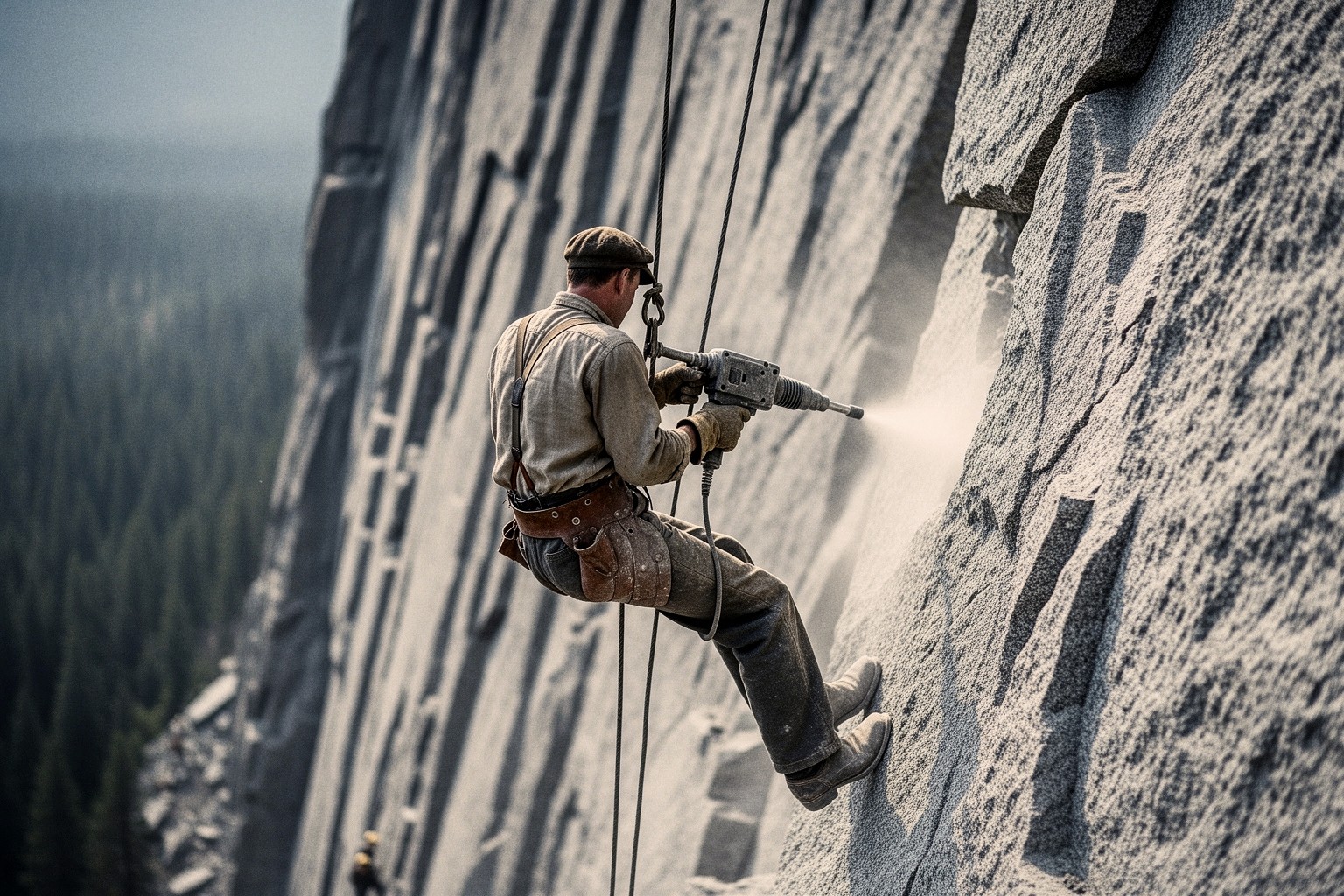
On October 31, 1941, crews stopped work on Mount Rushmore. Fourteen years of drilling and dynamite in the Black Hills of South Dakota had produced four presidential heads, each about 60 feet from chin to crown.
Heads were never the whole design. The sculptor's models showed the four men carved down to the waist. Behind them he planned a Hall of Records, a chamber cut into the rock to explain the monument to whoever found it centuries later.
About 400 workers did the carving, many of them miners who needed the wages. They hung from steel cables in leather bosun chairs. Dynamite took off most of the granite, and drills and hand tools finished the surface. The sculptor died in March 1941, and his son ran the last months of work.
Nobody declared the mountain finished. The money ran out, and five weeks later Pearl Harbor ended any talk of raising more.
The Hall of Records stayed a rough tunnel in the cliff for more than half a century. In 1998 the park sealed a small vault of records into its floor. The rubble from the carving still lies on the slope below the faces.
Checked against: National Park Service histories of the memorial; congressional appropriation records; contemporary newspaper reports; biographies of the sculptor and his son