The first president to move in had four months left
Illustration generated by AI for The Day Vault.
On November 1, 1800, John Adams became the first president to live in the new executive mansion in Washington. He arrived to a building that was not finished. The plaster was still damp. The grand staircase had not been built. Most rooms stood empty.
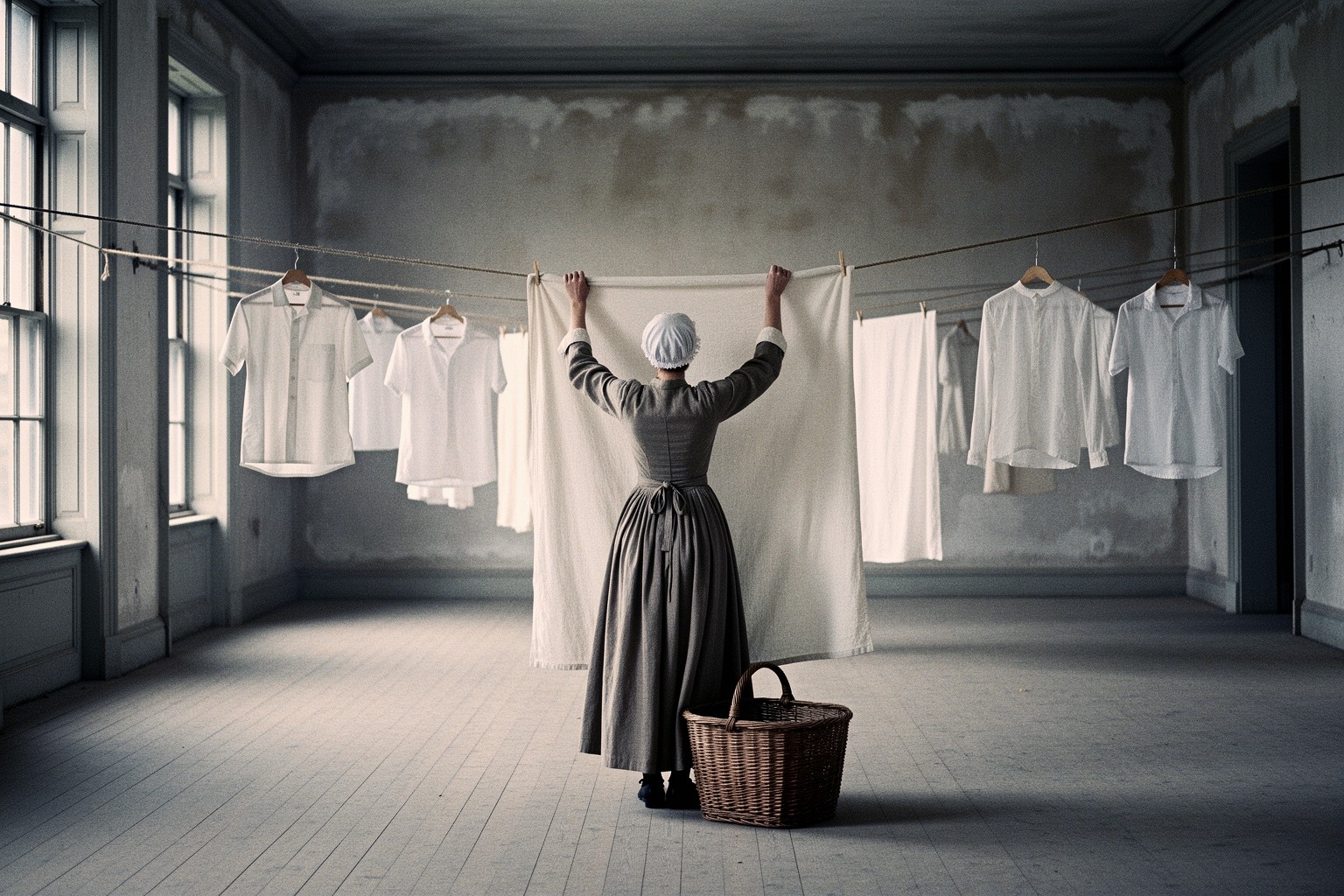
Abigail Adams joined him a little over two weeks later and wrote frankly about the place. Firewood was hard to come by in a city ringed with forest. Too few rooms were finished to live in comfortably. She had the household washing hung to dry in the great unfinished audience room, the space now called the East Room.
On his second night there, Adams wrote to her with a blessing for the house, hoping that none but honest and wise men would ever rule under its roof. Franklin Roosevelt later had the line carved into the State Dining Room mantel.
Adams was blessing a house he was about to lose. The election of 1800 was already under way, and when the electoral votes were counted he finished third, behind Thomas Jefferson and Aaron Burr.
He lived there about four months. Early on March 4, 1801, he left Washington by public stage, hours before Jefferson took the oath, and did not attend the ceremony.
Checked against: White House Historical Association histories; the Adams Family Papers at the Massachusetts Historical Society, including Abigail Adams's November 1800 letters; Library of Congress materials on the election of 1800; standard Adams biographies.
On the morning of 1 November 1755, an earthquake struck Lisbon while much of the city was at Mass. It was All Saints' Day. The churches were full, and their altars were crowded with lit candles.
The shaking lasted several minutes. Stone vaults and bell towers fell on the congregations below. Toppled candles and kitchen hearths set the wreckage alight, and fires began to spread through the packed streets of the lower town.
Survivors did the sensible thing. They left the narrow lanes and ran for the widest open space they could reach: the quays and the great square along the Tagus, where no wall could fall on them. Some eyewitness accounts describe the river drawing back and exposing its bed.
Open ground beside the water was the most dangerous place in Lisbon to stand.
Within the hour, a tsunami came up the river and over the waterfront, taking many of the crowds who had gathered there. Behind them, the fires burned for days. When the lower town was rebuilt, it went up on a straight grid of wide streets, and its new buildings were framed in timber designed to flex.
Checked against: Contemporary eyewitness letters and accounts from Lisbon residents and foreign merchants; Portuguese state records of the reconstruction; academic histories of the 1755 earthquake; seismological and tsunami studies of the event.
On November 1, 1952, the United States set off the first full-scale hydrogen bomb test. The target was Elugelab, a small island in Enewetak Atoll in the Marshall Islands. The test was code-named Ivy Mike.
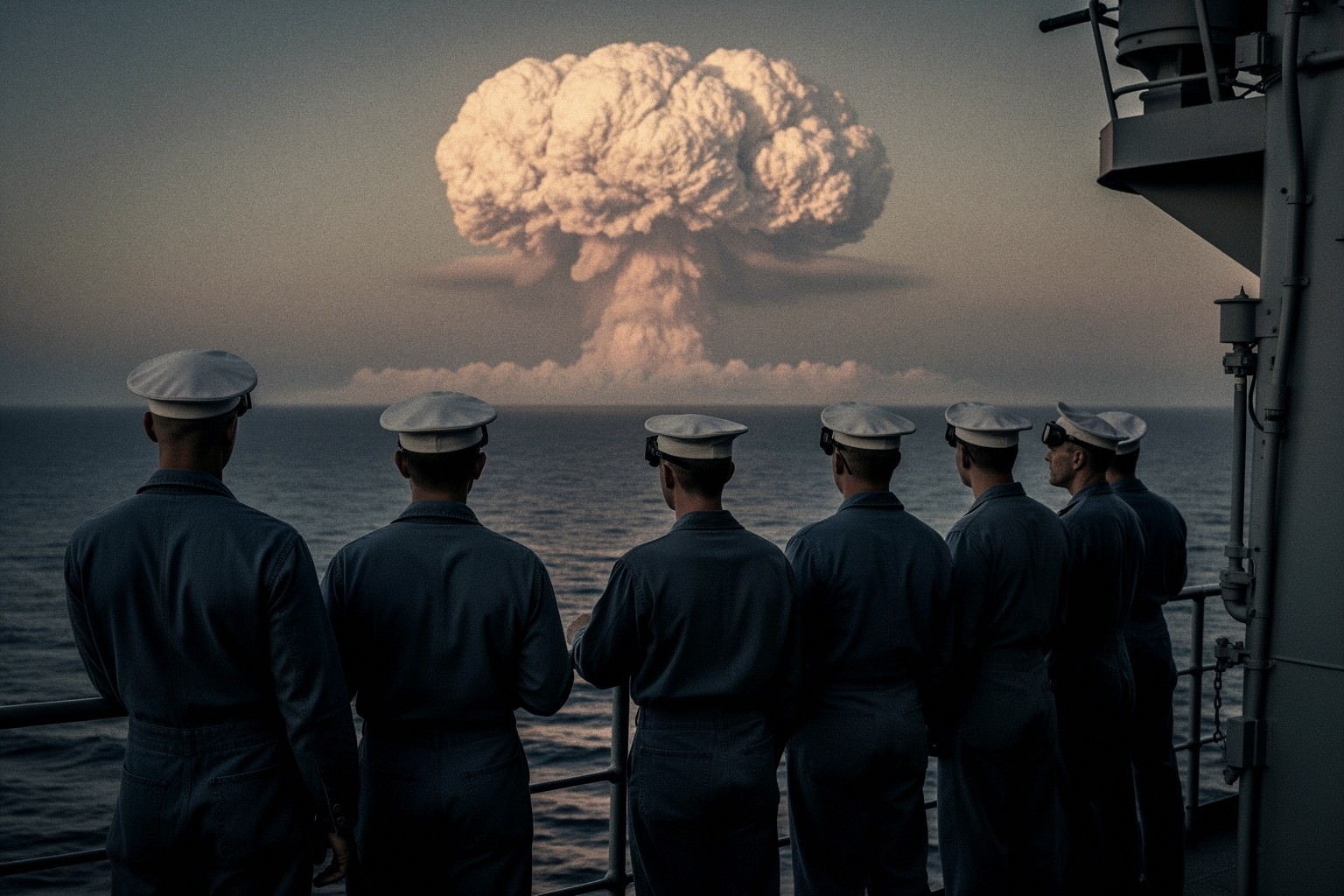
The blast yielded about 10.4 megatons, hundreds of times the power of the bomb dropped on Hiroshima. Observers watched from ships stationed miles out to sea, wearing dark goggles against the flash. The fireball swelled to miles across, and the cloud climbed far into the stratosphere.
When the sky cleared, Elugelab was gone. Where the island had stood there was a crater more than a mile wide, filled with seawater. A piece of the map had been erased in a single morning.
But Mike was not a weapon. It was closer to a building: a device about two storeys tall, filled with liquid deuterium chilled hundreds of degrees below freezing and kept cold by its own refrigeration plant. No aircraft could carry it.
So engineers set out to shrink it. Their dry-fuel design was tested at Bikini Atoll on March 1, 1954, as Castle Bravo. It yielded 15 megatons, more than twice what its designers predicted, and its fallout came down on a Japanese fishing boat and on the islanders of Rongelap.
Checked against: Declassified US Department of Energy and Defense Nuclear Agency test reports, Los Alamos National Laboratory institutional histories, and standard histories of the hydrogen bomb such as Richard Rhodes' Dark Sun.
Forty-four people died. He was tried for killing one.
Illustration generated by AI for The Day Vault.
On November 1, 1955, United Air Lines Flight 629 left Denver's Stapleton Airport bound for Portland. Eleven minutes later it blew apart over farmland near Longmont, Colorado. All 44 people aboard were killed.
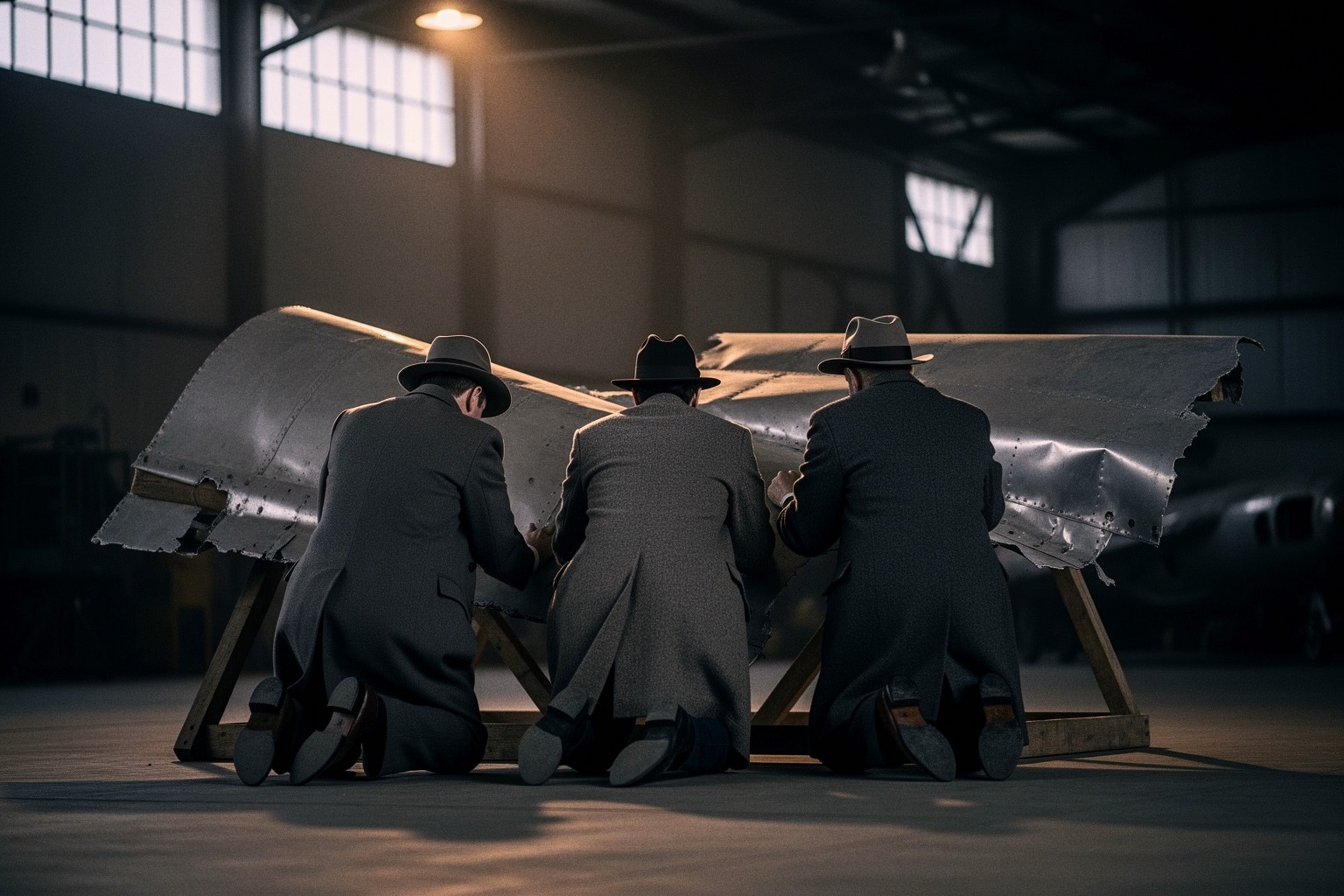
Investigators gathered the wreckage and laid it out piece by piece. The damage centred on one cargo hold, and lab tests found traces of dynamite. One of the passengers with luggage in that hold was Daisie King, a Denver businesswoman flying to visit her daughter in Alaska.
FBI agents turned to her son, Jack Gilbert Graham, 23. He had seen her off at the airport and bought travel insurance policies on her life. Within two weeks he confessed to building a time bomb and packing it into her suitcase. He later recanted.
Then prosecutors ran into a gap: no federal law made it a crime to blow up an airliner.
Colorado tried Graham for a single murder, his mother's. He was convicted and executed in January 1957. By then Congress had made the destruction of a civil aircraft a federal crime.
Checked against: FBI case histories; Civil Aeronautics Board accident report; contemporary newspaper coverage; Colorado court records
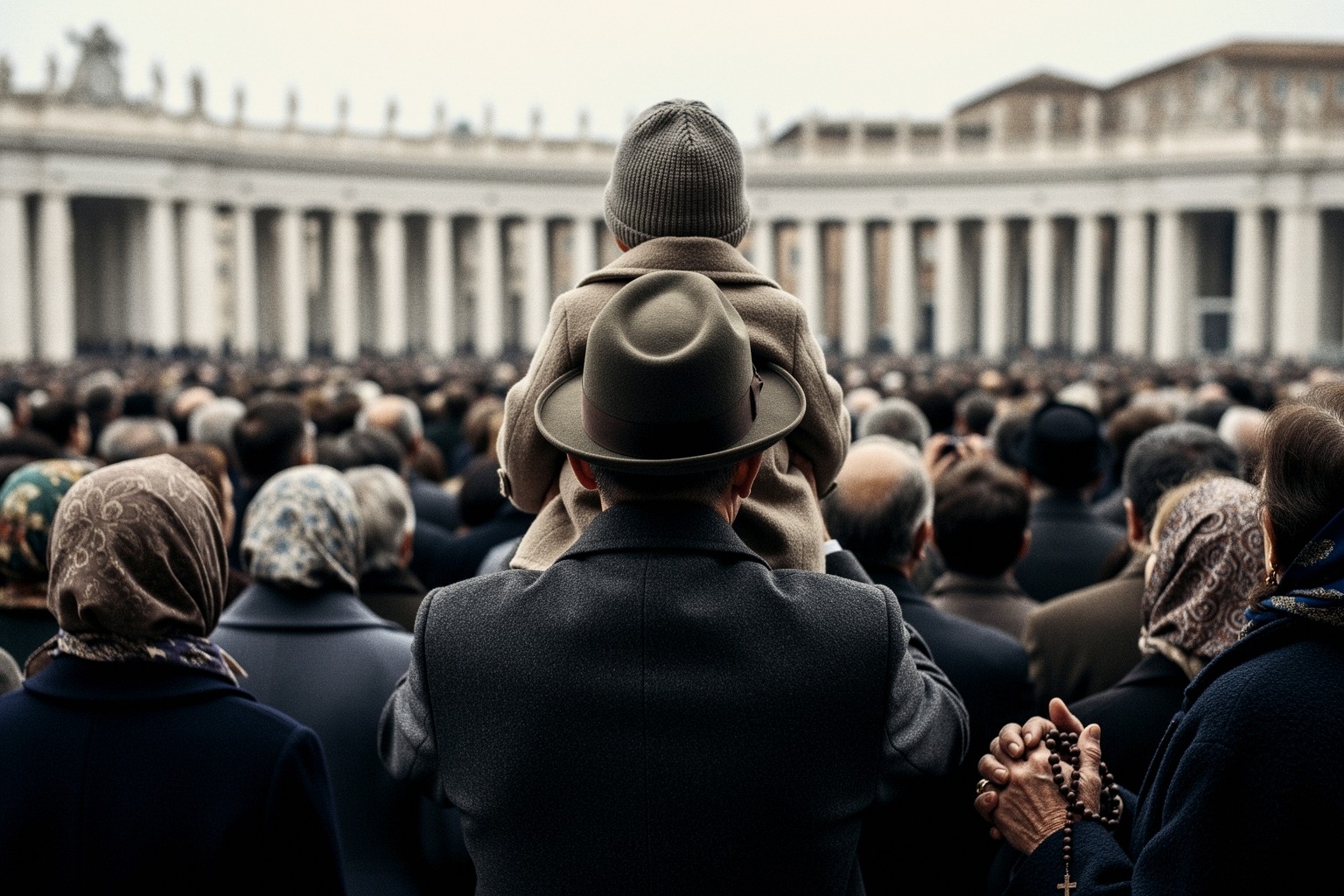
On November 1, 1950, Pope Pius XII stood before a packed St Peter's Square and declared that Mary, the mother of Jesus, had been taken body and soul into heaven at the end of her earthly life. He set it down as dogma in a document called Munificentissimus Deus.
The belief itself was old. Christians had kept a feast of Mary's Assumption every August 15 since late antiquity. What was new was the form. Pius spoke ex cathedra, from the chair of Peter, invoking the authority the First Vatican Council had defined in 1870. Under it, a pope's solemn teaching on faith and morals is held to be free from error.
He did not act alone. Four years earlier, Pius had written to Catholic bishops around the world asking whether they supported the definition. The overwhelming majority said yes. The crowd that morning filled the square and spilled into the streets beyond.
That authority had been bitterly fought over in 1870, and dozens of bishops left Rome rather than vote against it. Then, for eighty years, no pope used it.
None has used it since. Popes have written encyclicals, called a second Vatican Council and crossed the world. But a power that consumed a council has been invoked, beyond dispute, on a single morning.
Checked against: Vatican archives and the published text of the apostolic constitution; histories of the First Vatican Council; contemporary newspaper wire reports from Rome, November 1950
The first solo Beatle album had almost no singing on it
Illustration generated by AI for The Day Vault.
On 1 November 1968, George Harrison released Wonderwall Music in Britain. It was the first solo album by any member of the Beatles, and the first album issued on the band's new Apple label.
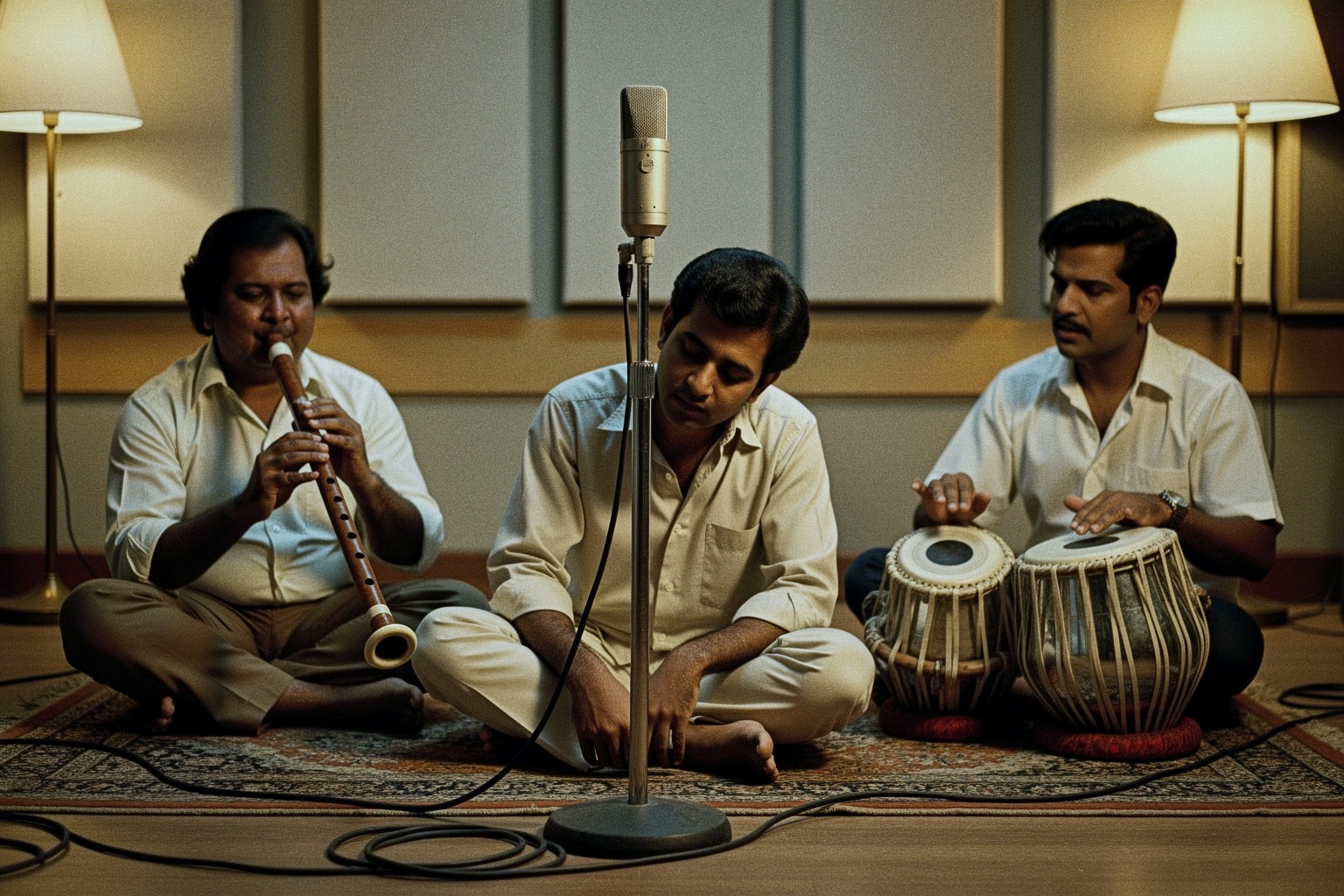
It was a soundtrack, written for a small art-house film. Harrison had flown to Bombay in January 1968 and booked an EMI studio there, hiring local musicians to play shehnai, sarod, santoor, sitar and tabla. The players worked in short takes, building brief Indian pieces that Harrison carried back to London.
In London he added Western tracks. Ringo Starr played drums. Eric Clapton played guitar, credited under the name Eddie Clayton. Harrison shaped the whole thing in a few months, between Beatles sessions, while the band was falling into its long, tense work on the double album that followed weeks later.
The first solo record by a Beatle was almost entirely instrumental, built largely on other people's playing.
The Bombay sessions' best-known result never made the album. A spare backing track became The Inner Light, the B-side of Lady Madonna and the first Harrison song on a Beatles single.
Checked against: Apple and EMI release records; Beatles session chronologies; biographies of George Harrison; music press archives from 1968
On November 1, 1968, American cinemas began sorting films by letter. The Motion Picture Association of America's new system had four: G for everyone, M for mature audiences, R for under-16s only with a parent, and X for nobody under 16 at all.
It replaced the Production Code, the decades-old rulebook that had dictated what Hollywood could put on screen. Under Jack Valenti, the studios traded censorship for labels. Make what you like, the idea went. Just tell parents what it is.
For a while, X could mean serious. In 1970, Midnight Cowboy, released with an X, won the Academy Award for Best Picture. It remains the only X-rated film ever to win it.
But the association protected its G, M and R as trademarks and left X unprotected. Anyone could stamp it on a film without submitting anything, and pornographers did, adding extra X's to sell harder.
Within a few years many newspapers refused to advertise X films and many cinemas refused to book them. Studios cut their films to escape the letter. In 1990 the association retired it and introduced NC-17, a rating it owned.
Checked against: MPAA ratings records and announcements; film trade press of 1968-1990 such as Variety; published histories of the Production Code and ratings system; Academy of Motion Picture Arts and Sciences awards database
On November 1, 1959, at Madison Square Garden, a shot from Rangers forward Andy Bathgate struck Montreal goaltender Jacques Plante in the face. He skated off to the dressing room with blood running from his nose and lip.
In those days a team dressed only one goalie. There was no backup on the bench. So the game simply stopped while a doctor stitched Plante up.
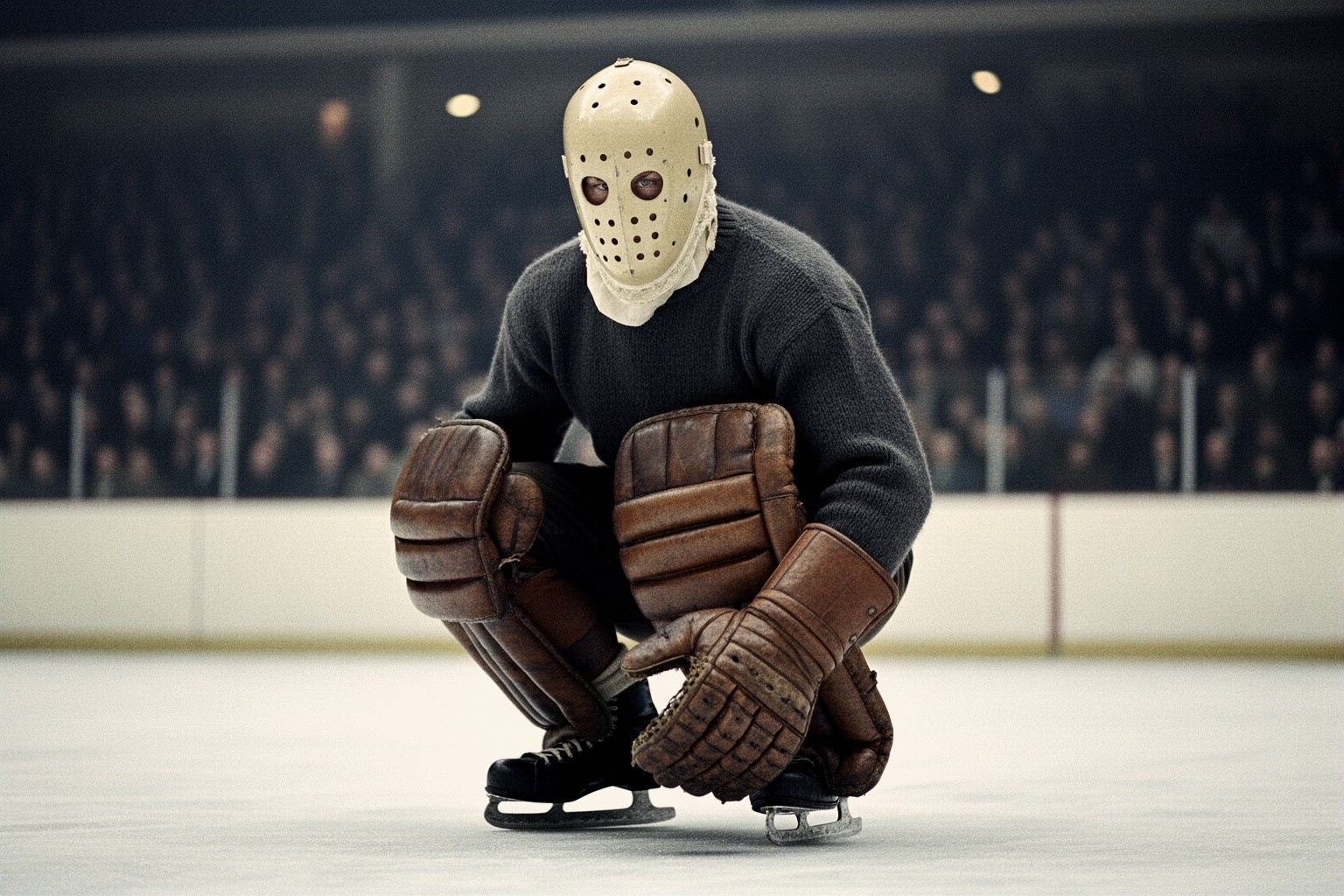
Plante had been wearing a fibreglass mask in practice for some time. His coach, Toe Blake, would not let him wear it in games. Now Blake had no one else to send out. Plante refused to return without the mask. Blake gave in. Plante went back into the net with his face covered, and Montreal won 3-1.
He was not the first. Clint Benedict of the Montreal Maroons had worn a leather mask in 1930 to protect a broken nose, then dropped it after a few games. For nearly thirty years after that, goalies took pucks to the face and were admired for it.
This time the mask stayed on. Other goalies followed, slowly at first, then all of them. In 1974 Andy Brown of Pittsburgh became the last goaltender to play an NHL game bare-faced.
Checked against: Contemporary newspaper game reports; NHL and Hockey Hall of Fame historical records; published biographies of the goaltender; histories of the goalie mask
On November 1, 1962, the Soviet Union launched Mars 1 from Baikonur. It was aimed at another planet, carrying a camera, a magnetometer and detectors for radiation and micrometeoroids.
The launch came days after the Cuban Missile Crisis ended. Every earlier Soviet attempt at Mars had failed close to home. Rockets broke up, or probes never left Earth orbit. This one got away clean, onto a long curve toward a planet no machine had ever visited.
For months it worked. Mars 1 radioed back measurements of the solar wind, magnetic fields and the thin stream of dust between the planets. Engineers on the ground tracked it farther and farther out, a small signal from deeper space than anyone had listened to before.
In March 1963, more than 100 million kilometres from Earth, its orientation system failed, its antenna could no longer find home, and the radio went quiet.
Mars 1 kept flying anyway. On June 19, 1963, it drifted past Mars, the planet it had been built to photograph, with its camera dark and nobody hearing a thing. It is still circling the Sun.
Checked against: Soviet and Russian space programme histories; NASA's lunar and planetary mission archive; academic histories of early planetary exploration
On November 1, 1950, two Puerto Rican nationalists walked toward the president's front door to kill Harry Truman. He wasn't in the White House. Its interior had been gutted for a rebuild, so the president was living across Pennsylvania Avenue in Blair House, a row house with a guard booth on the pavement.
Griselio Torresola and Oscar Collazo opened fire shortly after two in the afternoon. Torresola shot White House policeman Leslie Coffelt three times at close range. Coffelt, dying, fired back and killed him with a single shot to the head. Collazo went down wounded on the front steps. The whole exchange lasted under a minute.
Upstairs, Truman had been napping. He went to the window to see what the noise was and was ordered back inside. Coffelt died in hospital that evening. Truman kept his afternoon appointment at Arlington Cemetery and gave his speech as planned.
Collazo was tried, convicted and sentenced to death in 1951. The following summer, the man he had come to shoot commuted the sentence to life imprisonment.
Collazo spent the next twenty-seven years in federal prison. In 1979 President Carter commuted his sentence again, and he walked out and went home to Puerto Rico, where he died in 1994.
Checked against: Secret Service and Truman Library records; federal trial records; contemporary newspaper reporting; histories of the Blair House shooting