The capital finally got a ballot. Just a small one.
Illustration generated by AI for The Day Vault.
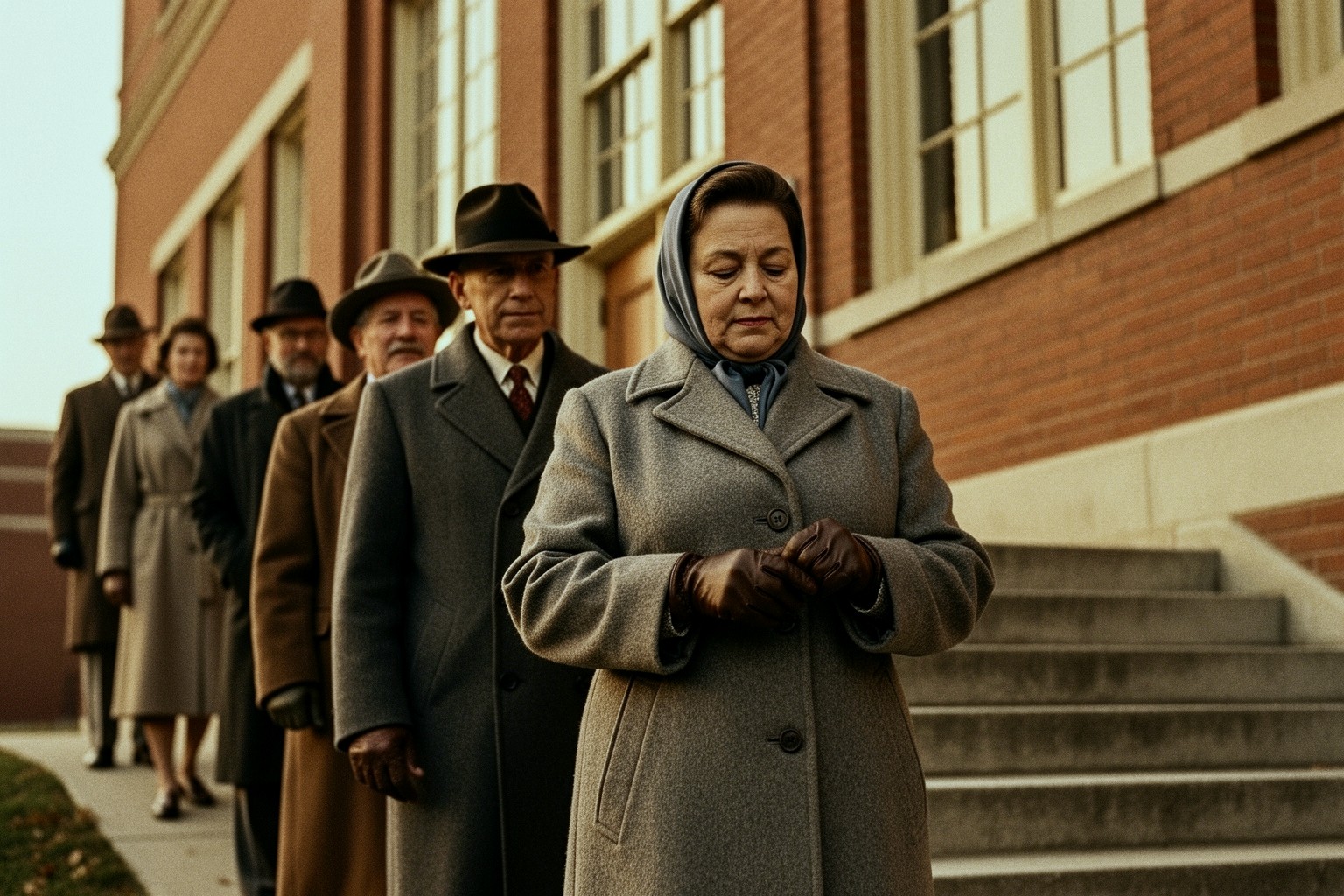
On November 3, 1964, residents of Washington, D.C., voted for president for the first time since the city became the nation's capital. For more than 160 years, the people who lived closest to the White House had no say in who moved into it.
The change came from the 23rd Amendment, ratified in 1961. It gave the District electors in the Electoral College, as if it were a state. On election day, residents filed into polling places across the city to cast a vote their parents and grandparents never had.
The District went overwhelmingly for Lyndon Johnson, who took more than four out of five of its votes. The city held more people than several states, and for one day its residents stood on the same footing as everyone else choosing a president.
But the amendment capped the District at the electoral votes of the least populous state: three, no matter how many people lived there. And it said nothing at all about Congress.
Washington got a non-voting delegate in the House in 1971. A vote on the floor never followed.
Checked against: Text of the 23rd Amendment and its ratification record; official 1964 presidential election returns; contemporary newspaper coverage of Washington polling places; histories of District of Columbia home rule.
The railway took the generals. The soldiers stayed behind.
Illustration generated by AI for The Day Vault.
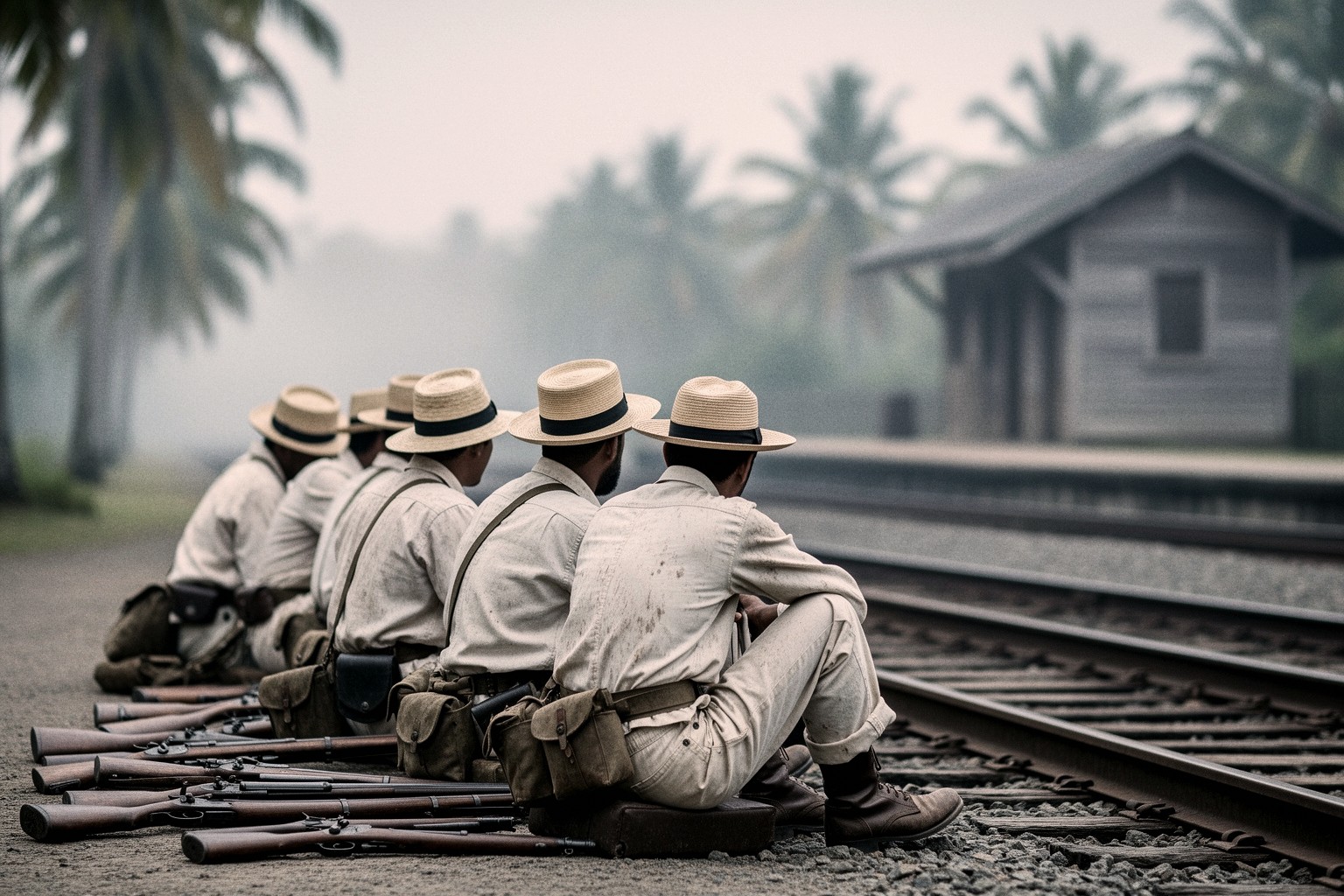
On November 3, 1903, Panama declared itself independent of Colombia. The revolt was small, partly planned in a New York hotel, and it depended on a railway.
That morning several hundred Colombian troops landed at Colón to crush it. Panama City lay fifty miles away across the isthmus, and the only practical route was the American-owned Panama Railroad. The railway's superintendent offered the commanding generals a private car so they could go ahead. Their men, he said, would follow. The men never got a train. The generals stepped off in Panama City and were arrested. An American gunboat lay off Colón.
Washington recognised the new republic within days. Panama sent a delegation north to negotiate the canal treaty that the whole affair had been about.
But a French engineer, Philippe Bunau-Varilla, had got himself named Panama's envoy, and on November 18 he signed the treaty with Secretary of State John Hay before the Panamanian delegates reached Washington.
The treaty handed the United States a zone through the middle of the country, in perpetuity. Panama, presented with a finished document, ratified it. The last of the zone did not return to Panamanian control until 1999.
Checked against: Diplomatic histories of the Panama Canal, US State Department records of the Hay-Bunau-Varilla Treaty, contemporary newspaper reports from Colón and Panama City
On November 3, 1936, Franklin Roosevelt won a second term by one of the widest margins in American history. He carried 46 of the 48 states. His opponent, Kansas governor Alf Landon, took only Maine and Vermont.
The result was a humiliation for The Literary Digest. The magazine ran the country's best-known presidential poll and had called the previous four elections correctly. In 1936 it mailed roughly ten million mock ballots across the country and counted about 2.4 million replies.
Its verdict was that Landon would win, and comfortably. The Digest printed the forecast with confidence. Nobody had ever asked so many voters anything, and the sheer pile of returned cards looked like proof.
But size was never the point. The mailing lists leaned on telephone directories and car registrations, and the people who bothered to mail a ballot back were not a fair slice of the people who didn't.
A young pollster named George Gallup questioned a fraction as many voters, chosen with care, and called Roosevelt's win. Within two years the Digest had folded. Gallup's surname became the ordinary word for a poll.
Checked against: 1936 presidential election returns; contemporary Literary Digest poll coverage; histories of American public opinion polling; academic studies of the 1936 Literary Digest poll's sampling and non-response bias
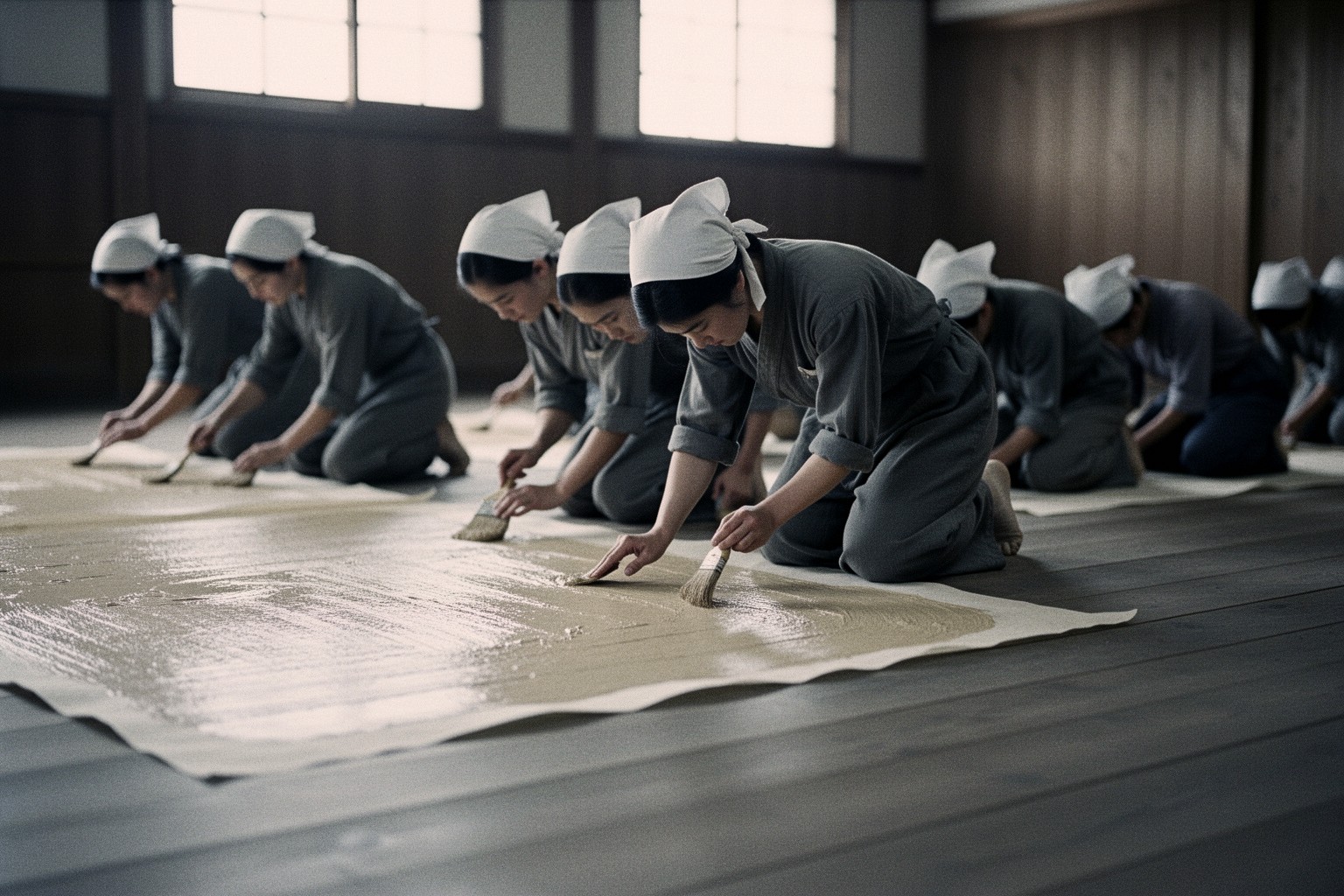
On November 3, 1944, Japan launched the first of its balloon bombs from the coast of Honshu. The date was chosen with care: it was the birthday of the Emperor Meiji. The balloons were made of mulberry paper, glued together largely by schoolgirls, and loaded with incendiaries and a small bomb. The jet stream would carry them to North America.
More than nine thousand went up over the next five months. A few hundred are known to have come down, from Alaska to Mexico and as far east as Michigan. They started brush fires. One snagged a power line and briefly cut electricity to the plutonium works at Hanford.
The US Office of Censorship asked newspapers and radio to say nothing, and they complied. Hearing no reports, Japanese commanders decided the weapon was failing. Launches stopped in April 1945.
The silence that fooled Tokyo also meant almost no one in America knew what a balloon bomb looked like.
On May 5, 1945, near Bly, Oregon, a pastor's wife and five children on a church outing found one lying in the woods. It exploded as they gathered round it. They were the only people killed by enemy action on the American mainland during the war. Within weeks, the government lifted the blackout and began warning the public.
Checked against: US Office of Censorship records, US Army and Smithsonian studies of the Fu-Go campaign, Forest Service and local Oregon accounts of the Bly explosion, Japanese military histories of the balloon programme
The cameras caught it all. The juries let them go.
Illustration generated by AI for The Day Vault.
On November 3, 1979, a caravan of cars carrying Ku Klux Klan members and neo-Nazis rolled up to a march gathering at Morningside Homes, a Black public housing project in Greensboro, North Carolina. The marchers, many of them organisers with the Communist Workers Party, had billed it as a "Death to the Klan" rally.
Men climbed out of the cars, took guns from a trunk and opened fire. Five marchers died: César Cauce, Michael Nathanson, Sandi Smith, Bill Sampson and Jim Waller. Two of them were doctors. No police officers were present when the shooting began.
Local television crews had come to film a march. They filmed the killings instead, and the footage aired that night. In 1980 an all-white state jury acquitted six defendants of murder. A federal civil rights trial in 1984 also ended in acquittals.
The man in the lead car, who had helped organise the caravan and knew the march route, was a paid informant for the Greensboro police.
In 1985 a civil jury found police officers and attackers jointly liable for one of the deaths, and the city paid the settlement. In 2006 a local truth and reconciliation commission named the absence of police as the most important factor in the violent outcome.
Checked against: Contemporary newspaper coverage, state and federal trial records, the 1985 civil verdict, and the 2006 Greensboro Truth and Reconciliation Commission final report
The convent kept him at the door, then asked Rome to let him in
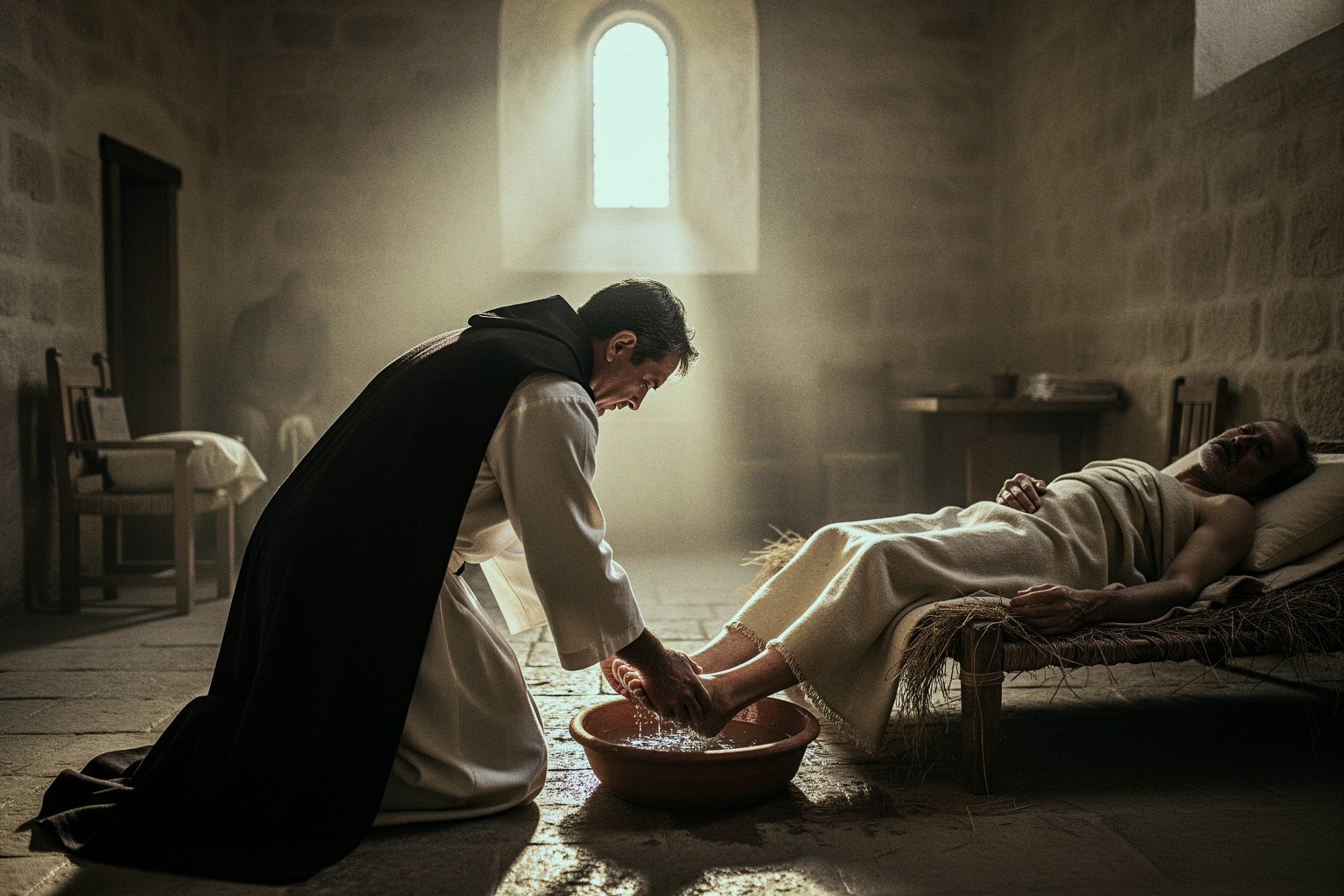
Illustration generated by AI for The Day Vault.
On November 3, 1639, a Dominican lay brother named Martin de Porres died in Lima, Peru. He was about sixty. He had spent nearly his whole life inside one convent, and much of it outside its full membership.
He was born in Lima in 1579, the son of a Spanish nobleman and a freed Black woman from Panama. His baptism record left the father's name blank. As a teenager he went to the Dominican Convent of the Holy Rosary, but the rules of the colony barred people of African descent from full membership of religious orders. So he entered as a donado: a servant who wore the habit and did the work, without taking vows. Only in 1603 did his prior let him profess as a lay brother.
He cut hair, swept floors and ran the infirmary. He brought the sick in from the streets, sometimes to his own bed when the wards were full, and fed the stray dogs and cats in the yard. Lima knew his name long before Rome did.
Within a few decades of his death, the order that had kept him at the threshold for nine years was collecting sworn testimony to have him made a saint.
Beatification came in 1837. Canonisation came in 1962, and the donado became the first Black saint of the Americas.
Checked against: Dominican order histories, Vatican canonisation records, colonial Lima archival studies, academic biographies of the saint
On November 3, 1954, Toho released Godzilla in Japanese cinemas. Its score was written by Akira Ifukube, a composer who had largely taught himself music while working as a forestry official in Hokkaido.
Ifukube wrote low, heavy music for the film: slow brass, pounding strings, a march that sounded like something very large walking. He wanted the creature to feel like a disaster, not a cartoon.
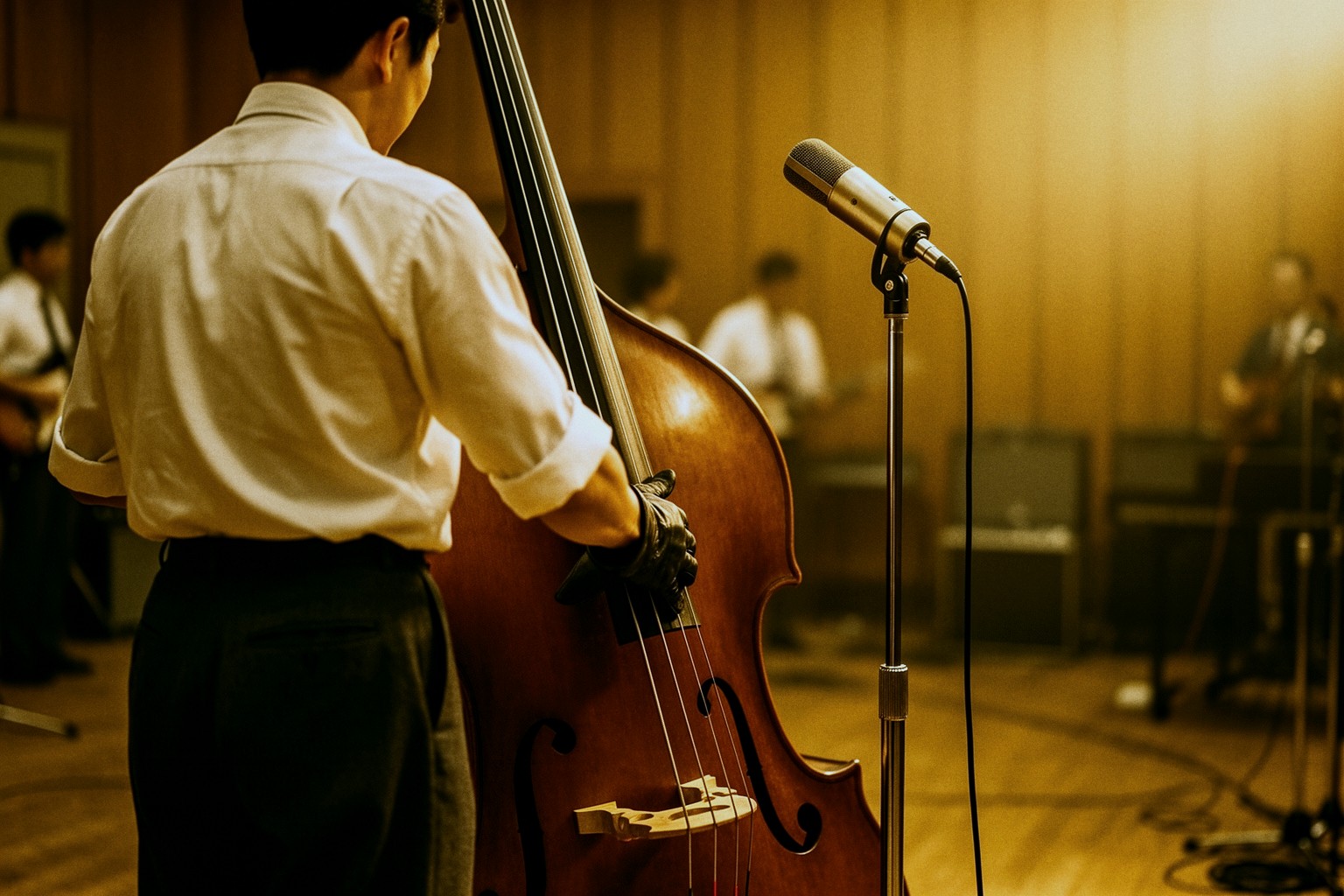
The film also needed a roar. Ifukube took a double bass, loosened its strings, and dragged a leather glove coated in pine resin along them. The sound crew recorded the groan and slowed it down until it no longer sounded like an instrument at all.
The work of his that has been heard most widely is the part he never wrote down.
Toho kept the roar, reworking it through decades of sequels, and it has reached more ears than any concert piece Ifukube composed.
Checked against: Japanese film histories, biographies of the composer, studio production accounts, published interviews with Ifukube and the film's sound crew
On November 3, 1957, the Soviet Union launched Sputnik 2. Strapped inside was Laika, a small mixed-breed stray picked up from the streets of Moscow. She became the first animal sent into orbit.
The launch came barely a month after Sputnik 1, and the world fell for the passenger. Western papers called the craft "Muttnik." Her face went onto Soviet postage stamps, and a cigarette brand took her name. Newspapers ran daily updates, and readers wrote in worried about her food and her air. For a few weeks she was probably the best-known animal alive.
Everyone involved knew she was not coming home. Sputnik 2 had no way back through the atmosphere. Moscow said she lived for days in orbit and died peacefully, and that version held for decades.
In 2002 a Russian scientist who had worked on the programme said Laika died of overheating within hours of launch, while the world was still learning her name.
The capsule kept circling with her body inside until April 1958, when it fell back and burned up over the Atlantic.
Checked against: NASA and Russian space-programme histories; 2002 World Space Congress proceedings; contemporary newspaper archives; histories of the early space race
On November 3, 2001, the Arizona Diamondbacks beat the New York Yankees 15-2 in Game 6 of the World Series. They collected 22 hits, a World Series record for a single game.
It was a rout from the start. Arizona scored in each of the first three innings, chased Yankees starter Andy Pettitte early, and led by double digits before most of the Phoenix crowd had finished their first drinks. Randy Johnson, the towering left-hander, pitched with a lead so large he barely needed to.
The series had already run into November, pushed back by the September attacks. In New York, the Yankees had won three straight, two of them on two-out, ninth-inning home runs off Arizona's young closer Byung-Hyun Kim. Back home, the Diamondbacks were finally hitting everything.
None of it carried over. A thirteen-run margin is worth exactly what a one-run win is worth: the series was tied at three games each, and everything came down to a single night against the most decorated postseason team of the era.
Arizona had spent its ace to get there. The following evening, Johnson walked out of the bullpen to pitch again in Game 7.
Checked against: Major League Baseball official box scores and records, contemporary newspaper game reports, broadcast archives of the 2001 World Series
Three visits to Mercury, and the same face every time
Illustration generated by AI for The Day Vault.
On November 3, 1973, an Atlas-Centaur rocket lifted Mariner 10 off Cape Canaveral, bound for Venus and then Mercury. No spacecraft had visited two planets. None had used one planet's gravity to bend its path toward another.
It worked. In February 1974 Mariner 10 swung past Venus, shed speed and fell inward toward the Sun. On March 29 it passed Mercury and sent back the first close pictures of a cratered, airless world that looked at first glance like the Moon. It also found a magnetic field, which few expected from so small a planet.
The Italian mathematician Giuseppe Colombo had noticed something about the craft's new orbit. It took almost exactly two Mercury years to circle the Sun. Mission planners used that to bring Mariner 10 back for a second pass in September 1974 and a third in March 1975.
But Mercury turns three times on its axis for every two trips around the Sun, so at each return the same half of the planet sat in sunlight.
Mariner 10 ran out of attitude-control gas and was switched off on March 24, 1975, having mapped less than half of Mercury. The rest waited more than three decades, until the MESSENGER probe flew past in 2008.
Checked against: NASA mission histories and Jet Propulsion Laboratory records; planetary science reference works on Mercury; contemporary press coverage of the 1973 launch and 1974-75 flybys
The admirals wanted one last battle. They got it in Kiel.
Illustration generated by AI for The Day Vault.
On November 3, 1918, sailors and dockyard workers marched through the German port of Kiel. They wanted their arrested shipmates released. A military patrol opened fire, and people died on the cobbles.
The arrests had a cause. In late October, with the war plainly lost, the naval command had drawn up orders for the High Seas Fleet to steam out and fight the Royal Navy one final time. The government was already seeking an armistice. To the crews, the sortie looked like a death ride staged for the honour of the officer corps. On the ships at Wilhelmshaven, stokers and seamen refused to raise steam. One squadron was sent back to Kiel, and its ringleaders were locked up.
The shooting did not end the protest. By the next day sailors held the town, elected councils, and sent delegates out by train. Within days, Hamburg, Bremen and Munich had followed.
The officers had planned a sortie to save the navy's honour, and it became the spark that brought down the empire the navy served.
On November 9, six days after the march, the Kaiser's abdication was announced in Berlin and a republic was proclaimed from a window of the Reichstag.
Checked against: Histories of the German Revolution of 1918-19, naval histories of the First World War, German naval archive records, and contemporary press reports